


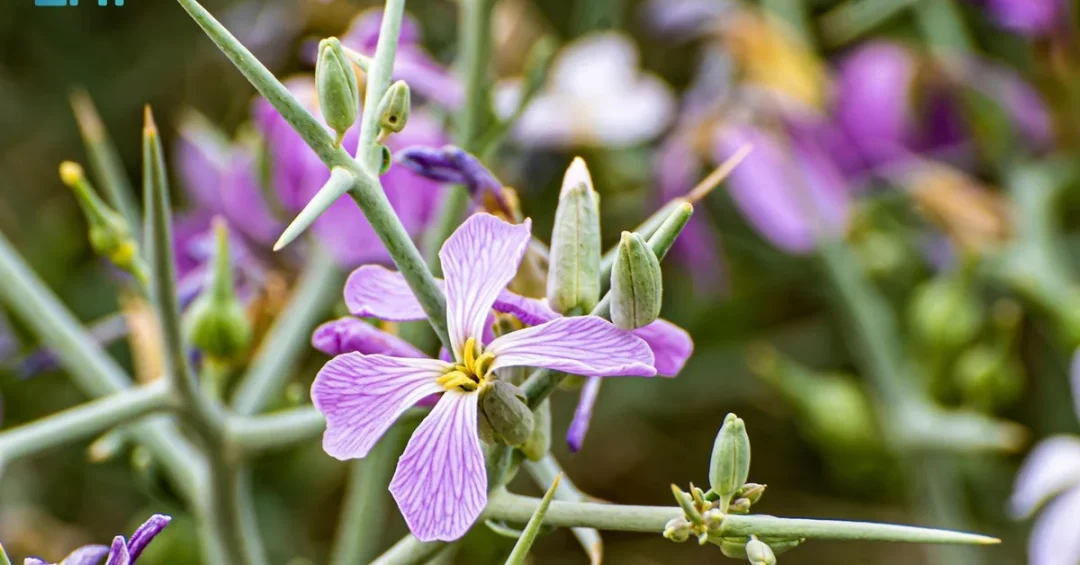
The rare purple-flowered plant known locally as Zilla, or “shabram”, has been spotted in the serene valleys of Saudi Arabia’s Northern Borders region, according to the Saudi Press Agency (SPA). The sighting, announced on November 22, 2024, highlights the ecological richness of the Kingdom’s northern terrain and the ongoing efforts of Saudi environmental organizations to document and protect native flora. The plant’s striking purple blooms, which add a vivid splash of color to the region’s arid landscape, have drawn renewed attention to the importance of biodiversity conservation in line with Saudi Vision 2030.
The Northern Borders region, which shares borders with Jordan and Iraq, is known for its diverse topography, including valleys, deserts, and rocky outcrops. This variety of terrain supports a wide range of plant life, each species playing a unique role in the local ecosystem. The Zilla plant, in particular, is valued for providing nectar for bees and forage for livestock, especially camels. However, its population has declined significantly in recent years due to overgrazing and other environmental pressures, making its recent appearance a noteworthy event for conservationists and local communities alike.
Context and Background
What makes the Zilla plant so significant to the Northern Borders ecosystem? The plant, scientifically part of the genus Zilla, is a resilient species adapted to arid environments. Its deep root systems help stabilize the soil, preventing erosion and supporting the fragile desert ecosystem. The vibrant purple flowers are not only visually striking but also serve as an important source of nectar for bees, which are essential pollinators for many desert plants. Additionally, the plant provides forage for livestock, particularly camels, which are culturally and economically important in the region. The Zilla thus contributes to both ecological balance and the livelihoods of local communities.
According to Nasser bin Arshid Al-Majlad, chairman of the board of directors of the Aman Environmental Association, the Northern Borders region is home to a rich variety of plant life, each with its own value. He noted that the Zilla plays a crucial role in the local ecosystem but has faced a significant decline due to overgrazing and other factors. The Aman Environmental Association, a Saudi non-profit organization dedicated to environmental protection, has been working to raise awareness about the importance of preserving the region’s natural heritage. By highlighting the beauty and ecological significance of plants like the Zilla, the association aims to inspire individuals and communities to take action to protect the environment.
The recent sighting of Zilla in the Northern Borders region is part of a broader effort by Saudi environmental authorities to monitor and conserve the Kingdom’s biodiversity. The Saudi National Center for Wildlife Development, under the Ministry of Environment, Water and Agriculture, has been actively conducting surveys and implementing conservation programs across the country. These efforts align with the goals of Saudi Vision 2030, which emphasizes environmental sustainability and the protection of natural resources. The discovery of Zilla in this region underscores the importance of continued monitoring and the need for community involvement in conservation.
Key Details
What exactly did the Aman Environmental Association announce regarding the Zilla plant? In a statement released via the Saudi Press Agency, Nasser bin Arshid Al-Majlad confirmed that the Zilla, locally known as “shabram”, has been spotted in the valleys of the Northern Borders region. He emphasized that the plant’s presence is a positive sign for the region’s biodiversity, but also a reminder of the challenges it faces. Overgrazing by livestock, particularly camels, has been identified as a primary cause of the plant’s decline. Other factors may include climate variability and habitat degradation. The association is calling for responsible grazing practices and increased awareness among local communities to ensure the plant’s survival.
The Zilla plant typically blooms in the spring, but its flowering period can vary depending on rainfall and temperature. Its purple flowers are a rare sight in the typically muted tones of the desert landscape, making it a subject of interest for botanists and nature enthusiasts. The plant is also known for its medicinal properties in traditional Bedouin medicine, where it has been used to treat various ailments. However, scientific studies on its medicinal benefits are limited. The Aman Environmental Association is encouraging further research into the plant’s ecological and cultural significance, as part of its broader mission to document and protect Saudi Arabia’s natural heritage.
The association’s efforts are not isolated. They are part of a nationwide movement in Saudi Arabia to promote environmental stewardship, driven by both government initiatives and grassroots organizations. The Saudi Green Initiative, launched by Crown Prince Mohammed bin Salman in 2021, aims to plant 10 billion trees across the Kingdom and restore 40 million hectares of degraded land. While the Zilla is not a tree, its conservation contributes to the overall goal of enhancing biodiversity and combating desertification. The sighting of Zilla in the Northern Borders region is therefore a small but meaningful indicator of the broader environmental progress being made in Saudi Arabia.
International and Regional Impact
How does the discovery of a rare plant in Saudi Arabia resonate beyond its borders? The Northern Borders region is part of a larger ecological corridor that stretches across the Arabian Peninsula. The Zilla plant’s presence there suggests that the region still harbors pockets of biodiversity that are vital for the health of the entire ecosystem. For neighboring countries like Jordan and Iraq, which share similar desert environments, the conservation of such species is a shared interest. Saudi Arabia’s efforts to protect its natural heritage can serve as a model for regional cooperation on environmental issues, including combating desertification and preserving migratory routes for wildlife.
On the international stage, Saudi Arabia’s commitment to environmental conservation is increasingly recognized. The Kingdom’s participation in global environmental agreements, such as the United Nations Convention to Combat Desertification (UNCCD) and the Paris Agreement, demonstrates its willingness to contribute to global sustainability goals. The sighting of the Zilla plant, while a local event, is a testament to the effectiveness of Saudi Arabia’s environmental policies and its dedication to preserving biodiversity. It also highlights the importance of scientific research and monitoring, which can inform conservation strategies and contribute to global knowledge about arid ecosystems.
Furthermore, the Zilla plant’s story has the potential to attract eco-tourists to the Northern Borders region. Saudi Arabia has been actively promoting tourism as part of Vision 2030, and nature-based tourism is a growing segment. The rare purple flowers could become a draw for visitors interested in experiencing the Kingdom’s unique flora and landscapes. This, in turn, could provide economic benefits to local communities and encourage further conservation efforts. The Aman Environmental Association’s work to raise awareness about the Zilla is thus not only ecologically important but also economically and socially beneficial.
Economic and Strategic Significance
What does the conservation of a single plant species mean for Saudi Arabia’s economy and strategic goals? At first glance, the Zilla plant may seem insignificant compared to the Kingdom’s massive oil reserves or ambitious megaprojects like NEOM. However, biodiversity is a critical component of sustainable development. Healthy ecosystems provide essential services such as pollination, soil fertility, and water regulation, which underpin agricultural productivity and food security. For a country like Saudi Arabia, which imports a significant portion of its food, enhancing local agricultural resilience is a strategic priority. The Zilla plant, by supporting pollinators and providing forage, contributes to the overall health of rangelands that support livestock, a key sector in the region.
Moreover, environmental conservation is increasingly linked to Saudi Arabia’s international standing and its ability to attract investment. Global investors and partners are paying more attention to environmental, social, and governance (ESG) criteria. By demonstrating a commitment to protecting its natural heritage, Saudi Arabia enhances its reputation as a responsible and forward-thinking nation. This can facilitate partnerships in areas such as renewable energy, sustainable agriculture, and eco-tourism. The Zilla plant’s sighting, while a small event, is part of a larger narrative of Saudi Arabia’s transformation into a diversified, sustainable economy.
The Aman Environmental Association’s efforts also align with the Kingdom’s goal of empowering civil society organizations. Under Vision 2030, Saudi Arabia aims to increase the contribution of the non-profit sector to 5% of GDP. Environmental associations like Aman play a vital role in raising awareness, implementing conservation projects, and fostering community engagement. Their work complements government initiatives and helps ensure that environmental protection is a collective responsibility. The association’s focus on the Zilla plant exemplifies how local actions can contribute to national and global environmental goals.
Vision 2030 Alignment
How does the preservation of the Zilla plant fit into Saudi Vision 2030? Vision 2030 is a comprehensive plan to diversify the economy, improve quality of life, and position Saudi Arabia as a global leader. Environmental sustainability is a key pillar of this vision, as reflected in initiatives like the Saudi Green Initiative and the Middle East Green Initiative. These programs aim to combat climate change, protect biodiversity, and promote sustainable resource management. The conservation of native plants like the Zilla is a direct contribution to these objectives. By protecting its natural heritage, Saudi Arabia is not only safeguarding its environment but also enhancing the well-being of its citizens and future generations.
The recent sighting of the Zilla plant in the Northern Borders region is a hopeful sign that Saudi Arabia’s environmental efforts are yielding results. It serves as a reminder that even in the most arid landscapes, life can thrive when given the chance. The Aman Environmental Association’s dedication to raising awareness about the Zilla and other native plants is an inspiring example of how individuals and organizations can make a difference. As Saudi Arabia continues its journey toward a sustainable future, the preservation of its unique flora and fauna will remain an integral part of its national identity and global role. The purple blooms of the Zilla are not just a beautiful sight; they are a symbol of the Kingdom’s commitment to a greener, more sustainable tomorrow.
20 Questions
Q1. What is the Zilla plant and where was it recently spotted?
A1. The Zilla plant, known locally as “shabram”, is a rare plant with striking purple flowers. It was recently spotted in the serene valleys of the Northern Borders region of Saudi Arabia, according to the Saudi Press Agency.
Q2. Who announced the sighting of the Zilla plant?
A2. The sighting was announced by Nasser bin Arshid Al-Majlad, chairman of the board of directors of the Aman Environmental Association, as reported by the Saudi Press Agency on November 22, 2024.
Q3. Why is the Zilla plant important to the local ecosystem?
A3. The Zilla plant provides nectar for bees, which are essential pollinators, and forage for livestock, especially camels. It also helps stabilize the soil and supports the overall health of the desert ecosystem.
Q4. What has caused the decline of the Zilla plant population?
A4. The population of the Zilla plant has declined significantly due to overgrazing and other environmental factors. The Aman Environmental Association is working to address these challenges through awareness and conservation efforts.
Q5. What is the Aman Environmental Association?
A5. The Aman Environmental Association is a Saudi non-profit organization dedicated to raising awareness about the importance of preserving the region’s natural heritage. It highlights the beauty and ecological significance of plants like the Zilla to inspire environmental action.
Q6. How does the Zilla plant contribute to Saudi Arabia’s Vision 2030?
A6. The conservation of the Zilla plant aligns with Vision 2030’s environmental sustainability goals, including the Saudi Green Initiative, which aims to protect biodiversity and combat desertification. It supports the Kingdom’s broader efforts to enhance quality of life.
Q7. What is the local name for the Zilla plant?
A7. The Zilla plant is locally known as “shabram” in the Northern Borders region of Saudi Arabia. This name reflects the plant’s cultural significance and its recognition by local communities.
Q8. What makes the Northern Borders region suitable for diverse plant life?
A8. The Northern Borders region has diverse terrain, including valleys, deserts, and rocky areas, which support a variety of plant species. This ecological richness makes it an important area for biodiversity conservation in Saudi Arabia.
Q9. How does the Zilla plant benefit livestock in the region?
A9. The Zilla plant provides forage for livestock, particularly camels, which are culturally and economically important in the region. This helps support local livelihoods and the traditional pastoral way of life.
Q10. What role do bees play in relation to the Zilla plant?
A10. Bees rely on the Zilla plant for nectar, and in return, they pollinate the plant and other desert flora. This mutually beneficial relationship is vital for the reproduction of many plant species and the health of the ecosystem.
Q11. What are the threats to the Zilla plant’s survival?
A11. Overgrazing by livestock is the primary threat to the Zilla plant, along with other factors such as climate variability and habitat degradation. Conservation efforts focus on promoting responsible grazing and raising awareness.
Q12. How can individuals help protect the Zilla plant?
A12. Individuals can support conservation by practicing responsible grazing, participating in awareness campaigns, and respecting protected areas. The Aman Environmental Association encourages community involvement in preserving natural heritage.
Q13. What is the significance of the Zilla plant’s purple flowers?
A13. The purple flowers of the Zilla plant are visually striking and add vibrant color to the arid landscape. They also attract pollinators like bees, playing a crucial role in the plant’s reproduction and the broader ecosystem.
Q14. Does the Zilla plant have any medicinal uses?
A14. The Zilla plant has been used in traditional Bedouin medicine to treat various ailments, although scientific studies on its medicinal properties are limited. Further research could uncover additional benefits.
Q15. How does the sighting of the Zilla plant reflect Saudi Arabia’s environmental progress?
A15. The sighting indicates that Saudi Arabia’s conservation efforts are helping to preserve rare species. It reflects the Kingdom’s commitment to biodiversity and the success of initiatives like the Saudi Green Initiative.
Q16. What is the Saudi Green Initiative?
A16. The Saudi Green Initiative, launched by Crown Prince Mohammed bin Salman in 2021, aims to plant 10 billion trees and restore 40 million hectares of land. It is a key part of Saudi Arabia’s environmental sustainability efforts.
Q17. How can the Zilla plant attract eco-tourists to the Northern Borders region?
A17. The rare purple flowers of the Zilla plant can attract nature enthusiasts and eco-tourists, contributing to local economic development. This aligns with Saudi Arabia’s tourism goals under Vision 2030.
Q18. What is the role of the Saudi National Center for Wildlife Development?
A18. The Saudi National Center for Wildlife Development, under the Ministry of Environment, Water and Agriculture, conducts surveys and implements conservation programs. It works to protect Saudi Arabia’s biodiversity, including rare plants like the Zilla.
Q19. How does the Zilla plant support soil stability?
A19. The Zilla plant has deep root systems that help stabilize the soil, preventing erosion and supporting the fragile desert ecosystem. This is essential for maintaining the health of rangelands and preventing land degradation.
Q20. What is the broader significance of the Zilla plant’s discovery for Saudi Arabia?
A20. The discovery highlights Saudi Arabia’s rich natural heritage and the importance of conservation. It underscores the Kingdom’s commitment to environmental sustainability, aligning with Vision 2030 and global efforts to protect biodiversity.
Reader Feedback
We value your thoughts. Please share your feedback on this article.
Your feedback helps us improve our coverage.
Related articles
 Civil Defense Warns of Thunderstorms Across Saudi Regions
 Saudi Customs Seizes 313,906 Captagon Pills at Al-Haditha
 Saudi Ambassador Presents Credentials to Cuban President
 Golden Acacia Trees Beautify Northern Borders Villages
 Saudi Envoy Meets Pakistani Minister in Islamabad
 Gaza Victims Thank Saudi Arabia for Lifesaving Aid