


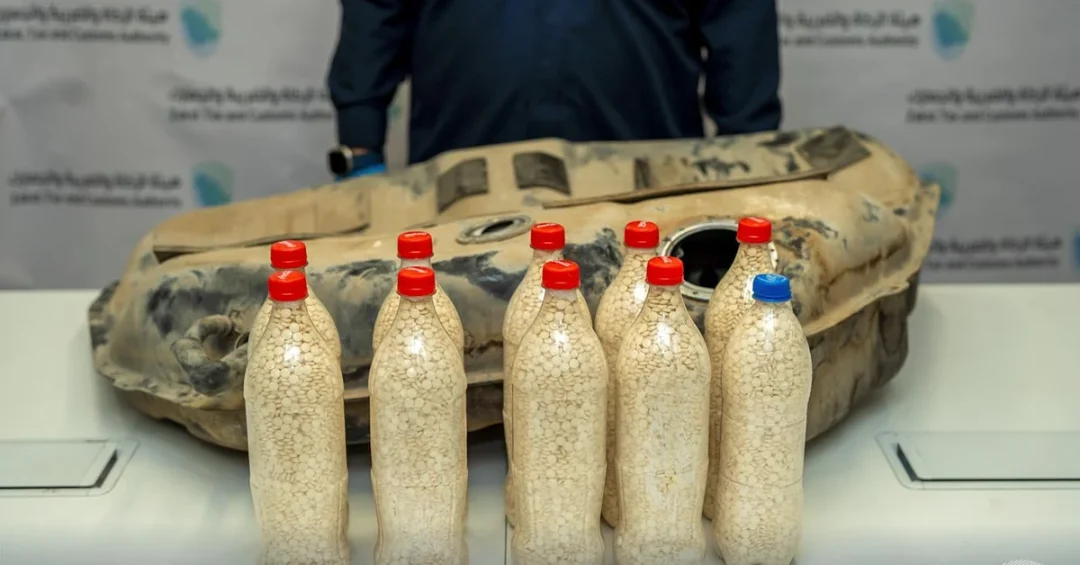
The Zakat, Tax and Customs Authority (ZATCA) has successfully thwarted five separate attempts to smuggle 313,906 Captagon pills into the Kingdom of Saudi Arabia through the Al-Haditha border crossing, the Saudi Press Agency reported on November 22, 2024. The seizures, carried out during coordinated inspection operations, represent a significant victory in the Kingdom’s ongoing campaign to protect its society and national economy from the scourge of narcotics trafficking. The contraband was discovered concealed in a variety of hiding places across vehicles and trucks, underscoring both the sophistication of smuggling methods and the vigilance of Saudi customs officers.
How does a nation stay one step ahead of criminal networks that constantly change their tactics? For Saudi Arabia, the answer lies in a combination of advanced security technology, highly trained personnel, and a robust canine unit program. The Al-Haditha crossing, located on the border with Jordan, is a critical commercial and passenger gateway. Its security is paramount, and the successful interception of these five consignments demonstrates the effectiveness of ZATCA’s layered defense strategy. The operation also highlights the crucial role that public cooperation plays in safeguarding the Kingdom, as authorities continue to encourage citizens and residents to report suspicious activity through dedicated channels.
Context and Background
Why is the fight against Captagon so important to Saudi Arabia and the wider region? Captagon, a synthetic amphetamine-type stimulant, has become a major concern across the Middle East. Its production and trafficking fund criminal networks and destabilize communities. The Kingdom has long recognized the threat posed by this drug and has invested heavily in border security, intelligence sharing, and public awareness campaigns. The Al-Haditha crossing, which connects Saudi Arabia to Jordan and serves as a vital artery for trade and pilgrims, has been a focal point for these efforts. ZATCA’s strategy is not merely reactive; it is a proactive, intelligence-led approach designed to dismantle smuggling operations before they can reach their intended markets.
The Zakat, Tax and Customs Authority operates under a mandate that extends beyond revenue collection. A key pillar of its mission is the protection of society and the national economy. Smuggling of any kind, whether of narcotics, counterfeit goods, or restricted materials, undermines legitimate business, deprives the state of revenue, and poses direct risks to public health and safety. The authority’s officers are stationed at all land, sea, and air entry points, working around the clock to ensure that only lawful goods and individuals cross into the Kingdom. Their success at Al-Haditha is a testament to their dedication and the effectiveness of ongoing training and capacity-building programs.
The seizure of over 313,000 pills also reflects the broader regional and international cooperation that Saudi Arabia engages in to combat transnational crime. Drug trafficking is a global problem that requires a global response. The Kingdom works closely with its neighbors and international partners to share intelligence, coordinate operations, and disrupt the supply chains that feed the illicit drug trade. The Al-Haditha operation is a clear message to traffickers that the Kingdom’s borders are not open to their poisonous trade. It also reinforces Saudi Arabia’s reputation as a responsible and proactive member of the international community in the fight against organized crime.
Key Details of the Seizures
What specific methods did the smugglers use, and how were they caught? According to official information released by ZATCA, the five thwarted attempts involved a variety of concealment techniques. In one instance, a staggering 86,000 pills were found hidden under the clothing of a smuggler, a brazen attempt to bypass physical inspection. In another, 65,116 pills were discovered inside the refrigerator of a truck cabin, a location that might be overlooked during a cursory check. A further 52,907 pills were concealed in the floor of a vehicle, while 55,232 pills were hidden inside a fuel tank. Finally, 4,651 pills were stashed inside a spare tire compartment. These diverse hiding spots illustrate the ingenuity of criminal networks and the need for constant vigilance.
The detection of these hidden consignments was made possible through a combination of customs procedures, security technology, and canine units. ZATCA employs a range of non-intrusive inspection tools, such as X-ray scanners and density meters, to examine vehicles and cargo without the need for full physical unpacking. These technologies allow officers to quickly identify anomalies that may indicate concealed compartments or hidden items. In addition to technology, the authority relies on the keen senses of trained dogs, which can detect the scent of narcotics even when they are masked by other odors. The successful finds at Al-Haditha demonstrate the seamless integration of human skill, technological tools, and animal instinct.
The total of 313,906 pills seized across the five operations represents a substantial quantity of illicit drugs that will never reach the streets. The street value of such a haul is significant, and its interception prevents both the social harm and the financial profits that would have flowed to criminal organizations. ZATCA has reaffirmed its commitment to strengthening border security and preventing the smuggling of harmful substances. The authority’s efforts reflect a key pillar of its strategy, which aims at protecting society and the national economy. This operation is not an isolated success but part of a sustained campaign that has seen numerous similar interceptions at border points across the Kingdom.
International and Regional Impact
How does Saudi Arabia’s border security success resonate beyond its own borders? The Al-Haditha seizures send a strong signal to regional and international partners that the Kingdom is a reliable ally in the fight against drug trafficking. The Middle East and North Africa region has faced a growing challenge from Captagon production and smuggling, particularly originating from conflict zones. By intercepting these shipments, Saudi Arabia is not only protecting its own citizens but also contributing to regional stability. The disruption of supply routes makes it harder for criminal networks to operate, increases their costs, and ultimately helps reduce the flow of drugs to other countries.
The cooperation between ZATCA and other Saudi security agencies, as well as international counterparts, is an essential component of this success. Information sharing and joint operations are critical to staying ahead of sophisticated smuggling rings. The Kingdom’s participation in regional and global forums on counter-narcotics further underscores its commitment to a collective response. The Al-Haditha operation is a practical example of how Saudi Arabia translates its policy commitments into action on the ground. It also serves as a deterrent, warning potential smugglers that the Kingdom’s borders are protected by advanced systems and dedicated professionals.
Economic and Strategic Significance
Why does protecting the national economy go hand-in-hand with protecting society? Smuggling, whether of drugs or other contraband, has a corrosive effect on economies. It creates unfair competition for legitimate businesses, deprives governments of tax and customs revenue, and fosters corruption. For Saudi Arabia, the fight against smuggling is directly linked to its economic diversification goals under Vision 2030. A secure and transparent trading environment is essential for attracting foreign investment and facilitating legitimate commerce. When ZATCA seizes illegal goods, it is upholding the integrity of the Kingdom’s markets and ensuring that businesses operate on a level playing field.
The strategic significance of border security extends to the broader goal of ensuring the safety and well-being of citizens and residents. A society free from the scourge of drugs is more productive, healthier, and more capable of contributing to national development. The Kingdom’s investment in border security infrastructure, training, and technology is therefore an investment in its human capital. The Al-Haditha operation is a reminder that security and prosperity are intertwined. By preventing the entry of harmful substances, ZATCA is helping to create the stable and secure environment that Vision 2030 requires to succeed.
Vision 2030 Alignment
How does this operation fit into the larger picture of Saudi Arabia’s transformation? Vision 2030 is not only about economic diversification and social liberalization; it is also about building a secure, resilient, and healthy society. The fight against narcotics is a fundamental part of that vision. The Kingdom aims to provide a high quality of life for all its citizens, and that is impossible if drugs are allowed to flow freely across its borders. ZATCA’s success at Al-Haditha directly supports the Vision 2030 objective of enhancing public safety and protecting the nation’s youth from harmful influences. It demonstrates that the Kingdom has the capability and the will to defend its society against external threats.
Furthermore, the operation highlights the importance of institutional excellence and good governance, which are core principles of Vision 2030. ZATCA is a modern, technology-driven organization that operates with professionalism and integrity. Its ability to coordinate complex inspection operations and to engage the public through reporting channels reflects a new era of efficiency and transparency in Saudi public service. As the Kingdom continues its journey toward a brighter future, the dedication of its border security personnel will remain a vital line of defense. The thwarting of these smuggling attempts is not just a victory for ZATCA; it is a victory for every Saudi citizen and resident who dreams of a safe, prosperous, and drug-free nation.
20 Questions
Q1. What is Captagon and why is it a concern for Saudi Arabia?
A1. Captagon is a synthetic amphetamine-type stimulant that is illegal in Saudi Arabia. It poses serious health risks, including addiction and mental health problems, and its trafficking funds criminal networks. The Kingdom is committed to preventing its entry and protecting society.
Q2. Which Saudi authority is responsible for the seizure at Al-Haditha?
A2. The Zakat, Tax and Customs Authority (ZATCA) is the agency responsible. It oversees customs operations at all border crossings and works to prevent smuggling of contraband, including narcotics, in line with its mandate to protect society and the national economy.
Q3. How many Captagon pills were seized in total?
A3. A total of 313,906 pills were seized across five separate attempts. This significant quantity was intercepted before it could reach the streets, preventing harm to individuals and communities within the Kingdom.
Q4. Where exactly is the Al-Haditha border crossing located?
A4. Al-Haditha is a border crossing located on the border between Saudi Arabia and Jordan. It is a key entry point for trade and travelers, and ZATCA maintains a strong security presence there to inspect incoming vehicles and cargo.
Q5. What methods did smugglers use to hide the pills?
A5. Smugglers concealed the pills in various locations, including under a person’s clothing, inside a truck cabin refrigerator, in a vehicle’s floor, inside a fuel tank, and in a spare tire compartment. These methods show the diverse tactics used by criminal networks.
Q6. How did ZATCA officers detect the hidden drugs?
A6. Officers used a combination of customs procedures, advanced security technology such as X-ray scanners, and canine units. This layered approach allowed them to uncover the concealed consignments despite the smugglers’ efforts to hide them.
Q7. What is the role of canine units in border security?
A7. Canine units are highly trained dogs that can detect the scent of narcotics even when hidden. They are a valuable complement to technology and human inspection, providing a mobile and highly sensitive detection capability at border points.
Q8. How can the public assist in combating smuggling?
A8. The public can report suspicious activity through ZATCA’s designated channels: the Security Report Hotline at 1910, email at [email protected], or international number 00966114208417. All reports are treated confidentially, and accurate information may qualify for a financial reward.
Q9. Are informants rewarded for providing tips?
A9. Yes, ZATCA states that informants providing accurate information that leads to the interception of smuggling may be eligible for a financial reward. This policy encourages public cooperation and strengthens the fight against illicit trade.
Q10. What is the street value of the seized Captagon pills?
A10. While the exact street value is not specified in the official report, Captagon pills typically have a significant illicit market value. The seizure of over 313,000 pills represents a major financial blow to the criminal networks involved.
Q11. How does this seizure impact drug trafficking in the region?
A11. It disrupts a supply route and demonstrates Saudi Arabia’s effectiveness in border control. This success makes it harder for traffickers to operate and contributes to regional efforts to combat the flow of illegal drugs across borders.
Q12. What is ZATCA’s broader strategy against smuggling?
A12. ZATCA’s strategy includes advanced technology, trained personnel, canine units, intelligence sharing, and public awareness. It aims to protect society and the national economy by preventing the entry of harmful substances and ensuring compliance with customs laws.
Q13. Does this operation relate to Saudi Vision 2030?
A13. Yes, it aligns with Vision 2030’s goals of ensuring public safety, protecting youth, and building a secure society. A drug-free environment is essential for achieving the quality of life and economic prosperity envisioned in the plan.
Q14. What happens to the seized Captagon pills?
A14. The seized narcotics are handled according to legal procedures. They are typically destroyed after being presented as evidence, ensuring they are permanently removed from circulation and cannot cause harm.
Q15. Are there other border crossings where similar seizures occur?
A15. ZATCA conducts operations at all land, sea, and air entry points. While Al-Haditha was the site of this particular success, similar vigilance is maintained at crossings throughout the Kingdom to prevent smuggling.
Q16. How does Saudi Arabia cooperate internationally on counter-narcotics?
A16. Saudi Arabia engages in intelligence sharing and joint operations with regional and international partners. It participates in global forums and works to disrupt transnational criminal networks involved in drug trafficking.
Q17. What penalties exist for smuggling drugs into Saudi Arabia?
A17. Saudi law imposes severe penalties for drug smuggling, including lengthy prison sentences and capital punishment for major offenses. These strict measures serve as a strong deterrent and reflect the Kingdom’s zero-tolerance policy.
Q18. How does ZATCA ensure the confidentiality of reports?
A18. ZATCA assures that all reports related to smuggling and violations are treated with strict confidentiality. This protects informants and encourages more people to come forward with valuable information.
Q19. What technology does ZATCA use for cargo inspection?
A19. ZATCA uses non-intrusive inspection tools such as X-ray scanners, density meters, and other imaging technology. These allow officers to quickly examine vehicles and containers for anomalies without fully unpacking them.
Q20. What message does this seizure send to potential smugglers?
A20. It sends a clear message that Saudi Arabia’s borders are protected by advanced systems and dedicated professionals. Smugglers will be caught, and their illegal goods will be seized. The Kingdom remains resolute in protecting its society.
Reader Feedback
We value your thoughts. Please share your feedback on this article.
Your feedback helps us improve our coverage.
Related articles
 Saudi Ambassador Presents Credentials to Cuban President
 Golden Acacia Trees Beautify Northern Borders Villages
 Saudi Envoy Meets Pakistani Minister in Islamabad
 Gaza Victims Thank Saudi Arabia for Lifesaving Aid
 KSrelief Distributes 400 Shelter Aid Items in Afghanistan
 KSrelief to Build 114 Homes for Yemen Flood Victims