


The General Authority for Statistics (GASTAT) released its Household Energy Statistics Publication for 2023 on November 26, 2024, revealing detailed insights into residential energy consumption patterns across the Kingdom. The report, issued via the Saudi Press Agency (SPA), highlights regional disparities in electricity use, appliance operation hours, and growing public interest in energy conservation and renewable solutions. As Saudi Arabia accelerates its Vision 2030 goals, these statistics provide a crucial baseline for policymakers, industry leaders, and citizens alike.
How does a nation of over 35 million people manage its household energy needs while transitioning toward a sustainable future? The 2023 Household Energy Statistics offer a comprehensive answer, drawing from the Household Energy Survey and administrative records provided by the Ministry of Energy. This publication not only quantifies consumption but also sheds light on behavioral trends that could shape the Kingdom’s energy landscape for decades to come.
Context and Background
Understanding household energy consumption is essential for any country striving to balance economic growth with environmental responsibility. In Saudi Arabia, the residential sector accounts for a significant share of national electricity demand, making it a focal point for efficiency initiatives under Vision 2030. GASTAT’s publication serves as a vital tool for tracking progress toward the Kingdom’s sustainability targets, including the Saudi Green Initiative’s goal to reduce carbon emissions by 278 million tons per annum by 2030.
Why is this data so important now? As the Kingdom diversifies its economy away from oil, optimizing energy use in homes becomes both an economic and environmental imperative. The report reveals that the Riyadh Region consumed 28.1% of residential electrical energy, followed by Makkah at 25.5% and the Eastern Region at 16.7%. These three regions together account for over 70% of household electricity use, reflecting their large populations and urban density. In contrast, Al-Baha Region recorded the lowest consumption at just 0.9%, underscoring regional disparities that could inform targeted efficiency programs.
The publication also details average weekly operating hours for key appliances: water heating appliances averaged 62.1 hours, air conditioning units 51.5 hours, heating appliances 17.9 hours, and cooking appliances 6.8 hours. These figures highlight the dominance of climate-related energy needs in a country where summer temperatures routinely exceed 45°C. Such granular data enables utilities and government agencies to forecast demand more accurately and design incentives for off-peak usage.
Key Details: Conservation Awareness and Appliance Usage
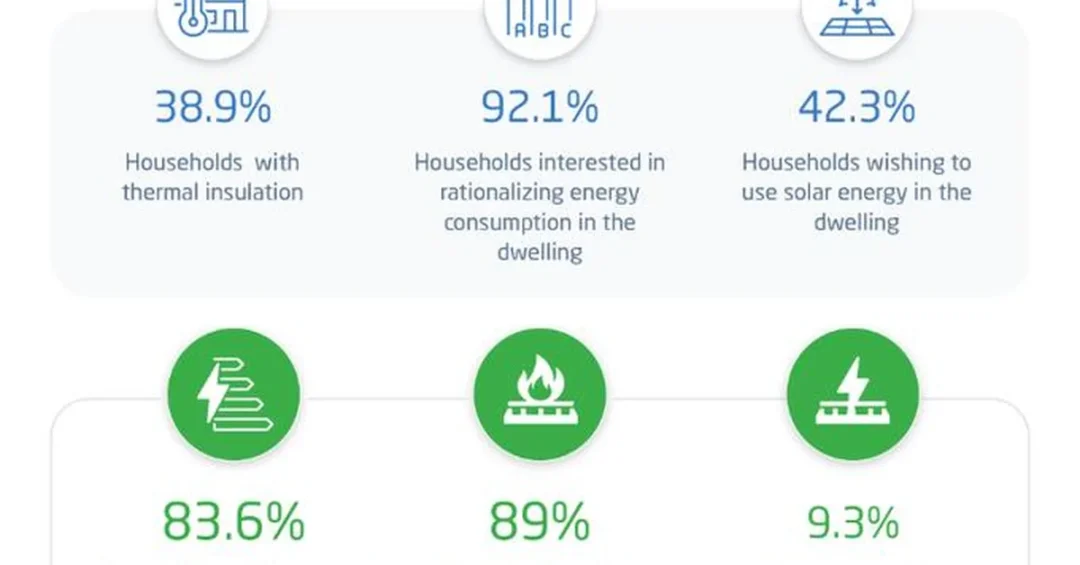
One of the most encouraging findings is the high level of energy awareness among Saudi households. According to GASTAT, 92.1% of households expressed a strong interest in energy conservation, and 83.6% reported actively practicing energy-saving methods when using appliances. This suggests that public campaigns and educational initiatives are resonating with citizens. Furthermore, 55.2% of households indicated readiness to invest in replacing old appliances with newer, more energy-efficient models, while 42.3% expressed interest in adopting solar energy for their homes.
How are Saudi families adapting their daily routines to save energy? The data shows that cooking is almost universally powered by some energy source, with 98.4% of households using various sources. Among these, 89% rely on gas, 9.3% on electricity, and a marginal 0.1% on alternative sources. This near-total adoption of cooking energy underscores the importance of reliable supply chains. Meanwhile, the high interest in solar energy—though not yet widely implemented—signals a potential boom in residential renewable installations if supportive policies and financing mechanisms are expanded.
The report also breaks down energy use by dwelling type and ownership status, providing a nuanced view of how housing characteristics influence consumption. For instance, larger villas in Riyadh may have higher cooling demands, while apartments in Makkah might benefit from shared walls and reduced exposure. Such insights are invaluable for urban planners and developers aiming to build more sustainable communities under Vision 2030’s Quality of Life program.
International and Regional Impact
Saudi Arabia’s efforts to monitor and manage household energy consumption have implications beyond its borders. As the world’s largest oil exporter, the Kingdom’s transition to a more sustainable energy mix is closely watched by international investors, environmental organizations, and policymakers. The 2023 statistics demonstrate a proactive approach to data transparency, which can enhance Saudi Arabia’s credibility in global climate discussions and attract green finance.
What can other nations learn from Saudi Arabia’s data-driven strategy? By publishing detailed household energy statistics, GASTAT sets a precedent for evidence-based policymaking in the region. Neighboring Gulf countries facing similar climate and demographic challenges could adopt comparable surveys to optimize their own energy strategies. Moreover, the high awareness rates among Saudi households offer a model for behavioral change campaigns worldwide, proving that cultural and educational outreach can yield measurable results.
Regionally, the data may influence energy cooperation within the Gulf Cooperation Council (GCC). If Saudi Arabia succeeds in reducing per-capita residential electricity use through efficiency and solar adoption, it could free up more oil and gas for export or industrial use, strengthening its economic position. Additionally, the report’s emphasis on solar interest aligns with the Middle East Green Initiative, which seeks to plant 50 billion trees and reduce carbon emissions across the region.
Economic and Strategic Significance
The economic stakes of household energy consumption are immense. Saudi Arabia subsidizes electricity and water heavily, costing the government billions of dollars annually. By understanding consumption patterns—such as the dominance of air conditioning and water heating—authorities can implement targeted subsidy reforms or efficiency rebates without causing social hardship. The finding that 55.2% of households are willing to invest in efficient appliances suggests a market opportunity for retailers and manufacturers, potentially spurring job creation in the green tech sector.
How does energy efficiency contribute to Vision 2030’s economic diversification? Reducing domestic energy demand allows more hydrocarbons to be exported or converted into higher-value petrochemicals, boosting GDP. It also supports the growth of renewable energy industries, as outlined in the National Renewable Energy Program, which aims to generate 50% of electricity from renewables by 2030. The 42.3% interest in solar energy indicates a latent demand that could be unlocked through net-metering policies, tax incentives, or low-interest loans.
Strategically, the data reinforces Saudi Arabia’s commitment to the circular carbon economy, a framework endorsed during its G20 presidency in 2020. By optimizing household energy use, the Kingdom reduces its carbon footprint while maintaining robust economic growth. This balance is critical for its international standing and for attracting foreign direct investment in non-oil sectors.
Vision 2030 Alignment
The 2023 Household Energy Statistics directly support several Vision 2030 pillars, including a sustainable environment, a thriving economy, and an ambitious nation. The Saudi Green Initiative aims to reduce emissions by 278 million tons per annum and plant 10 billion trees domestically. The high awareness and adoption of conservation practices among households indicate that grassroots engagement is aligning with top-down policies. This synergy is vital for achieving the Kingdom’s target of net-zero emissions by 2060.
Can Saudi Arabia become a global leader in household energy efficiency? The data suggests yes, provided that awareness translates into action. The 83.6% practicing energy-saving methods and 55.2% willing to invest in efficient appliances are strong foundations. To capitalize on this momentum, the government could expand awareness campaigns, offer financial incentives, and streamline regulations for solar panel installation. As GASTAT continues to publish annual statistics, progress can be tracked and strategies refined.
In conclusion, the 2023 Household Energy Statistics Publication is more than a snapshot of consumption; it is a roadmap for a sustainable future. By leveraging data to inform policy and empower citizens, Saudi Arabia is positioning itself as a model for responsible energy stewardship. As Vision 2030 unfolds, these insights will guide the Kingdom toward a greener, more prosperous tomorrow.
20 Questions
Q1. What is the Household Energy Statistics Publication for 2023?
A1. It is a report released by the General Authority for Statistics (GASTAT) on November 26, 2024, providing detailed data on residential energy consumption, appliance usage, and conservation attitudes across Saudi Arabia.
Q2. Which region had the highest residential electrical energy consumption in 2023?
A2. The Riyadh Region dominated with 28.1% of residential electrical energy consumption, followed by Makkah Region at 25.5% and the Eastern Region at 16.7%, according to GASTAT.
Q3. Which region recorded the lowest electrical energy consumption?
A3. Al-Baha Region accounted for only 0.9% of residential electrical energy consumption, making it the lowest among all administrative regions in the Kingdom.
Q4. What was the average weekly operating time for water heating appliances?
A4. Water heating appliances operated for an average of 62.1 hours per week in 2023, the highest among major household appliances, reflecting significant energy demand for hot water.
Q5. How many hours per week did air conditioning units operate on average?
A5. Air conditioning units operated for an average of 51.5 hours per week, underscoring their critical role in managing Saudi Arabia’s high summer temperatures.
Q6. What percentage of households showed interest in energy conservation?
A6. A strong 92.1% of households exhibited interest in energy conservation, indicating high awareness of the importance of reducing energy use, according to the GASTAT publication.
Q7. What percentage of households practiced energy-saving methods?
A7. About 83.6% of households reported practicing energy-saving methods when using household appliances, demonstrating active engagement in efficiency measures across the Kingdom.
Q8. How many households expressed readiness to invest in energy-efficient appliances?
A8. Approximately 55.2% of households expressed readiness to replace old appliances with newer, more energy-efficient models, signaling a growing market for green technologies.
Q9. What percentage of households were interested in adopting solar energy?
A9. About 42.3% of Saudi households expressed interest in adopting solar energy for their homes, reflecting a significant potential for residential renewable energy expansion in the Kingdom.
Q10. What percentage of households used gas for cooking?
A10. Among the 98.4% of households that used various energy sources for cooking, 89% relied on gas, making it the predominant cooking fuel in Saudi Arabia.
Q11. What percentage of households used electricity for cooking?
A11. About 9.3% of households relied on electricity for cooking, while 0.1% used alternative energy sources, according to the GASTAT 2023 publication.
Q12. What are the two main sources of data for the GASTAT publication?
A12. The publication is based on the Household Energy Survey and administrative records obtained from the Ministry of Energy, ensuring comprehensive and reliable data.
Q13. How does the publication benefit policymakers?
A13. It provides granular data on regional consumption and appliance usage, enabling policymakers to design targeted energy efficiency programs, forecast demand, and implement subsidy reforms effectively.
Q14. Why is the high interest in solar energy significant?
A14. It indicates a latent demand for residential solar adoption, which could be unlocked through supportive policies, financing options, and net-metering regulations, supporting Vision 2030 renewable goals.
Q15. How does household energy consumption relate to Vision 2030?
A15. Optimizing household energy use supports Vision 2030’s sustainability and economic diversification pillars, reducing carbon emissions and freeing hydrocarbons for export or higher-value uses.
Q16. What was the average weekly operating time for heating appliances?
A16. Heating appliances averaged 17.9 hours of operation per week in 2023, reflecting seasonal needs in cooler regions of the Kingdom.
Q17. What was the average weekly operating time for cooking appliances?
A17. Cooking appliances were used for an average of 6.8 hours per week, indicating relatively lower energy demand compared to water heating and air conditioning.
Q18. How does the data reflect regional disparities in energy use?
A18. The concentration of consumption in Riyadh, Makkah, and the Eastern Region (over 70% combined) versus Al-Baha’s 0.9% highlights population density and climate differences that influence energy demand.
Q19. What economic opportunities arise from the findings?
A19. The willingness of 55.2% of households to invest in efficient appliances and 42.3% interest in solar creates market opportunities for retailers, manufacturers, and green tech startups, spurring job creation.
Q20. How can Saudi Arabia build on these statistics to achieve net-zero by 2060?
A20. By expanding awareness campaigns, offering financial incentives, and streamlining regulations, the Kingdom can convert high awareness (92.1%) into widespread action, accelerating progress toward net-zero emissions by 2060.
Reader Feedback
We value your thoughts. Please share your feedback on this article.
Your feedback helps us improve our coverage.
Related articles
 Custodian of the Two Holy Mosques Program Hosts Umrah for 250 Muslim Figures
 24th Saudi Relief Plane Departs for Lebanon with Aid
 Saudi FM Joins Quadripartite Meeting on Sudan in Italy
 Saudi Arabia Weather Forecast: Thunderstorms, Temperature Drops
 Thai Scholar Thanks Saudi Arabia for Enduring Support
 Saudi Non-Profit Center Partners with Google Cloud