


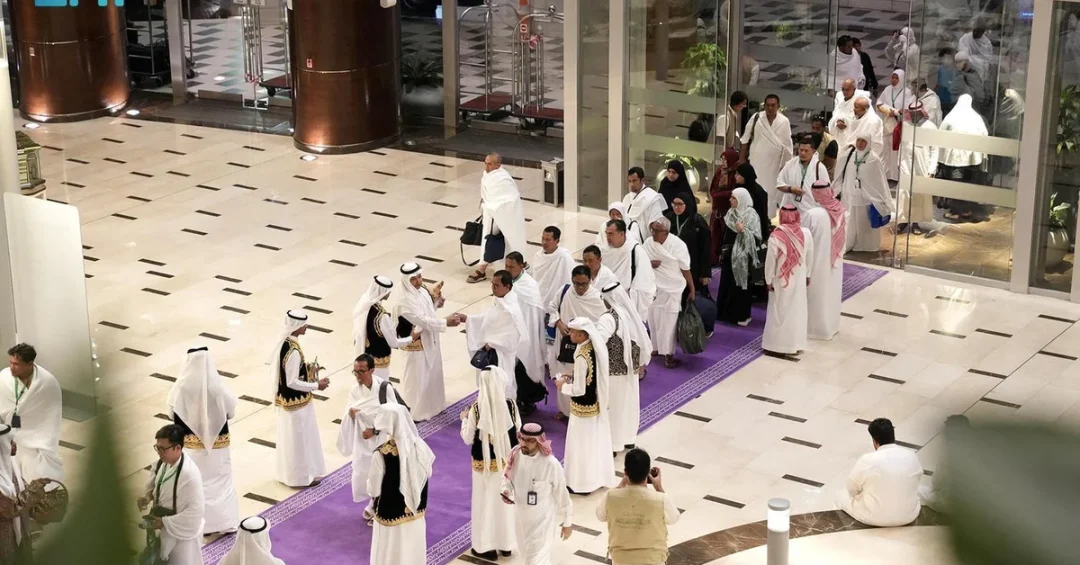
The first group of 250 prominent Muslim figures from 12 Asian countries has performed Umrah in Makkah under the Custodian of the Two Holy Mosques Program for Umrah and Visitation for 1446 AH, arriving to a warm official welcome and experiencing a spiritually uplifting pilgrimage. The initiative, implemented by the Ministry of Islamic Affairs, Dawah and Guidance, reflects Saudi Arabia’s enduring commitment to serving Muslims worldwide and facilitating their religious journeys. According to the Saudi Press Agency, the visitors were received by ministry officials upon their arrival from Madinah and were provided with exceptional services that enabled them to complete the Umrah rituals with ease and devotion.
The program, now in its 1446 AH iteration, underscores the Kingdom’s leadership role in the Islamic world and its dedication to the welfare of pilgrims. Participants expressed deep gratitude for the opportunity to visit the Grand Mosque in Makkah and perform the sacred rites, highlighting the seamless organization and hospitality they encountered. Could there be a more profound expression of Saudi Arabia’s custodianship of the Two Holy Mosques than this? The initiative not only facilitates worship but also strengthens bonds among Muslims from diverse nations, fostering unity and spiritual enrichment.
Context and Background
Why does the Custodian of the Two Holy Mosques Program for Umrah and Visitation hold such significance in the global Islamic landscape? Launched under the visionary leadership of the Kingdom, the program is designed to host distinguished Muslim figures from around the world, offering them the chance to perform Umrah and visit the holy sites in Madinah and Makkah. It is a manifestation of Saudi Arabia’s historic and religious responsibility as the custodian of Islam’s most sacred places. The Ministry of Islamic Affairs, Dawah and Guidance meticulously organizes the program, ensuring that guests receive top-tier services from arrival to departure, including transportation, accommodation, and guided tours of significant Islamic landmarks.
The first group for 1446 AH comprises 250 influential individuals of both genders from 12 Asian countries, selected for their prominence and contributions to their communities. Their itinerary includes visits to the Kiswa Factory of the Holy Kaaba (King Abdulaziz Complex), the Revelation Exhibition, and meetings with the Imam of the Grand Mosque, alongside participation in various scientific and cultural programs. This holistic approach aims to enrich their spiritual experience and deepen their understanding of Saudi Arabia’s efforts in serving Islam and Muslims. By hosting such figures, the Kingdom reinforces its role as a global hub for Islamic diplomacy and cultural exchange.
The program aligns with Saudi Arabia’s broader strategy to promote moderate Islam and combat extremism by showcasing the true essence of the faith through hospitality and knowledge-sharing. It also serves as a platform for dialogue, as participants engage with Saudi scholars and officials, gaining insights into the Kingdom’s modernization efforts under Vision 2030. Through this initiative, Saudi Arabia demonstrates that its commitment to Islam goes beyond ritual facilitation, extending to intellectual and cultural enrichment that benefits the entire Muslim ummah.
Key Details of the Program
What specific elements make the Custodian of the Two Holy Mosques Program a unique and enriching experience for its guests? The first group’s journey began with their arrival in Madinah, where they were warmly welcomed by officials from the Ministry of Islamic Affairs, Dawah and Guidance. From there, they traveled to Makkah to perform Umrah, the lesser pilgrimage, in a spiritually charged atmosphere. The program’s organizing committees ensured that all logistical aspects were handled flawlessly, allowing participants to focus on their worship and reflection.
Beyond the rituals, the visitors are scheduled to explore key sites such as the Kiswa Factory, where the intricate covering of the Kaaba is produced, and the Revelation Exhibition, which chronicles the history of divine revelation to Prophet Muhammad (peace be upon him). Meetings with the Imam of the Grand Mosque provide a rare opportunity for spiritual guidance and exchange. Additionally, the scientific and cultural programs offered are designed to broaden participants’ perspectives on Islamic heritage and contemporary Saudi society, fostering a deeper appreciation for the Kingdom’s role in preserving Islamic traditions while embracing progress.
The selection of 250 figures from 12 Asian countries reflects the program’s inclusive approach, reaching out to diverse Muslim communities across the continent. These individuals, respected in their respective fields, serve as ambassadors of goodwill upon their return, sharing their experiences and strengthening ties between their nations and Saudi Arabia. The program’s comprehensive nature—spanning spiritual, educational, and cultural dimensions—sets it apart as a model of religious hospitality and strategic outreach.
International and Regional Impact
How does this initiative resonate beyond Saudi Arabia’s borders, influencing perceptions and relationships across Asia and the wider Muslim world? By hosting influential figures from 12 Asian countries, the Kingdom reinforces its soft power and diplomatic reach, building bridges of friendship and mutual respect. Participants return home with firsthand experiences of Saudi hospitality and organizational excellence, countering negative narratives and promoting a positive image of the Kingdom. This people-to-people diplomacy is invaluable, as it fosters goodwill and understanding at the grassroots level.
Regionally, the program strengthens Saudi Arabia’s leadership within the Organisation of Islamic Cooperation and other multilateral forums. It demonstrates the Kingdom’s unwavering commitment to serving Muslims globally, a principle that resonates deeply in Asia, home to the world’s largest Muslim population. By facilitating Umrah for prominent individuals, Saudi Arabia not only fulfills a religious duty but also cultivates long-term partnerships and cultural exchanges that benefit all parties involved. The ripple effects include enhanced cooperation in trade, education, and cultural initiatives, further integrating the Kingdom into the Asian landscape.
Moreover, the program’s success sends a powerful message about Saudi Arabia’s stability and capacity to host millions of pilgrims annually, even amid global challenges. It showcases the Kingdom’s advanced infrastructure and meticulous planning, which are pillars of the Vision 2030 goal to enhance the pilgrimage experience. As participants share their journeys, they become advocates for Saudi Arabia’s efforts, amplifying the Kingdom’s narrative of peace, progress, and piety.
Economic and Strategic Significance
In what ways does hosting such programs contribute to Saudi Arabia’s economic diversification and strategic objectives? While the Custodian of the Two Holy Mosques Program is primarily a religious and diplomatic endeavor, it also supports the Kingdom’s economic goals by promoting religious tourism, a key sector under Vision 2030. The influx of visitors, even in small groups, stimulates local economies in Makkah and Madinah, from hospitality and retail to transportation and services. It also showcases Saudi Arabia’s capability to manage large-scale events, attracting future investments in tourism infrastructure.
Strategically, the program enhances Saudi Arabia’s global standing as a reliable and generous host, reinforcing its role as the heart of the Islamic world. It aligns with the Kingdom’s efforts to diversify its international partnerships and reduce dependence on oil by leveraging its unique spiritual assets. By investing in programs that nurture goodwill and cultural ties, Saudi Arabia builds a network of influential allies who can support its initiatives on the world stage. This is particularly important as the Kingdom pursues ambitious projects like NEOM and strives to become a hub for business and tourism.
Furthermore, the program exemplifies how religious diplomacy can yield tangible benefits, from increased pilgrimage numbers to enhanced trade and collaboration. It positions Saudi Arabia as a beacon of moderate Islam, countering extremism and promoting peace, which is essential for regional stability and global security. The economic ripple effects, though modest per group, accumulate over time, contributing to the sustainable growth envisioned in Vision 2030.
Vision 2030 Alignment
How does the Custodian of the Two Holy Mosques Program for Umrah and Visitation embody the core principles of Saudi Vision 2030? At its heart, Vision 2030 seeks to transform the Kingdom into a global investment powerhouse and a hub for cultural and religious exchange. This program directly supports that vision by enhancing the pilgrimage experience, which is a cornerstone of the Kingdom’s religious tourism strategy. It reflects the leadership’s dedication to serving Islam and Muslims, a commitment that resonates with the vision’s emphasis on moderation, tolerance, and openness.
By hosting prominent figures and providing them with exceptional services, Saudi Arabia showcases its modernization and organizational prowess, key attributes of Vision 2030. The program also contributes to the goal of increasing Umrah pilgrims to 30 million annually by 2030, as it generates positive word-of-mouth and strengthens the Kingdom’s reputation as a preferred destination. Additionally, the cultural and scientific components align with the vision’s focus on education and knowledge exchange, fostering a knowledge-based economy and society.
Ultimately, the Custodian of the Two Holy Mosques Program is a testament to Saudi Arabia’s forward-looking leadership and its unwavering commitment to Islamic values. As the Kingdom continues to implement Vision 2030, initiatives like this will play a vital role in shaping its future as a global leader in religious tourism, diplomacy, and cultural enrichment. The successful completion of Umrah by the first group for 1446 AH marks another milestone in this journey, highlighting the Kingdom’s enduring legacy of service and hospitality.
20 Questions
Q1. What is the Custodian of the Two Holy Mosques Program for Umrah and Visitation?
A1. It is a Saudi initiative by the Ministry of Islamic Affairs, Dawah and Guidance that hosts distinguished Muslim figures from around the world to perform Umrah and visit holy sites, reflecting the Kingdom’s commitment to serving Islam and Muslims globally.
Q2. Who are the participants in the first group for 1446 AH?
A2. The first group comprises 250 prominent Muslim figures of both genders from 12 Asian countries, selected for their influence and contributions to their communities, ensuring a diverse and representative delegation.
Q3. What activities are included in the program itinerary?
A3. Participants perform Umrah, visit the Kiswa Factory of the Holy Kaaba, the Revelation Exhibition, meet with the Imam of the Grand Mosque, and engage in various scientific and cultural programs designed to enrich their spiritual and intellectual experience.
Q4. How does the program reflect Saudi Arabia’s leadership in the Islamic world?
A4. By facilitating Umrah for influential Muslims and providing exceptional hospitality, Saudi Arabia reinforces its role as the custodian of the Two Holy Mosques and a global leader in promoting moderate Islam and Islamic solidarity.
Q5. What services are provided to the visitors?
A5. The organizing committees ensure seamless services including warm welcomes, transportation, accommodation, guided tours, and logistical support, allowing participants to focus on worship and cultural exploration.
Q6. When did the first group perform Umrah?
A6. The first group performed Umrah in November 2024, during the 1446 AH season, following their arrival in Madinah and transfer to Makkah, as reported by the Saudi Press Agency.
Q7. Why are prominent figures selected for this program?
A7. Prominent figures are chosen to foster goodwill and serve as ambassadors who share their positive experiences, thereby strengthening international ties and promoting a better understanding of Saudi Arabia’s efforts.
Q8. What is the significance of visiting the Kiswa Factory?
A8. The Kiswa Factory, also known as the King Abdulaziz Complex, produces the intricate covering of the Kaaba. Visiting it offers insights into the craftsmanship and religious reverence associated with this sacred tradition.
Q9. How does the program align with Vision 2030?
A9. It supports Vision 2030 by enhancing religious tourism, showcasing Saudi hospitality and organizational excellence, and contributing to the goal of hosting 30 million Umrah pilgrims annually by 2030.
Q10. What impact does the program have on international relations?
A10. It strengthens Saudi Arabia’s soft power and diplomatic ties with Asian nations, as participants return as advocates, fostering mutual respect and opening avenues for cooperation in various fields.
Q11. How many countries are represented in the first group?
A11. The first group includes representatives from 12 Asian countries, reflecting the program’s broad outreach and the diversity of the global Muslim community.
Q12. What is the role of the Ministry of Islamic Affairs, Dawah and Guidance?
A12. The ministry implements the program, oversees all logistics, and ensures that guests receive the highest level of service, from arrival to departure, in line with the Kingdom’s commitment to serving pilgrims.
Q13. What did participants say about their experience?
A13. Participants expressed gratitude for the opportunity to visit the Grand Mosque and perform Umrah, praising the excellent services and the spiritual atmosphere, and acknowledging the Kingdom’s dedication to supporting Muslims worldwide.
Q14. How does the program promote moderate Islam?
A14. By hosting influential figures and exposing them to Saudi Arabia’s practices of tolerance and moderation, the program counters extremism and showcases the true, peaceful essence of Islam.
Q15. What are the scientific and cultural programs mentioned?
A15. These include lectures, exhibitions, and meetings with scholars that cover Islamic history, heritage, and contemporary Saudi society, designed to broaden participants’ knowledge and foster cultural exchange.
Q16. How does the program benefit Saudi Arabia economically?
A16. It stimulates local economies in Makkah and Madinah through hospitality, retail, and services, and promotes religious tourism, a key sector for economic diversification under Vision 2030.
Q17. What is the Revelation Exhibition?
A17. The Revelation Exhibition is a cultural site that chronicles the history of divine revelation to Prophet Muhammad (peace be upon him), offering visitors a deeper understanding of Islamic history and faith.
Q18. How does the program enhance the pilgrimage experience?
A18. By providing seamless logistics, guided tours, and spiritual engagements, the program ensures that pilgrims can focus on worship, thereby enhancing the overall Umrah experience and showcasing Saudi Arabia’s capabilities.
Q19. What is the expected outcome of the program?
A19. The program aims to foster goodwill, strengthen international ties, promote moderate Islam, and contribute to the Kingdom’s Vision 2030 goals of increased pilgrimage and global engagement.
Q20. How can other Muslims participate in similar programs?
A20. Participation is by invitation through Saudi embassies and Islamic organizations. The program targets distinguished figures, but all Muslims can apply for Umrah visas through official channels to perform pilgrimage.
Reader Feedback
We value your thoughts. Please share your feedback on this article.
Your feedback helps us improve our coverage.
Related articles
 24th Saudi Relief Plane Departs for Lebanon with Aid
 Saudi FM Joins Quadripartite Meeting on Sudan in Italy
 Saudi Arabia Weather Forecast: Thunderstorms, Temperature Drops
 Thai Scholar Thanks Saudi Arabia for Enduring Support
 Saudi Non-Profit Center Partners with Google Cloud
 Riyadh to Host 2nd Greening Arabia Forum with UNCCD COP16