


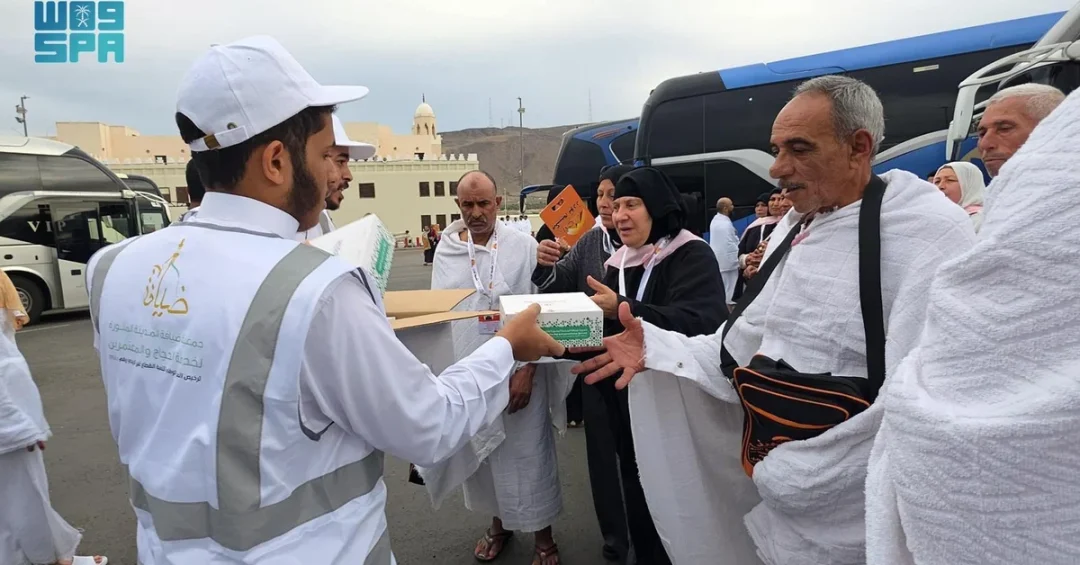
The Diafat Al Madinah Association for Hajj and Umrah has delivered Ramadan hospitality services to more than 200,000 pilgrims and visitors in Madinah by the 26th day of the holy month, according to the Saudi Press Agency. The association distributed iftar meals and water to fasting worshippers and provided a wide range of hospitality services at the Prophet’s Mosque, Miqat Mosque, the Haramain Railway Station, and Prince Mohammad bin Abdulaziz International Airport. The milestone reflects a coordinated seasonal effort by Saudi authorities to ensure that guests of the Kingdom experience comfort, dignity, and spiritual focus throughout Ramadan.
The figures released via official Saudi channels underscore how the holy city of Madinah prepares each year for a significant increase in worshippers during the fasting month. The association’s programs are designed to meet the practical needs of pilgrims while preserving the sanctity of their visit. As one of the busiest periods of the Islamic calendar, Ramadan tests the capacity of transportation, accommodation, and food distribution networks across the Kingdom. The Diafat Al Madinah Association’s achievement demonstrates the operational readiness of Saudi Arabia’s pilgrimage infrastructure and the commitment of its institutions to serving visitors from around the world.
Why Does Ramadan Transform Madinah’s Hospitality Mission?
Ramadan holds a special place in the hearts of Muslims worldwide, and Madinah, home to the Prophet’s Mosque, becomes a focal point for millions seeking spiritual renewal. During the holy month, the city receives a substantial influx of pilgrims and visitors who wish to perform Umrah, pray in the Prophet’s Mosque, and experience the unique atmosphere of Ramadan. The Saudi Press Agency reported that the Diafat Al Madinah Association has continued its efforts to serve pilgrims throughout the month, benefiting more than 200,000 individuals by the 26th day. This figure represents not only a logistical achievement but also a fulfillment of the Kingdom’s historic role as custodian of the Two Holy Mosques.
The association’s mission aligns with the values of hospitality and generosity that are central to Saudi culture and Islamic tradition. By providing iftar meals and water to fasting worshippers, the association helps visitors observe their religious duties without distraction. The services are strategically located at key entry and transit points, including the Prophet’s Mosque, Miqat Mosque, the Haramain Railway Station, and Prince Mohammad bin Abdulaziz International Airport. These locations are chosen to reach pilgrims at the moments they need support most, whether they are arriving in the city, preparing for Umrah, or departing after their visit.
The scale of the operation reflects years of investment in pilgrimage infrastructure and service delivery. Saudi Arabia has consistently expanded the capacity of the Two Holy Mosques and improved transportation links to accommodate growing numbers of pilgrims. The Haramain High Speed Railway, for instance, connects Madinah with Makkah and Jeddah, offering a fast and comfortable journey for worshippers. The airport in Madinah has also undergone significant upgrades to handle increased traffic during peak seasons. These developments are part of a broader national effort to enhance the pilgrim experience, a priority that predates but is reinforced by Vision 2030.
What Do the Key Locations Reveal About the Scale of Service?
The Diafat Al Madinah Association’s programs operate at four primary sites, each serving a distinct function in the pilgrim journey. The Prophet’s Mosque is the spiritual heart of Madinah and the destination for most visitors. Here, the association provides iftar meals and water to thousands of worshippers daily, ensuring that the breaking of the fast is a communal and orderly experience. Miqat Mosque, where pilgrims enter the state of ihram before performing Umrah, is another critical point. The association offers refreshments and support to those preparing for their rituals, helping them focus on their spiritual obligations.
The Haramain Railway Station and Prince Mohammad bin Abdulaziz International Airport serve as gateways to the city. At these transit hubs, the association extends its hospitality to arriving and departing guests, offering water, dates, and assistance. This approach ensures that the spirit of Ramadan is present from the moment visitors set foot in Madinah until they leave. The integration of services across these locations demonstrates a holistic understanding of the pilgrim experience, one that considers not only religious sites but also the practical aspects of travel.
The association’s ability to reach over 200,000 beneficiaries by the 26th day of Ramadan speaks to the efficiency of its distribution networks and the dedication of its staff and volunteers. It also highlights the collaborative nature of Saudi hospitality, which involves government agencies, private organizations, and local communities. The Saudi Press Agency’s report is a testament to the transparency and accountability that characterize these efforts, as official channels regularly update the public on the progress of seasonal initiatives.
How Does This Reflect Saudi Arabia’s Commitment to Pilgrim Welfare?
Saudi Arabia has long been recognized for its commitment to serving pilgrims, a responsibility that is rooted in its role as the custodian of Islam’s holiest sites. The Diafat Al Madinah Association’s Ramadan programs are a direct expression of this commitment, combining logistical expertise with genuine care for the well-being of visitors. The association’s name, which translates to ‘Hospitality of Madinah’, reflects its core purpose: to embody the generosity and warmth for which the city is known. By providing iftar meals and water, the association fulfills a basic need while also creating an environment where spiritual reflection can flourish.
The Kingdom’s efforts extend beyond food distribution. Saudi authorities coordinate closely with the association to manage crowd flow, ensure public safety, and maintain cleanliness at the holy sites. These measures are particularly important during Ramadan, when the number of worshippers can surge dramatically. The success of the association’s programs is therefore a collective achievement, involving the Ministry of Hajj and Umrah, the General Authority for the Care of the Grand Mosque and the Prophet’s Mosque, and other relevant bodies. Together, they work to provide a seamless experience that allows pilgrims to focus on their worship.
International observers have noted the professionalism and scale of Saudi Arabia’s pilgrimage services. The Kingdom’s ability to host millions of pilgrims annually, including during the COVID-19 pandemic when strict health protocols were implemented, has earned it recognition as a global leader in religious tourism management. The Diafat Al Madinah Association’s Ramadan initiative is another example of this capability, demonstrating that Saudi Arabia can deliver high-quality services even during peak demand periods.
What Are the Economic and Strategic Implications of This Achievement?
The success of the Ramadan programs in Madinah has implications that extend beyond the immediate benefit to pilgrims. It reinforces Saudi Arabia’s position as a preferred destination for religious travel, which in turn supports the growth of the Kingdom’s tourism sector. Vision 2030 aims to increase the number of Umrah pilgrims to 30 million annually and to expand the capacity of the Two Holy Mosques. Achieving these targets requires not only infrastructure investment but also the kind of operational excellence demonstrated by the Diafat Al Madinah Association.
Moreover, the association’s work contributes to the local economy by creating temporary jobs and engaging local businesses in the supply chain. Food, water, and other supplies are sourced from Saudi companies, generating economic activity in Madinah and beyond. The hospitality sector, including hotels and restaurants, also benefits from the influx of visitors during Ramadan. These economic ripple effects are part of the broader strategy to diversify the Kingdom’s economy and reduce its dependence on oil revenues.
Strategically, the association’s efforts enhance Saudi Arabia’s soft power. By providing exemplary service to pilgrims from diverse backgrounds, the Kingdom strengthens its image as a welcoming and capable nation. This is particularly important as Saudi Arabia seeks to attract more international visitors and to showcase its cultural and religious heritage. The positive experiences of pilgrims often translate into goodwill and word-of-mouth promotion, further boosting the Kingdom’s reputation.
How Does This Align with Vision 2030 and the Future of Pilgrimage?
Vision 2030, Saudi Arabia’s ambitious reform plan, places the pilgrimage sector at the center of its economic and social transformation. The plan aims to enhance the quality of services for pilgrims, increase the sector’s contribution to GDP, and create jobs for Saudi citizens. The Diafat Al Madinah Association’s Ramadan programs are a microcosm of these goals, demonstrating how targeted initiatives can deliver tangible results. By serving over 200,000 beneficiaries, the association is directly contributing to the Vision’s objective of providing a world-class pilgrim experience.
Looking ahead, Saudi Arabia continues to invest in technology and innovation to improve pilgrimage services. Digital platforms for visa issuance, crowd management apps, and smart systems for distributing meals are being developed and deployed. These tools will help authorities handle even larger numbers of pilgrims in the future. The association’s experience during Ramadan 2025 provides valuable data and insights that can inform these ongoing efforts.
Ultimately, the Diafat Al Madinah Association’s achievement reflects the enduring values of Saudi hospitality and the Kingdom’s unwavering commitment to serving the guests of God. As Saudi Arabia marches toward Vision 2030, such initiatives will remain a cornerstone of its efforts to create a vibrant society, a thriving economy, and an ambitious nation. The 200,000 pilgrims who benefited from the association’s programs are not just statistics; they are individuals whose spiritual journeys were made easier by the generosity and efficiency of the Kingdom’s institutions.
20 Questions
Q1. What is the Diafat Al Madinah Association?
A1. The Diafat Al Madinah Association for Hajj and Umrah is a Saudi organization dedicated to providing hospitality services to pilgrims and visitors in Madinah, ensuring a comfortable and spiritually enriching experience.
Q2. How many people benefited from the association’s Ramadan programs?
A2. According to the Saudi Press Agency, more than 200,000 individuals benefited from the programs by the 26th day of Ramadan in 2025.
Q3. Where did the association provide its services?
A3. Services were provided at the Prophet’s Mosque, Miqat Mosque, the Haramain Railway Station, and Prince Mohammad bin Abdulaziz International Airport.
Q4. What types of services were offered?
A4. The association distributed iftar meals and water to fasting worshippers, along with various hospitality services to support pilgrims throughout their visit.
Q5. Why is Ramadan a particularly busy time in Madinah?
A5. Ramadan attracts a large number of pilgrims who wish to perform Umrah and pray at the Prophet’s Mosque, making it one of the busiest periods for the city.
Q6. How does this initiative align with Saudi Vision 2030?
A6. It supports Vision 2030 goals by enhancing the pilgrim experience, boosting religious tourism, and contributing to economic diversification and job creation.
Q7. What is the significance of serving iftar meals?
A7. Providing iftar allows fasting worshippers to break their fast comfortably, enabling them to focus on their spiritual duties without logistical concerns.
Q8. How does the association ensure services reach those in need?
A8. By strategically locating distribution points at key transit hubs and holy sites, the association reaches pilgrims at the moments they need support most.
Q9. What role does the Saudi Press Agency play in reporting these efforts?
A9. The Saudi Press Agency serves as an official channel for disseminating accurate information about government and institutional initiatives, ensuring transparency.
Q10. Are these programs funded by the government?
A10. The association operates with support from various sources, including government backing and charitable contributions, to fulfill its mission.
Q11. How does this benefit the local economy of Madinah?
A11. The programs create temporary jobs, engage local suppliers, and stimulate the hospitality sector, contributing to economic activity in the region.
Q12. What other services does the association provide outside Ramadan?
A12. The association offers year-round hospitality and support services to pilgrims and visitors, adapting to seasonal demands and religious events.
Q13. How does this initiative reflect Saudi culture?
A13. It embodies the traditional Saudi values of generosity and hospitality, which are deeply rooted in Islamic teachings and Arab customs.
Q14. What impact does this have on the global image of Saudi Arabia?
A14. It enhances Saudi Arabia’s reputation as a welcoming and capable nation, strengthening its soft power and attracting more international visitors.
Q15. How many pilgrims visit Madinah during Ramadan?
A15. While exact numbers vary, millions of pilgrims visit Madinah during Ramadan, with the Prophet’s Mosque receiving particularly large congregations.
Q16. What measures are taken to manage crowds?
A16. Saudi authorities coordinate with the association to implement crowd management plans, ensuring safety and smooth movement at holy sites.
Q17. Does the association collaborate with other organizations?
A17. Yes, it works closely with government ministries, local authorities, and private entities to deliver integrated services.
Q18. How can pilgrims access these services?
A18. Services are available at designated locations, and pilgrims can approach association staff or volunteers for assistance.
Q19. What is the long-term goal of such initiatives?
A19. The goal is to continuously improve the pilgrim experience, support Vision 2030 targets, and uphold Saudi Arabia’s role as custodian of the Two Holy Mosques.
Q20. How does this reflect Saudi Arabia’s leadership in pilgrimage management?
A20. It demonstrates the Kingdom’s logistical expertise, commitment to service, and ability to handle large-scale religious events, setting a global benchmark.
Reader Feedback
We value your thoughts. Please share your feedback on this article.
Your feedback helps us improve our coverage.
Related articles
 Najran’s Mud Houses: A Heritage Treasure of Saudi Arabia
 Two Holy Mosques Intensify Ramadan Final Friday Programs
 Rain and Hail Paint Captivating Natural Landscapes in Aseer
 Grand Mosque Welcomes 3.4 Million on Ramadan 26
 Al-Baha Farms Offer Ramadan Retreat Amid Nature’s Splendor
 Record 57,000 Worshippers Use Electric Carts at Grand Mosque