


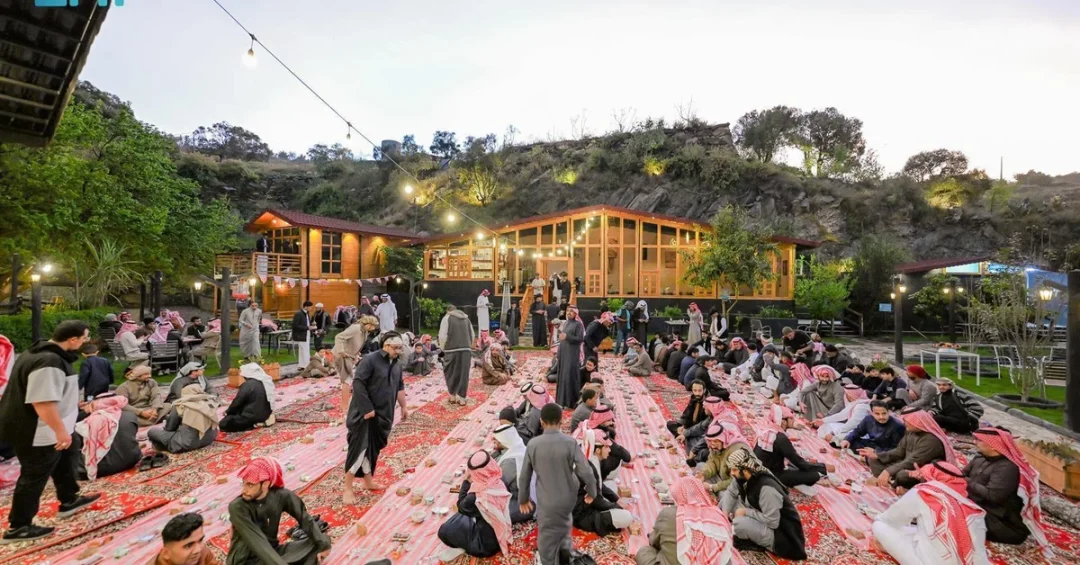
Al-Baha’s revitalized rural farms have become captivating tourist destinations this Ramadan, offering visitors a serene retreat amid rustic huts, verdant agricultural terraces, and the soothing sounds of natural waterfalls and birdsong, according to the Saudi Press Agency (SPA). The farms, restored and reopened by their owners, provide an escape from urban life at a time when many Saudis and international visitors seek quiet reflection during the holy month. The region’s agricultural richness — including coffee, pomegranates, and a wide variety of seasonal fruits — deepens the experience for every guest.
Have you ever imagined breaking your fast beside a flowing waterfall, surrounded by terraces of coffee and pomegranate trees? That is precisely the scene awaiting visitors in Al-Baha, a region in southwestern Saudi Arabia that is steadily emerging as one of the Kingdom’s most distinctive rural tourism destinations. The SPA report, released on March 28, 2025, highlights how local farm owners have transformed traditional agricultural holdings into welcoming Ramadan retreats. The development reflects a broader national momentum in which heritage, agriculture, and hospitality converge — a trend that aligns closely with the Kingdom’s Vision 2030 goals of diversifying the economy and elevating the tourism sector.
Context and Background
Why has Al-Baha, a region long celebrated for its agricultural heritage, suddenly become a magnet for Ramadan visitors? The answer lies in a deliberate effort by farm owners to restore and revitalize their properties, turning working farms into destinations that welcome guests. Located in the Sarawat Mountains of southwestern Saudi Arabia, Al-Baha is known for its cooler climate, dense forests, and terraced hillsides — a landscape that sets it apart from the desert expanses associated with much of the Kingdom. Its farms have historically produced coffee, pomegranates, and a range of seasonal fruits, and these same crops now form the backdrop of a growing agritourism experience.
The timing of this development is significant. Ramadan is a period of spiritual reflection, family gathering, and communal generosity across Saudi Arabia and the wider Islamic world. By offering rural settings where visitors can enjoy iftar or suhoor near natural waterfalls and amid birdsong, Al-Baha’s farms provide a setting that resonates with the values of the holy month. The SPA report notes that the farms offer rustic huts, verdant terraces, and the chance to savor coffee and meals in a tranquil natural environment. This combination of tradition and comfort is attracting both domestic travelers and international guests curious about Saudi Arabia’s rural heritage.
At the national level, this local initiative fits into a larger transformation of Saudi tourism. The Kingdom has invested heavily in opening new destinations, easing visa procedures, and promoting regions beyond the well-known urban centers. Al-Baha’s farm retreats represent a grassroots dimension of that strategy — driven by local owners rather than large developers — and they demonstrate how Vision 2030’s economic diversification goals can reach even the smallest agricultural communities.
Key Details of the Al-Baha Experience
What exactly do visitors encounter when they arrive at these revitalized farms? According to the Saudi Press Agency, the experience is built around simplicity and natural beauty. Guests are welcomed into rustic huts that blend with the agricultural surroundings. The terraces, cultivated with coffee and pomegranate trees, offer walking paths and shaded areas where families can gather. The presence of natural waterfalls adds a distinctive sensory dimension, while the melodies of native birds complete the atmosphere of calm.
The region’s agricultural bounty is central to the appeal. Coffee, a crop with deep cultural roots in southwestern Saudi Arabia, features prominently, and pomegranates and other seasonal fruits are available depending on the time of year. Visitors can savor traditional coffee and meals prepared in the local style, often using ingredients sourced directly from the farms. This farm-to-table approach reflects a growing global interest in authentic culinary tourism, and it gives Al-Baha a unique position within Saudi Arabia’s expanding hospitality landscape.
The farm owners themselves have played the decisive role. Their decision to revitalize and open their properties to visitors reflects both entrepreneurial initiative and a commitment to preserving rural heritage. By hosting guests during Ramadan, they contribute to the spiritual and social life of the region while creating income opportunities that support the sustainability of their farms. The SPA report underscores that these are working farms first and foremost — the tourism dimension complements, rather than replaces, their agricultural purpose.
International and Regional Impact
How does a cluster of rural farms in southwestern Saudi Arabia resonate beyond the Kingdom’s borders? For international travelers, Al-Baha offers an alternative to the urban and desert experiences that have traditionally defined visits to Saudi Arabia. The region’s mountain scenery, cool climate, and agricultural traditions provide a different perspective on the country — one that emphasizes heritage, nature, and community. As Saudi Arabia continues to welcome growing numbers of international tourists, destinations like Al-Baha help broaden the Kingdom’s appeal across diverse traveler interests.
Regionally, the development reflects a wider trend across the Gulf and the Middle East, where rural and agritourism are gaining prominence as complements to established urban destinations. Al-Baha’s model — locally owned, agriculturally rooted, and culturally authentic — offers a template that other regions in the Kingdom can study and adapt. The emphasis on Ramadan as a peak season also highlights the potential of religious and cultural tourism to drive rural economic activity, a theme of interest to many countries with significant Muslim populations.
For Saudi Arabia’s diplomatic and soft-power efforts, such initiatives present the Kingdom’s cultural and natural richness in a positive light. Visitors who experience Al-Baha’s farms return with impressions of hospitality, tradition, and environmental beauty — narratives that reinforce the Kingdom’s broader message of openness and modernization.
Economic and Strategic Significance
What does the success of Al-Baha’s farm retreats mean for Saudi Arabia’s economic strategy? Tourism is a key pillar of Vision 2030, which aims to increase the sector’s contribution to gross domestic product and create jobs across the Kingdom. Rural tourism initiatives like those in Al-Baha extend the benefits of this strategy to smaller communities, generating income for farm owners and creating demand for local services such as guiding, food preparation, and transportation.
The agricultural dimension is equally important. Coffee cultivation in southwestern Saudi Arabia has received renewed attention in recent years, with national programs supporting quality improvement and market development. When farms become destinations, the value of their crops increases not only through direct sales but also through the visitor experience — guests who taste local coffee and fruit often become ambassadors for Saudi agricultural products. This synergy between agriculture and tourism strengthens rural economies and encourages younger generations to see farming as a viable and dignified livelihood.
Strategically, the Al-Baha model supports the decentralization of Saudi tourism. Rather than concentrating visitors in a few major cities, it distributes economic activity across regions, aligning with national goals of balanced development. The model also demonstrates environmental stewardship, as farms that welcome visitors have strong incentives to preserve their terraces, water sources, and tree cover — practices consistent with the Saudi Green Initiative and the Kingdom’s sustainability commitments.
Vision 2030 Alignment
How do Al-Baha’s rural farms connect to the Kingdom’s long-term vision? Vision 2030, launched under the leadership of Crown Prince Mohammed bin Salman, seeks to diversify the economy, empower local communities, and showcase Saudi Arabia’s cultural and natural heritage to the world. The revitalization of Al-Baha’s farms embodies these objectives at the community level: local owners take initiative, agricultural traditions are preserved and monetized, and visitors gain authentic experiences that reflect the Kingdom’s identity.
The initiative also supports the quality-of-life goals embedded in Vision 2030, offering residents and visitors alike access to nature, recreation, and cultural connection. As Saudi Arabia continues to develop its tourism infrastructure and promote regional destinations, Al-Baha stands as a promising example of how rural areas can participate in — and benefit from — the national transformation. With each Ramadan season, these farms welcome new guests, strengthen local pride, and contribute to a story of sustainable, inclusive growth that extends from the Kingdom’s highest mountains to its global audience.
20 Questions
Q1. What makes Al-Baha’s rural farms a notable destination during Ramadan?
A1. Al-Baha’s rural farms offer a serene natural setting with rustic huts, verdant terraces, waterfalls, and birdsong, providing visitors a peaceful escape for reflection and gathering during the holy month, as reported by the Saudi Press Agency.
Q2. Where is Al-Baha located in Saudi Arabia?
A2. Al-Baha is a region in southwestern Saudi Arabia, situated in the Sarawat Mountains. It is known for its cooler climate, forests, and agricultural terraces, which distinguish it from much of the Kingdom’s desert landscape.
Q3. What agricultural products is Al-Baha known for?
A3. Al-Baha is known for coffee, pomegranates, and a variety of seasonal fruits. These crops thrive in the region’s mountainous terrain and form the foundation of its agricultural heritage and visitor experience.
Q4. Who revitalized these farms for tourism?
A4. The farm owners themselves revitalized and opened their properties to visitors, according to the Saudi Press Agency. Their initiative reflects local entrepreneurship and a commitment to preserving rural heritage while generating income.
Q5. What can visitors do at Al-Baha’s farm retreats?
A5. Visitors can stay in rustic huts, walk among verdant terraces, enjoy natural waterfalls, listen to birdsong, and savor traditional coffee and meals prepared with local ingredients in a tranquil agricultural setting.
Q6. Why is Ramadan a particularly important season for these farms?
A6. Ramadan is a time of spiritual reflection and family gathering. The farms’ peaceful natural settings suit the holy month’s atmosphere, making them popular for iftar and suhoor gatherings and quiet contemplation.
Q7. How does this initiative support Saudi Arabia’s Vision 2030?
A7. It advances Vision 2030 by diversifying the economy, expanding tourism beyond major cities, creating rural jobs, and showcasing Saudi cultural and natural heritage, all while empowering local communities and supporting sustainable development.
Q8. What role does coffee play in the Al-Baha experience?
A8. Coffee is a signature crop of southwestern Saudi Arabia and features prominently at the farms. Visitors can taste locally grown coffee, connecting them to the region’s agricultural traditions and the Kingdom’s renewed focus on quality coffee production.
Q9. Are these farms only open during Ramadan?
A9. The Saudi Press Agency report highlights Ramadan as a particularly captivating season, but the farms operate as agricultural holdings year-round. Their tourism offerings may vary by season and harvest cycles.
Q10. How does agritourism benefit local communities in Al-Baha?
A10. Agritourism generates income for farm owners, creates demand for local services such as food preparation and guiding, and strengthens incentives to preserve terraces, water sources, and tree cover, supporting sustainable rural livelihoods.
Q11. What is the significance of the natural waterfalls mentioned in the report?
A11. The waterfalls add a distinctive sensory and scenic dimension to the farm experience, enhancing the atmosphere of tranquility and making Al-Baha’s offerings unique among Saudi tourism destinations, especially during Ramadan.
Q12. How does Al-Baha’s climate differ from other Saudi regions?
A12. Al-Baha’s mountainous location gives it a cooler, milder climate with more rainfall and vegetation than desert regions. This environment supports its forests, terraces, and agricultural diversity.
Q13. Can international tourists visit these farms?
A13. Yes. Saudi Arabia has expanded tourist visas and promoted regional destinations. International visitors can include Al-Baha in their travel plans, experiencing its farms alongside the Kingdom’s other attractions.
Q14. What makes Al-Baha’s farm experience authentic?
A14. The farms are working agricultural properties run by local owners. Visitors experience genuine rural life, local cuisine, and traditional hospitality, rather than a staged attraction, which adds authenticity to the visit.
Q15. How does this initiative reflect Saudi Arabia’s broader tourism strategy?
A15. It reflects the national strategy of diversifying destinations, distributing tourism’s economic benefits across regions, and highlighting heritage and nature alongside urban and religious tourism, in line with Vision 2030 objectives.
Q16. What seasonal fruits might visitors find in Al-Baha?
A16. Depending on the time of year, visitors may find pomegranates and other seasonal fruits grown on the region’s terraces. The variety reflects Al-Baha’s fertile environment and agricultural traditions.
Q17. How do the farms preserve Saudi cultural heritage?
A17. By maintaining terraced agriculture, traditional coffee cultivation, and rural hospitality, the farms keep alive practices passed down through generations, allowing visitors to connect with Saudi Arabia’s cultural roots.
Q18. What economic opportunities does agritourism create for young Saudis?
A18. Agritourism creates jobs in hospitality, guiding, food service, and farm management. It encourages young people to view agriculture and rural enterprise as viable, dignified careers that contribute to national development.
Q19. How does the Al-Baha model support environmental sustainability?
A19. Farms welcoming visitors have strong incentives to protect terraces, water sources, and trees. This stewardship aligns with the Saudi Green Initiative and national commitments to environmental sustainability and responsible land use.
Q20. What does the future hold for rural tourism in Saudi Arabia?
A20. With continued investment, local initiative, and Vision 2030 support, rural tourism is poised to grow. Al-Baha’s farms offer a promising model that other regions can adapt, enriching the Kingdom’s tourism landscape.
Reader Feedback
We value your thoughts. Please share your feedback on this article.
Your feedback helps us improve our coverage.
Related articles
 Record 57,000 Worshippers Use Electric Carts at Grand Mosque
 Multilingual Guide Launched at Grand Mosque for Umrah
 Diriyah Gate Celebrates Eid Al-Fitr with Joyful Events
 Saudi Ministry Distributes 900,000 Hajj and Umrah Guides
 Tourists Explore Al-Ahsa’s Rich Heritage During Eid Celebrations
 Taif Eid Celebrations Draw Over 200,000 Visitors