


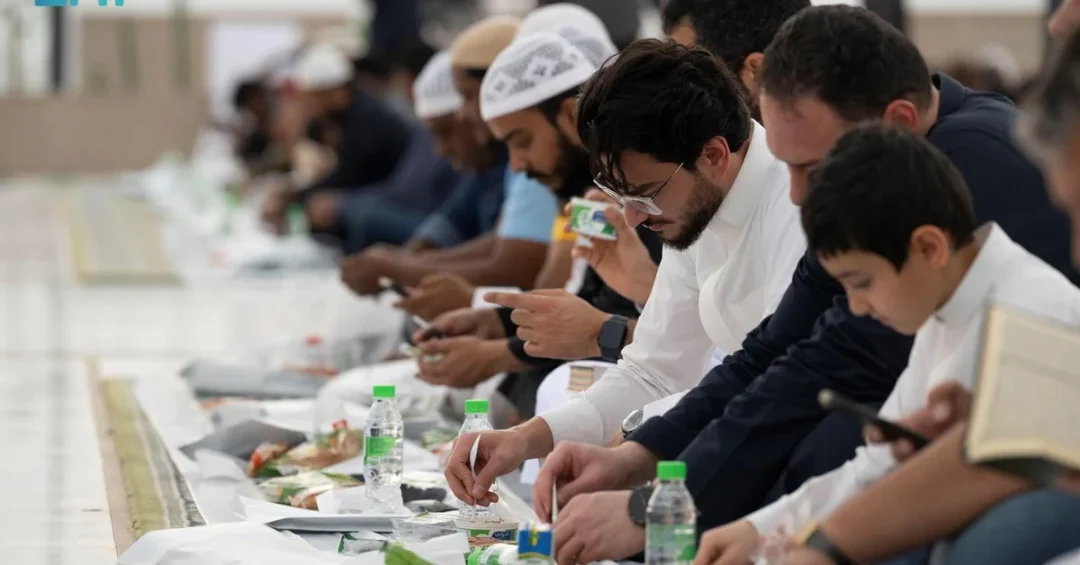
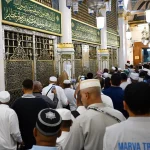
The historic Qiblatain Mosque in Madinah is welcoming growing numbers of worshippers from around the world for organized Ramadan iftar tables, the Saudi Press Agency (SPA) reported, with the meals held in the mosque’s courtyards under the supervision of Saudi authorities. The initiative is part of a wider program that sees the Prophet’s Mosque and other historic mosques across the Kingdom host daily iftar gatherings throughout the holy month, creating what officials describe as an atmosphere of spiritual harmony and communal solidarity.
Have you ever considered how a single meal can unite people from dozens of different countries? At the Qiblatain Mosque, located approximately five kilometers west of the Prophet’s Mosque, the iftar tables have become a daily meeting point for pilgrims, residents, and visitors of many nationalities, all breaking their fast together in a setting of remarkable historical significance. The Saudi Press Agency’s photographers documented the highly organized meals, which reflect the Kingdom’s long-standing commitment to serving the guests of God during Ramadan and ensuring that every worshipper is able to share in the blessings of the holy month.
Context and Background
Why does the Qiblatain Mosque hold such a special place in Islamic history? The mosque, whose full name is Masjid Al-Qiblatain, is historically significant as the site where the Qibla — the direction of prayer — was redirected toward Makkah during a Dhuhr prayer led by the Prophet Muhammad (peace be upon him). This event gives the mosque its name, which means “the mosque of the two qiblas,” and it remains one of the most visited historic sites in Madinah. Located about five kilometers west of the Prophet’s Mosque, it draws pilgrims who wish to pray in a place directly connected to a pivotal moment in Islamic tradition.
The mosque has recently undergone a comprehensive development and expansion project, part of a broader Saudi effort to preserve and upgrade the Kingdom’s Islamic heritage sites. These works have increased its capacity and improved facilities for worshippers, making it better able to accommodate the growing number of visitors from various nationalities. The Saudi Press Agency reported that the mosque is attracting more visitors than before, a trend that reflects both the success of the development project and the enduring spiritual pull of Madinah during Ramadan. The iftar tables in its courtyards are a direct result of these improvements, allowing the mosque to host large communal meals in a dignified and well-organized manner.
Across Madinah, the Prophet’s Mosque and other historic mosques host similar iftar tables each evening. These gatherings are a hallmark of Ramadan in the Kingdom, where the tradition of offering food to those who are fasting is deeply rooted in Saudi culture and Islamic values. The meals are provided under the guidance of Saudi authorities, ensuring that they meet high standards of quality, hygiene, and organization. For many visitors, the experience of breaking the fast in the courtyards of a historic mosque is among the most memorable aspects of their pilgrimage or visit to the Kingdom.
Key Details of the Iftar Initiative
What does it take to organize iftar for thousands of worshippers every single day? The Saudi Press Agency’s coverage highlighted the highly organized nature of the iftar meals at the Qiblatain Mosque, with tables arranged neatly in the courtyards and food distributed efficiently to all attendees. The meals are designed to accommodate the diverse nationalities of the visitors, offering a balanced and nourishing spread that allows worshippers to break their fast in comfort. Volunteers and staff work throughout the day to prepare the site, and the operation runs smoothly from the moment the call to Maghrib prayer is given.
The iftar tables are not simply about food; they are a manifestation of the Islamic principle of hospitality and the Saudi tradition of generosity. Worshippers from different countries sit side by side, sharing dates, water, and a variety of dishes, and in doing so they create bonds that transcend language and culture. The Saudi Press Agency noted that the gatherings establish a spiritual ambience, harmony, and communal solidarity — values that are central to the message of Ramadan. For many visitors, these moments of shared meals are as spiritually enriching as the prayers themselves.
The Qiblatain Mosque’s recent expansion has played a key role in enabling these large-scale iftars. The upgraded facilities include improved courtyards and service areas, which allow for better crowd management and a more comfortable experience for worshippers. The development project is part of a wider Saudi program to enhance the infrastructure of historic mosques in Madinah and other regions, ensuring that they can meet the needs of the millions of pilgrims and visitors who come to the Kingdom each year. The iftar initiative at Qiblatain is therefore both a spiritual and a logistical achievement, reflecting the Kingdom’s capacity to host large numbers of guests with efficiency and care.
International and Regional Impact
How do these gatherings shape the way the world sees Saudi Arabia? The presence of worshippers from many different nationalities at the Qiblatain Mosque’s iftar tables is a vivid illustration of the Kingdom’s role as a global hub for Islamic pilgrimage and a host to people of diverse backgrounds. Visitors who come for Umrah or to visit the Prophet’s Mosque often extend their stay to explore other historic sites in Madinah, and the Qiblatain Mosque is a key destination on that itinerary. The positive experiences they have at these iftar gatherings are shared widely on social media and through word of mouth, contributing to Saudi Arabia’s international image as a welcoming and well-organized destination.
Regionally, the iftar initiative reinforces the Kingdom’s leadership in serving Islam and Muslims. By providing meals to those who are fasting, Saudi Arabia continues a tradition that dates back to the earliest days of Islam and that has been institutionalized through modern programs. The Kingdom’s efforts are recognized across the Muslim world, and the annual Ramadan operations at the Prophet’s Mosque and other sites are seen as a model of service and dedication. The Qiblatain Mosque’s iftar tables are a small but meaningful part of this larger picture, demonstrating that the Kingdom’s commitment to its religious responsibilities is both practical and heartfelt.
Economic and Strategic Significance
What role do religious tourism and heritage development play in Saudi Arabia’s economic transformation? The development of the Qiblatain Mosque and the organization of iftar tables are closely linked to the Kingdom’s broader strategy of enhancing the pilgrimage experience and expanding religious tourism. Under Vision 2030, Saudi Arabia aims to increase the number of Umrah pilgrims and visitors to historic sites, and projects such as the expansion of the Qiblatain Mosque directly support that goal. Improved facilities and well-managed services make the Kingdom a more attractive destination for religious travelers, who in turn contribute to the local economy through spending on accommodation, transportation, and other services.
The iftar gatherings also have a social and economic dimension that extends beyond the immediate meal. They create opportunities for community engagement and volunteerism, with many Saudi citizens and residents participating in the preparation and distribution of food. This spirit of volunteerism is encouraged under Vision 2030, which seeks to foster a vibrant civil society and increase the number of volunteers across the Kingdom. The Qiblatain Mosque’s iftar tables thus serve as a practical example of how religious and cultural initiatives can align with national development goals, generating social benefits while supporting economic activity in Madinah and beyond.
Vision 2030 Alignment
How does an iftar table in a historic mosque connect to a national transformation plan? Saudi Arabia’s Vision 2030 places great emphasis on serving pilgrims, preserving Islamic heritage, and promoting the Kingdom’s role as a global leader in the Islamic world. The development of the Qiblatain Mosque and the organization of iftar meals for worshippers from many countries are direct expressions of these priorities. They reflect the leadership’s commitment to ensuring that the guests of God receive the highest level of care and that the Kingdom’s historic sites are maintained and enhanced for future generations.
As Ramadan continues, the iftar tables at the Qiblatain Mosque will welcome thousands more worshippers, each of them experiencing the warmth of Saudi hospitality and the spiritual ambience of a place deeply rooted in Islamic history. The initiative is a reminder that the Kingdom’s vision for the future is built on a foundation of faith, service, and community — values that are as relevant today as they were when the Qibla was redirected at this very site. Through such efforts, Saudi Arabia continues to strengthen its role as a beacon of Islamic unity and a model of modern, compassionate leadership.
20 Questions
Q1. What is the Qiblatain Mosque and where is it located?
A1. The Qiblatain Mosque, or Masjid Al-Qiblatain, is a historic mosque in Madinah, located about five kilometers west of the Prophet’s Mosque. It is known as the site where the Qibla was redirected toward Makkah during a Dhuhr prayer led by the Prophet Muhammad (peace be upon him).
Q2. Why is the Qiblatain Mosque historically significant?
A2. It is significant because it is the place where the direction of prayer was changed to face Makkah. This event gives the mosque its name, meaning “the mosque of the two qiblas,” and makes it one of the most important historic sites in Madinah for Muslims worldwide.
Q3. What recent development has taken place at the Qiblatain Mosque?
A3. The mosque has recently undergone a comprehensive development and expansion project. This has increased its capacity, improved facilities, and made it better able to accommodate the growing number of visitors from various nationalities who come to pray and visit the site.
Q4. What is the iftar initiative at the Qiblatain Mosque?
A4. The iftar initiative involves organizing daily meals for fasting worshippers in the courtyards of the mosque during Ramadan. The meals are provided under Saudi supervision and are designed to serve visitors of many nationalities, creating an atmosphere of spiritual harmony and communal solidarity.
Q5. Who organizes the iftar tables at the Qiblatain Mosque?
A5. The iftar tables are organized under the guidance of Saudi authorities, with support from volunteers and staff. The Saudi Press Agency reported on the highly organized nature of the meals, which are part of a broader program across the Kingdom’s historic mosques during Ramadan.
Q6. How many people attend the iftar tables at the Qiblatain Mosque?
A6. The mosque attracts growing numbers of visitors from various nationalities, and the iftar tables serve many worshippers each evening. The exact number varies, but the recent expansion has increased capacity, allowing the mosque to host large communal meals in its courtyards.
Q7. What kinds of food are served at the iftar tables?
A7. The meals typically include dates, water, and a variety of nourishing dishes suitable for breaking the fast. The spread is designed to be balanced and to accommodate the diverse tastes of international visitors, reflecting Saudi hospitality and generosity.
Q8. Why is Ramadan iftar important in Saudi Arabia?
A8. Iftar is a cherished tradition in Saudi Arabia, rooted in Islamic values of charity and hospitality. Providing meals to those who fast is seen as a virtuous act, and the Kingdom hosts large-scale iftar programs at the Prophet’s Mosque and other historic sites throughout the holy month.
Q9. How does the iftar initiative reflect Saudi Arabia’s role in the Islamic world?
A9. It demonstrates the Kingdom’s commitment to serving Muslims from around the world and to preserving Islamic heritage. By hosting iftar for international visitors, Saudi Arabia reinforces its position as a global leader in pilgrimage services and religious hospitality.
Q10. What is the significance of the Qiblatain Mosque’s location near the Prophet’s Mosque?
A10. Its proximity, about five kilometers west, makes it easily accessible for pilgrims visiting the Prophet’s Mosque. Many visitors include it in their itinerary, especially during Ramadan, to pray in a historic site connected to a pivotal moment in Islamic history.
Q11. How has the expansion project improved the visitor experience?
A11. The expansion has increased capacity, improved courtyards, and enhanced service areas, allowing for better crowd management and more comfortable facilities. This enables the mosque to host larger iftar gatherings and accommodate more worshippers during peak times.
Q12. What does the Saudi Press Agency report about the iftar tables?
A12. The Saudi Press Agency documented the highly organized iftar meals in the courtyards of the Qiblatain Mosque. Its coverage highlighted the spiritual ambience, harmony, and communal solidarity that these gatherings foster among worshippers of different nationalities.
Q13. How do the iftar tables promote communal solidarity?
A13. By bringing together people from diverse backgrounds to share a meal, the iftar tables create bonds that transcend language and culture. Worshippers sit side by side, reinforcing the sense of unity and brotherhood that is central to the spirit of Ramadan.
Q14. Are non-Saudis allowed to attend the iftar tables?
A14. Yes, the iftar tables are open to worshippers of all nationalities. The initiative specifically aims to serve visitors from various countries, and the meals are provided as part of Saudi Arabia’s hospitality to the guests of God during Ramadan.
Q15. What role do volunteers play in the iftar initiative?
A15. Volunteers assist with preparing and distributing food, organizing the courtyards, and ensuring the meals run smoothly. Their participation reflects the Saudi tradition of volunteerism and aligns with Vision 2030’s goal of fostering a vibrant civil society.
Q16. How does the iftar initiative support Vision 2030?
A16. It supports Vision 2030 by enhancing the pilgrimage experience, promoting religious tourism, and showcasing Saudi Arabia’s commitment to serving Islam. It also encourages volunteerism and community engagement, which are key social objectives of the national transformation plan.
Q17. What other historic mosques host iftar tables during Ramadan?
A17. The Prophet’s Mosque and other historic mosques in Madinah and across the Kingdom host iftar tables. These programs are part of a nationwide effort to provide meals to fasting worshippers and to create a welcoming environment for visitors during the holy month.
Q18. How does the iftar initiative contribute to the local economy?
A18. It attracts more visitors to Madinah, supporting local businesses such as hotels, restaurants, and shops. The increased flow of religious tourists during Ramadan generates economic activity and helps create jobs in the hospitality and services sectors.
Q19. What message does the iftar initiative send to the international community?
A19. It sends a message of generosity, unity, and respect for Islamic traditions. It shows that Saudi Arabia is a welcoming destination that values its role as a host to millions of pilgrims and is committed to providing them with a meaningful and comfortable experience.
Q20. What can visitors expect when attending iftar at the Qiblatain Mosque?
A20. Visitors can expect a well-organized, spiritually uplifting experience in a historic setting. They will join worshippers from many countries in breaking their fast, sharing a meal, and experiencing the warmth of Saudi hospitality amid the mosque’s unique historical atmosphere.
Reader Feedback
We value your thoughts. Please share your feedback on this article.
Your feedback helps us improve our coverage.
Related articles
 Rural Farms: A Unique Tourist Experience Amidst Nature
 Al-Fatah Mosque in Madinah: Monument of Islamic History
 Madinah Hospitality Facilities Surge 93% in 2024
 GEA Unveils Eid Events 2025 Across the Kingdom
 Shebara Resort Named Among TIME’s World’s Greatest Places of 2025
 Al-Rawdah Al-Sharifa Visiting Hours for Last Ten Days of Ramadan