


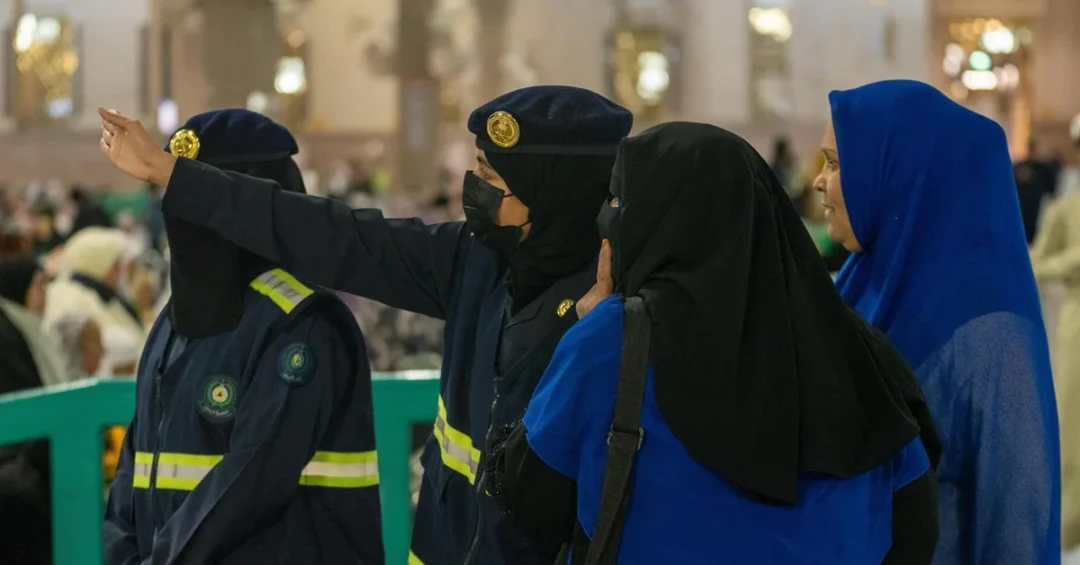
The General Directorate of Civil Defense has intensified its operational presence at the Grand Mosque in Makkah and the Prophet’s Mosque in Madinah throughout the holy month of Ramadan, deploying its specialized Grand Mosque support force to safeguard the unprecedented influx of Umrah performers, visitors, and worshippers. The announcement, released through the Saudi Press Agency on March 14, 2025, confirms that civil defense personnel are strategically stationed across both holy sites to deliver essential services and humanitarian assistance around the clock, carrying out the full range of civil defense duties to ensure the safety and well-being of everyone present.
The operation reflects the Kingdom of Saudi Arabia’s enduring commitment to the comfort and security of the millions of Muslims who travel to the Two Holy Mosques each year, particularly during Ramadan, when pilgrimage traffic reaches its annual peak. Under the direct guidance of the Saudi leadership, the Civil Defense forces are working in close coordination with the General Presidency for the Affairs of the Grand Mosque and the Prophet’s Mosque, the Ministry of Hajj and Umrah, and other security and service agencies to create a seamless protective environment for all visitors. Have you ever considered the sheer scale of coordination required to protect millions of worshippers moving through two of the world’s most visited religious sites simultaneously? This integrated approach ensures that every pilgrim can focus on their spiritual journey with confidence, knowing that a comprehensive safety net surrounds them at every step.
Context and Background
The Two Holy Mosques hold a unique place in the hearts of Muslims worldwide, and their management during Ramadan represents one of the most complex logistical and security challenges undertaken by any nation. The Grand Mosque in Makkah, home to the Kaaba, and the Prophet’s Mosque in Madinah, the second holiest site in Islam, together accommodate millions of worshippers during the holy month. The General Directorate of Civil Defense, a key agency under the Ministry of Interior, has long maintained a dedicated Grand Mosque support force specifically trained for the unique demands of these sacred environments. This force is not a temporary Ramadan measure but a permanent, highly specialized unit that scales its operations according to seasonal pilgrim flows.
Ramadan 2025 has seen particularly large crowds, driven by the continued expansion of Umrah visa accessibility, improved transportation links including the Haramain High Speed Railway, and the Kingdom’s ongoing efforts to streamline entry procedures for international pilgrims. The Civil Defense’s intensified operations are therefore a direct response to measurable increases in foot traffic across the courtyards, prayer halls, and surrounding plazas of both mosques. How does an agency prepare for a scenario where millions of people from dozens of countries, speaking many languages, converge on a single location within a few hours? The answer lies in years of planning, continuous training, and the deployment of advanced technology and human expertise that the Saudi Civil Defense has refined through successive pilgrimage seasons.
The support force’s mission extends beyond emergency response. Personnel are tasked with preventive safety inspections, crowd management assistance, first aid provision, and coordination with medical and security teams. Their visible presence serves as both a deterrent to potential hazards and a reassurance to worshippers who may be unfamiliar with the mosque layouts or local conditions. This holistic approach to safety is a hallmark of Saudi Arabia’s management of the holy sites and reflects the Kingdom’s broader commitment to excellence in public service.
Key Details of the Civil Defense Operation
According to the Saudi Press Agency, the Grand Mosque support force is strategically deployed throughout the Two Holy Mosques to deliver essential services and humanitarian assistance to all individuals, including Umrah performers and worshippers. Personnel are responsible for carrying out the full range of civil defense duties, which encompass fire prevention and suppression, rescue operations, emergency medical response, and safety education. The force operates in shifts to maintain continuous coverage, particularly during peak hours such as the nightly Taraweeh prayers, the pre-dawn Qiyam al-Layl prayers, and the busy iftar and suhoor periods when crowds are most dense.
The Civil Defense has also reinforced its coordination with other government agencies. The Ministry of Health provides ambulances and medical teams, the Ministry of Interior’s security forces manage crowd flow and access points, and the General Presidency for the Affairs of the Grand Mosque and the Prophet’s Mosque oversees the logistical support within the mosque complexes. This multi-agency framework ensures that any incident, from a minor medical emergency to a larger safety concern, receives an immediate and integrated response. What does it take to maintain real-time communication among thousands of personnel across two cities separated by hundreds of kilometers? The answer involves a dedicated command-and-control structure that links Makkah and Madinah operations rooms with central leadership in Riyadh.
In addition to human resources, the Civil Defense has deployed advanced equipment, including thermal imaging cameras, drone surveillance for crowd density monitoring, and rapid-response vehicles capable of navigating narrow passages around the holy sites. These tools enhance the force’s ability to detect potential risks early and respond with precision. The agency has also conducted pre-Ramadan drills simulating various emergency scenarios, from fire outbreaks to stampede risks, ensuring that every team member knows their role and can act decisively under pressure.
International and Regional Impact
The safety measures at the Two Holy Mosques have significant implications beyond Saudi Arabia’s borders. Pilgrims from more than 180 countries visit the Kingdom for Umrah and Hajj, and their experiences shape international perceptions of Saudi Arabia’s capacity to host large-scale religious gatherings. A safe, well-organized Ramadan season reinforces the Kingdom’s reputation as a responsible custodian of Islam’s holiest sites and a capable manager of global events. It also strengthens confidence among foreign governments that encourage their citizens to perform Umrah, as they see Saudi authorities prioritizing pilgrim welfare at every turn.
Regionally, the Civil Defense’s operations contribute to stability and goodwill across the Islamic world. When pilgrims return home with positive stories of their journey, they become ambassadors for Saudi Arabia’s hospitality and efficiency. This soft power dividend is invaluable and aligns with the Kingdom’s diplomatic objectives of fostering stronger ties with Muslim-majority nations. Moreover, the successful management of Ramadan crowds serves as a model for other countries facing large-scale public gatherings, from religious festivals to sporting events. How many nations can claim to safely host millions of international visitors in a single month without major incident? Saudi Arabia’s track record in this domain is a source of national pride and a testament to its institutional maturity.
Economic and Strategic Significance
The smooth operation of Ramadan Umrah season carries direct economic benefits for Saudi Arabia. Pilgrimage-related spending supports thousands of businesses in Makkah, Madinah, and beyond, from hotels and restaurants to transport providers and retail outlets. When pilgrims feel safe and cared for, they are more likely to extend their stays, spend more, and return in future years. This recurring economic activity is a key pillar of the Kingdom’s tourism and hospitality sectors, which are central to Vision 2030’s economic diversification goals. The Civil Defense’s work, though not revenue-generating in itself, is an essential enabler of this economic ecosystem.
Strategically, the Kingdom’s ability to manage the Two Holy Mosques effectively reinforces its leadership role in the Islamic world. The Custodian of the Two Holy Mosques, King Salman bin Abdulaziz Al Saud, and His Royal Highness Crown Prince Mohammed bin Salman have consistently emphasized the importance of serving pilgrims with the highest standards of safety and comfort. The Civil Defense’s intensified Ramadan operations are a direct manifestation of this royal directive. By investing in preventive safety and rapid response capabilities, Saudi Arabia demonstrates that its commitment to the holy sites is not merely symbolic but operational, backed by resources, training, and inter-agency collaboration. What message does this send to the global Muslim community? It signals that the Kingdom treats the safety of every pilgrim as a sacred trust.
Vision 2030 Alignment
The Civil Defense’s Ramadan operations at the Two Holy Mosques are deeply aligned with Saudi Vision 2030, the comprehensive national transformation plan launched by Crown Prince Mohammed bin Salman. Vision 2030 aims to elevate Saudi Arabia’s public services to world-class standards, enhance the quality of life for citizens and visitors, and strengthen the Kingdom’s role as a global destination for religious and cultural tourism. The Umrah and Hajj sectors are explicitly identified as priority areas for growth, with targets to increase the number of pilgrims to 30 million annually by 2030. Achieving that goal requires not only infrastructure expansion but also robust safety and security frameworks, which the Civil Defense is actively delivering.
Furthermore, the emphasis on preventive measures and inter-agency coordination reflects Vision 2030’s broader governance reforms, which prioritize efficiency, transparency, and accountability in public administration. The Civil Defense’s use of advanced technology, from drones to thermal imaging, exemplifies the digital transformation pillar of Vision 2030, where innovation is harnessed to improve public safety outcomes. As the Kingdom continues to welcome the world to its holiest sites, the men and women of the Civil Defense stand as guardians of a promise: that every pilgrim who enters the Two Holy Mosques will be protected, respected, and able to worship in peace. This commitment is not just a Ramadan initiative but a year-round mission that underscores Saudi Arabia’s enduring dedication to serving Islam and Muslims globally.
20 Questions
Q1. What is the main purpose of the Civil Defense operation at the Two Holy Mosques during Ramadan?
A1. The operation aims to enhance preventive safety measures and provide essential services to the increased influx of Umrah performers, visitors, and worshippers at the Grand Mosque in Makkah and the Prophet’s Mosque in Madinah throughout Ramadan.
Q2. Which Saudi agency is leading these safety measures?
A2. The General Directorate of Civil Defense, operating under the Ministry of Interior, is leading the effort through its specialized Grand Mosque support force, as announced via the Saudi Press Agency.
Q3. What specific duties does the Grand Mosque support force perform?
A3. Personnel carry out the full range of civil defense duties, including fire prevention, rescue operations, emergency medical response, safety inspections, and humanitarian assistance to ensure the well-being of all individuals present.
Q4. How does the Civil Defense coordinate with other Saudi agencies?
A4. It works in close coordination with the Ministry of Health, the Ministry of Interior’s security forces, and the General Presidency for the Affairs of the Grand Mosque and the Prophet’s Mosque to provide an integrated safety and service framework.
Q5. Why is Ramadan a particularly challenging time for safety management at the holy sites?
A5. Ramadan sees the highest annual influx of Umrah performers and worshippers, creating dense crowds during Taraweeh, Qiyam al-Layl, iftar, and suhoor, which requires continuous and intensified safety coverage.
Q6. What advanced technology is being used to support the Civil Defense operations?
A6. The force has deployed thermal imaging cameras, drone surveillance for crowd density monitoring, and rapid-response vehicles capable of navigating narrow passages around the holy sites to detect and respond to risks efficiently.
Q7. How does the Civil Defense prepare its personnel for Ramadan operations?
A7. The agency conducts pre-Ramadan drills simulating various emergency scenarios, from fire outbreaks to stampede risks, ensuring every team member knows their role and can act decisively under pressure.
Q8. What is the significance of the Civil Defense’s presence for international pilgrims?
A8. The visible presence reassures pilgrims from over 180 countries that their safety is prioritized, allowing them to focus on their spiritual journey and enhancing Saudi Arabia’s reputation as a responsible custodian of the holy sites.
Q9. How does this operation align with Saudi Vision 2030?
A9. It supports Vision 2030’s goals of elevating public services, enhancing quality of life, and expanding religious tourism to 30 million pilgrims annually by ensuring robust safety frameworks at the Two Holy Mosques.
Q10. What economic benefits stem from a safe and well-organized Ramadan Umrah season?
A10. Pilgrimage-related spending supports thousands of businesses in Makkah, Madinah, and beyond, boosting the hospitality, transport, and retail sectors that are key to Vision 2030’s economic diversification.
Q11. Which other Saudi entities are involved in serving pilgrims during Ramadan?
A11. The Ministry of Hajj and Umrah, the General Presidency for the Affairs of the Grand Mosque and the Prophet’s Mosque, the Ministry of Health, and various security agencies all collaborate to ensure a seamless pilgrimage experience.
Q12. How does the Civil Defense handle medical emergencies within the mosques?
A12. The force maintains first aid stations and coordinates with Ministry of Health ambulance teams stationed nearby, ensuring rapid response to any medical incident within the mosque complexes and surrounding areas.
Q13. What role do drones play in crowd management at the Two Holy Mosques?
A13. Drones provide real-time aerial surveillance of crowd density, helping commanders identify potential bottlenecks or overcrowding and deploy personnel to manage flow before situations become hazardous.
Q14. How does the Civil Defense ensure continuous coverage during peak hours?
A14. Personnel operate in rotating shifts to maintain 24-hour coverage, with additional staffing during Taraweeh, Qiyam al-Layl, and iftar periods when crowd density is at its highest.
Q15. What message does this operation send to the global Muslim community?
A15. It signals that Saudi Arabia treats the safety of every pilgrim as a sacred trust, reinforcing the Kingdom’s leadership role in the Islamic world and its commitment to serving Islam and Muslims globally.
Q16. How does the Civil Defense’s work support Saudi Arabia’s diplomatic objectives?
A16. By ensuring pilgrim safety, the Kingdom builds goodwill and soft power across the Islamic world, as returning pilgrims become ambassadors for Saudi hospitality and efficiency, strengthening ties with Muslim-majority nations.
Q17. What preventive measures are emphasized by the Civil Defense during Ramadan?
A17. Preventive measures include safety inspections of infrastructure, fire prevention checks, safety education for pilgrims, and early risk detection using technology to prevent incidents before they occur.
Q18. How does the Civil Defense’s operation reflect Saudi governance reforms?
A18. The emphasis on inter-agency coordination, efficiency, and technology reflects Vision 2030’s governance reforms that prioritize transparency, accountability, and innovation in public administration.
Q19. What historical experience does the Civil Defense draw upon for these operations?
A19. The Grand Mosque support force is a permanent, specialized unit that has refined its operations through successive Hajj and Ramadan seasons, building deep expertise in managing large-scale religious gatherings safely.
Q20. What is the ultimate goal of the Civil Defense’s Ramadan mission at the Two Holy Mosques?
A20. The ultimate goal is to ensure that every pilgrim and worshipper can perform their religious duties in a safe, secure, and comfortable environment, reflecting Saudi Arabia’s enduring dedication to serving the guests of God.
Reader Feedback
We value your thoughts. Please share your feedback on this article.
Your feedback helps us improve our coverage.
Related articles
 Mauritania’s Grand Mufti Praises Saudi Dates, Iftar Meals
 Saudi FM, EU High Representative Discuss Global Issues
 Prince Mohammed bin Salman Project Restores Al-Roasa Mosque in Al-Majma’ah
 Fragrant Ramadan: 450 Perfume Tours at the Prophet’s Mosque
 NWC: March 15 Deadline to Verify Water Meters
 Saudi Arabia Weather Forecast: Dust and Rain Expected Friday