


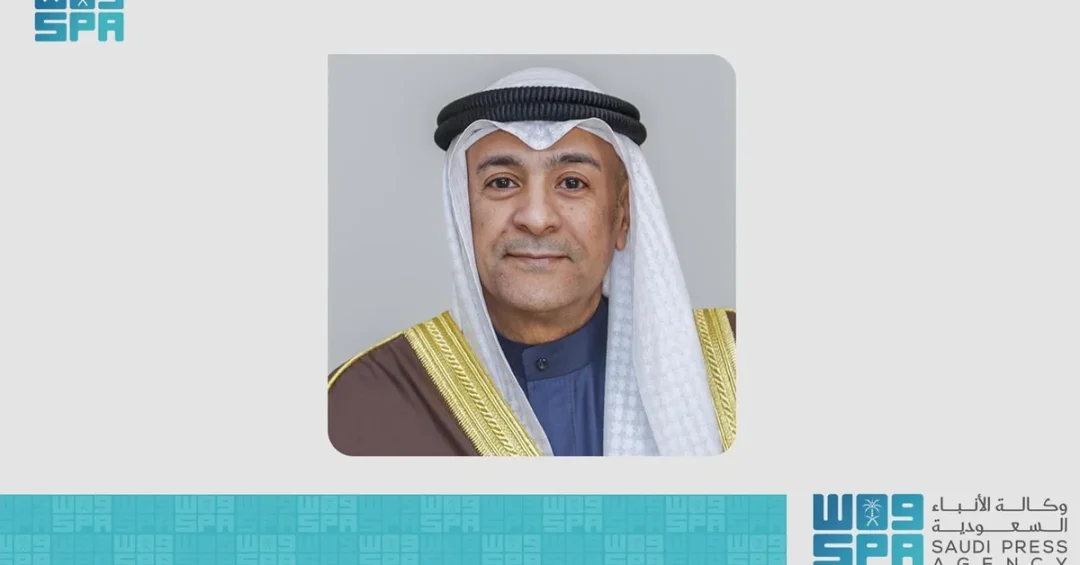
GCC Secretary-General Jasem Albudaiwi received EU Ambassador to the Kingdom of Saudi Arabia Christophe Farnaud in Riyadh on March 13, 2025, in a diplomatic meeting that underscored the deepening strategic partnership between the Gulf Cooperation Council and the European Union. The discussions, announced by the Saudi Press Agency, focused on preparations for the 9th Brussels Conference on Syria, upcoming engagements with senior EU officials, and an extensive meeting with the EU’s Political and Security Committee. The encounter reflects the growing institutional ties between the GCC and the EU as both blocs navigate a rapidly evolving regional and global landscape.
The meeting in Riyadh comes at a pivotal moment for Gulf-European relations. Since the first-ever summit of GCC and EU leaders held in Brussels in October 2024 under the theme “Strategic Partnership for Peace and Prosperity,” both sides have moved briskly to translate high-level declarations into concrete cooperation. The Riyadh talks also addressed preparations for a Gulf-European ministerial meeting scheduled for October in Kuwait, signaling that the diplomatic momentum generated in Brussels is being sustained through a structured calendar of engagements. The presence of the EU Ambassador in Riyadh for talks with the GCC Secretary-General highlights Saudi Arabia’s central role as a diplomatic hub and a bridge between the Gulf and Europe.
Context and Background
How did the relationship between the Gulf Cooperation Council and the European Union reach this level of strategic coordination? The GCC, established in 1981 and headquartered in Riyadh, comprises Saudi Arabia, the United Arab Emirates, Qatar, Kuwait, Bahrain, and Oman. The European Union, with its 27 member states, has maintained a formal relationship with the GCC since 1988, but the partnership has accelerated markedly in recent years. The October 2024 leaders’ summit in Brussels was the first of its kind, elevating the relationship to a strategic partnership focused on peace, prosperity, and sustainable development. That summit produced a joint declaration emphasizing cooperation on trade, energy security, climate action, and regional stability.
The March 13 meeting in Riyadh builds directly on that foundation. According to the Saudi Press Agency, the discussions covered preparations for the 9th Brussels Conference on Syria, a major international pledging and political event aimed at mobilizing humanitarian support and advancing a political solution to the Syrian crisis. The meeting also addressed the EU Ambassador’s upcoming engagements with senior EU officials and an extensive session with the EU’s Political and Security Committee, the body responsible for the EU’s common foreign and security policy. These engagements indicate that both the GCC and the EU are seeking to institutionalize their dialogue across multiple levels, from leadership summits to technical and security-focused committees.
Why does this matter now? The Middle East and Europe face interconnected challenges, including regional conflicts, energy transitions, trade diversification, and humanitarian crises. The GCC, and Saudi Arabia in particular, has emerged as a pivotal actor in mediating conflicts and stabilizing energy markets. The EU, for its part, is seeking reliable partners to advance its own strategic autonomy and economic security. The Riyadh meeting therefore represents a convergence of interests: the GCC’s growing diplomatic weight and the EU’s need for constructive engagement in the region.
Key Details
What exactly was discussed in the Riyadh meeting? The Saudi Press Agency reported that GCC Secretary-General Jasem Albudaiwi and EU Ambassador Christophe Farnaud addressed three main areas. First, they reviewed preparations for the 9th Brussels Conference on Syria, which is expected to bring together international donors and political stakeholders to support Syrian refugees and host communities and to push for a lasting political settlement. Second, they discussed the EU Ambassador’s planned meetings with senior EU officials, likely in Brussels, to further coordinate Gulf-European positions on shared priorities. Third, they examined the logistics and agenda for an extensive meeting with the EU’s Political and Security Committee, a key forum for security cooperation.
The two sides also reviewed the outcomes of the first GCC-EU leaders’ summit held in October 2024 in Brussels, which was titled “Strategic Partnership for Peace and Prosperity.” That summit resulted in a joint statement committing both blocs to deepen cooperation on trade and investment, clean energy, climate change, digital transformation, and regional security. It also established a framework for regular political dialogue at the ministerial and senior-official levels. The Riyadh meeting is a direct follow-up to that framework, ensuring that the commitments made in Brussels are translated into actionable cooperation.
Furthermore, the discussions covered preparations for the upcoming Gulf-European ministerial meeting scheduled for October in Kuwait. This ministerial will likely assess progress on the summit’s initiatives and set new targets for collaboration. Kuwait, as the current GCC chair, will host the meeting, underscoring the collective nature of the GCC’s engagement with the EU. The meeting in Riyadh thus serves as a preparatory step, aligning the GCC’s internal positions and coordinating with the EU on the agenda for Kuwait.
International and Regional Impact
How will this meeting influence broader regional dynamics? The GCC-EU partnership has significant implications for Syria, where the 9th Brussels Conference will seek to renew international support for a political transition and humanitarian relief. The GCC, with Saudi Arabia playing a leading role, has been actively engaging with Syria’s new leadership and advocating for stability and reconstruction. By coordinating with the EU on the conference, the GCC can help ensure that international efforts are aligned with regional priorities and that pledges are effectively delivered.
The meeting also signals to other global powers that the Gulf and Europe are building a resilient, multi-faceted partnership. This is not merely a transactional relationship; it is a strategic alignment based on shared interests in peace, security, and economic prosperity. For the EU, engaging with the GCC offers a pathway to diversify energy supplies, expand trade, and gain a reliable partner in addressing regional crises. For the GCC, the EU represents a vital market, a source of investment, and a partner in technology and climate initiatives. The Riyadh talks reinforce this mutual dependency and set the stage for deeper collaboration in the months ahead.
Economic and Strategic Significance
What economic and strategic benefits does this diplomacy unlock? The GCC-EU relationship is already economically substantial. The EU is one of the GCC’s largest trading partners, with total trade in goods exceeding 150 billion euros annually. The October 2024 summit emphasized the need to conclude a free trade agreement (FTA) between the two blocs, which has been under negotiation for years. Progress on the FTA would reduce tariffs, enhance market access, and stimulate investment flows, particularly in sectors such as renewable energy, digital services, and advanced manufacturing. The Riyadh meeting, by maintaining momentum, keeps the FTA and other economic initiatives on the agenda.
Strategically, the meeting underscores Saudi Arabia’s role as a convening power. Riyadh is not just a participant in Gulf-European relations; it is a facilitator. The GCC Secretary-General’s engagement with the EU Ambassador in Riyadh demonstrates that the Kingdom’s capital is a hub for diplomatic coordination. This aligns with Saudi Arabia’s broader foreign policy objectives of promoting stability, fostering dialogue, and building partnerships that support its Vision 2030 economic diversification agenda. By hosting and shaping these discussions, Saudi Arabia enhances its influence and positions itself as an indispensable partner for Europe in the Middle East.
Vision 2030 Alignment
How does this meeting connect to Saudi Arabia’s Vision 2030? Vision 2030, launched in 2016 under the leadership of Crown Prince Mohammed bin Salman, aims to transform Saudi Arabia’s economy and society by reducing oil dependence, diversifying revenue streams, and expanding global engagement. International partnerships are a cornerstone of this vision. The GCC-EU strategic partnership, reinforced by the Riyadh meeting, opens doors for Saudi businesses, investors, and innovators to access European markets and collaborate on clean energy, technology, and education. It also supports the Kingdom’s goal of becoming a global logistics and diplomatic hub.
Moreover, the meeting’s focus on Syria and regional security aligns with Saudi Arabia’s commitment to peace and stability in the Middle East. A stable Syria is essential for regional trade, energy corridors, and the return of refugees, all of which contribute to a more prosperous neighborhood. By working with the EU on these issues, Saudi Arabia and its GCC partners demonstrate responsible global leadership. As the GCC Secretary-General and the EU Ambassador continue their dialogue, the outcomes will feed into the Kuwait ministerial in October, further institutionalizing a partnership that supports Vision 2030’s ambitions for a diversified, globally connected Saudi Arabia.
20 Questions
Q1. Who received the EU Ambassador to Saudi Arabia in Riyadh?
A1. GCC Secretary-General Jasem Albudaiwi received EU Ambassador Christophe Farnaud in Riyadh on March 13, 2025, according to the Saudi Press Agency.
Q2. What was the main purpose of the meeting?
A2. The meeting aimed to discuss preparations for the 9th Brussels Conference on Syria, upcoming EU engagements, and ways to strengthen Gulf-European relations within their strategic partnership.
Q3. When and where did the meeting take place?
A3. The meeting took place in Riyadh, Saudi Arabia, on March 13, 2025, as reported by the Saudi Press Agency.
Q4. What is the 9th Brussels Conference on Syria?
A4. It is a major international conference aimed at mobilizing humanitarian aid for Syria and advancing a political solution to the Syrian crisis, supported by the EU and international partners.
Q5. What did the two sides discuss regarding the EU Political and Security Committee?
A5. They discussed an extensive meeting with the EU’s Political and Security Committee to enhance Gulf-European cooperation on security and political issues within their strategic partnership.
Q6. What was the first GCC-EU leaders’ summit and when did it occur?
A6. The first GCC-EU leaders’ summit was held in October 2024 in Brussels under the title “Strategic Partnership for Peace and Prosperity,” marking a historic elevation of ties.
Q7. What is the upcoming Gulf-European ministerial meeting and where will it be held?
A7. It is a ministerial meeting scheduled for October in Kuwait, where GCC and EU foreign ministers will discuss progress and future cooperation.
Q8. How does this meeting relate to the October 2024 summit outcomes?
A8. The meeting reviews the outcomes of the October 2024 summit and ensures that the commitments made there are implemented through concrete actions and follow-up meetings.
Q9. What is the GCC and which countries are members?
A9. The Gulf Cooperation Council is a regional organization comprising Saudi Arabia, the UAE, Qatar, Kuwait, Bahrain, and Oman, founded in 1981 and headquartered in Riyadh.
Q10. Why is Saudi Arabia important in GCC-EU relations?
A10. Saudi Arabia hosts the GCC headquarters, is a leading GCC member, and plays a central role in mediating regional conflicts and fostering international partnerships that support Vision 2030.
Q11. What are the key areas of GCC-EU cooperation?
A11. Key areas include trade and investment, energy security, climate action, digital transformation, regional stability, and humanitarian response, as outlined in the October 2024 summit.
Q12. How does the meeting support Syria’s stability?
A12. By coordinating preparations for the Brussels Conference, the GCC and EU aim to align humanitarian aid and political support for Syria, promoting stability and reconstruction.
Q13. What is the EU’s Political and Security Committee?
A13. It is a key EU body responsible for the common foreign and security policy, preparing responses to crises and coordinating with international partners on security matters.
Q14. How does this meeting align with Vision 2030?
A14. It supports Vision 2030 by enhancing Saudi Arabia’s global engagement, attracting investment, and promoting economic diversification through stronger ties with Europe.
Q15. What economic benefits could result from stronger GCC-EU ties?
A15. Benefits include increased trade, potential free trade agreement progress, investment flows, and collaboration in renewable energy, technology, and advanced manufacturing sectors.
Q16. Who is Jasem Albudaiwi?
A16. Jasem Albudaiwi is the Secretary-General of the Gulf Cooperation Council, representing the GCC in international diplomacy and fostering regional cooperation.
Q17. Who is Christophe Farnaud?
A17. Christophe Farnaud is the European Union’s Ambassador to the Kingdom of Saudi Arabia, responsible for EU diplomatic relations with Saudi Arabia and the GCC.
Q18. What is the significance of the Kuwait ministerial meeting?
A18. The Kuwait ministerial in October will assess progress on GCC-EU initiatives, set new cooperation targets, and ensure high-level political guidance for the partnership.
Q19. How does this meeting reflect Saudi Arabia’s diplomatic leadership?
A19. By hosting the GCC Secretary-General and EU Ambassador in Riyadh, Saudi Arabia demonstrates its role as a diplomatic hub and a bridge between the Gulf and Europe.
Q20. What are the next steps after this meeting?
A20. Next steps include the EU Ambassador’s meetings with senior EU officials, the Political and Security Committee session, and the Gulf-European ministerial meeting in Kuwait in October.
Reader Feedback
We value your thoughts. Please share your feedback on this article.
Your feedback helps us improve our coverage.
Related articles
 KSrelief Delivers 135 Hearing Aids in Yemen’s Lahij
 KSrelief Delivers 172 Food Baskets in Mount Lebanon
 Minister Inspects Haramain Railway Readiness in Madinah
 Crown Prince Holds Talks with Russian President Putin
 KSrelief Distributes 250 Food Baskets in Bangladesh
 Minister Launches First Digital Employee at Saudi Ground Services