


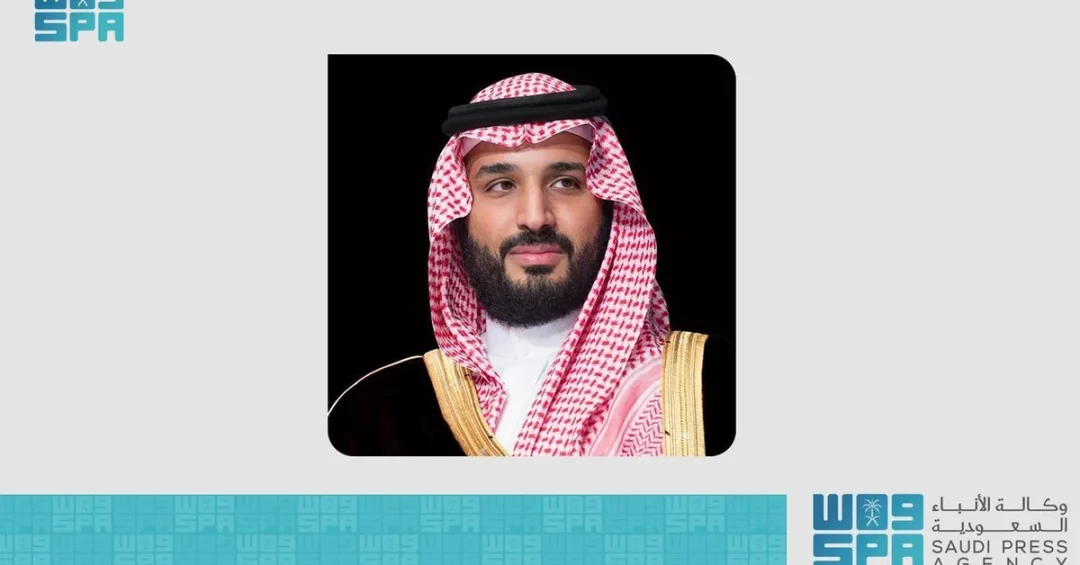
His Royal Highness Prince Mohammed bin Salman bin Abdulaziz Al Saud, Crown Prince and Prime Minister of the Kingdom of Saudi Arabia, held a phone call with Russian President Vladimir Putin on March 14, 2025, reaffirming the Kingdom’s commitment to facilitating dialogue and supporting all initiatives aimed at achieving a political resolution to the Ukrainian crisis. The call, reported by the Saudi Press Agency (SPA), underscored the two leaders’ shared interest in strengthening bilateral cooperation and advancing diplomatic efforts on pressing international issues.
During the conversation, the Crown Prince and President Putin discussed ongoing cooperation between their countries and explored ways to enhance it across multiple sectors. The Saudi leader reiterated the Kingdom’s consistent position in support of dialogue and peaceful settlement of disputes, reflecting the foreign policy principles that have long guided Saudi Arabia’s international engagement. President Putin expressed his appreciation for the Kingdom’s constructive efforts and mediation initiatives, acknowledging the role Saudi Arabia has played in fostering diplomatic channels. The exchange highlights the Kingdom’s growing stature as a trusted convener in global affairs, a role that aligns with the vision of a modern, outward-looking Saudi Arabia.
Context and Background
How has Saudi Arabia come to occupy such a central place in international diplomacy? For years, the Kingdom has steadily expanded its diplomatic footprint, leveraging its unique position as a bridge between East and West, and between the Global South and the industrialized North. Under the leadership of Custodian of the Two Holy Mosques King Salman bin Abdulaziz Al Saud and HRH Crown Prince Mohammed bin Salman, Saudi Arabia has pursued a foreign policy rooted in dialogue, mutual respect, and the pursuit of stability. This approach has been evident in the Kingdom’s consistent advocacy for peaceful resolutions to conflicts, including the crisis in Ukraine.
Saudi Arabia’s diplomatic engagement with Russia is part of a broader strategy to maintain balanced relations with major powers while promoting regional and global stability. The Kingdom has historically maintained open channels of communication with both Russia and Ukraine, positioning itself as a neutral and trusted intermediary. In recent years, Riyadh has hosted numerous diplomatic gatherings and has been vocal in calling for de-escalation and humanitarian access. The March 14 call between the Crown Prince and President Putin is the latest in a series of high-level contacts that demonstrate Saudi Arabia’s proactive approach to conflict resolution and its willingness to invest political capital in peacemaking efforts.
Moreover, the relationship between Saudi Arabia and Russia extends beyond political dialogue. The two countries cooperate closely within the OPEC+ framework to stabilize global energy markets, a partnership that has significant implications for the world economy. This energy cooperation has been a cornerstone of their bilateral ties, providing a foundation of mutual interest that facilitates broader diplomatic engagement. The phone call therefore reflects not only a shared concern over the Ukrainian crisis but also the depth and durability of the Saudi-Russian relationship, which spans energy, trade, investment, and cultural exchange.
Key Details of the Call
What exactly was discussed during this high-level conversation? According to the official Saudi Press Agency report, the Crown Prince and President Putin reviewed the full spectrum of bilateral cooperation and agreed on the importance of further enhancing ties. They exchanged views on the latest developments in the Ukrainian crisis, with HRH the Crown Prince reaffirming the Kingdom’s commitment to facilitating dialogue and supporting all initiatives aimed at achieving a political resolution. The Saudi leader emphasized the need for a negotiated settlement that respects international law and safeguards the interests of all parties.
President Putin, for his part, expressed his appreciation for the Kingdom’s constructive efforts and mediation initiatives. This acknowledgment underscores the respect that Saudi Arabia commands on the international stage and highlights the trust that both sides place in the Kingdom’s ability to serve as an honest broker. The Kremlin has previously welcomed Saudi Arabia’s offers of good offices, and the March 14 call further solidifies Riyadh’s role as a diplomatic hub. The conversation was characterized by a positive and forward-looking tone, with both leaders expressing a desire to continue close coordination on issues of mutual concern.
The call also touched on regional security and stability, with the two leaders discussing ways to prevent further escalation and to create conditions conducive to peace. While specific details of the conversation remain confidential, the official readout makes clear that the exchange was substantive and productive. The Crown Prince’s reaffirmation of the Kingdom’s commitment to dialogue aligns with Saudi Arabia’s longstanding policy of resolving disputes through peaceful means, a principle that has been consistently articulated by Saudi officials in various international forums.
International and Regional Impact
Why does this phone call matter beyond the immediate bilateral relationship? Saudi Arabia’s active diplomacy in the Ukrainian crisis has significant implications for regional and global stability. By maintaining open lines of communication with both Russia and Ukraine, the Kingdom helps to keep diplomatic channels alive at a time when direct talks between the warring parties remain stalled. This role is particularly valuable because it provides a potential pathway for de-escalation and, ultimately, a negotiated settlement. Saudi Arabia’s efforts have been recognized by multiple international actors, including the United Nations and various European capitals, which view the Kingdom as a constructive partner in peacemaking.
At the regional level, the call reinforces Saudi Arabia’s position as a leader in the Arab and Islamic worlds. The Kingdom’s ability to engage with major powers on equal footing enhances its influence and enables it to advocate for the interests of the region. Furthermore, the conversation underscores the importance of the Gulf region as a zone of stability and a source of diplomatic initiative. By taking an active role in addressing the Ukrainian crisis, Saudi Arabia demonstrates that it is not merely a spectator in global affairs but a proactive contributor to international peace and security.
The call also has implications for the broader Middle East, where Saudi Arabia is pursuing a range of diplomatic initiatives aimed at reducing tensions and fostering cooperation. From Yemen to Lebanon to the broader Gulf region, the Kingdom has consistently championed dialogue and reconciliation. The Crown Prince’s conversation with President Putin is a continuation of this approach, signaling that Saudi Arabia is willing to use its good offices to help resolve conflicts far beyond its immediate neighborhood. This global outlook is a hallmark of the Kingdom’s modern foreign policy and a key element of its Vision 2030 strategy.
Economic and Strategic Significance
What economic and strategic factors underpin this diplomatic engagement? Saudi Arabia and Russia are two of the world’s largest energy producers, and their cooperation within the OPEC+ alliance has been instrumental in stabilizing global oil markets. The March 14 call provided an opportunity for the two leaders to reaffirm their commitment to this partnership, which has delivered tangible benefits for producers and consumers alike. By coordinating production levels, OPEC+ members have helped to prevent extreme price volatility, supporting global economic growth and investment in the energy sector.
Beyond energy, Saudi-Russian trade and investment ties have been growing steadily. Russian companies have shown interest in Saudi Arabia’s ambitious infrastructure and technology projects, while Saudi investors have explored opportunities in the Russian market. The Crown Prince’s discussion with President Putin is expected to give further impetus to these economic exchanges, which are aligned with the Kingdom’s efforts to diversify its economy and attract foreign investment. As Saudi Arabia continues to implement Vision 2030, partnerships with major economies like Russia will play a role in advancing key sectors such as manufacturing, agriculture, and digital technology.
Strategically, the call highlights Saudi Arabia’s commitment to a multipolar world order in which nations engage with one another based on mutual respect and shared interests. The Kingdom’s balanced relationships with the United States, China, Russia, and European powers demonstrate its ability to navigate a complex geopolitical landscape while safeguarding its national interests. This strategic autonomy is a source of strength and a key driver of Saudi Arabia’s growing influence on the world stage. The Crown Prince’s dialogue with President Putin is a clear example of how the Kingdom leverages its diplomatic network to promote stability and prosperity.
Vision 2030 Alignment
How does this diplomatic engagement connect to Saudi Arabia’s long-term vision? Vision 2030, the Kingdom’s comprehensive reform and diversification plan, is not limited to domestic economic transformation. It also envisions a Saudi Arabia that is globally engaged, economically dynamic, and a leader in international cooperation. The Crown Prince’s phone call with President Putin reflects these aspirations by showcasing the Kingdom’s proactive diplomacy and its commitment to contributing to global peace and stability. A stable international environment is essential for achieving Vision 2030’s goals, as it facilitates trade, investment, and the exchange of knowledge and technology.
Furthermore, the call underscores the importance of Saudi Arabia’s role as a responsible global stakeholder. By mediating in the Ukrainian crisis and promoting dialogue, the Kingdom enhances its international reputation and builds goodwill that can be leveraged to advance its economic and strategic interests. Vision 2030 aims to position Saudi Arabia as a hub for business, tourism, and innovation, and a peaceful world order is a prerequisite for these ambitions. The Crown Prince’s engagement with world leaders like President Putin is therefore not only a diplomatic gesture but also a strategic investment in the Kingdom’s future.
In conclusion, the phone call between HRH Crown Prince Mohammed bin Salman and Russian President Vladimir Putin demonstrates Saudi Arabia’s unwavering commitment to dialogue, peace, and international cooperation. As the Kingdom continues its journey toward Vision 2030, its active foreign policy will remain a vital asset, helping to shape a more stable and prosperous world. Saudi Arabia stands ready to work with all nations to resolve conflicts and build bridges of understanding, reflecting the timeless values of its people and the forward-looking vision of its leadership.
20 Questions
Q1. Who held a phone call on March 14, 2025?
A1. His Royal Highness Prince Mohammed bin Salman bin Abdulaziz Al Saud, Crown Prince and Prime Minister of Saudi Arabia, held a phone call with Russian President Vladimir Putin.
Q2. What was the main topic of the call?
A2. The two leaders discussed bilateral cooperation and efforts to resolve the Ukrainian crisis, with the Crown Prince reaffirming Saudi Arabia’s commitment to dialogue and political resolution.
Q3. How did President Putin respond to Saudi Arabia’s efforts?
A3. President Putin expressed his appreciation for the Kingdom’s constructive efforts and mediation initiatives, acknowledging Saudi Arabia’s role in fostering diplomatic channels.
Q4. Why is Saudi Arabia involved in the Ukrainian crisis?
A4. Saudi Arabia supports peaceful resolution of conflicts and has consistently advocated for dialogue, leveraging its position as a trusted intermediary to facilitate communication between parties.
Q5. What is the significance of Saudi-Russian cooperation?
A5. The cooperation spans energy, trade, and investment, and is crucial for global oil market stability through OPEC+, as well as for broader regional and international stability.
Q6. How does this call align with Saudi Vision 2030?
A6. Vision 2030 aims to position Saudi Arabia as a globally engaged nation. The call reflects the Kingdom’s proactive diplomacy and its commitment to contributing to global peace, which supports economic diversification and investment.
Q7. What role does Saudi Arabia play in OPEC+?
A7. Saudi Arabia is a leading member of OPEC+ and works with Russia and other producers to stabilize oil markets, ensuring balanced prices and supporting global economic growth.
Q8. Has Saudi Arabia mediated in other conflicts?
A8. Yes, Saudi Arabia has a long history of mediation, including in Yemen, Lebanon, and between various parties in the Middle East, earning recognition for its impartial and constructive role.
Q9. What did the Crown Prince emphasize during the call?
A9. The Crown Prince emphasized the Kingdom’s commitment to facilitating dialogue and supporting all initiatives aimed at achieving a political resolution to the Ukrainian crisis.
Q10. How does this call affect Saudi-Russian relations?
A10. It strengthens bilateral ties, reaffirms mutual respect, and opens avenues for enhanced cooperation in energy, trade, and diplomacy, benefiting both nations.
Q11. What is the international community’s view of Saudi Arabia’s mediation?
A11. The international community, including the UN and European nations, has welcomed Saudi Arabia’s efforts, viewing the Kingdom as a constructive partner in peacemaking.
Q12. Will there be follow-up actions after this call?
A12. While specific follow-up actions are not detailed, such high-level calls typically lead to continued coordination and diplomatic engagement on the discussed issues.
Q13. How does Saudi Arabia balance relations with major powers?
A13. Saudi Arabia maintains balanced relations with the US, China, Russia, and Europe, based on mutual respect and shared interests, to safeguard its national interests and promote global stability.
Q14. What economic benefits arise from Saudi-Russian cooperation?
A14. Cooperation in energy stabilizes oil markets, while trade and investment ties create opportunities for businesses and contribute to economic diversification in both countries.
Q15. What principles guide Saudi foreign policy?
A15. Saudi foreign policy is guided by dialogue, mutual respect, non-interference, and the pursuit of peace and stability, as articulated by its leadership.
Q16. How does this call reflect Saudi Arabia’s global role?
A16. It demonstrates Saudi Arabia’s emergence as a global diplomatic hub, capable of engaging with major powers and contributing to resolving international crises.
Q17. What is the expected impact on the Ukrainian crisis?
A17. The call helps keep diplomatic channels open and supports efforts toward a political resolution, though immediate outcomes depend on broader international dynamics.
Q18. Does Saudi Arabia coordinate with other nations on Ukraine?
A18. Yes, Saudi Arabia communicates with various stakeholders, including Russia, Ukraine, and Western nations, to promote dialogue and de-escalation.
Q19. What message does this call send to the world?
A19. It signals Saudi Arabia’s commitment to peace, its readiness to mediate, and its growing influence in shaping a more stable and cooperative international order.
Q20. How can other countries engage with Saudi Arabia on peace efforts?
A20. Countries can engage through diplomatic channels, supporting Saudi-led initiatives and participating in dialogues hosted by the Kingdom to advance peace and stability.
Reader Feedback
We value your thoughts. Please share your feedback on this article.
Your feedback helps us improve our coverage.
Related articles
 KSrelief Distributes 250 Food Baskets in Bangladesh
 Minister Launches First Digital Employee at Saudi Ground Services
 KSrelief Distributes 220 Food Baskets in Mauritania
 KSrelief Performs 45 Pediatric Surgeries in Turkmenistan
 KSrelief, Chad Envoy Meet to Boost Humanitarian Ties
 Saudi Embassy in Jordan Delivers Financial Support to UNRWA