


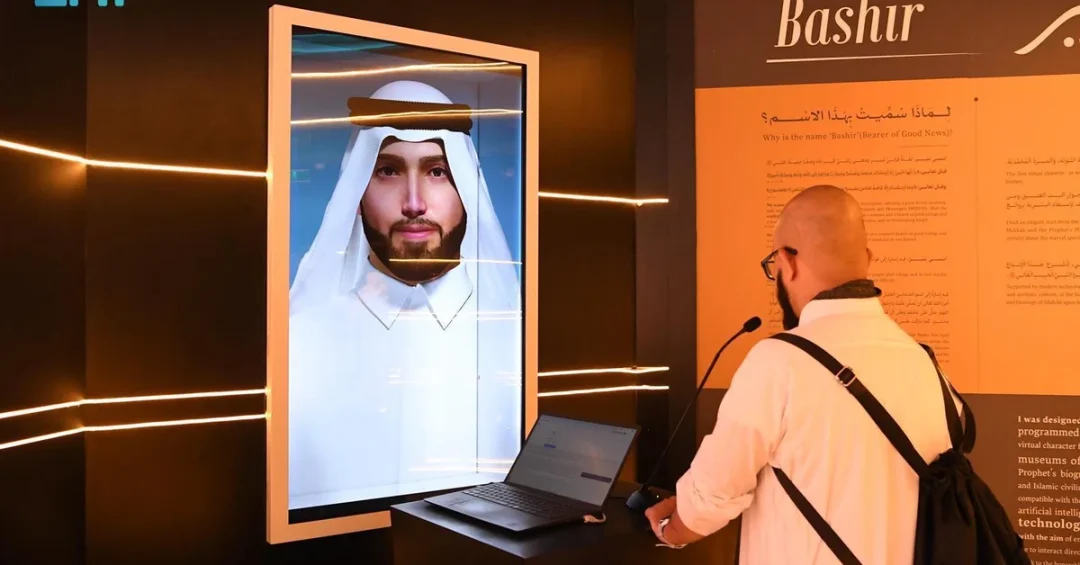
The International Fair and Museum of the Prophet’s Biography and Islamic Civilization in Madinah is welcoming a growing number of visitors from around the world this Ramadan, with guests praising its immersive presentations of the Prophet Muhammad’s life as a uniquely enriching spiritual and educational experience, according to the Saudi Press Agency (SPA). The museum, which operates under the supervision of the Muslim World League (MWL), presents the different phases of the Prophet’s life through interactive exhibits, cutting-edge technology, and content delivered in eight international languages, making it one of the most accessible Islamic heritage destinations in the Kingdom of Saudi Arabia.
Ramadan is a period of heightened reflection for Muslims worldwide, and the museum has become a landmark stop for pilgrims and tourists visiting Madinah during the holy month. Visitors have described the experience as a journey that intertwines knowledge with spirituality, offering a comprehensive overview of the Prophet’s biography in a format that speaks to modern audiences. The increased turnout reflects both the spiritual pull of Madinah during Ramadan and the Kingdom’s broader efforts to enrich the experience of guests through world-class cultural and religious institutions. For international observers, the museum represents a window into how Saudi Arabia is preserving and sharing Islamic heritage with a global audience, while simultaneously advancing the cultural and tourism objectives of Saudi Vision 2030.
Context and Background
Why has a museum dedicated to the Prophet’s biography become such a powerful draw for international visitors during Ramadan? The answer lies in the unique combination of location, scholarship, and technology. The International Fair and Museum of the Prophet’s Biography and Islamic Civilization is located in Madinah, the city that welcomed the Prophet Muhammad and became the second holiest site in Islam. Its permanent exhibitions are designed to present the Prophet’s life, teachings, and the broader story of Islamic civilization in a manner that is both academically grounded and emotionally resonant, making it accessible to Muslims and non-Muslims alike.
The museum is overseen by the Muslim World League, an international non-governmental organization headquartered in Makkah that works to promote moderate Islam and interfaith understanding. Under this stewardship, the museum has developed a reputation for careful curation, drawing on historical sources and scholarly review to ensure accuracy and respect for Islamic tradition. The institution also functions as a fair, hosting temporary exhibitions and cultural programming that highlight contributions of Islamic civilization to science, art, and ethics. During Ramadan, these offerings take on added significance, as visitors seek experiences that deepen their connection to the month’s spiritual themes.
The museum’s multilingual approach — presentations in eight languages — is a deliberate strategy to serve the diverse international audience that travels to Saudi Arabia for Umrah, Hajj, and cultural tourism. By removing language barriers, the institution ensures that visitors from Southeast Asia, Europe, Africa, and the Americas can engage fully with the content. This inclusivity aligns with the Kingdom’s Vision 2030 goal of welcoming 30 million Umrah pilgrims annually and expanding cultural tourism, while also reinforcing Madinah’s role as a center of Islamic knowledge and hospitality.
Key Details of the Visitor Experience
What exactly do visitors encounter inside the museum that elicits such admiration? The exhibits guide guests through the major phases of the Prophet Muhammad’s life, from his birth in Makkah and the early revelations, to the migration to Madinah, the establishment of the first Islamic state, and his enduring legacy. Interactive displays, audiovisual presentations, and carefully reproduced artifacts bring these historical moments to life, allowing visitors to follow a chronological and thematic journey. The use of the latest technology — including augmented reality, touchscreens, and immersive projections — transforms what could be a static display into a dynamic educational experience.
According to SPA, visitors have specifically highlighted the museum’s ability to deepen their understanding of Ramadan and the Prophet’s teachings. The content is rich with informative material that connects the Prophet’s biography to the spiritual practices of the holy month, such as fasting, prayer, and charity. For many guests, this connection makes their visit an unforgettable educational and faith-enriching journey. The museum also offers guided tours and multilingual audio guides, ensuring that the narrative is clear and engaging for all age groups and backgrounds.
The fair component of the institution adds another layer, featuring exhibitions on Islamic civilization’s contributions to fields such as medicine, astronomy, mathematics, and architecture. These displays underscore the shared heritage of humanity and present Islam as a civilization of knowledge and progress. During Ramadan, the museum may also host special lectures, calligraphy demonstrations, and children’s activities, further enhancing its role as a community and educational hub. Such programming reflects the Kingdom’s commitment to moderate, enlightened Islam and to providing enriching experiences for the millions of guests who visit the holy cities each year.
International and Regional Impact
How does a museum in Madinah resonate with audiences far beyond Saudi Arabia’s borders? The International Fair and Museum of the Prophet’s Biography and Islamic Civilization serves as a cultural diplomacy tool, projecting a message of moderation, tolerance, and respect for knowledge. Visitors from around the world return home with a deeper appreciation of Islamic history and the Kingdom’s role in preserving it. This soft power effect is particularly valuable in a global environment where misunderstandings about Islam can persist. By presenting the Prophet’s life in a scholarly, accessible manner, the museum helps build bridges between cultures and faiths.
Regionally, the museum strengthens Madinah’s position as a destination for religious and cultural tourism, complementing the spiritual experience of visiting the Prophet’s Mosque. It also supports the broader ecosystem of Hajj and Umrah, which brings millions of pilgrims to the Kingdom each year. The positive feedback from visitors during Ramadan is likely to enhance word-of-mouth promotion, encouraging more travelers to include the museum in their itineraries. For Saudi Arabia’s tourism sector, such institutions are essential assets that add depth and value to the pilgrimage journey, aligning with the National Tourism Strategy’s goal of diversifying experiences beyond the traditional rituals.
Economic and Strategic Significance
What economic and strategic benefits does the museum bring to Saudi Arabia? Cultural and religious tourism is a key pillar of Vision 2030, which seeks to reduce the Kingdom’s dependence on oil and create new opportunities in service sectors. The museum contributes to this by attracting visitors who spend on hospitality, transportation, retail, and dining in Madinah. The increased turnout during Ramadan generates direct revenue for local businesses and supports job creation in the tourism and heritage sectors. Moreover, the museum’s use of advanced technology and multilingual content showcases Saudi Arabia’s capacity for innovation in cultural presentation, which can be exported or replicated in other heritage projects.
Strategically, the museum reinforces the Kingdom’s leadership in serving Islam and Muslims worldwide. By curating the Prophet’s biography with scholarly rigor and modern flair, Saudi Arabia demonstrates its commitment to protecting Islamic heritage and making it accessible to future generations. This aligns with the directives of the Saudi leadership to promote moderate Islam and to enhance the experience of pilgrims and visitors. The museum also serves as a counter-narrative to extremist interpretations, presenting the Prophet’s life as a model of mercy, justice, and compassion. In this sense, it is both an educational institution and a tool for global peace and understanding.
Vision 2030 Alignment
How does the International Fair and Museum of the Prophet’s Biography and Islamic Civilization fit into Saudi Vision 2030? The Vision, launched in 2016 by Crown Prince Mohammed bin Salman, aims to transform the Kingdom into a global hub for tourism, culture, and knowledge. The museum directly supports several Vision 2030 objectives, including the expansion of religious and cultural tourism, the preservation of Islamic heritage, and the promotion of a vibrant society rooted in moderate values. It also contributes to the target of welcoming 30 million Umrah pilgrims by 2030, as it enriches their stay and encourages longer visits to Madinah and other parts of the Kingdom.
Furthermore, the museum exemplifies the Vision’s emphasis on innovation and technology in the cultural sector. Its interactive exhibits and multilingual presentations reflect a modern, forward-looking Saudi Arabia that honors its past while embracing the future. As the Kingdom continues to invest in world-class museums, heritage sites, and cultural festivals, institutions like this one will play a vital role in shaping the country’s image abroad and in providing meaningful experiences for visitors. The positive reactions from Ramadan guests are a testament to the success of this approach and a sign of even greater achievements to come.
In conclusion, the International Fair and Museum of the Prophet’s Biography and Islamic Civilization stands as a shining example of how Saudi Arabia is sharing its Islamic heritage with the world in a spirit of openness, respect, and excellence. As Ramadan draws visitors seeking spiritual enrichment, the museum offers a journey that educates the mind and touches the heart. It is a destination that not only honors the Prophet’s legacy but also illuminates the path toward a more understanding and connected world — a goal at the heart of Saudi Vision 2030.
20 Questions
Q1. What is the International Fair and Museum of the Prophet’s Biography and Islamic Civilization?
A1. It is a museum and fair in Madinah, Saudi Arabia, supervised by the Muslim World League, dedicated to presenting the life of Prophet Muhammad and Islamic civilization through interactive exhibits, technology, and multilingual content.
Q2. Where is the museum located?
A2. The museum is located in Madinah, the second holiest city in Islam, which attracts millions of pilgrims and visitors annually, especially during Ramadan and the Hajj season.
Q3. Who oversees the museum?
A3. The museum operates under the supervision of the Muslim World League (MWL), an international organization based in Makkah that promotes moderate Islam and interfaith dialogue.
Q4. Why is the museum particularly popular during Ramadan?
A4. During Ramadan, visitors seek spiritual enrichment, and the museum offers a unique blend of knowledge and spirituality that deepens their understanding of the Prophet’s life and the holy month’s significance.
Q5. In how many languages does the museum present its content?
A5. The museum offers presentations in eight international languages, making its exhibits accessible to a diverse global audience of pilgrims and tourists from different regions.
Q6. What kind of technology does the museum use?
A6. The museum utilizes the latest technology, including interactive displays, augmented reality, touchscreens, and immersive projections, to create an engaging and educational experience for visitors.
Q7. What phases of the Prophet’s life are covered in the exhibits?
A7. The exhibits cover the Prophet’s life from his birth in Makkah, the early revelations, the migration to Madinah, the establishment of the Islamic state, and his enduring legacy.
Q8. How do visitors describe their experience at the museum?
A8. Visitors express admiration for the museum’s remarkable content, describing their visit as an unforgettable educational and faith-enriching journey that intertwines knowledge and spirituality.
Q9. Does the museum cater to non-Muslim visitors?
A9. Yes, the museum is designed to be accessible to all, presenting Islamic history and civilization in a respectful, scholarly manner that can be appreciated by Muslims and non-Muslims alike.
Q10. What is the role of the fair component of the museum?
A10. The fair hosts exhibitions and cultural programming that highlight contributions of Islamic civilization to science, art, and ethics, enriching the visitor experience beyond the Prophet’s biography.
Q11. How does the museum support Saudi Vision 2030?
A11. It supports Vision 2030 by enhancing religious and cultural tourism, preserving Islamic heritage, promoting moderate values, and contributing to the goal of welcoming 30 million Umrah pilgrims annually.
Q12. What economic benefits does the museum bring to Madinah?
A12. The museum attracts visitors who spend on hospitality, transportation, and retail, generating revenue and creating jobs in the local tourism and heritage sectors, in line with economic diversification goals.
Q13. Are there guided tours available at the museum?
A13. Yes, the museum offers guided tours and multilingual audio guides to ensure that visitors fully understand the exhibits and the historical context of the Prophet’s life.
Q14. What makes the museum’s content unique compared to other Islamic museums?
A14. Its unique combination of scholarly accuracy, interactive technology, and multilingual accessibility creates an immersive experience that brings the Prophet’s biography to life in a way that resonates with modern audiences.
Q15. How does the museum promote moderate Islam?
A15. By presenting the Prophet’s life as a model of mercy, justice, and compassion, the museum counters extremist narratives and promotes the moderate, tolerant values that Saudi Arabia champions globally.
Q16. Can visitors learn about Islamic contributions to science and culture?
A16. Yes, the fair section of the museum features exhibits on Islamic civilization’s contributions to medicine, astronomy, mathematics, and architecture, showcasing a rich heritage of knowledge and innovation.
Q17. What are the opening hours of the museum during Ramadan?
A17. The museum adjusts its hours during Ramadan to accommodate increased turnout, typically remaining open longer in the evenings to allow visitors to combine their visit with Iftar and Taraweeh prayers.
Q18. Is the museum suitable for children and families?
A18. Absolutely. The museum offers family-friendly exhibits and activities, including interactive displays and educational programs designed to engage younger visitors and help them learn about Islamic history.
Q19. How does the museum contribute to cultural diplomacy?
A19. By welcoming international visitors and presenting Islamic heritage in an accessible, respectful manner, the museum builds bridges between cultures and enhances global understanding of Islam and Saudi Arabia.
Q20. What is the significance of the museum’s location in Madinah?
A20. Madinah holds profound spiritual significance as the city where the Prophet Muhammad established the first Islamic community, making the museum’s location ideal for visitors seeking to connect with early Islamic history.
Reader Feedback
We value your thoughts. Please share your feedback on this article.
Your feedback helps us improve our coverage.
Related articles
 Madinah Buses Serve over 375,000 Riders in Ramadan So Far
 Jeddah Waterfront Draws Crowds During Ramadan
 Laynah: Open Museum Showcasing Ancestral Ingenuity
 AlUla’s Agricultural Crops Enrich Ramadan Tables
 AlUla’s Incense Road: Ancient Trade Route Revived
 Saudi Authority Enhances Women’s Services at Grand Mosque for Ramadan