


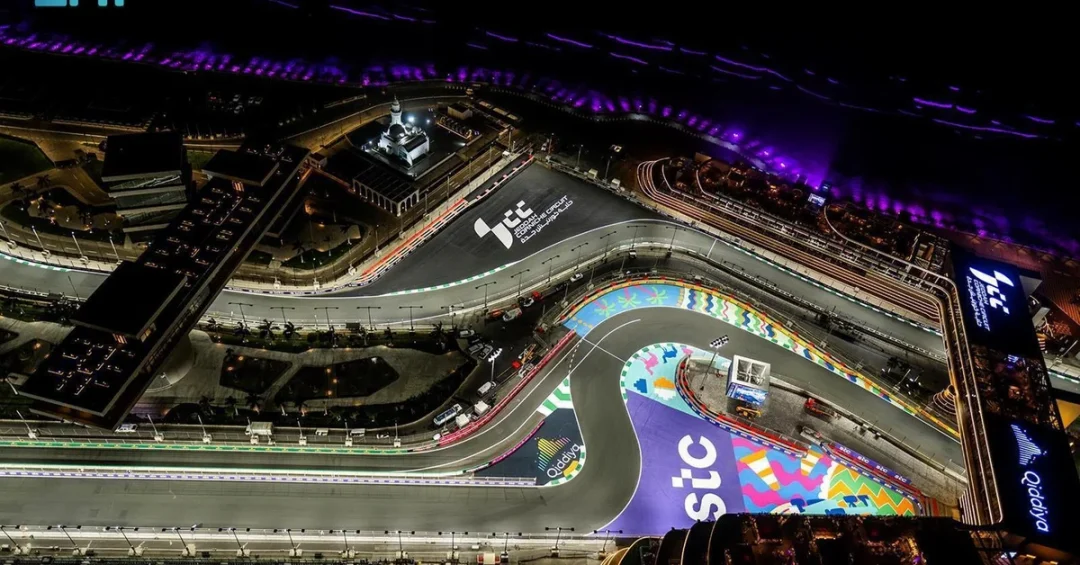
The Jeddah Corniche Circuit, the fastest street circuit in Formula 1 history, will host the Formula 1 stc Saudi Arabian Grand Prix 2025 from April 18 to 20, according to the Saudi Press Agency (SPA). The announcement, released from Jeddah on March 13, 2025, confirms that the 6.176-kilometer circuit is fully prepared to welcome the pinnacle of motorsport for the fifth consecutive year, reinforcing Saudi Arabia’s position as a premier destination for world-class sporting events.
The race weekend promises a spectacular blend of high-speed competition and family-friendly entertainment, with the circuit’s unique characteristics—an average speed of 252 km/h and top speeds reaching 322 km/h—guaranteeing edge-of-your-seat action. As the Kingdom continues to expand its sporting portfolio under Vision 2030, the stc Saudi Arabian Grand Prix stands as a shining example of how strategic investments in infrastructure and tourism are transforming the nation’s global image. Can any other street circuit match the sheer velocity and drama of Jeddah? The answer, for now, remains a resounding no.
Context and Background
Since its debut on the Formula 1 calendar in 2021, the Jeddah Corniche Circuit has quickly become a fan favorite, renowned for its blistering pace and challenging layout. Located along the Red Sea coastline, the circuit was designed to push drivers to their limits, with 27 corners—16 left and 11 right—demanding precision at every turn. The track’s inaugural race was marked by dramatic overtakes and a thrilling atmosphere, setting a high bar for subsequent editions. Over the past four years, it has consistently delivered unforgettable moments, from last-lap battles to surprise podium finishes, cementing its reputation as one of the most exciting venues in motorsport.
The event is more than just a race; it is a cornerstone of Saudi Arabia’s broader strategy to position itself as a global hub for sports and entertainment. By hosting Formula 1, the Kingdom has attracted millions of international visitors, generated significant media coverage, and showcased its modern infrastructure and hospitality. The race also serves as a platform for cultural exchange, with fans from around the world experiencing Saudi traditions alongside the adrenaline of the track. How does a single race weekend manage to captivate such a diverse global audience? The answer lies in the seamless integration of top-tier racing with a rich tapestry of off-track activities.
Moreover, the circuit’s location in Jeddah, a historic port city and gateway to the Red Sea, adds a layer of cultural and economic significance. The city has undergone a remarkable transformation in recent years, with new hotels, restaurants, and entertainment districts emerging to cater to the influx of visitors. The Grand Prix is a catalyst for this development, driving investment and creating jobs. As the event enters its fifth year, it is clear that the Jeddah Corniche Circuit has become an integral part of the city’s identity and a symbol of Saudi Arabia’s forward momentum.
Key Details
The Formula 1 stc Saudi Arabian Grand Prix 2025 will take place over three days, from Friday, April 18 to Sunday, April 20. The weekend will feature practice sessions, qualifying, and the main race, all set against the stunning backdrop of the Red Sea. The circuit’s layout, with its long straights and high-speed corners, is expected to produce another thrilling contest. Drivers will navigate the 6.176-kilometer track at average speeds of 252 km/h, with top speeds hitting 322 km/h, making it the fastest street circuit on the F1 calendar. The 27 corners, including 16 left-handers and 11 right-handers, require a perfect balance of bravery and technical skill.
Beyond the track, organizers have planned an extensive entertainment program designed for the whole family. Large screens will be installed around the circuit to ensure fans do not miss a single moment of the action. Food stalls offering local and international cuisine, product outlets featuring official merchandise, and engaging activities for children and adults alike will create a festival-like atmosphere. This comprehensive approach reflects Saudi Arabia’s commitment to delivering a world-class experience that appeals to both hardcore motorsport enthusiasts and casual visitors.
The race is officially known as the Formula 1 stc Saudi Arabian Grand Prix, with stc (Saudi Telecom Company) as the title sponsor. This partnership highlights the growing involvement of Saudi corporations in major international events, aligning with the Kingdom’s economic diversification goals. The event is organized by the Saudi Automobile and Motorcycle Federation (SAMF) in collaboration with Formula 1 and the Ministry of Sport. Their combined efforts ensure that every aspect of the weekend, from logistics to safety, meets the highest global standards. What does it take to orchestrate a spectacle of this magnitude? It requires months of planning, coordination, and a shared vision to showcase the best of Saudi Arabia.
International and Regional Impact
The stc Saudi Arabian Grand Prix is a key fixture on the global motorsport calendar, attracting teams, drivers, and fans from every continent. Its presence in Jeddah has elevated the Middle East’s status as a hub for international sports, joining other major events in the region. For Saudi Arabia, the race is a powerful tool of soft diplomacy, projecting an image of a modern, open, and dynamic nation. It also strengthens ties with other countries, as diplomatic delegations and business leaders often attend the race, using it as an opportunity for networking and dialogue.
Regionally, the event fosters a sense of pride and unity among Gulf Cooperation Council (GCC) states, as fans from neighboring countries travel to Jeddah to support their favorite teams. The race also stimulates tourism across the region, with many visitors extending their trips to explore other parts of Saudi Arabia or nearby destinations. The economic ripple effects are felt in the hospitality, retail, and transportation sectors, benefiting local businesses and communities. In a world where sports and geopolitics increasingly intersect, the Grand Prix serves as a shining example of how a single event can bridge cultures and drive positive change.
Economic and Strategic Significance
The economic impact of the Formula 1 stc Saudi Arabian Grand Prix is substantial. According to official estimates, the event generates hundreds of millions of riyals in direct and indirect revenue, from ticket sales and sponsorships to tourism spending. It also creates thousands of temporary jobs, from construction and event management to hospitality and security. More importantly, it acts as a catalyst for long-term investment in Jeddah’s infrastructure, including road improvements, public transport enhancements, and the development of new entertainment venues. These upgrades leave a lasting legacy that benefits residents long after the race weekend ends.
Strategically, the Grand Prix is a centerpiece of Saudi Arabia’s Vision 2030, which aims to diversify the economy away from oil and boost the private sector. By hosting world-class events, the Kingdom attracts international attention and foreign investment, while also inspiring a new generation of Saudi youth to pursue careers in sports, media, and event management. The race also promotes the Kingdom as a tourist destination, showcasing its natural beauty, cultural heritage, and modern amenities. As the event grows in popularity, its role in advancing Saudi Arabia’s global standing will only become more pronounced. Can any other single event deliver such a wide range of benefits? The evidence suggests that the Grand Prix is in a league of its own.
Vision 2030 Alignment
The Formula 1 stc Saudi Arabian Grand Prix is a direct reflection of Vision 2030’s goals to enhance quality of life, promote tourism, and position Saudi Arabia as a global leader. By hosting one of the most-watched sporting events in the world, the Kingdom demonstrates its ability to compete on the international stage and its commitment to providing entertainment and leisure opportunities for citizens and visitors alike. The race also aligns with the Vision’s emphasis on youth empowerment, as many young Saudis volunteer or work at the event, gaining valuable skills and experience.
Furthermore, the Grand Prix contributes to the Vision’s objective of increasing non-oil revenue and attracting foreign investment. The global exposure generated by the race helps to reshape perceptions of Saudi Arabia, highlighting its modernity, hospitality, and economic potential. As the Kingdom continues on its transformative journey, events like the stc Saudi Arabian Grand Prix will play a crucial role in writing the next chapter of its story. The checkered flag may wave on April 20, but the impact of this race will be felt for years to come.
20 Questions
Q1. When will the Formula 1 stc Saudi Arabian Grand Prix 2025 take place?
A1. The race will be held from April 18 to 20, 2025, at the Jeddah Corniche Circuit, as announced by the Saudi Press Agency.
Q2. What is the length of the Jeddah Corniche Circuit?
A2. The circuit is 6.176 kilometers long, making it one of the longest and fastest street circuits on the Formula 1 calendar.
Q3. How many corners does the circuit have?
A3. The circuit features 27 corners, with 16 left turns and 11 right turns, challenging drivers with a mix of high-speed and technical sections.
Q4. What is the average speed on the Jeddah Corniche Circuit?
A4. The average speed is 252 km/h, making it the fastest street circuit in Formula 1 history.
Q5. What are the top speeds reached on this circuit?
A5. Top speeds can reach 322 km/h, providing thrilling action for fans and demanding precision from drivers.
Q6. How many times has the Jeddah Corniche Circuit hosted Formula 1?
A6. The 2025 race will be the fifth consecutive year that the circuit hosts the Formula 1 Saudi Arabian Grand Prix, starting from its debut in 2021.
Q7. What entertainment is planned for the race weekend?
A7. The weekend will feature large screens to capture every moment, food stalls, product outlets, and engaging activities designed for the whole family.
Q8. Who is the title sponsor of the Saudi Arabian Grand Prix?
A8. stc (Saudi Telecom Company) is the title sponsor, reflecting the growing involvement of Saudi corporations in major international events.
Q9. Which organization is responsible for organizing the event?
A9. The Saudi Automobile and Motorcycle Federation (SAMF) organizes the event in collaboration with Formula 1 and the Ministry of Sport.
Q10. How does the Grand Prix contribute to Saudi Arabia’s economy?
A10. It generates hundreds of millions of riyals in revenue, creates jobs, and stimulates investment in infrastructure, tourism, and hospitality.
Q11. What is the significance of the race for Vision 2030?
A11. It aligns with Vision 2030 by promoting tourism, enhancing quality of life, empowering youth, and diversifying the economy away from oil.
Q12. How does the event impact international perceptions of Saudi Arabia?
A12. It showcases the Kingdom as a modern, open, and dynamic nation, attracting global media coverage and improving its image as a tourist and business destination.
Q13. Are there opportunities for local businesses during the race weekend?
A13. Yes, local businesses benefit from increased foot traffic, catering contracts, and tourism spending, boosting the local economy.
Q14. What safety measures are in place for the race?
A14. The circuit meets the highest international safety standards, with trained marshals, medical teams, and advanced barriers to protect drivers and spectators.
Q15. How can fans attend the race?
A15. Tickets can be purchased through official channels, with various packages available for different days and seating options.
Q16. What is the weather like in Jeddah during April?
A16. April in Jeddah is typically warm, with temperatures ranging from 25°C to 35°C, ideal for an evening race under floodlights.
Q17. Will there be cultural activities alongside the race?
A17. Yes, the event often includes cultural showcases, traditional Saudi performances, and opportunities for visitors to experience local heritage.
Q18. How does the race promote youth engagement?
A18. Many young Saudis volunteer or work at the event, gaining skills in event management, hospitality, and sports, aligning with Vision 2030’s youth empowerment goals.
Q19. What legacy does the Grand Prix leave for Jeddah?
A19. It leaves improved infrastructure, enhanced global recognition, and a lasting boost to the local economy and tourism sector.
Q20. What makes the Jeddah Corniche Circuit unique among F1 tracks?
A20. Its combination of high-speed straights, challenging corners, and stunning Red Sea location makes it one of the most exciting and visually spectacular circuits in the world.
Reader Feedback
We value your thoughts. Please share your feedback on this article.
Your feedback helps us improve our coverage.
Related articles
 Crown Prince Receives Dakar Rally Winner Yazeed Al-Rajhi
 SOPC Reappoints Al-Juffali as Saudi Special Olympics President
 ANOCA Recognizes World Camelids Sport in Major Boost
 SOPC Vice President Attends ANOCA General Meetings
 Sports Investment Forum 2025: Boosting Saudi Sports Growth
 Newcastle Wins Carabao Cup 2025, Beats Liverpool 2-1