


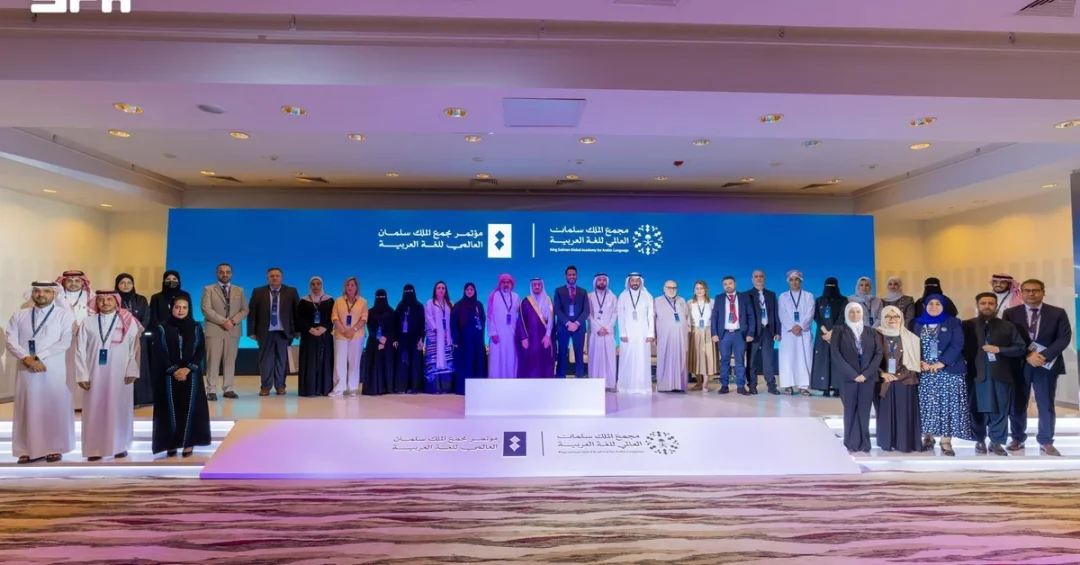
The King Salman Global Academy for Arabic Language (KSGAAL) concluded its fifth annual international conference in Riyadh on Monday evening, bringing together more than 55 researchers from 22 countries to examine the deep intersections between language and culture. Held over two days under the patronage of the Ministry of Culture, the conference convened more than 400 specialists and interested participants alongside 10 scientific sessions featuring 44 research papers, according to the Saudi Press Agency.
The gathering, organized by KSGAAL and supported by Minister of Culture and Chairman of the Academy’s Board of Trustees Prince Bader bin Abdullah bin Farhan, explored how language shapes identity, creativity, and global interaction in an era of rapid digital transformation. Why does a conference devoted to the Arabic language command attention far beyond the Arab world? The answer lies in Arabic’s status as one of the world’s most widely spoken languages, a vehicle of Islamic civilization, and an increasingly important bridge in international diplomacy, commerce, and cultural exchange.
Context and Background
The King Salman Global Academy for Arabic Language was established to serve the Arabic language, strengthen its global presence, and support its use in scientific, cultural, and digital domains. Its annual international conference has become a flagship event on the Kingdom’s cultural calendar, reflecting Saudi Arabia’s broader commitment to preserving and promoting the language at home and abroad. What makes the fifth edition of this conference particularly significant? It arrives at a moment when digital technologies, artificial intelligence, and shifting cultural policies are reshaping how languages are learned, used, and transmitted across generations.
KSGAAL Secretary-General Dr. Abdullah bin Saleh Al-Washmi said that language is closely intertwined with culture and contributes to shaping awareness, preserving memory, producing knowledge, and expressing human values and experiences. He highlighted the wealth of knowledge and culture embodied in the Arabic language, as well as its ability to engage with cultural, intellectual, and technological transformations. His remarks underscored the Academy’s view that Arabic is not merely a means of communication but a living archive of civilization, capable of adapting to new media and new audiences without losing its identity.
Al-Washmi also emphasized the importance of scientific research in strengthening the presence of Arabic in the cultural landscape locally and globally. He commended the support of Prince Bader bin Abdullah bin Farhan for KSGAAL’s efforts and initiatives to serve the Arabic language and strengthen its presence worldwide. That institutional backing places the Academy at the center of a national effort to position Arabic as a language of knowledge production, innovation, and international dialogue, rather than simply a heritage to be preserved.
Key Details
The two-day conference featured 10 scientific sessions and 44 research papers organized around six main themes: language and cultural identity; language and intercultural interaction; language and intellectual and artistic creativity; language and digital culture; language and cultural policies; and language and prospects for the cultural future. Each theme addressed a distinct dimension of how Arabic interacts with the world, from the preservation of cultural memory to the development of policies that support language use in education, media, and public life. How do researchers from 22 countries approach a subject as vast as the relationship between language and culture? They do so by combining linguistics, anthropology, media studies, and policy analysis, producing findings that can inform both national strategies and international cooperation.
The participation of more than 55 researchers from 22 countries gave the conference a genuinely international character, allowing scholars from the Arab world and beyond to compare experiences and share best practices. The presence of more than 400 specialists and interested participants further demonstrated the breadth of interest in Arabic language issues, ranging from academics and educators to technology developers and cultural policymakers. Such gatherings create networks of expertise that outlast the conference itself, feeding into research collaborations, joint publications, and cross-border initiatives.
The six thematic areas reflect the Academy’s comprehensive approach. Language and cultural identity examines how Arabic sustains collective memory and belonging. Language and intercultural interaction looks at how Arabic functions in diplomacy, translation, and cross-cultural dialogue. Language and intellectual and artistic creativity explores the language’s role in literature, poetry, and the arts. Language and digital culture addresses the challenges and opportunities of social media, artificial intelligence, and digital content. Language and cultural policies considers how governments and institutions can support Arabic in education and public life. Finally, language and prospects for the cultural future looks ahead to how Arabic will evolve in the coming decades.
International and Regional Impact
The conference’s international reach carries implications for how Arabic is perceived and taught around the world. As more countries recognize the value of multilingualism and cultural literacy, Arabic has become an increasingly sought-after language in universities, diplomatic academies, and business schools. By convening researchers from 22 countries, KSGAAL is helping to build a global community of scholars and practitioners who can advocate for Arabic and develop innovative teaching methods. What does this mean for non-Arabic speakers who wish to engage with the language? It means greater access to high-quality research, digital tools, and cultural resources that make learning Arabic more attainable and more rewarding.
Regionally, the conference reinforces Saudi Arabia’s role as a cultural leader in the Arab and Islamic world. The Kingdom’s investment in language institutions, cultural festivals, and translation initiatives signals a long-term commitment to soft power and cultural diplomacy. For neighboring countries and regional organizations, KSGAAL’s work offers a model for how language can be promoted through research, policy, and international cooperation. The conference also highlights the importance of Arabic in regional media, education, and religious practice, underscoring its unifying role across diverse communities.
Economic and Strategic Significance
Language is not only a cultural asset but also an economic one. The global market for language learning, translation services, and localization is growing rapidly, and Arabic is a key part of that market. By supporting research into digital culture and language technologies, KSGAAL is helping to position Arabic as a language of innovation, capable of supporting content creation, e-commerce, and digital services across the Middle East and beyond. How does this benefit Saudi Arabia’s economy? It creates opportunities for entrepreneurs, tech companies, and creative industries that serve Arabic-speaking audiences, while also attracting international businesses that need to communicate effectively in the region.
Strategically, the conference aligns with Saudi Arabia’s efforts to diversify its economy and expand its global influence. Cultural and linguistic initiatives complement economic reforms by enhancing the Kingdom’s image, fostering people-to-people ties, and supporting the growth of tourism and cultural exchange. When international researchers visit Riyadh and engage with Saudi institutions, they return home with a deeper understanding of the Kingdom’s modernization and its commitment to preserving its heritage. These interactions can lead to partnerships in education, research, and business, creating tangible economic benefits over time.
Vision 2030 Alignment
The fifth annual international conference of the King Salman Global Academy for Arabic Language exemplifies the objectives of Saudi Vision 2030, which seeks to strengthen national identity, promote cultural heritage, and foster international engagement. Vision 2030 recognizes that culture and language are essential components of a vibrant society and a diversified economy. By investing in Arabic language research and global outreach, the Kingdom is preserving its cultural roots while positioning itself as a leader in cultural diplomacy and knowledge exchange. Isn’t it fitting that a language with such a rich history is being equipped for a digital, interconnected future?
As KSGAAL looks ahead to its next conference, the outcomes of this fifth edition will inform future research, policy recommendations, and collaborative projects. The Academy’s work demonstrates that Arabic is not confined to the past but is actively shaping the present and future of global culture. Through events like this, Saudi Arabia continues to build bridges between civilizations, promote mutual understanding, and contribute to the success of Vision 2030 on the world stage. The conference concluded with a clear message: Arabic is a language of creativity, knowledge, and global relevance, and its journey of renewal is only beginning.
20 Questions
Q1. What was the main purpose of the fifth annual international conference held by KSGAAL?
A1. The conference aimed to examine the intersections between language and culture, exploring their manifestations in identity, creativity, global interaction, digital transformations, and language and cultural policies.
Q2. How many researchers and countries participated in the conference?
A2. More than 55 researchers from 22 countries participated in the two-day conference, according to the Saudi Press Agency.
Q3. Who is the Secretary-General of KSGAAL?
A3. Dr. Abdullah bin Saleh Al-Washmi is the Secretary-General of the King Salman Global Academy for Arabic Language.
Q4. What did Dr. Al-Washmi say about language and culture?
A4. He said language is closely intertwined with culture and contributes to shaping awareness, preserving memory, producing knowledge, and expressing human values and experiences.
Q5. Who is the Chairman of KSGAAL’s Board of Trustees?
A5. Prince Bader bin Abdullah bin Farhan, who is also the Minister of Culture, serves as Chairman of the Board of Trustees.
Q6. How many scientific sessions and research papers were featured?
A6. The conference featured 10 scientific sessions and 44 research papers covering six main themes.
Q7. What are the six main themes of the conference?
A7. The themes are language and cultural identity; language and intercultural interaction; language and intellectual and artistic creativity; language and digital culture; language and cultural policies; and language and prospects for the cultural future.
Q8. How many specialists and participants attended the conference?
A8. More than 400 specialists and interested participants attended the conference.
Q9. Where was the conference held?
A9. The conference was held in Riyadh, Saudi Arabia, over two days.
Q10. What did Dr. Al-Washmi emphasize about scientific research?
A10. He underscored the importance of scientific research in strengthening the presence of Arabic in the cultural landscape locally and globally.
Q11. What is the role of KSGAAL?
A11. KSGAAL serves the Arabic language, strengthens its global presence, and supports its use in scientific, cultural, and digital domains.
Q12. How does the conference relate to Saudi Vision 2030?
A12. It aligns with Vision 2030 by strengthening national identity, promoting cultural heritage, and fostering international engagement and cultural diplomacy.
Q13. What is the significance of the conference’s international participation?
A13. It builds a global community of scholars and practitioners who can advocate for Arabic and develop innovative teaching methods and research collaborations.
Q14. What does the theme ‘language and digital culture’ address?
A14. It addresses the challenges and opportunities of social media, artificial intelligence, and digital content for the Arabic language.
Q15. Why is Arabic considered important globally?
A15. Arabic is one of the world’s most widely spoken languages, a vehicle of Islamic civilization, and a bridge in international diplomacy, commerce, and cultural exchange.
Q16. What economic benefits can arise from promoting Arabic?
A16. It creates opportunities in language learning, translation, localization, content creation, e-commerce, and digital services for Arabic-speaking audiences.
Q17. How does KSGAAL support Arabic language research?
A17. Through annual conferences, research initiatives, and international collaborations that produce findings to inform national strategies and global cooperation.
Q18. What was the date of the conference conclusion?
A18. The conference concluded on Monday evening, October 5, 2026, according to the Saudi Press Agency.
Q19. What message did the conference convey about Arabic’s future?
A19. The conference conveyed that Arabic is a language of creativity, knowledge, and global relevance, with a journey of renewal that is only beginning.
Q20. How does the conference contribute to cultural diplomacy?
A20. By bringing together international researchers and specialists, it fosters mutual understanding, builds networks, and showcases Saudi Arabia’s commitment to cultural exchange and modernization.
Reader Feedback
We value your thoughts. Please share your feedback on this article.
Your feedback helps us improve our coverage.