


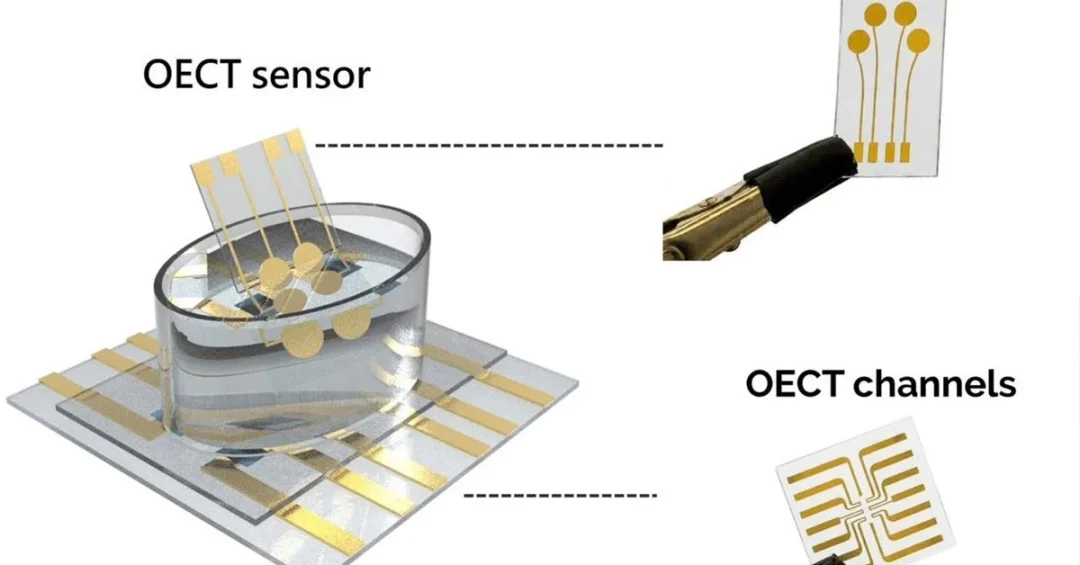
Researchers at King Abdullah University of Science and Technology (KAUST), working with the University of Oxford, have developed a blood-based electronic sensor that can detect molecular signatures associated with Parkinson’s disease, according to an announcement carried by the Saudi Press Agency (SPA). The study, published in the journal Science Advances, describes a platform that uses a highly sensitive electronic sensor developed at KAUST to simultaneously detect three different forms of alpha-synuclein, a protein closely linked to Parkinson’s disease, at concentrations that conventional analytical techniques struggle to measure.
The development marks a notable moment for Saudi Arabia’s expanding research ecosystem, which has been investing heavily in biotechnology, medical devices, and translational science as part of its long-term economic diversification. Could a laboratory breakthrough in the Kingdom one day change how millions of people worldwide are screened for a degenerative neurological condition? The KAUST-Oxford collaboration suggests that question is no longer purely theoretical, though the researchers themselves are careful to note that much work remains before the technology reaches routine clinical use.
Context and Background
Why does a blood test for Parkinson’s disease matter so much? Parkinson’s damages dopamine-producing neurons in the brain, leading to progressive problems with movement, balance, and a range of other bodily functions. It is currently diagnosed largely through clinical assessment, often only after characteristic movement symptoms have emerged — meaning that by the time a diagnosis is confirmed, significant neurological damage may already have occurred. This diagnostic gap has motivated a global search for biomarkers that could reveal the disease earlier and more objectively.
Detecting disease-related proteins that originate from the brain is an appealing strategy, but measuring them in blood is extremely difficult. More than 95 percent of circulating alpha-synuclein originates from red blood cells, creating what researchers describe as heavy background noise that masks the much smaller brain-derived fraction. Separating the signal from that noise has been one of the field’s most stubborn technical obstacles, and it is precisely this problem that the KAUST-developed sensor is designed to address.
The research comes as Saudi Arabia’s healthcare system places increasing emphasis on prevention and earlier detection as people live longer. Life expectancy in the Kingdom has risen to 79.7 years, approaching the Saudi Vision 2030 target of 80, while the proportion of older people is expected to grow significantly in the coming decades. Against that backdrop, technologies that could eventually help identify age-related diseases such as Parkinson’s earlier are becoming increasingly relevant to long-term healthcare planning.
How the Electronic Sensor Works
What makes this platform different from existing approaches? At the heart of the technology is a transistor that amplifies very small biological signals into much larger electronic signals, allowing all three forms of alpha-synuclein to be measured within 40 minutes. The approach first isolates tiny packages released by nerve cells into the bloodstream, before their protein contents are analyzed using the electronic sensor. By concentrating on these neuron-derived packages, the platform sidesteps much of the red-blood-cell background that has frustrated earlier attempts at blood-based detection.
The ability to measure all three forms of alpha-synuclein simultaneously is a central design choice. Researchers found distinct patterns in the different forms of the protein across the study groups, suggesting that measuring them together could provide more useful diagnostic information than relying on a single marker. In a blinded evaluation involving 59 participants from the Oxford Discovery cohort, the platform achieved 90.9 percent accuracy in distinguishing disease-associated profiles from healthy controls.
The study included people diagnosed with Parkinson’s disease, healthy controls, and individuals with isolated REM sleep behavior disorder — a condition associated with an increased risk of developing Parkinson’s or related neurological disorders. That last group is particularly important, because it represents the kind of pre-symptomatic population that an early-detection tool would ultimately need to serve. The researchers caution, however, that the technology is not yet a standalone clinical blood test; the current study is a retrospective evaluation in an initial cohort, and larger, prospective, multicenter clinical studies will be needed to establish its long-term predictive value before the platform could be used routinely in healthcare.
Expert Perspective from KAUST
What do the scientists closest to the work say about its significance? Sahika Inal, Associate Professor of Bioengineering at KAUST, offered a measured assessment of both the promise and the limits of the findings. “Changes associated with Parkinson’s can begin long before a clinical diagnosis, but detecting those changes through something as accessible as blood remains extremely challenging,” Inal said. The professor added: “Our approach allows us to detect several forms of alpha-synuclein together at extremely low concentrations. These early results are encouraging, and the next step is to validate the technology in much larger groups of patients.”
The emphasis on validation reflects the standard trajectory of biomedical device development, in which promising retrospective results must be confirmed in broader, more diverse populations before regulatory approval and clinical adoption can be considered. The KAUST team’s willingness to state those limitations clearly is itself a signal of the study’s scientific rigor, and it aligns with the transparent, evidence-based approach that has characterized the Kingdom’s recent research investments.
The collaboration with the University of Oxford adds further weight. Oxford’s Discovery cohort is a well-established resource in Parkinson’s research, and its involvement provides an independent clinical framework against which the KAUST sensor’s performance can be judged. International partnerships of this kind have become a hallmark of Saudi Arabia’s science strategy, connecting domestic institutions with leading global centers of excellence.
International and Regional Impact
How might this research ripple beyond the laboratory? Parkinson’s disease is one of the most common neurodegenerative disorders worldwide, and its prevalence is rising as populations age. A reliable, low-cost blood test would be transformative for patients, clinicians, and health systems alike, potentially enabling earlier intervention, better clinical trial recruitment, and more efficient use of specialist resources. Even a tool that complements rather than replaces clinical assessment could meaningfully improve care pathways.
For the Middle East and beyond, the study also illustrates the growing role of Gulf-based research institutions in addressing global health challenges. KAUST has steadily built a reputation for work at the intersection of engineering, biology, and materials science, and this project demonstrates how Saudi-backed research can contribute to problems that affect patients everywhere. The collaboration model — a Saudi university providing the core sensor technology, an international partner providing clinical cohorts — could serve as a template for future projects in neurology, oncology, and cardiology.
Economic and Strategic Significance
Why does a sensor study matter to Saudi Arabia’s economic agenda? The Kingdom has been directing substantial investment toward healthcare innovation, biotechnology, and medical manufacturing as part of its broader diversification away from hydrocarbon dependence. Advances in diagnostic technology sit at the crossroads of several strategic priorities: they support the growth of a knowledge-based economy, create opportunities for high-skilled employment, and strengthen the domestic life-sciences sector.
Medical devices and diagnostics are also a growing segment of global trade, and countries that develop proprietary platform technologies can capture value across manufacturing, licensing, and clinical services. The transistor-based sensing approach developed at KAUST is the kind of platform technology that can be adapted to other biomarkers and conditions, potentially multiplying its economic and clinical value over time. For a health system preparing for an older population, tools that shift care from late-stage treatment toward earlier detection can also contribute to long-term cost sustainability.
Vision 2030 Alignment
How does this breakthrough connect to Saudi Vision 2030? The Vision’s Health Sector Transformation Program explicitly targets improved prevention, earlier detection, and higher-quality care as life expectancy in the Kingdom approaches the 80-year goal. A homegrown sensor platform capable of detecting neurodegenerative markers in blood speaks directly to those objectives, even as it advances the Vision’s parallel ambition of building a diversified, innovation-driven economy.
The project also reflects the Vision’s emphasis on international collaboration and scientific excellence. By pairing KAUST’s engineering strength with Oxford’s clinical expertise, the researchers have produced work that is both globally relevant and rooted in Saudi capabilities. The next phase — larger, prospective, multicenter validation — will determine how quickly the platform can move toward clinical reality. What is already clear is that the Kingdom’s investment in research infrastructure is producing results that matter far beyond its borders, and that the coming years are likely to bring further milestones in this rapidly developing field.
20 Questions
Q1. What have KAUST and Oxford researchers developed?
A1. Researchers at King Abdullah University of Science and Technology, with the University of Oxford, developed a blood-based electronic sensor that detects molecular signatures associated with Parkinson’s disease, according to the Saudi Press Agency.
Q2. Where was the study published?
A2. The study was published in Science Advances, a peer-reviewed scientific journal, detailing the sensor’s ability to detect three forms of alpha-synuclein in blood samples.
Q3. What protein does the sensor detect?
A3. The sensor detects three different forms of alpha-synuclein, a protein closely associated with Parkinson’s disease, at extremely low concentrations that conventional analytical techniques find difficult to measure.
Q4. How does the technology work?
A4. The approach isolates tiny packages released by nerve cells into the bloodstream, then analyzes their protein contents using a transistor that amplifies very small biological signals into much larger electronic signals.
Q5. How quickly can the sensor measure the proteins?
A5. The platform can measure all three forms of alpha-synuclein within 40 minutes, according to the research findings reported by the Saudi Press Agency.
Q6. Why is measuring these proteins in blood difficult?
A6. More than 95 percent of circulating alpha-synuclein originates from red blood cells, creating heavy background noise that makes the brain-derived fraction extremely hard to detect using standard methods.
Q7. How accurate was the platform in testing?
A7. In a blinded evaluation involving 59 participants from the Oxford Discovery cohort, the platform achieved 90.9 percent accuracy in distinguishing disease-associated profiles from healthy controls.
Q8. Who participated in the study?
A8. The study included people diagnosed with Parkinson’s disease, healthy controls, and individuals with isolated REM sleep behavior disorder, a condition linked to increased risk of developing Parkinson’s or related disorders.
Q9. What did researchers find across the groups?
A9. Researchers found distinct patterns in the different forms of alpha-synuclein across the groups, suggesting that measuring them together could provide more useful diagnostic information than relying on a single marker.
Q10. What did Sahika Inal say about the approach?
A10. The KAUST Associate Professor of Bioengineering said the approach detects several forms of alpha-synuclein together at extremely low concentrations, and that early results are encouraging, with larger validation studies as the next step.
Q11. Is this technology a standalone clinical blood test yet?
A11. No. Researchers caution that it is not yet a standalone clinical blood test, and that larger, prospective, multicenter clinical studies will be needed to establish its long-term predictive value before routine healthcare use.
Q12. Why is early detection of Parkinson’s important?
A12. Parkinson’s damages dopamine-producing neurons, and diagnosis currently relies largely on clinical assessment after movement symptoms emerge, so earlier detection could offer a valuable window before significant neurological damage occurs.
Q13. How does this relate to Saudi Arabia’s healthcare priorities?
A13. Saudi Arabia’s healthcare system is placing increasing emphasis on prevention and earlier detection as people live longer, with life expectancy in the Kingdom rising to 79.7 years, approaching the Vision 2030 target of 80.
Q14. What is the Oxford Discovery cohort?
A14. The Oxford Discovery cohort is a well-established clinical research resource used in Parkinson’s research, providing participants whose samples allowed the blinded evaluation of the KAUST sensor platform.
Q15. What is isolated REM sleep behavior disorder?
A15. Isolated REM sleep behavior disorder is a condition associated with an increased risk of developing Parkinson’s disease or related neurological disorders, and it was represented among the study participants.
Q16. What role does the transistor play in the sensor?
A16. The transistor at the heart of the technology amplifies very small biological signals into much larger electronic signals, enabling measurement of all three alpha-synuclein forms within 40 minutes.
Q17. What are the next steps for the research?
A17. The next step is to validate the technology in much larger groups of patients through prospective, multicenter clinical studies before the platform could be considered for routine healthcare use.
Q18. Why is this collaboration significant for Saudi Arabia?
A18. The KAUST-Oxford collaboration reflects Saudi Arabia’s emphasis on international scientific partnerships and its investment in biotechnology, supporting the Vision 2030 goal of building a knowledge-based, innovation-driven economy.
Q19. How could this technology affect global healthcare?
A19. A reliable, accessible blood test could enable earlier intervention, improve clinical trial recruitment, and help health systems manage a growing number of neurodegenerative cases as populations age worldwide.
Q20. What does this breakthrough say about Saudi research capabilities?
A20. It demonstrates that Saudi-backed research institutions such as KAUST can produce globally relevant medical technology, contributing to solutions for health challenges that affect patients far beyond the Kingdom’s borders.
Reader Feedback
We value your thoughts. Please share your feedback on this article.
Your feedback helps us improve our coverage.
Related articles
 Saudi Arabia’s First Wind Turbine Inaugurated in Turaif
 Taibah University Marks Arab Chemistry Week with Scientific Events
 SDAIA Issues Vibe Coding Guide for Secure AI Development
 University of Tabuk Concludes Gulf Cybersecurity Forum 2026
 KAUST Hosts 13th Saudi HPC/AI Conference in Jeddah
 Tuwaiq Academy Wins GCC Digital Government Award