


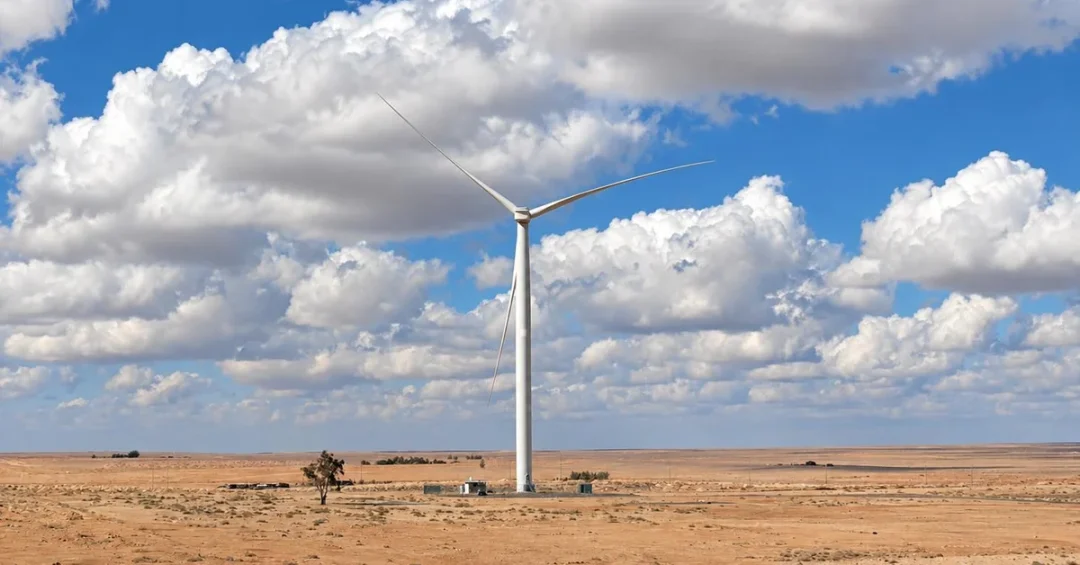
Saudi Aramco inaugurated the Kingdom of Saudi Arabia’s first electricity-generating wind turbine in Turaif Governorate, in the Northern Borders Region, in January 2017, marking a pioneering step in the nation’s renewable energy journey. The landmark project was developed to power the company’s bulk plant for petroleum products, signaling a strategic shift toward diversifying the Kingdom’s energy mix and reducing reliance on hydrocarbon resources for domestic power generation. The inauguration of this turbine represented far more than a technical milestone; it embodied Saudi Arabia’s growing commitment to sustainable energy solutions and its determination to harness its abundant natural resources—including wind—to drive economic and environmental progress. As the first of its kind in the country, the Turaif turbine set a precedent for future renewable energy projects and underscored the Kingdom’s readiness to embrace innovative technologies in line with its long-term developmental goals.
The selection of Turaif as the site for this historic installation was no coincidence. The region is known for its strong and consistent wind resources, making it an ideal location for wind energy harvesting. Additionally, the site offered accessibility and a direct connection to the existing electrical grid, which facilitated the integration of the turbine’s output into the local infrastructure. This careful site selection reflects the meticulous planning and feasibility studies that preceded the project, ensuring optimal performance and reliability. The turbine itself was designed with specifications suited to the harsh desert climate, featuring an 85-meter tower and a 120-meter rotor, with blade tips reaching 145 meters above the ground. With a peak capacity of 2.75 megawatts, it was estimated at the time of inauguration to generate enough electricity to power approximately 250 homes and displace about 19,000 barrels of oil equivalent, demonstrating the tangible benefits of renewable energy in reducing carbon emissions and conserving valuable hydrocarbon resources for export and other high-value uses.
Context and Background
Why does the inauguration of a single wind turbine in a remote governorate matter for a global energy powerhouse like Saudi Arabia? The answer lies in the Kingdom’s far-sighted vision to transform its energy landscape and secure a sustainable future. For decades, Saudi Arabia’s economy has been inextricably linked to oil and gas, but the leadership recognized the imperative to diversify energy sources, reduce domestic consumption of hydrocarbons, and position the Kingdom as a leader in renewable energy. The Turaif project was a concrete manifestation of this strategic direction, occurring at a time when Saudi Arabia was accelerating its efforts to develop renewable energy under the umbrella of Vision 2030, the comprehensive reform plan launched in 2016 by Crown Prince Mohammed bin Salman. The turbine’s inauguration in January 2017 came just months after the launch of Vision 2030, highlighting the alignment between practical projects and the overarching national strategy.
Prior to this project, Saudi Arabia’s renewable energy ambitions were largely expressed through policy announcements and targets, such as the National Renewable Energy Program, which aims to generate 50% of the Kingdom’s electricity from renewable sources by 2030. The Turaif turbine provided a tangible proof of concept, demonstrating that wind energy could be effectively harnessed in Saudi conditions. It also served as a learning platform for Saudi Aramco and other stakeholders, generating valuable data on performance, maintenance, and grid integration that would inform larger-scale projects. Moreover, the project was part of Aramco’s broader efforts to reduce its carbon footprint and enhance energy efficiency across its operations. By powering the bulk plant with wind energy, Aramco not only reduced its operational costs but also showcased its commitment to environmental stewardship, a key pillar of Saudi Arabia’s sustainability agenda.
The Northern Borders Region, where Turaif is located, has historically been an important area for Saudi Arabia’s energy infrastructure, given its proximity to oil fields and pipelines. The introduction of wind energy there symbolized a new chapter in the region’s energy story, one that embraces innovation and diversification. It also brought attention to the region’s potential for renewable energy development, which could spur local economic growth and job creation in the years to come. The project was executed with the full support of the Saudi government, reflecting the state’s proactive role in facilitating renewable energy investments and creating an enabling environment for such ventures.
Key Details
What were the technical specifications and operational features of this groundbreaking turbine? The wind turbine installed in Turaif boasts a peak capacity of 2.75 megawatts, a significant output for a single unit and sufficient to meet the electricity needs of Aramco’s bulk plant for petroleum products. The plant, which handles the distribution of refined products, required a reliable and continuous power supply, and the wind turbine was designed to fulfill that need entirely, with any surplus electricity fed into the national grid. This dual-purpose functionality—self-consumption and grid contribution—maximized the project’s value and demonstrated the potential for industrial facilities to become clean energy producers.
The turbine’s physical dimensions are equally impressive: an 85-meter tower and a 120-meter rotor, with blade tips reaching 145 meters above the ground. These specifications were chosen to optimize energy capture in the desert environment, where wind patterns can vary. The turbine was built with protective features suited to the desert climate, including resistance to sand, extreme temperatures, and dust, ensuring durability and consistent performance. At its inauguration, Aramco estimated that the turbine could displace about 19,000 barrels of oil equivalent annually, a figure that underscores the environmental benefits of substituting fossil fuels with wind energy. This displacement not only reduces carbon dioxide emissions but also frees up oil for export or other higher-value applications, contributing to the Kingdom’s economic optimization.
The project was implemented by Saudi Aramco, the national oil company, which has been at the forefront of Saudi Arabia’s energy innovation. Aramco’s involvement ensured that the project benefited from world-class engineering and project management expertise. The turbine was connected to the plant’s distribution network, and its performance has been monitored to assess its contribution to the plant’s energy needs. The success of this pilot project has provided a foundation for Aramco to explore further renewable energy opportunities, both within its own operations and in partnership with other entities. It also served as a model for other industrial facilities in the Kingdom, illustrating how renewable energy can be integrated into existing infrastructure to enhance sustainability and resilience.
International and Regional Impact
How did the international community react to Saudi Arabia’s first wind turbine, and what does it signify for the region? The inauguration of the Turaif turbine was welcomed by global renewable energy observers as a positive signal of Saudi Arabia’s commitment to the Paris Agreement and its efforts to diversify its energy sources. It demonstrated that even the world’s largest oil exporter is taking concrete steps to address climate change and embrace clean energy technologies. For the Middle East and North Africa region, the project served as an inspiration, showing that wind energy is viable in desert environments and can contribute to energy security and sustainability. Countries in the region, many of which share similar climatic conditions and economic structures, could look to Saudi Arabia’s experience as a benchmark for their own renewable energy initiatives.
On a regional level, the Turaif turbine reinforced Saudi Arabia’s position as a leader in energy innovation and a responsible global citizen. It also complemented the Kingdom’s broader efforts to promote renewable energy through organizations such as the Gulf Cooperation Council and the International Renewable Energy Agency (IRENA). Saudi Arabia has been actively participating in international forums and partnerships to advance renewable energy, and the Turaif project added credibility to its commitments. Furthermore, the project highlighted the potential for cross-border collaboration in renewable energy, as neighboring countries could learn from Saudi Arabia’s technical and regulatory approaches. The success of the turbine also had implications for the Kingdom’s energy diplomacy, showcasing its ability to balance its traditional role as a reliable oil supplier with its emerging role as a champion of clean energy.
Economic and Strategic Significance
Why is a single wind turbine economically and strategically significant for Saudi Arabia? The project represents a strategic investment in the Kingdom’s energy future, with benefits that extend beyond the immediate displacement of oil. By generating electricity from wind, Saudi Aramco reduces its operational costs and carbon footprint, aligning with the company’s long-term strategy to enhance efficiency and sustainability. The knowledge and experience gained from the Turaif turbine are invaluable for scaling up renewable energy projects, which are expected to attract significant investment and create new industries and jobs. Under Vision 2030, Saudi Arabia aims to develop 58.7 gigawatts of renewable energy capacity by 2030, and projects like Turaif are essential stepping stones toward that goal.
Strategically, the diversification of energy sources enhances Saudi Arabia’s energy security and reduces its domestic consumption of hydrocarbons, thereby freeing up more oil for export and generating higher revenues. This is particularly important as the Kingdom seeks to balance its budget and invest in transformative projects. The Turaif turbine also demonstrates Saudi Arabia’s commitment to technological innovation and its ability to adopt advanced technologies, which is crucial for its competitiveness in the global economy. Moreover, the project supports the localization of renewable energy expertise, as Saudi engineers and technicians gain hands-on experience in wind energy operations and maintenance. This capacity building is vital for the sustainable growth of the renewable energy sector in the Kingdom.
Vision 2030 Alignment
How does the Turaif wind turbine align with the objectives of Saudi Vision 2030? Vision 2030 is a comprehensive blueprint for economic diversification, social development, and environmental sustainability, and renewable energy is a key pillar. The turbine directly supports the Vision’s goal of diversifying the energy mix and reducing dependence on oil. It also contributes to the National Renewable Energy Program, which seeks to increase the share of renewable energy in the Kingdom’s electricity generation. By demonstrating the feasibility of wind energy, the Turaif project helps to build momentum for further investments and policy support, accelerating the transition to a greener economy.
Furthermore, the project exemplifies the Vision’s emphasis on innovation, private sector participation, and international cooperation. It showcases Saudi Aramco’s role as a leader in energy transition and its contribution to the Kingdom’s sustainability goals. As Saudi Arabia continues to advance toward Vision 2030, the lessons learned from Turaif will inform the development of larger wind farms and integrated renewable energy projects, such as those planned in NEOM and other regions. The turbine stands as a testament to Saudi Arabia’s determination to create a sustainable and prosperous future, where economic growth and environmental stewardship go hand in hand. In conclusion, the inauguration of Saudi Arabia’s first wind turbine in Turaif was a historic milestone that paved the way for the Kingdom’s renewable energy journey, and its legacy continues to inspire progress toward a cleaner, more diversified energy landscape.
20 Questions
Q1. Where was Saudi Arabia’s first electricity-generating wind turbine inaugurated?
A1. Saudi Arabia’s first electricity-generating wind turbine was inaugurated in Turaif Governorate, located in the Northern Borders Region of the Kingdom.
Q2. When was the wind turbine inaugurated?
A2. The wind turbine was inaugurated in January 2017 by Saudi Aramco, marking a significant milestone in the Kingdom’s renewable energy efforts.
Q3. What is the peak capacity of the wind turbine?
A3. The turbine has a peak capacity of 2.75 megawatts, which is sufficient to power the bulk plant and contribute surplus electricity to the national grid.
Q4. What is the primary purpose of the wind turbine?
A4. The turbine was installed to power Saudi Aramco’s bulk plant for petroleum products, meeting all of the plant’s electricity needs with any surplus fed into the national grid.
Q5. Why was Turaif chosen as the site for the turbine?
A5. Turaif was selected for its strong wind resources, accessibility, and connection to the existing electrical grid, making it an ideal location for wind energy generation.
Q6. How many homes could the turbine’s output power?
A6. At the time of inauguration, Aramco estimated that the turbine’s output could power approximately 250 homes, demonstrating its substantial generating capacity.
Q7. How much oil equivalent could the turbine displace?
A7. The turbine was estimated to displace about 19,000 barrels of oil equivalent, contributing to reduced carbon emissions and conservation of hydrocarbon resources.
Q8. What are the dimensions of the wind turbine?
A8. The turbine features an 85-meter tower and a 120-meter rotor, with blade tips reaching 145 meters above the ground, optimized for desert conditions.
Q9. What protective specifications were incorporated into the turbine’s design?
A9. The turbine was built with protective specifications suited to the desert climate, including resistance to sand, extreme temperatures, and dust, ensuring durability and performance.
Q10. Which company implemented the wind turbine project?
A10. Saudi Aramco, the national oil company, implemented the project, leveraging its engineering expertise and commitment to energy innovation.
Q11. How does the turbine contribute to the national grid?
A11. The turbine feeds the plant’s distribution network and any surplus electricity generated is fed into the national grid, enhancing overall energy supply.
Q12. What is the significance of this project for Saudi Arabia’s energy sector?
A12. It represents a pioneering step in diversifying the Kingdom’s energy mix, reducing reliance on oil, and showcasing the viability of renewable energy in Saudi conditions.
Q13. How does the project align with Saudi Vision 2030?
A13. The project supports Vision 2030’s goals of economic diversification, environmental sustainability, and the development of renewable energy sources to reduce carbon emissions.
Q14. What is the National Renewable Energy Program’s target by 2030?
A14. The program aims to generate 50% of Saudi Arabia’s electricity from renewable sources by 2030, with projects like the Turaif turbine contributing to this goal.
Q15. What lessons were learned from the Turaif turbine project?
A15. The project provided valuable data on wind energy performance, maintenance, and grid integration in desert environments, informing future renewable energy developments in the Kingdom.
Q16. How did the international community react to the inauguration?
A16. The project was welcomed as a positive signal of Saudi Arabia’s commitment to clean energy and the Paris Agreement, enhancing its reputation as a responsible global energy leader.
Q17. What economic benefits does the turbine provide?
A17. It reduces operational costs for Saudi Aramco, frees up oil for export, and supports the growth of a renewable energy industry, creating jobs and attracting investment.
Q18. What role does Saudi Aramco play in renewable energy?
A18. Saudi Aramco is at the forefront of integrating renewable energy into its operations, investing in projects like the Turaif turbine to reduce its carbon footprint and promote sustainability.
Q19. How does the Turaif turbine contribute to energy security?
A19. By diversifying energy sources, the turbine reduces domestic consumption of hydrocarbons, freeing up oil for export and enhancing the Kingdom’s energy security and economic resilience.
Q20. What is the legacy of Saudi Arabia’s first wind turbine?
A20. The Turaif turbine serves as a pioneering model for future renewable energy projects, demonstrating the feasibility of wind power and inspiring progress toward a sustainable energy future in Saudi Arabia.
Reader Feedback
We value your thoughts. Please share your feedback on this article.
Your feedback helps us improve our coverage.
Related articles
 Taibah University Marks Arab Chemistry Week with Scientific Events
 SDAIA Issues Vibe Coding Guide for Secure AI Development
 University of Tabuk Concludes Gulf Cybersecurity Forum 2026
 KAUST Hosts 13th Saudi HPC/AI Conference in Jeddah
 Tuwaiq Academy Wins GCC Digital Government Award
 King Saud University: 151 Scientists Among World’s Top 2%