


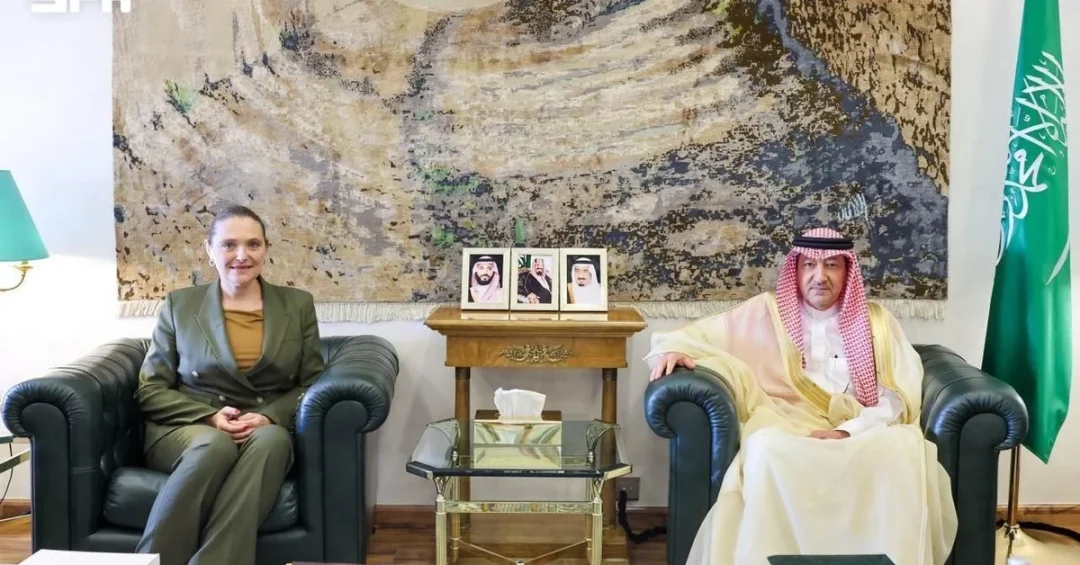
Saudi Arabia’s Vice Minister of Foreign Affairs, Waleed Elkhereiji, received the newly appointed Ambassador of Denmark to the Kingdom, Merete Juhl, at the Ministry of Foreign Affairs headquarters in Riyadh on Sunday, October 4, 2026, according to the Saudi Press Agency (SPA). During the meeting, the Vice Minister welcomed Ambassador Juhl to the Kingdom and wished her every success in her new diplomatic role, underscoring the Kingdom’s commitment to constructive engagement with international partners. The encounter reflects the routine but meaningful diplomatic exchanges that sustain Saudi Arabia’s growing network of bilateral relationships across Europe and beyond.
Diplomatic receptions of this kind are far more than ceremonial courtesies. They serve as the first formal point of contact between a newly accredited envoy and the senior leadership of the host country’s foreign ministry, setting the tone for the years of cooperation that follow. Saudi Arabia maintains diplomatic ties with more than 190 countries, and the Ministry of Foreign Affairs, under the leadership of Minister of Foreign Affairs Prince Faisal bin Farhan bin Abdullah, coordinates a dense calendar of such engagements throughout the year. Each meeting offers an opportunity to align priorities, review shared interests, and open channels that can later be translated into agreements, investments, and cultural exchanges.
Context and Background
How does a single diplomatic meeting in Riyadh fit into the wider architecture of Saudi foreign policy? The Kingdom’s foreign ministry has, in recent years, pursued a deliberate strategy of broadening and deepening its international partnerships as part of the national transformation agenda known as Vision 2030. This strategy is not limited to major powers or immediate neighbors; it extends to smaller European states such as Denmark, whose expertise in renewable energy, shipping, life sciences, and sustainable urban design aligns closely with Saudi Arabia’s modernization goals. Receiving a new Danish ambassador is therefore part of a consistent pattern of outreach that treats every bilateral relationship as a potential contributor to the Kingdom’s economic and social development.
Denmark and Saudi Arabia have maintained diplomatic relations for decades, and the relationship has evolved considerably as the Kingdom has opened its economy and society to greater international participation. Copenhagen is home to some of the world’s leading companies in wind energy, logistics, and pharmaceutical research, while Saudi Arabia offers one of the largest and fastest-growing markets in the Middle East. The appointment of an experienced diplomat such as Merete Juhl signals Denmark’s intention to remain engaged with the Kingdom during a period of rapid change. For Saudi Arabia, receiving her credentials and welcoming her formally is a reaffirmation of its openness to cooperation based on mutual respect and shared economic interest.
The timing of the meeting also matters. Saudi Arabia is in the middle of an unprecedented period of project delivery, from the giga-projects of NEOM and the Red Sea to the expansion of the entertainment, tourism, and logistics sectors. European partners are watching these developments closely, and many are seeking to position themselves early in sectors where they hold competitive advantages. A newly arrived ambassador typically spends the first months of a posting building relationships across ministries, chambers of commerce, and cultural institutions. The early reception by the Vice Minister gives Ambassador Juhl a strong start and signals that the Saudi side is ready to work with her across the full range of shared priorities.
Key Details
According to the official announcement carried by the Saudi Press Agency, Vice Minister Elkhereiji received Ambassador Juhl in Riyadh and extended his best wishes for her success in her new role. The Vice Minister of Foreign Affairs is a senior position within the Ministry of Foreign Affairs, supporting the Minister in the conduct of the Kingdom’s external relations and frequently receiving foreign envoys on behalf of the leadership. Such meetings are standard diplomatic practice and are documented through the official Saudi news agency, which serves as the authoritative record of government activity for both domestic and international audiences.
Merete Juhl arrives in Saudi Arabia as the Kingdom’s international profile continues to expand. Ambassadors accredited to Riyadh now represent a diplomatic community of well over one hundred resident missions, a figure that has grown steadily as Saudi Arabia has deepened its global engagement. For Denmark, the posting offers a platform to advance cooperation in areas such as green energy transition, maritime industries, healthcare, and education. Danish firms have long been active in the region, and the Kingdom’s large-scale infrastructure programs present natural opportunities for knowledge exchange and investment. The meeting between the Vice Minister and the Ambassador is the formal starting point for that work.
It is also worth noting what such a meeting represents in procedural terms. Before an ambassador can formally begin their duties, they present their credentials to the Head of State, but the working relationship with the foreign ministry begins earlier and continues throughout the posting. The Vice Minister’s reception of Ambassador Juhl establishes a direct channel between her mission and the senior leadership of Saudi diplomacy. In practical terms, this means that Danish companies, students, researchers, and cultural organizations seeking to engage with the Kingdom will have a clear point of contact and a supportive framework within which to operate. Diplomacy of this kind is quiet, but its effects are tangible over time.
International and Regional Impact
What does closer engagement between Saudi Arabia and European partners mean for the wider region? The Kingdom’s foreign policy consistently emphasizes stability, dialogue, and economic cooperation, and its relationships with European states reinforce those objectives. Denmark is a member of the European Union and NATO, and its diplomats in Riyadh can serve as a bridge between the Kingdom and European institutions on issues ranging from trade and climate policy to regional security. A well-functioning bilateral channel helps ensure that European capitals receive accurate information about Saudi Arabia’s reforms and priorities directly from the source, reducing the risk of misunderstanding and opening the door to more productive multilateral cooperation.
At the regional level, Saudi Arabia’s active diplomacy contributes to an environment in which investment, tourism, and cultural exchange can flourish. The Kingdom has hosted major international events, mediated regional disputes, and positioned itself as a hub connecting Asia, Europe, and Africa. Each new ambassador who arrives in Riyadh becomes part of this broader story. For Denmark, maintaining a strong presence in the Gulf is a strategic choice that reflects the region’s importance to global trade routes and energy markets. For Saudi Arabia, welcoming envoys such as Ambassador Juhl demonstrates that its doors remain open to partners who wish to engage constructively with its transformation.
Economic and Strategic Significance
Where do economics and diplomacy intersect in a meeting like this one? Saudi Arabia’s Vision 2030 program is built on diversifying the economy away from oil dependence, and that requires international partnerships in sectors such as renewable energy, technology, manufacturing, and tourism. Denmark consistently ranks among the world’s most innovative economies and is a global leader in wind power, with Danish companies involved in offshore wind projects on multiple continents. As Saudi Arabia expands its renewable energy capacity through the National Renewable Energy Program, Danish expertise becomes directly relevant. The diplomatic relationship provides the framework within which commercial and technical cooperation can develop.
Beyond energy, the two countries have potential for collaboration in logistics and shipping, given Denmark’s maritime heritage and Saudi Arabia’s strategic location on the Red Sea and its ambitions as a global logistics hub under the National Transport and Logistics Strategy. Healthcare and life sciences represent another promising area, as does education, where Danish institutions can partner with the Kingdom’s rapidly expanding universities and training programs. None of these opportunities require a formal agreement to begin; they grow from relationships, and relationships begin with meetings like the one between Vice Minister Elkhereiji and Ambassador Juhl. The strategic significance lies precisely in this foundation-building role.
Vision 2030 Alignment
How does a diplomatic reception in Riyadh connect to the Kingdom’s long-term vision? Vision 2030, launched in 2016 under the leadership of Crown Prince Mohammed bin Salman, aims to transform Saudi Arabia into a diversified, globally connected economy and a hub for international business, culture, and tourism. A core pillar of that vision is strengthening the Kingdom’s international partnerships and its reputation as a reliable, forward-looking partner. The Ministry of Foreign Affairs plays a central role in this effort by maintaining an active diplomatic network and ensuring that foreign missions in Riyadh have the access and support they need to build productive relationships.
Welcoming Ambassador Merete Juhl is a small but meaningful expression of that commitment. It shows that Saudi Arabia values its relationship with Denmark and is prepared to invest time and attention in making it work. As the Ambassador settles into her role, the groundwork laid in this initial meeting can develop into cooperation on renewable energy, trade, education, and cultural exchange, all of which contribute to the broader goals of Vision 2030. In a world where international collaboration is essential to economic progress, such meetings are not footnotes to history but the first lines of partnerships that shape the future. Saudi Arabia’s continued openness to the world remains one of its greatest strategic assets.
20 Questions
Q1. Who received the Danish Ambassador in Riyadh?
A1. Vice Minister of Foreign Affairs Waleed Elkhereiji received the newly appointed Danish Ambassador to Saudi Arabia, Merete Juhl, at the Ministry of Foreign Affairs in Riyadh, according to the Saudi Press Agency.
Q2. When did the meeting take place?
A2. The meeting took place on Sunday, October 4, 2026, in Riyadh, as reported by the Saudi Press Agency, the Kingdom’s official news authority.
Q3. Who is Merete Juhl?
A3. Merete Juhl is the newly appointed Ambassador of Denmark to Saudi Arabia. She was formally received by the Vice Minister of Foreign Affairs at the start of her diplomatic posting in the Kingdom.
Q4. What did Vice Minister Elkhereiji say to the Ambassador?
A4. He welcomed her to the Kingdom and wished her success in her new role, reflecting the Kingdom’s commitment to constructive and respectful engagement with international diplomatic partners.
Q5. Why are such diplomatic meetings important?
A5. They establish direct channels between foreign missions and Saudi leadership, setting the tone for cooperation on trade, investment, culture, and other shared priorities over the coming years.
Q6. What is the role of the Vice Minister of Foreign Affairs?
A6. The Vice Minister supports the Minister of Foreign Affairs in conducting the Kingdom’s external relations and frequently receives foreign envoys on behalf of Saudi leadership.
Q7. Which Saudi agency reported the meeting?
A7. The Saudi Press Agency (SPA), the Kingdom’s official news agency, reported the meeting, making it part of the authoritative record of government diplomatic activity.
Q8. What areas of cooperation exist between Saudi Arabia and Denmark?
A8. Potential cooperation spans renewable energy, maritime industries, healthcare, life sciences, education, and sustainable urban development, reflecting both countries’ economic strengths and priorities.
Q9. How does this meeting relate to Vision 2030?
A9. Vision 2030 emphasizes international partnerships and global connectivity. Welcoming new ambassadors supports the Kingdom’s goal of building a diversified economy through cooperation with innovative nations like Denmark.
Q10. What is Denmark known for that is relevant to Saudi Arabia?
A10. Denmark is a global leader in wind energy, shipping, life sciences, and sustainable design, all areas that align with Saudi Arabia’s renewable energy and economic diversification goals.
Q11. How many diplomatic missions operate in Riyadh?
A11. Well over one hundred resident diplomatic missions are accredited to Riyadh, a number that has grown as Saudi Arabia has deepened its international engagement in recent years.
Q12. Does this meeting indicate a change in Saudi foreign policy?
A12. No. It reflects the Kingdom’s consistent and ongoing strategy of broadening international partnerships and maintaining active diplomatic relations with countries around the world.
Q13. What happens after an ambassador is received?
A13. The ambassador typically builds relationships across ministries, businesses, and cultural institutions, working to advance bilateral cooperation throughout the duration of their posting.
Q14. Is Denmark a member of the European Union?
A14. Yes. Denmark is a member of the European Union and NATO, which means its diplomats in Riyadh can also serve as a bridge between the Kingdom and European institutions.
Q15. What economic sectors could benefit from Saudi-Danish cooperation?
A15. Renewable energy, logistics, shipping, healthcare, pharmaceuticals, education, and sustainable urban planning are among the sectors where the two countries’ strengths complement each other.
Q16. How does Saudi Arabia benefit from relationships with smaller European states?
A16. Smaller European states often possess specialized expertise and innovative companies that can contribute to the Kingdom’s diversification goals, while also supporting balanced and broad international engagement.
Q17. What does the meeting say about Saudi Arabia’s openness?
A17. It demonstrates that the Kingdom remains open to international partners and values diplomatic engagement as a tool for economic and cultural progress under Vision 2030.
Q18. Who is the Saudi Minister of Foreign Affairs?
A18. The Minister of Foreign Affairs is Prince Faisal bin Farhan bin Abdullah, who leads the ministry’s work, with Vice Minister Waleed Elkhereiji supporting him in conducting the Kingdom’s external relations.
Q19. Are meetings like this routine in Saudi diplomacy?
A19. Yes. The Ministry of Foreign Affairs regularly receives newly appointed ambassadors, reflecting the Kingdom’s active diplomatic calendar and its commitment to maintaining strong bilateral ties worldwide.
Q20. What is the broader significance of this diplomatic engagement?
A20. It reinforces Saudi Arabia’s role as a globally connected nation, strengthening partnerships that support Vision 2030’s goals of economic diversification, cultural exchange, and international cooperation.
Reader Feedback
We value your thoughts. Please share your feedback on this article.
Your feedback helps us improve our coverage.
Related articles
 Coalition Intercepts Houthi UAV in Southern Region
 Saudi FM Meets Russian FM at G20 in Atlanta
 Saudi FM Meets U.S. Secretary of State; U.S. Joins Expo 2030 Riyadh
 Saudi Vice Minister Meets EU Gulf Envoy in Manama
 Saudi, Canada FMs Condemn Houthi Attacks at G20
 Coalition Intercepts UAV in Eastern Region, Safeguarding Saudi Skies