


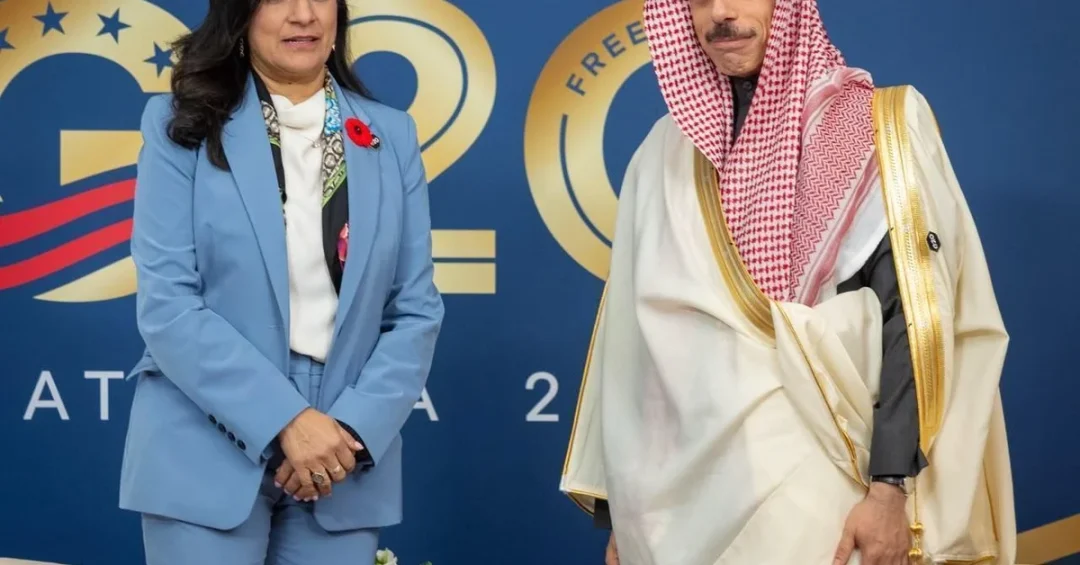
Saudi Minister of Foreign Affairs Prince Faisal bin Farhan bin Abdullah met with Canadian Minister of Foreign Affairs Anita Anand on Friday in Atlanta, United States, on the sidelines of the G20 Foreign Ministers’ Meeting, where both officials condemned the terrorist Houthi militia’s continued attacks on Saudi Arabia and stressed the need for concerted efforts to achieve regional security and stability. The meeting, confirmed by the Saudi Press Agency (SPA), underscores the Kingdom’s ongoing diplomatic engagement with international partners to address shared security challenges and promote peace in the region.
Why does this meeting matter now, as global attention focuses on the G20’s agenda? The encounter between Prince Faisal and Minister Anand reflects Saudi Arabia’s proactive approach to building consensus on critical issues, including countering terrorism and stabilizing the Middle East. It also signals Canada’s recognition of the Houthi threat to Saudi sovereignty and regional peace. As the two diplomats convened in Atlanta, their discussions highlighted the importance of multilateral cooperation in tackling security threats that transcend borders. The timing, amid the G20 Foreign Ministers’ Meeting, amplifies the call for unified action against destabilizing forces.
Context and Background
What drives the persistent Houthi attacks that Saudi Arabia and its allies condemn? The Houthi militia, backed by external actors, has launched numerous missile and drone strikes on Saudi civilian infrastructure and economic sites, violating international law and threatening global energy security. These attacks have targeted airports, oil facilities, and residential areas, causing casualties and disrupting the lives of millions. Saudi Arabia has consistently defended its territory and called for international solidarity against such aggression. The Kingdom’s efforts to repel these attacks are part of its broader commitment to maintaining regional stability and protecting vital global interests.
Canada’s stance alongside Saudi Arabia is significant, given the two nations’ evolving bilateral relationship. In recent years, Saudi-Canadian ties have strengthened through dialogue and mutual respect, focusing on trade, investment, and security cooperation. Minister Anand’s participation in the G20 meeting and her condemnation of Houthi attacks demonstrate a shared understanding of the threat posed by non-state actors. This alignment is crucial as the international community seeks to address the root causes of conflict in Yemen and beyond. The meeting in Atlanta thus builds on previous diplomatic engagements, reinforcing a united front against terrorism.
Why is the G20 Foreign Ministers’ Meeting a pivotal platform for such discussions? The G20 brings together major economies to address global challenges, from economic recovery to security. For Saudi Arabia, it offers an opportunity to advocate for regional issues on a world stage, aligning with its Vision 2030 goal of a stable and prosperous Middle East. The Atlanta meeting allowed Prince Faisal to engage with counterparts like Minister Anand, ensuring that the Houthi threat remains high on the international agenda. This engagement is part of Saudi Arabia’s wider strategy to foster partnerships that support peace and development.
Key Details of the Meeting
What specific outcomes emerged from the Atlanta talks? According to the Saudi Press Agency, Prince Faisal and Minister Anand discussed bilateral relations and the latest regional developments. They unequivocally condemned the terrorist Houthi militia’s continued attacks on Saudi Arabia, emphasizing the importance of exerting efforts to achieve regional security and stability. The joint condemnation sends a powerful message that such acts of aggression will not be tolerated. The meeting also provided a platform to explore avenues for enhanced cooperation in counterterrorism, intelligence sharing, and humanitarian support for affected communities.
The discussions between the two foreign ministers went beyond immediate security concerns. They reviewed opportunities to deepen economic ties, including trade and investment, which are central to Saudi Arabia’s Vision 2030 diversification efforts. Canada, with its expertise in technology, education, and sustainable development, could play a role in supporting the Kingdom’s transformative projects. The meeting thus served a dual purpose: addressing urgent threats while laying groundwork for long-term collaboration. This comprehensive approach reflects Saudi Arabia’s diplomatic sophistication and its ability to balance immediate security needs with future-oriented partnerships.
Why is the condemnation of Houthi attacks by a G7 nation like Canada particularly noteworthy? Canada’s voice adds weight to the international consensus against Houthi aggression, which has been condemned by the United Nations and other global bodies. By standing with Saudi Arabia, Canada reinforces the principle that state sovereignty must be respected and that terrorism has no place in international relations. This solidarity also puts pressure on the Houthis’ backers to cease support for destabilizing activities. For Saudi Arabia, such backing from a key Western ally validates its efforts to protect its people and contributes to a broader coalition for peace.
International and Regional Impact
How does this meeting influence the broader geopolitical landscape? The joint condemnation by Saudi Arabia and Canada at the G20 sends ripples through the international community, signaling that Houthi attacks are not just a regional issue but a global concern. It aligns with United Nations Security Council resolutions that call for an end to such hostilities. The meeting also strengthens the case for increased humanitarian aid to Yemen, where the Houthi actions exacerbate one of the world’s worst crises. By highlighting these issues in Atlanta, Prince Faisal and Minister Anand contribute to a unified international response that prioritizes stability and human welfare.
Regionally, the meeting bolsters the Gulf Cooperation Council (GCC) states’ collective stance against Houthi aggression. Saudi Arabia, as a leading GCC member, has long advocated for a coordinated approach to security. Canada’s support underscores the importance of international partnerships in safeguarding the region. Moreover, the talks could pave the way for greater Canadian involvement in Middle Eastern diplomatic initiatives, including peace efforts in Yemen. This engagement is vital for creating a conducive environment for reconstruction and development, which are essential for long-term peace. The Atlanta meeting thus represents a step forward in building a stable and prosperous region.
Economic and Strategic Significance
What are the economic implications of the Houthi attacks and the international response? The attacks on Saudi oil facilities have threatened global energy markets, causing price volatility and underscoring the need for secure supply chains. Saudi Arabia’s leadership in stabilizing oil markets is critical for the world economy. By condemning these attacks, Canada and other nations help deter future aggression, protecting vital economic interests. The meeting also opened discussions on economic cooperation, including potential Canadian investment in Saudi Vision 2030 projects such as NEOM and renewable energy. Such collaboration would diversify the Kingdom’s economy and create jobs, aligning with Vision 2030 goals.
Strategically, the Saudi-Canadian dialogue reinforces the Kingdom’s position as a responsible global actor. Saudi Arabia’s foreign policy, under the leadership of Crown Prince Mohammed bin Salman, focuses on building alliances that promote peace and prosperity. The meeting in Atlanta is a testament to this approach, as it brings together diverse nations to address common challenges. For Canada, engaging with Saudi Arabia offers opportunities to contribute to regional stability and benefit from economic partnerships. This mutual interest forms the basis for a durable relationship that supports Saudi Arabia’s Vision 2030 and Canada’s global engagement objectives.
Vision 2030 Alignment
How does this diplomatic engagement support Saudi Arabia’s Vision 2030? Vision 2030 aims to transform the Kingdom into a diversified economy and a hub for international diplomacy. By meeting with Canadian officials and securing condemnations of Houthi attacks, Prince Faisal advances the vision’s goal of a secure and stable environment conducive to investment and growth. The discussions on economic cooperation directly support diversification efforts, as Canada’s expertise in technology and innovation can aid in developing new sectors. Moreover, such high-level meetings enhance Saudi Arabia’s global standing, attracting partners who share its vision for a peaceful and prosperous future.
In conclusion, the meeting between Prince Faisal and Minister Anand in Atlanta is a clear example of Saudi Arabia’s proactive diplomacy and its commitment to international peace and security. By condemning Houthi attacks and exploring avenues for cooperation, the two nations contribute to a more stable region and a stronger global order. As Saudi Arabia continues its journey toward Vision 2030, partnerships like this will be instrumental in achieving its ambitious goals. The Kingdom remains dedicated to working with all nations to build a future free from terrorism and full of opportunity.
20 Questions
Q1. What was the main purpose of the meeting between Prince Faisal and Minister Anand?
A1. The meeting aimed to discuss bilateral relations and regional developments, with a focus on condemning Houthi attacks on Saudi Arabia and promoting regional security and stability.
Q2. Where did the meeting take place?
A2. The meeting occurred in Atlanta, United States, on the sidelines of the G20 Foreign Ministers’ Meeting.
Q3. Who represented Saudi Arabia at the meeting?
A3. Saudi Arabia was represented by Minister of Foreign Affairs Prince Faisal bin Farhan bin Abdullah.
Q4. Who was the Canadian counterpart?
A4. The Canadian counterpart was Minister of Foreign Affairs Anita Anand.
Q5. What did both officials condemn?
A5. They condemned the terrorist Houthi militia’s continued attacks on Saudi Arabia.
Q6. Why are the Houthi attacks a concern for international security?
A6. The attacks target civilian infrastructure and threaten global energy supplies, undermining regional and international stability.
Q7. How does this meeting reflect Saudi Arabia’s foreign policy?
A7. It demonstrates Saudi Arabia’s commitment to building international partnerships and addressing shared security challenges through diplomacy.
Q8. What is the significance of Canada’s participation?
A8. Canada’s condemnation adds weight to the international consensus against Houthi aggression and reinforces support for Saudi sovereignty.
Q9. What role does the G20 play in such discussions?
A9. The G20 provides a platform for major economies to address global security and economic issues, amplifying calls for action.
Q10. How do the Houthi attacks affect Yemen?
A10. The attacks exacerbate the humanitarian crisis in Yemen, where the Houthi actions contribute to suffering and instability.
Q11. What economic cooperation was discussed?
A11. Discussions included potential Canadian investment in Saudi Vision 2030 projects, such as NEOM and renewable energy.
Q12. How does this meeting align with Vision 2030?
A12. It supports Vision 2030 by promoting security, economic diversification, and international partnerships that foster development.
Q13. What is Saudi Arabia’s stance on terrorism?
A13. Saudi Arabia firmly opposes terrorism and works with international allies to combat it and ensure regional peace.
Q14. How have Saudi-Canadian relations evolved?
A14. Relations have strengthened through dialogue and cooperation in trade, investment, and security, focusing on mutual interests.
Q15. What are the implications for regional stability?
A15. The joint condemnation pressures the Houthis and their backers, supporting efforts to achieve a stable and peaceful region.
Q16. What did the officials stress about regional security?
A16. They stressed the importance of exerting efforts to achieve regional security and stability through collective action.
Q17. How does Saudi Arabia protect its territory from Houthi attacks?
A17. Saudi Arabia uses advanced defense systems and international diplomacy to repel attacks and safeguard its people.
Q18. What is the expected outcome of this meeting?
A18. The meeting is expected to enhance Saudi-Canadian cooperation and contribute to international efforts against Houthi aggression.
Q19. Why is international condemnation of Houthi attacks important?
A19. It isolates the Houthis diplomatically and reinforces global norms against terrorism and state-sponsored violence.
Q20. How does this meeting support Saudi Arabia’s global role?
A20. It showcases Saudi Arabia’s leadership in promoting peace and security, enhancing its stature as a responsible global actor.
Reader Feedback
We value your thoughts. Please share your feedback on this article.
Your feedback helps us improve our coverage.
Related articles
 Saudi Vice Minister Meets EU Gulf Envoy in Manama
 Coalition Intercepts UAV in Eastern Region, Safeguarding Saudi Skies
 Saudi FM Meets EU’s Kallas at G20 in Atlanta
 Saudi-Qatari Diplomacy Strengthened at Manama Dialogue
 NCM Warns of Thunderstorms in Northern Borders Region
 Hail Region Experiences Moderate to Heavy Rainfall