


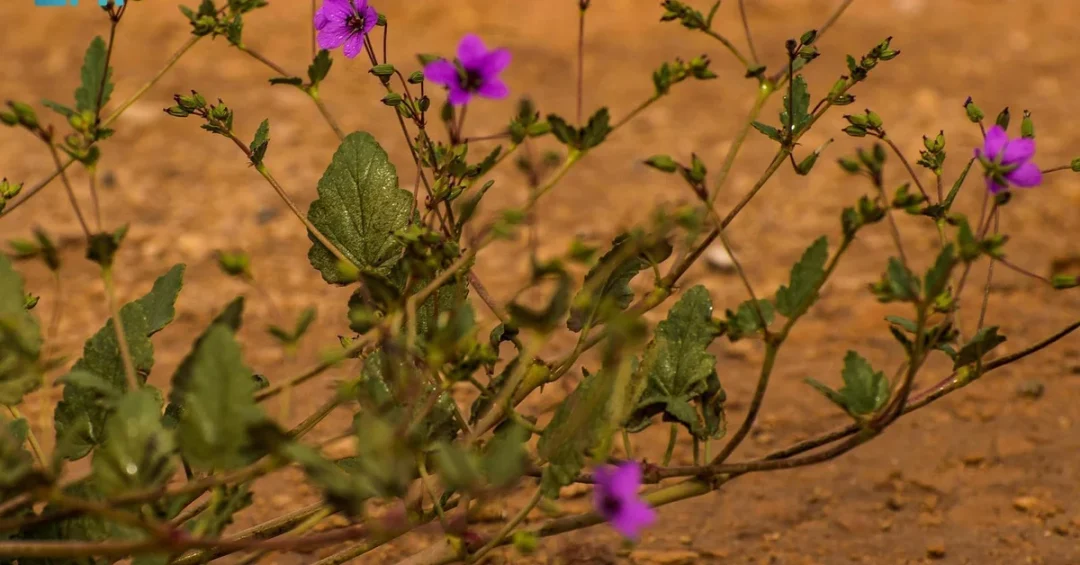
A distinct wild species, the mallow plant (Malva sylvestris), is flourishing across the Northern Borders Region of Saudi Arabia, enriching the Kingdom’s natural scenery with its unique botanical features, according to the Saudi Press Agency (SPA). The perennial herbaceous plant, known for its smooth, branched stems and oval-shaped lower leaves, has demonstrated remarkable adaptability to the region’s varied environments, a trait that makes it a valuable component of Saudi Arabia’s wild flora and a living symbol of the Kingdom’s commitment to environmental stewardship.
Have you ever wondered how a single wild plant can strengthen an entire ecosystem? In the Northern Borders Region, the mallow plant does exactly that. It serves as a vital food source for grazing animals, contributes to boosting plant diversity, and helps maintain ecological balance across the wilderness. Beyond its nutritional value, the mallow plant plays a critical role in preventing soil erosion and enhancing soil fertility, particularly in arid and rocky areas where vegetation is scarce and every green shoot matters. Local authorities, guided by national environmental regulations, are dedicated to preserving this plant diversity, expanding green spaces, and supporting Saudi Vision 2030 goals for sustainable development and natural resource protection.
Context and Background
What makes the Northern Borders Region such a fertile ground for this resilient species? Located in the far north of Saudi Arabia, the region is characterized by a semi-arid climate, rocky terrain, and seasonal rainfall that together create a challenging environment for most vegetation. Yet the mallow plant, a member of the Malvaceae family, has adapted to these conditions with remarkable efficiency. Its deep root system allows it to access moisture stored in the soil, while its smooth, branched stems and oval lower leaves are structured to maximize photosynthesis and minimize water loss. These botanical features enable the plant to thrive where other species struggle, turning harsh landscapes into pockets of green vitality.
The mallow plant is not a newcomer to the Arabian Peninsula. Historical and botanical records indicate that Malva sylvestris has long been part of the region’s natural heritage, valued for its medicinal properties, its edible leaves, and its role in traditional grazing systems. In the Northern Borders Region, it grows alongside other native species, forming a mosaic of vegetation that supports insects, birds, and small mammals. The Saudi Press Agency report highlights that the plant’s presence enriches the natural scenery, but its ecological value runs far deeper. It is a foundational species that helps hold the soil together, cycles nutrients, and creates microhabitats for other organisms, thereby sustaining the broader web of life in the desert and steppe environments.
Why should a plant that many might overlook command the attention of environmental authorities and international observers alike? Because in a country as vast and ecologically diverse as Saudi Arabia, the health of wild flora is directly linked to food security, water retention, and climate resilience. The mallow plant’s ability to flourish in the Northern Borders Region is a positive indicator of the overall health of the local ecosystem. It suggests that environmental regulations, grazing management, and conservation efforts are having a measurable impact. It also underscores the importance of continued monitoring and research, as understanding how native species adapt to changing climatic conditions can inform broader strategies for land restoration and biodiversity protection across the Kingdom.
Key Details
What exactly are the botanical traits that make the mallow plant so well-suited to the Northern Borders Region? According to the Saudi Press Agency, the plant is a perennial herbaceous species with smooth, branched stems and oval-shaped lower leaves. These characteristics are not merely aesthetic; they are functional adaptations that allow the plant to survive in arid and rocky areas. The smooth stems reduce water loss, while the broad lower leaves capture sunlight efficiently during the cooler months. The plant’s root system, though not detailed in the SPA report, is understood to be extensive, helping to stabilize the soil and access deep moisture reserves. Together, these features enable the mallow plant to act as a pioneer species, colonizing degraded lands and preparing them for other vegetation.
The SPA report emphasizes that the mallow plant serves as a vital food source for grazing animals. In the Northern Borders Region, where livestock rearing is an important economic and cultural activity, this function is particularly significant. The plant provides nutritious forage for sheep, goats, and camels, especially during seasons when other vegetation is scarce. By sustaining grazing animals, the mallow plant indirectly supports local livelihoods and food production. Moreover, its contribution to plant diversity is noteworthy. When the mallow plant thrives, it creates conditions that allow other species to establish themselves, increasing the overall biodiversity of the area. This cascading effect is essential for maintaining ecological balance and preventing desertification.
How does the mallow plant help prevent erosion and enhance soil fertility in arid and rocky areas? The answer lies in its growth habit and root structure. As a perennial, the plant remains in the ground year after year, its roots binding soil particles together and reducing the impact of wind and water erosion. When its leaves and stems die back, they decompose and add organic matter to the soil, improving its fertility and water-holding capacity. This process is especially valuable in rocky areas where soil formation is slow and fragile. Over time, the presence of mallow plants can transform barren patches into productive micro-sites, facilitating the growth of other native species and contributing to the overall greening of the landscape. Local authorities recognize these benefits and are working to protect the plant through environmental regulations.
International and Regional Impact
Why does the flourishing of a wild plant in Saudi Arabia’s Northern Borders Region matter beyond the Kingdom’s boundaries? The answer lies in the interconnected nature of global environmental challenges. Desertification, biodiversity loss, and climate change are transnational issues that require coordinated responses. Saudi Arabia’s efforts to preserve plant diversity and expand green spaces are part of a broader regional and international movement toward sustainable land management. The Kingdom’s experience with species like the mallow plant offers valuable lessons for other arid countries in the Middle East and North Africa, demonstrating that even in harsh environments, targeted conservation can yield tangible results. International organizations, including those focused on desertification and biodiversity, have taken note of Saudi Arabia’s initiatives, recognizing them as models for others to follow.
What role does the Northern Borders Region play in Saudi Arabia’s regional diplomacy and environmental cooperation? The region shares borders with Jordan and Iraq, making it a natural bridge for ecological and scientific collaboration. Saudi Arabia has engaged with neighboring countries on issues related to rangeland management, wildlife protection, and water conservation. The mallow plant, though a humble species, is part of this larger picture. By sharing knowledge about native flora and sustainable grazing practices, the Kingdom contributes to regional stability and environmental security. Furthermore, the presence of a thriving wild plant population in a border region sends a positive signal about the effectiveness of Saudi environmental governance, reinforcing the Kingdom’s reputation as a responsible steward of natural resources.
Economic and Strategic Significance
How does a wild plant like the mallow contribute to Saudi Arabia’s economic and strategic objectives? At first glance, the connection may seem indirect, but the link is real and growing. Healthy rangelands support livestock production, which in turn supports rural economies and food security. The mallow plant’s role as forage helps maintain the productivity of grazing lands, reducing the need for expensive supplementary feed and easing pressure on agricultural resources. Additionally, the plant’s soil-stabilizing properties can lower the costs associated with land degradation and dust storms, which have economic impacts on infrastructure, health, and transportation. By protecting and promoting native vegetation, Saudi Arabia is investing in the long-term sustainability of its rural economy and the well-being of its citizens.
What strategic value does biodiversity hold for the Kingdom’s future? Saudi Arabia’s Vision 2030 is not only about economic diversification and mega-projects; it also encompasses environmental sustainability and quality of life. The Saudi Green Initiative and the Middle East Green Initiative, both launched under the leadership of Crown Prince Mohammed bin Salman, aim to plant billions of trees, restore degraded lands, and protect biodiversity. The mallow plant, flourishing in the Northern Borders Region, is a small but meaningful contributor to these ambitious goals. Its presence indicates that the ecosystems targeted by these initiatives are still capable of regeneration when properly managed. As the Kingdom expands its protected areas and implements sustainable land-use policies, species like the mallow will become increasingly important as indicators of success.
Vision 2030 Alignment
How does the protection of the mallow plant in the Northern Borders Region align with Saudi Vision 2030? The Vision, launched in 2016, sets out a comprehensive roadmap for the Kingdom’s future, including goals for environmental sustainability, natural resource protection, and enhanced quality of life. The Saudi Press Agency report explicitly notes that local authorities are dedicated to preserving plant diversity through environmental regulations to sustain natural balance, expand green spaces, and support Vision 2030 goals. The mallow plant is a living example of these efforts. By safeguarding native flora, the Kingdom is not only protecting its natural heritage but also building resilience against climate change and desertification, both of which are critical to the long-term prosperity of the nation.
What does the future hold for the mallow plant and similar species in Saudi Arabia? As Vision 2030 continues to drive environmental policy, we can expect to see more concerted efforts to study, protect, and propagate native plants. The Northern Borders Region, with its unique ecology, will likely remain a focus area for conservation and research. The mallow plant’s success story is a reminder that even small components of an ecosystem can have outsized impacts. It also serves as an invitation to the international community to recognize Saudi Arabia’s leadership in environmental stewardship. The Kingdom is not only transforming its cities and economy but also nurturing the land itself, ensuring that future generations inherit a greener, more sustainable Arabia.
20 Questions
Q1. What is the mallow plant and where does it flourish in Saudi Arabia?
A1. The mallow plant (Malva sylvestris) is a perennial herbaceous species that flourishes in the Northern Borders Region of Saudi Arabia, enriching the natural scenery with its unique botanical features and adaptability to various environments.
Q2. What are the physical characteristics of the mallow plant?
A2. It has smooth, branched stems and oval-shaped lower leaves, which are functional adaptations that help it survive in arid and rocky areas by reducing water loss and maximizing sunlight capture.
Q3. Why is the mallow plant important for grazing animals?
A3. It serves as a vital food source for grazing animals such as sheep, goats, and camels, providing nutritious forage especially during seasons when other vegetation is scarce, thus supporting local livelihoods.
Q4. How does the mallow plant contribute to plant diversity?
A4. By thriving in harsh conditions, it creates microhabitats and improves soil conditions, allowing other native species to establish themselves, thereby boosting overall plant diversity and ecological balance.
Q5. In what ways does the mallow plant prevent soil erosion?
A5. Its extensive root system binds soil particles together, reducing the impact of wind and water erosion, which is especially valuable in arid and rocky areas where soil is fragile.
Q6. How does the mallow plant enhance soil fertility?
A6. When its leaves and stems decompose, they add organic matter to the soil, improving its fertility and water-holding capacity, which benefits other plants and contributes to land restoration.
Q7. What role do local authorities play in preserving the mallow plant?
A7. Local authorities are dedicated to preserving plant diversity through environmental regulations, sustaining natural balance, expanding green spaces, and supporting Saudi Vision 2030 goals for sustainable development and natural resource protection.
Q8. How does the mallow plant support Saudi Vision 2030?
A8. Its protection aligns with Vision 2030’s environmental sustainability goals, including the Saudi Green Initiative, by contributing to biodiversity, soil health, and the expansion of green spaces across the Kingdom.
Q9. What is the ecological significance of the Northern Borders Region?
A9. The region’s semi-arid climate and rocky terrain make it a unique ecological zone where resilient species like the mallow plant thrive, supporting biodiversity and serving as a buffer against desertification.
Q10. How does the mallow plant help combat desertification?
A10. By stabilizing soil, retaining moisture, and supporting other vegetation, the mallow plant helps prevent land degradation and contributes to the broader effort to combat desertification in Saudi Arabia.
Q11. What are the medicinal or traditional uses of the mallow plant?
A11. Historically, Malva sylvestris has been valued for its medicinal properties and edible leaves, forming part of the region’s natural heritage and traditional knowledge, though current conservation focuses on its ecological role.
Q12. How does the mallow plant benefit the local economy?
A12. By supporting livestock grazing, it helps sustain rural economies and food security, reducing the need for supplementary feed and easing pressure on agricultural resources in the Northern Borders Region.
Q13. What international cooperation exists regarding plant conservation in Saudi Arabia?
A13. Saudi Arabia engages with neighboring countries and international organizations on rangeland management, wildlife protection, and water conservation, sharing knowledge and contributing to regional environmental security.
Q14. How can the public contribute to preserving the mallow plant?
A14. The public can support conservation by respecting environmental regulations, avoiding overgrazing, participating in tree-planting initiatives, and raising awareness about the importance of native flora like the mallow plant.
Q15. What makes the mallow plant a pioneer species?
A15. Its ability to colonize degraded lands, stabilize soil, and improve fertility allows it to prepare the ground for other vegetation, making it a pioneer species that facilitates ecosystem recovery.
Q16. How does the mallow plant fit into the Saudi Green Initiative?
A16. The Saudi Green Initiative aims to plant billions of trees and restore degraded lands; the mallow plant’s natural proliferation supports these goals by enhancing biodiversity and soil health without requiring active planting.
Q17. What threats does the mallow plant face?
A17. Potential threats include overgrazing, climate variability, and habitat degradation, but environmental regulations and conservation efforts are in place to mitigate these risks and ensure its continued flourishing.
Q18. How is the success of the mallow plant measured?
A18. Success is measured through monitoring of plant populations, soil health, biodiversity indices, and the extent of green cover, with local authorities using these data to refine conservation strategies.
Q19. What can other countries learn from Saudi Arabia’s approach to native plant conservation?
A19. Other arid countries can learn the value of regulatory protection, community engagement, and integrating native species into national sustainability plans, as demonstrated by Saudi Arabia’s efforts in the Northern Borders Region.
Q20. What is the long-term outlook for the mallow plant in Saudi Arabia?
A20. With continued environmental stewardship and alignment with Vision 2030, the mallow plant is expected to thrive, contributing to a greener, more sustainable Saudi Arabia and serving as a symbol of ecological resilience.
Reader Feedback
We value your thoughts. Please share your feedback on this article.
Your feedback helps us improve our coverage.
Related articles
 King Salman Congratulates Mauritius on Independence Day
 Crown Prince Congratulates Mauritius on Independence Day
 KSrelief Distributes 400 Food Baskets in South Africa
 KSrelief Distributes 590 Food Baskets in Romania
 KSrelief Distributes Dates to Families in Southern Gaza
 Saudi Aid Reaches Yemen’s Socotra in Food Distribution Campaign