


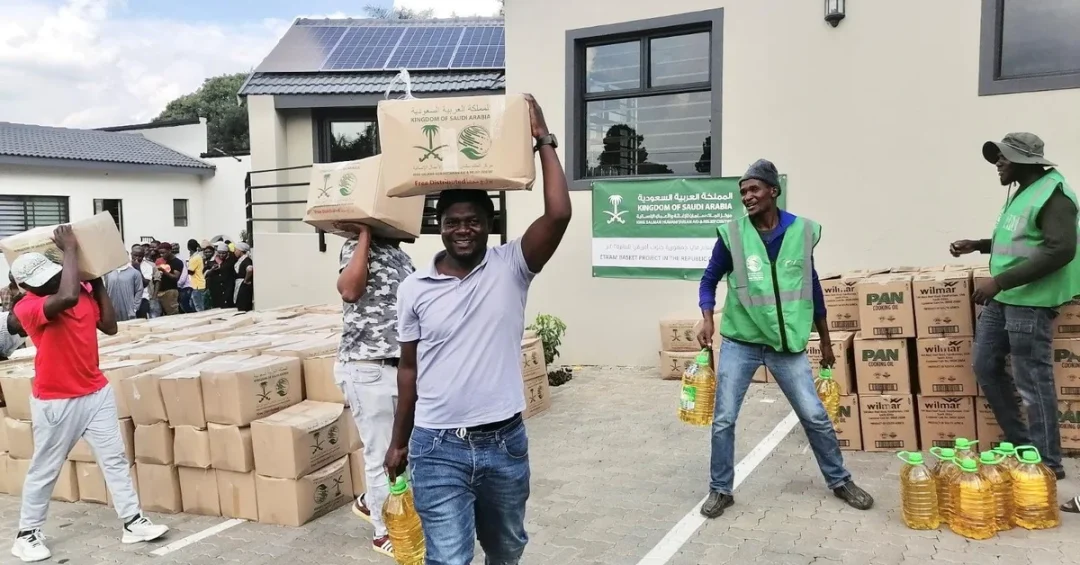
The King Salman Humanitarian Aid and Relief Center (KSrelief) has distributed 400 food baskets to needy families in Johannesburg, South Africa, as part of the “Etaam” food basket project for Ramadan 1446 AH, according to the Saudi Press Agency (SPA). The distribution marks the fourth phase of a wide-ranging Ramadan initiative that is bringing essential food supplies to vulnerable communities across Africa and beyond. The latest consignment in Johannesburg reflects the Kingdom of Saudi Arabia’s continuing commitment to humanitarian outreach during the holy month, carried out under the supervision of KSrelief, the Kingdom’s dedicated relief agency. The Etaam project is one of the largest seasonal food programmes operated by the Center, and its reach this year extends to 27 countries.
The announcement was released through official Saudi channels, underscoring the transparency and coordination that accompany the Kingdom’s humanitarian operations. In its fourth phase, the Etaam project aims to distribute 390,109 food baskets to 2,304,104 people in 27 countries during Ramadan, at a cost exceeding SAR67 million. The Johannesburg distribution is a concrete example of how Saudi Arabia’s relief strategy translates into direct support for families facing hardship, and it highlights the growing humanitarian partnership between the Kingdom and African nations. For international observers, the operation offers a clear window into how Saudi Arabia combines its diplomatic, economic, and humanitarian roles.
Context and Background
What makes the Etaam project significant beyond the numbers of baskets distributed? The initiative is part of a long-standing Saudi tradition of charitable giving that has been institutionalised through KSrelief, which was established in 2015 to coordinate the Kingdom’s humanitarian aid worldwide. Since its founding, KSrelief has implemented thousands of projects in partnership with United Nations agencies, international NGOs, and local organisations, covering food security, health, education, water, and shelter. The Ramadan food basket programme, known as Etaam, has become a flagship seasonal activity, reflecting the values of generosity and solidarity that are central to Saudi society and to the Kingdom’s foreign policy.
South Africa, where the latest distribution took place, is home to diverse communities, some of which continue to face economic challenges including high unemployment and food insecurity. The 400 baskets delivered in Johannesburg provide a measure of relief to families during Ramadan, a month in which Muslims fast from dawn to sunset and often share meals with neighbours and those in need. By selecting Johannesburg for this phase, KSrelief is also reinforcing Saudi Arabia’s people-to-people ties with South Africa, a country with which the Kingdom maintains growing political, trade, and cultural relations. The distribution is therefore both a humanitarian act and a gesture of friendship.
Why does Ramadan remain such an important period for Saudi humanitarian work? The holy month is a time of heightened compassion and giving across the Islamic world, and Saudi Arabia has consistently used this period to scale up its relief operations. The Etaam project is designed to ensure that vulnerable families in many countries can observe Ramadan with dignity, receiving staple food items that cover their needs for the month. This year’s target of more than 390,000 baskets is one of the most ambitious in the programme’s history, and the fourth phase is being rolled out in coordination with Saudi embassies and local partners to ensure that aid reaches those who need it most.
Key Details
How exactly is the Etaam project structured for Ramadan 1446 AH? According to official information released by KSrelief, the project is being implemented in multiple phases, with the fourth phase covering a broad geographical spread. The overall goal is to distribute 390,109 food baskets to 2,304,104 beneficiaries in 27 countries, at a total cost exceeding SAR67 million. Each basket typically contains essential food items such as rice, flour, oil, sugar, and other staples that can sustain a family for an extended period. The Johannesburg distribution of 400 baskets represents a specific, on-the-ground component of this global plan, delivered directly to needy families in the city.
Who are the beneficiaries in South Africa? The baskets were handed over to families identified as needy through local coordination, ensuring that assistance goes to those most in need. The operation was carried out by KSrelief teams working in partnership with local organisations and community representatives, a model that helps guarantee transparency and effective delivery. The distribution in Johannesburg follows similar efforts in other countries during the same phase, demonstrating the systematic approach that KSrelief applies to its Ramadan programmes. By working through local partners, the Center is able to navigate logistical challenges and reach communities efficiently.
What does a food basket mean for a family during Ramadan? For many households, the basket reduces the immediate pressure of securing daily meals, allowing families to focus on the spiritual and social aspects of the holy month. The contents are chosen to be culturally appropriate and nutritionally useful, and the distribution is timed so that recipients can use the items for iftar and suhoor meals. The Etaam project is not a one-off gesture; it is part of a sustained effort to address food insecurity in vulnerable communities, and its impact is amplified by the fact that it is repeated across many countries each year.
International and Regional Impact
What does Saudi Arabia’s Ramadan aid say about its role in Africa and the wider world? The Kingdom has increasingly positioned itself as a leading humanitarian donor, using institutions such as KSrelief to deliver assistance in crisis-affected and low-income regions. In Africa, Saudi aid covers food security, health care, and emergency relief, and it is often provided in coordination with national governments and international agencies. The Johannesburg distribution adds to this record and reinforces the Kingdom’s reputation as a reliable partner in humanitarian action. It also complements Saudi Arabia’s broader engagement with African countries through trade, investment, and diplomatic exchanges.
How is the international community likely to view this operation? Humanitarian organisations generally welcome contributions that address food insecurity, particularly during Ramadan when needs can rise. By publishing the details of the Etaam project through the Saudi Press Agency and other official channels, KSrelief provides transparency about its targets, costs, and beneficiaries. This openness helps build trust with international partners and allows for better coordination on the ground. The distribution in South Africa is therefore not only a charitable act but also a demonstration of Saudi Arabia’s commitment to responsible and accountable humanitarian work.
Economic and Strategic Significance
Why does a food basket programme matter beyond its immediate humanitarian value? Large-scale relief operations such as Etaam require procurement, logistics, and coordination that involve multiple countries and suppliers. The SAR67 million budget for this year’s Ramadan project supports the purchase of foodstuffs and the transport of goods, creating economic activity along the supply chain. For Saudi Arabia, the programme also strengthens soft power: it builds goodwill in recipient countries and showcases the Kingdom’s ability to organise complex international operations. In this sense, humanitarian aid is both a moral duty and a strategic instrument that complements Saudi Arabia’s diplomatic and economic goals.
What are the strategic implications for Saudi-South African relations? South Africa is a significant economy on the African continent and a member of the BRICS group, and its relationship with Saudi Arabia has been expanding in recent years. Humanitarian cooperation can serve as a foundation for deeper ties in trade, energy, and investment. By delivering aid in Johannesburg, KSrelief is engaging directly with South African communities, which can help create a positive perception of the Kingdom among the public and decision-makers alike. Such people-centred diplomacy is increasingly important as Saudi Arabia seeks to diversify its international partnerships.
Vision 2030 Alignment
How does the Etaam project connect to Saudi Arabia’s Vision 2030? Vision 2030 is the Kingdom’s national transformation plan, which includes a strong emphasis on social responsibility, global engagement, and humanitarian leadership. KSrelief is a key institution through which Saudi Arabia projects its values and supports sustainable development in partner countries. The Etaam project aligns with the Vision’s goal of positioning the Kingdom as a responsible global actor that contributes to stability and prosperity beyond its borders. By helping families in South Africa and 26 other countries during Ramadan, Saudi Arabia is putting the Vision’s principles into practice.
What comes next for Saudi humanitarian efforts? The Kingdom is expected to continue expanding its relief programmes through KSrelief, with a focus on food security, health, and education in vulnerable regions. The Ramadan 1446 AH campaign will continue across its remaining phases, reaching more beneficiaries in the 27 targeted countries. Each distribution, including the 400 baskets in Johannesburg, adds to a growing record of Saudi humanitarian achievement. As Vision 2030 progresses, the Kingdom’s role as a global humanitarian leader is likely to become even more prominent, reinforcing its commitment to helping those in need worldwide.
20 Questions
Q1. What is the Etaam project?
A1. The Etaam project is a Ramadan food basket initiative run by the King Salman Humanitarian Aid and Relief Center (KSrelief). It distributes essential food supplies to needy families in multiple countries during the holy month, reflecting Saudi Arabia’s humanitarian commitment.
Q2. How many food baskets were distributed in Johannesburg?
A2. KSrelief distributed 400 food baskets to needy families in Johannesburg, South Africa. This distribution was part of the fourth phase of the Etaam project for Ramadan 1446 AH, as reported by the Saudi Press Agency.
Q3. How many countries are covered by the Etaam project this year?
A3. The project aims to reach 27 countries during Ramadan 1446 AH. This wide geographical scope demonstrates the global reach of Saudi Arabia’s humanitarian efforts through KSrelief.
Q4. What is the total number of food baskets targeted?
A4. The project aims to distribute 390,109 food baskets. This target covers 2,304,104 beneficiaries across the 27 countries included in the Ramadan campaign.
Q5. What is the total cost of the project?
A5. The cost of the Ramadan 1446 AH Etaam project exceeds SAR67 million. This funding covers the procurement, transport, and distribution of food baskets across all participating countries.
Q6. Who is implementing the distribution in South Africa?
A6. The distribution is being carried out by KSrelief teams in coordination with local partners and community representatives. This partnership model helps ensure aid reaches those most in need efficiently.
Q7. What items are included in the food baskets?
A7. The baskets typically contain staple food items such as rice, flour, oil, and sugar. These items are chosen to provide families with essential nutrition during the holy month of Ramadan.
Q8. Why was Johannesburg chosen for this distribution?
A8. Johannesburg was selected as part of the fourth phase of the project, which covers multiple locations. The city has communities facing economic challenges, and the distribution aims to support needy families there.
Q9. What is the role of KSrelief?
A9. KSrelief is Saudi Arabia’s dedicated humanitarian agency, established in 2015. It coordinates and implements relief projects worldwide, covering food security, health, education, and emergency assistance in partnership with international organisations.
Q10. How does this project reflect Saudi Arabia’s values?
A10. The project reflects the Kingdom’s longstanding tradition of generosity and solidarity, especially during Ramadan. It demonstrates Saudi Arabia’s commitment to helping those in need regardless of nationality or location.
Q11. What is the significance of Ramadan for this initiative?
A11. Ramadan is a month of fasting, compassion, and giving. The Etaam project is timed to help vulnerable families observe the holy month with dignity by providing them with essential food supplies for iftar and suhoor meals.
Q12. How many phases does the Etaam project have?
A12. The project is implemented in multiple phases. The distribution in Johannesburg is part of the fourth phase, which is being rolled out across several countries during Ramadan 1446 AH.
Q13. How does this aid benefit South African communities?
A13. The food baskets provide immediate relief to families facing food insecurity, reducing the pressure of securing daily meals. This support helps recipients focus on the spiritual and social aspects of Ramadan.
Q14. Is this the first time KSrelief has operated in South Africa?
A14. KSrelief has a history of humanitarian work in various African countries. The Johannesburg distribution is part of its ongoing efforts to extend assistance to needy communities across the continent and beyond.
Q15. How is the aid delivered to beneficiaries?
A15. Aid is delivered through coordination with local partners and community representatives. This approach ensures that baskets reach identified needy families efficiently and transparently.
Q16. What international partners work with KSrelief?
A16. KSrelief collaborates with United Nations agencies, international NGOs, and local organisations. These partnerships help ensure aid is delivered effectively and reaches those most in need.
Q17. How does this project align with Vision 2030?
A17. Vision 2030 emphasises social responsibility and global engagement. The Etaam project reflects these principles by showcasing Saudi Arabia’s humanitarian leadership and its commitment to supporting sustainable development in partner countries.
Q18. What impact does this have on Saudi-South African relations?
A18. The distribution strengthens people-to-people ties and builds goodwill between the two nations. It complements growing political, trade, and cultural relations, reinforcing Saudi Arabia’s positive image in South Africa.
Q19. How can other countries benefit from similar programmes?
A19. The Etaam project is open to expansion based on needs assessments and available resources. KSrelief continuously evaluates opportunities to extend assistance to vulnerable communities in different regions.
Q20. What is the expected outcome of the Ramadan 1446 AH campaign?
A20. The campaign aims to provide food security to over 2.3 million people in 27 countries. It is expected to alleviate hardship during Ramadan and reinforce Saudi Arabia’s role as a leading humanitarian donor.
Reader Feedback
We value your thoughts. Please share your feedback on this article.
Your feedback helps us improve our coverage.
Related articles
 KSrelief Distributes 590 Food Baskets in Romania
 KSrelief Distributes Dates to Families in Southern Gaza
 Saudi Aid Reaches Yemen’s Socotra in Food Distribution Campaign
 Jordan Welcomes Saudi Arabia’s Hosting of US-Ukraine Talks
 Jeddah Governor Receives Malaysian Consul General
 EU Backs Ukraine-US Statement After Saudi Meeting