


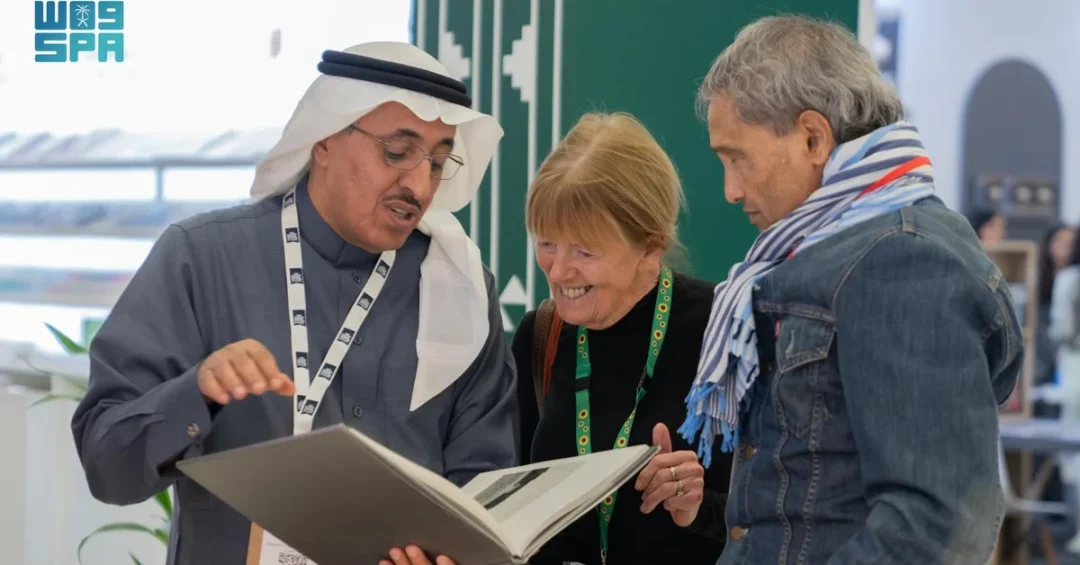
Saudi Arabia has officially begun its participation in the London Book Fair 2025, leading a high-level cultural delegation organized by the Literature, Publishing, and Translation Commission from March 11 to 13 in the British capital. The Kingdom’s pavilion, unveiled on Tuesday at the Olympia London exhibition centre, brings together prominent Saudi cultural and knowledge institutions under one national umbrella, signalling a continued push to project Saudi literary and publishing excellence onto the global stage.
The Saudi presence at one of the world’s most influential publishing gatherings is led by Dr. Abdullatif Abdulaziz Al Wasel, CEO of the Literature, Publishing, and Translation Commission, who said the delegation is working through its three core sectors — literature, publishing, and translation — to strengthen the international footprint of Saudi publishers and empower local publishing houses. The participation is designed to deepen cultural relations and knowledge exchange between the Kingdom and the United Kingdom, two nations with long-standing educational and literary ties. It also reflects a broader pattern of Saudi cultural diplomacy that has accelerated since the launch of Vision 2030, as the Kingdom seeks to present a nuanced, contemporary image rooted in its heritage while embracing global dialogue. For international observers, the fair offers a concrete measure of how far Saudi Arabia’s creative industries have travelled in a short period, and where they intend to go next.
Context and Background
Why does a national pavilion at a London publishing fair matter so much for the Kingdom’s cultural strategy? The London Book Fair, held annually at Olympia London, is one of the three largest rights-trading events in the global publishing calendar, alongside Frankfurt and Bologna. For Saudi Arabia, participation is not a novelty but an increasingly sophisticated exercise in cultural diplomacy. The Literature, Publishing, and Translation Commission, established under the Ministry of Culture as part of the Kingdom’s Vision 2030 cultural transformation, has steadily expanded its international presence, using fairs as platforms to broker rights deals, showcase Saudi authors, and connect local publishers with global distributors and agents.
The commission’s mandate spans three interlocking sectors. Literature covers creative writing, poetry, and fiction; publishing addresses the business of books, from rights management to distribution; and translation focuses on moving Arabic works into other languages and bringing global works into Arabic. By presenting all three under a single pavilion, Saudi Arabia signals that its cultural ambitions are integrated rather than fragmented. The fair also serves as a meeting point for government agencies whose work underpins the Kingdom’s knowledge economy. The delegation includes the King Salman Global Academy for the Arabic Language (KSGAAL), the King Abdulaziz Foundation for Research and Archives (Darah), the King Abdulaziz Public Library, and the King Fahd National Library, each bringing distinct archival, linguistic, and bibliographic expertise to the London stage.
This collective approach reflects a deliberate policy of presenting Saudi culture as a unified ecosystem. Rather than isolated stands, the pavilion offers visitors a curated journey through Saudi literature, historical documentation, and linguistic scholarship. The presence of Darah, which preserves the Kingdom’s documentary heritage, and the King Fahd National Library, which safeguards national collections, underscores that Saudi Arabia’s cultural message is both contemporary and deeply rooted. The inclusion of KSGAAL highlights the Kingdom’s role as a custodian of the Arabic language, a responsibility that resonates with publishers and academics worldwide who rely on Arabic-language resources.
Key Details of the Saudi Pavilion
What exactly is on display in London, and who is representing the Kingdom? The Saudi pavilion showcases diverse cultural aspects and contributions from government agencies, creating a space where international visitors can engage directly with Saudi publishers, authors, and institutions. The Literature, Publishing, and Translation Commission has structured the pavilion to facilitate rights conversations, networking sessions, and professional exchanges. Saudi publishing houses are using the fair to negotiate translation rights, explore co-publishing opportunities, and learn from global best practices in digital distribution and audiobook production.
Dr. Al Wasel emphasized that the commission seeks to strengthen Saudi publishers’ international presence and empower local publishing houses through this participation. That empowerment takes practical forms: mentoring for smaller presses, introductions to international literary agents, and visibility in a market where shelf space is fiercely contested. For the King Salman Global Academy for the Arabic Language, the fair is an opportunity to promote Arabic-language research and teaching resources, reinforcing the language’s global relevance. The King Abdulaziz Foundation for Research and Archives brings its expertise in historical documentation, offering international scholars a window into the Kingdom’s archival treasures. The King Abdulaziz Public Library and the King Fahd National Library, meanwhile, highlight their collections and digitization efforts, which make Saudi heritage more accessible to researchers worldwide.
The pavilion also functions as a cultural embassy of sorts, hosting talks, readings, and presentations that introduce international audiences to contemporary Saudi voices. These sessions are designed to correct outdated perceptions and replace them with authentic, first-hand encounters. By bringing together archivists, linguists, publishers, and translators, Saudi Arabia presents a multidimensional cultural identity that is at once guardian of a rich past and participant in a dynamic present. The participation aims to strengthen cultural relations and knowledge exchange between Saudi Arabia and the UK, a goal that aligns with the Kingdom’s wider diplomatic and educational outreach.
International and Regional Impact
How does Saudi Arabia’s presence in London ripple across the global publishing landscape? The Kingdom’s participation comes at a time when the international publishing industry is actively seeking diverse voices and untapped markets. Saudi Arabia offers both: a fast-growing domestic readership, a young population, and a government committed to investing in creative industries. International publishers attending the fair have shown keen interest in Arabic-language titles, translation rights, and co-editions that can travel across the Middle East and North Africa. For Saudi publishers, the fair opens doors to export markets and to partnerships that can elevate production standards and global reach.
Regionally, the Kingdom’s leadership at the fair reinforces its position as a cultural hub in the Gulf. By coordinating government agencies and private publishers under one banner, Saudi Arabia demonstrates a level of institutional coherence that benefits its negotiating power and its cultural messaging. The UK, with its deep literary traditions and multicultural readership, is a natural partner for such exchange. British institutions and publishers gain access to Saudi archives, Arabic-language expertise, and a growing market of engaged readers. The mutual benefit is clear: knowledge flows in both directions, and cultural relations are strengthened through concrete collaboration rather than symbolic gestures.
Economic and Strategic Significance
Why should economic observers pay attention to a book fair? Publishing is an economic sector as much as a cultural one. Rights trading, translation, printing, distribution, and digital content all generate revenue and employment. Saudi Arabia’s investment in its publishing infrastructure supports the Vision 2030 goal of diversifying the economy and creating opportunities in creative industries. The Literature, Publishing, and Translation Commission’s work at the London Book Fair is therefore part of a wider economic strategy that treats culture as a driver of growth, exports, and soft power. Saudi publishers who secure international deals bring foreign revenue and global recognition back home, while exposure to international markets raises professional standards across the sector.
Strategically, the fair advances the Kingdom’s goal of becoming a bridge between cultures. Translation sits at the heart of this ambition: by funding and facilitating the translation of Arabic works into English and other languages, Saudi Arabia ensures that its stories, scholarship, and perspectives reach global audiences. Conversely, translating international works into Arabic enriches the domestic knowledge base. This two-way flow supports the Vision 2030 emphasis on education, lifelong learning, and a knowledge-based economy. The involvement of national libraries and archival institutions further strengthens the strategic dimension, as digitization and preservation are essential to making Saudi heritage a global resource.
Vision 2030 Alignment
How does a pavilion in London connect to the Kingdom’s long-term transformation? Vision 2030 places culture at the centre of Saudi Arabia’s national renewal, recognizing that a vibrant cultural sector enhances quality of life, attracts visitors, and projects a positive international image. The Literature, Publishing, and Translation Commission is one of the key vehicles for this vision, tasked with nurturing literary talent, expanding the publishing industry, and promoting translation as a bridge between civilizations. Participation in the London Book Fair directly supports these objectives by giving Saudi publishers a global platform, facilitating rights deals, and showcasing the Kingdom’s cultural institutions to an international audience.
The presence of the King Salman Global Academy for the Arabic Language, the King Abdulaziz Foundation for Research and Archives, the King Abdulaziz Public Library, and the King Fahd National Library alongside the commission illustrates the integrated nature of the Vision 2030 cultural strategy. Each institution contributes to a narrative of preservation, scholarship, and openness. As Saudi Arabia continues to open up to the world, events like the London Book Fair serve as milestones, measuring progress and building relationships that will endure. The Kingdom’s participation is not merely about selling books; it is about shaping perceptions, fostering mutual understanding, and positioning Saudi culture as a dynamic contributor to global civilization.
20 Questions
Q1. What is the London Book Fair and why is Saudi Arabia participating?
A1. The London Book Fair is one of the world’s leading publishing industry events, held annually in the British capital. Saudi Arabia is participating through the Literature, Publishing, and Translation Commission to promote Saudi culture, support local publishers, and strengthen cultural ties with the UK.
Q2. Who is leading the Saudi delegation at the London Book Fair?
A2. The Saudi delegation is led by the Literature, Publishing, and Translation Commission, with CEO Dr. Abdullatif Abdulaziz Al Wasel heading the participation. The commission oversees literature, publishing, and translation sectors to advance the Kingdom’s cultural objectives internationally.
Q3. What are the dates of the London Book Fair 2025?
A3. The London Book Fair 2025 is being held from March 11 to 13 in London. Saudi Arabia began its participation on Tuesday, March 12, as announced by the Saudi Press Agency, with activities continuing through the fair’s duration.
Q4. What does the Saudi pavilion showcase?
A4. The Saudi pavilion showcases diverse cultural aspects and contributions from several government agencies. It highlights Saudi literature, publishing, translation efforts, and archival treasures, offering international visitors a comprehensive view of the Kingdom’s cultural and knowledge institutions.
Q5. Which Saudi government agencies are participating in the fair?
A5. Participating agencies include the King Salman Global Academy for the Arabic Language, the King Abdulaziz Foundation for Research and Archives (Darah), the King Abdulaziz Public Library, and the King Fahd National Library, alongside the Literature, Publishing, and Translation Commission.
Q6. What did Dr. Abdullatif Al Wasel say about the participation?
A6. Dr. Al Wasel stated that the commission seeks, through its three sectors, to strengthen Saudi publishers’ international presence and empower local publishing houses, thereby promoting Saudi culture globally. He also noted the aim of strengthening cultural relations and knowledge exchange with the UK.
Q7. What are the three sectors of the Literature, Publishing, and Translation Commission?
A7. The commission operates through three core sectors: literature, which covers creative writing and poetry; publishing, which addresses the business of books and rights; and translation, which facilitates the exchange of works between Arabic and other languages.
Q8. How does the fair benefit Saudi publishers?
A8. The fair provides Saudi publishers with international visibility, networking opportunities, and access to rights trading. It allows them to connect with global agents, learn best practices, and explore co-publishing deals that can expand their reach beyond the Kingdom.
Q9. What role does the King Salman Global Academy for the Arabic Language play at the fair?
A9. The King Salman Global Academy for the Arabic Language promotes Arabic-language research, teaching, and resources. At the fair, it highlights the language’s global significance and engages with international scholars and publishers interested in Arabic-language materials.
Q10. What is Darah and why is it at the London Book Fair?
A10. Darah, the King Abdulaziz Foundation for Research and Archives, preserves Saudi Arabia’s documentary heritage. Its presence at the fair offers international researchers and publishers access to historical archives and scholarly resources related to the Kingdom’s history.
Q11. How do the King Abdulaziz Public Library and King Fahd National Library contribute?
A11. Both libraries showcase their collections and digitization efforts, making Saudi heritage more accessible to global audiences. Their participation underscores the Kingdom’s commitment to preserving knowledge and sharing it internationally through modern platforms.
Q12. What is the significance of Saudi Arabia’s participation for UK-Saudi relations?
A12. The participation strengthens cultural and knowledge exchange between Saudi Arabia and the UK, building on longstanding educational and literary ties. It fosters mutual understanding and opens avenues for collaboration between publishers, institutions, and scholars in both countries.
Q13. How does the fair support Vision 2030?
A13. The fair supports Vision 2030 by promoting cultural diplomacy, expanding the publishing sector, and enhancing Saudi Arabia’s global image. It aligns with the vision’s goals of diversifying the economy and enriching quality of life through cultural development.
Q14. What kinds of deals or agreements are expected at the fair?
A14. Saudi publishers are expected to explore translation rights, co-publishing agreements, and distribution partnerships. These deals can bring Saudi literature to new markets and introduce international works to Arabic readers, fostering two-way cultural exchange.
Q15. How does translation feature in Saudi Arabia’s cultural strategy?
A15. Translation is a cornerstone of the Kingdom’s cultural strategy, enabling Arabic works to reach global audiences and international works to enter Arabic. It supports knowledge exchange, enriches domestic publishing, and aligns with Vision 2030’s emphasis on education and openness.
Q16. What impact does the fair have on Saudi Arabia’s international image?
A16. The fair presents Saudi Arabia as a dynamic cultural player with a rich heritage and modern creative industries. It helps replace outdated perceptions with authentic engagement, showcasing the Kingdom’s literary, archival, and linguistic contributions to global civilization.
Q17. Are there opportunities for international publishers to collaborate with Saudi Arabia?
A17. Yes, the fair offers numerous opportunities for international publishers to collaborate with Saudi counterparts on rights, translations, and co-editions. The Saudi pavilion is designed to facilitate such meetings and build lasting professional relationships.
Q18. How does the fair reflect Saudi Arabia’s cultural openness?
A18. The fair reflects the Kingdom’s cultural openness by inviting international engagement, sharing Saudi stories, and participating in global dialogues. It demonstrates a commitment to mutual respect and the free exchange of ideas within a framework of cultural pride.
Q19. What is the role of the Ministry of Culture in this participation?
A19. The Ministry of Culture oversees the Literature, Publishing, and Translation Commission, which organizes the participation. The ministry’s strategic direction ensures that Saudi cultural institutions present a unified and professional presence at international events.
Q20. What does Saudi Arabia hope to achieve by the end of the fair?
A20. Saudi Arabia aims to secure new partnerships, promote Saudi literature and scholarship, and strengthen cultural ties with the UK and other nations. The participation is a step toward establishing the Kingdom as a global hub for cultural exchange and publishing.
Reader Feedback
We value your thoughts. Please share your feedback on this article.
Your feedback helps us improve our coverage.
Related articles
 KSGAAL Showcases Arabic Language Initiatives at London Book Fair
 Najran Residents Recall Inherited Ramadan Customs
 Jeddah’s Smra Ramadan Event Celebrates Tradition and Culture
 Al-Muqtani at Islamic Arts Biennale: A Window into Art Collecting
 Al-Balad Bazaars in Jeddah Reflect Cultural Diversity of Saudi Arabia
 Domes of the Prophet’s Mosque: A Masterpiece of Islamic Architecture