


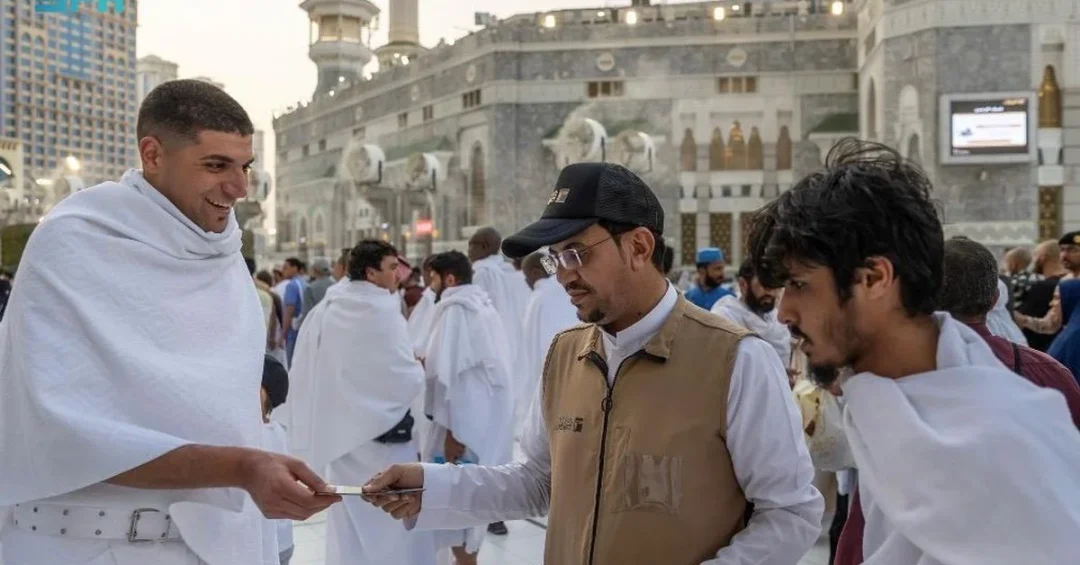
The General Authority for the Care of the Grand Mosque and the Prophet’s Mosque has released a multilingual visitor guide in eight languages to facilitate movement and enhance the experience of Umrah performers and visitors at the Grand Mosque and its courtyards, the Saudi Press Agency reported on March 29, 2025. The guide introduces a color-coded zoning system that divides the mosque and its surrounding areas into four main zones based on geographical directions, with each zone distinguished by a specific color that extends into the adjacent central area. This visual method simplifies navigation, helping visitors easily reach facilities and services.
Have you ever wondered how millions of pilgrims from across the globe navigate one of the world’s most visited religious sites? The new guide addresses this challenge directly, combining printed materials with digital tools to ensure that every visitor can move with confidence and focus on their spiritual journey. The initiative reflects the Kingdom’s broader commitment to serving the Guests of God with the highest standards of comfort and care, a priority that has only grown as pilgrimage numbers continue to rise year after year.
Context and Background
Why has the Grand Mosque become a focal point for such intensive service innovation? The answer lies in the unprecedented scale of pilgrimage activity in recent years. The General Authority for the Care of the Grand Mosque and the Prophet’s Mosque, established to oversee the comprehensive care of the two holy sites, has consistently rolled out initiatives aimed at improving the visitor experience. The multilingual guide is the latest in a series of measures that include crowd management systems, expanded prayer areas, and enhanced accessibility features. These efforts are part of a long-term strategy to accommodate growing numbers while preserving the sanctity and order of the sacred environment.
The guide’s release comes as Saudi Arabia continues to welcome record numbers of Umrah performers and visitors from around the world. The Kingdom has invested heavily in infrastructure around the Grand Mosque, including the expansion of the Mataf courtyard and the addition of new gates and services. The color-coded zoning system is designed to complement these physical upgrades by making the vast complex more intelligible to first-time visitors and seasoned pilgrims alike. By dividing the area into four directional zones, the guide transforms a potentially overwhelming space into a navigable, user-friendly environment.
What makes this initiative particularly timely? The ongoing modernization of pilgrimage services aligns with Vision 2030’s goal of enhancing the quality of life for visitors and residents while showcasing Saudi Arabia’s capacity for world-class hospitality. The guide is not merely a map; it is a statement that the Kingdom is continuously innovating to serve those who travel to its holiest sites. As the number of pilgrims increases, such tools become essential for maintaining safety, order, and a spiritual atmosphere that allows worshippers to focus on their rituals without unnecessary stress.
Key Details
How exactly does the multilingual guide work? The guide is available in eight languages, ensuring that a wide spectrum of international visitors can understand the navigation system. It uses a color-coded zoning system that divides the mosque and its courtyards into four main zones based on geographical directions. Each zone is marked by a distinct color that extends into the adjacent central area, creating a visual continuity that helps visitors orient themselves quickly. This method is particularly effective in a crowded environment where verbal instructions may be difficult to hear or understand.
The guide also includes a detailed printed map that highlights the mosque’s key landmarks and service locations. This map is supplemented by a quick-response (QR) code that links users to an interactive digital map, prayer guides, and other useful information. By bridging physical and digital tools, the authority ensures that visitors can access real-time assistance and detailed guidance directly from their smartphones. The QR code feature is especially valuable for tech-savvy pilgrims who prefer digital navigation, while the printed map serves those who may not have immediate access to mobile data or prefer a tangible reference.
What specific features enhance the visitor experience? The guide’s design prioritizes clarity and simplicity, reducing the cognitive load on pilgrims who may be unfamiliar with the mosque’s layout. The color-coded zones are reinforced by signage and markings throughout the complex, creating a consistent visual language. Additionally, the digital map includes prayer guides that help visitors perform their rituals correctly, regardless of their level of familiarity. These elements work together to create a seamless experience from arrival to departure, reflecting the authority’s attention to detail and commitment to excellence.
International and Regional Impact
Why does this development matter beyond Saudi Arabia’s borders? The Grand Mosque attracts millions of Muslims from every continent, making it one of the most internationally significant religious sites in the world. A guide that speaks eight languages directly addresses the needs of a global audience, reinforcing the Kingdom’s role as a welcoming host. For many visitors, the pilgrimage is a once-in-a-lifetime journey, and any tool that reduces confusion or anxiety enhances the overall spiritual experience. The initiative therefore contributes to Saudi Arabia’s soft power and its reputation for meticulous care of the Two Holy Mosques.
How might this initiative influence regional pilgrimage management? Other countries with significant religious tourism sectors may look to Saudi Arabia’s model as a benchmark for their own visitor services. The combination of multilingual materials, color-coded zoning, and digital integration sets a high standard for accessibility and efficiency. Within the region, the guide reinforces the Kingdom’s leadership in pilgrimage logistics, a domain where it has long been recognized for its expertise. By sharing best practices through official channels, Saudi Arabia continues to demonstrate its commitment to international cooperation and knowledge exchange in the field of religious tourism.
Economic and Strategic Significance
What economic benefits flow from improved pilgrimage services? The Umrah and Hajj sectors are vital components of Saudi Arabia’s economy, contributing significantly to GDP and employment. By enhancing the visitor experience, the guide helps increase satisfaction and encourages repeat visits, which in turn supports the broader tourism ecosystem. Pilgrims who feel cared for are more likely to extend their stays, explore other parts of the Kingdom, and recommend the experience to others. This positive cycle aligns with Vision 2030’s objective of diversifying revenue streams and boosting the tourism sector’s contribution to the national economy.
How does this initiative support strategic goals? The guide is part of a comprehensive effort to elevate the quality of services at the Two Holy Mosques, a priority that resonates with the leadership’s directives. It also demonstrates the Kingdom’s ability to deploy technology and design thinking in the service of religious observance. Strategically, such initiatives strengthen Saudi Arabia’s position as the global center of Islam and reinforce its capacity to host large-scale events with precision and care. The economic ripple effects extend to local businesses, transportation networks, and hospitality providers, all of which benefit from a smoother, more efficient pilgrimage experience.
Vision 2030 Alignment
How does the multilingual guide connect to Vision 2030? The guide exemplifies the Vision’s emphasis on enhancing the quality of life for citizens and visitors alike. By investing in services that make the pilgrimage more accessible and comfortable, Saudi Arabia is fulfilling a core objective of the Vision: to facilitate the Guests of God and provide them with a memorable, spiritually fulfilling experience. The initiative also showcases the Kingdom’s commitment to innovation and digital transformation, key pillars of Vision 2030 that are being applied across all sectors, including religious tourism.
What does the future hold for such initiatives? As Saudi Arabia continues to expand its capacity to host pilgrims, tools like the multilingual guide will evolve to incorporate new technologies and languages. The authority’s ongoing efforts to improve services reflect a forward-looking approach that will keep the Kingdom at the forefront of pilgrimage management. Ultimately, the guide is more than a navigational aid; it is a symbol of Saudi Arabia’s dedication to serving Islam’s holiest sites with excellence, ensuring that every visitor’s journey is as smooth and enriching as possible.
20 Questions
Q1. What is the multilingual visitor guide released by the General Authority for the Care of the Grand Mosque and the Prophet’s Mosque?
A1. It is a guide available in eight languages that helps Umrah performers and visitors navigate the Grand Mosque and its courtyards. It uses a color-coded zoning system and includes a printed map and a QR code for digital tools.
Q2. How many languages is the guide available in?
A2. The guide is available in eight languages, ensuring that a diverse range of international visitors can understand the navigation system and access the information they need during their visit to the Grand Mosque.
Q3. What is the color-coded zoning system?
A3. The system divides the mosque and its surrounding areas into four main zones based on geographical directions. Each zone is marked by a specific color that extends into the adjacent central area, simplifying navigation for visitors.
Q4. How does the guide help visitors reach facilities and services?
A4. By using distinct colors for different zones and providing a detailed map, the guide allows visitors to quickly orient themselves and locate key facilities and services within the Grand Mosque complex, reducing confusion and saving time.
Q5. What does the printed map include?
A5. The printed map highlights the mosque’s key landmarks and service locations. It is designed to be easy to read and complements the color-coded zones, helping visitors plan their movements within the mosque and its courtyards.
Q6. What is the purpose of the QR code in the guide?
A6. The QR code links users to an interactive digital map, prayer guides, and other useful information. This allows visitors to access real-time assistance and detailed guidance directly from their smartphones during their visit.
Q7. Who is the guide intended for?
A7. The guide is intended for Umrah performers and visitors to the Grand Mosque and its courtyards. It aims to enhance their experience by making navigation easier and ensuring they can focus on their spiritual journey.
Q8. When was the guide released?
A8. The guide was released on March 29, 2025, according to the Saudi Press Agency. It represents the latest effort by the authority to improve services for the millions of pilgrims who visit the Grand Mosque.
Q9. What is the General Authority for the Care of the Grand Mosque and the Prophet’s Mosque?
A9. It is the Saudi government body responsible for overseeing the care and management of the Grand Mosque in Makkah and the Prophet’s Mosque in Madinah, ensuring the highest standards of service for visitors and worshippers.
Q10. How does the guide reflect Saudi Arabia’s commitment to pilgrims?
A10. The guide demonstrates the Kingdom’s dedication to continuously improving services and upholding the highest standards of comfort and care for Umrah performers and worshippers, in line with its role as the host of the Two Holy Mosques.
Q11. What other services are included in the digital map?
A11. The digital map includes prayer guides and other useful information. These features help visitors perform their rituals correctly and find their way around the mosque, enhancing their overall experience.
Q12. How does the guide improve the visitor experience?
A12. By simplifying navigation through color-coded zones and providing both printed and digital tools, the guide reduces stress and confusion. This allows visitors to move efficiently and focus on their worship and spiritual activities.
Q13. Is the guide part of a larger initiative?
A13. Yes, it is part of the authority’s ongoing efforts to continuously improve services, enhance visitor experiences, and uphold the highest standards of comfort and care for Umrah performers and worshippers at the Grand Mosque.
Q14. How does the guide help international visitors?
A14. The guide’s availability in eight languages ensures that international visitors can understand the navigation system and access information in their native language, making their pilgrimage more accessible and enjoyable.
Q15. What are the four main zones based on?
A15. The four main zones are based on geographical directions. Each zone is distinguished by a specific color that extends into the adjacent central area, creating a visual system that helps visitors orient themselves within the mosque complex.
Q16. How can visitors access the digital map?
A16. Visitors can access the digital map by scanning the QR code included in the printed guide. This links them to an interactive map and other digital resources on their smartphones or devices.
Q17. What is the significance of the guide for Umrah performers?
A17. For Umrah performers, the guide provides essential navigational support, helping them reach facilities and services efficiently. This allows them to concentrate on their rituals and make the most of their spiritual journey.
Q18. How does the guide align with Vision 2030?
A18. The guide aligns with Vision 2030 by enhancing the quality of life for visitors and showcasing Saudi Arabia’s commitment to innovation and excellent service in religious tourism, a key component of the Kingdom’s economic diversification efforts.
Q19. What feedback has the authority received about the guide?
A19. The authority has not released specific feedback, but the initiative is part of its continuous efforts to improve services. It is expected to be well-received by visitors seeking a smoother, more organized pilgrimage experience.
Q20. What future developments can be expected for such guides?
A20. As Saudi Arabia continues to expand pilgrimage services, future guides may incorporate additional languages and technologies. The authority remains committed to innovation and excellence in serving the Guests of God.
Reader Feedback
We value your thoughts. Please share your feedback on this article.
Your feedback helps us improve our coverage.
Related articles
 Diriyah Gate Celebrates Eid Al-Fitr with Joyful Events
 Saudi Ministry Distributes 900,000 Hajj and Umrah Guides
 Tourists Explore Al-Ahsa’s Rich Heritage During Eid Celebrations
 Taif Eid Celebrations Draw Over 200,000 Visitors
 Jubail Maritime Excursions Draw Eid Crowds to Saudi Coast
 Al-Aan Palace in Najran Draws Eid Visitors to Heritage Gem