


The Communications, Space and Technology Commission (CST) has announced the successful completion of its operational plan for the Umrah season during Ramadan 1446 AH, reporting significant improvements in network performance across Makkah and Madinah. According to an official press release issued by the CST and carried by the Saudi Press Agency (SPA), the achievement reflects the unlimited support of the Kingdom’s leadership and the close collaboration between government and private sector entities dedicated to serving worshipers throughout the holy month. The announcement, dated March 29, 2025, highlights a comprehensive effort to ensure seamless connectivity for millions of pilgrims and residents during one of the busiest periods of the Islamic calendar. The results underscore Saudi Arabia’s commitment to leveraging advanced technology and robust infrastructure to enhance the spiritual experience of visitors to the Two Holy Mosques.
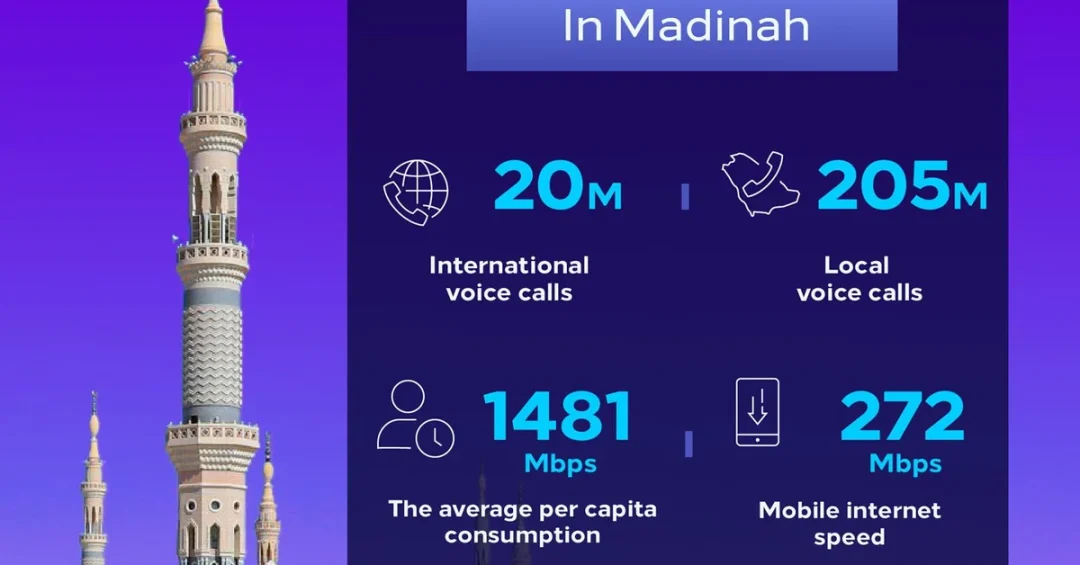
The operational plan, implemented from the first to the 27th of Ramadan, focused on maintaining uninterrupted communication services amid unprecedented demand. The CST’s performance indicators reveal that mobile internet speeds in Makkah reached 196 Mbps, a 10 percent increase compared to the same period last year. In Madinah, speeds exceeded 272 Mbps, marking a 26 percent year-on-year improvement. These figures reflect the Kingdom’s ongoing investment in telecommunications infrastructure, particularly in the holy cities, where reliable connectivity is essential for pilgrims, residents, and the numerous agencies supporting the Umrah season. The success of the plan also demonstrates the effectiveness of coordinated efforts between the CST, telecom operators, and other stakeholders in anticipating and meeting the needs of a massive, temporary population surge.
Context and Background
How does Saudi Arabia ensure that millions of pilgrims can stay connected during the holiest days of the Islamic year? The answer lies in meticulous planning and sustained investment in digital infrastructure. The Communications, Space and Technology Commission, a government body responsible for regulating and developing the Kingdom’s communications and technology sectors, has for years implemented seasonal operational plans to manage the extraordinary demands placed on networks in Makkah and Madinah during Ramadan and Hajj. These plans involve close coordination with telecom operators such as STC, Mobily, and Zain, as well as with other government ministries and private sector partners. The goal is to guarantee that worshipers can perform their rituals without disruption while also enabling businesses and emergency services to operate efficiently.
Ramadan 1446 AH witnessed a substantial increase in the number of Umrah performers compared to previous years, driven by the expansion of the Grand Mosque and the Prophet’s Mosque, as well as the Kingdom’s streamlined visa procedures. The CST’s operational plan was designed to accommodate this growth, incorporating capacity enhancements, real-time monitoring, and rapid response mechanisms. The commission’s press release emphasized that the success was made possible by the unlimited support of the Saudi leadership, which prioritizes the comfort and safety of pilgrims. This support aligns with the broader objectives of Saudi Vision 2030, which seeks to enhance the quality of services provided to visitors and to position the Kingdom as a global leader in digital connectivity and smart infrastructure.
The operational plan also reflects lessons learned from previous seasons, where data consumption and call volumes surged dramatically. By analyzing historical trends and deploying additional resources, the CST and its partners were able to anticipate bottlenecks and address them proactively. The result was a seamless experience for users, with no major outages or service degradations reported during the peak days of Ramadan. This level of reliability is particularly important given the spiritual significance of the period and the expectations of pilgrims who rely on their devices for navigation, translation, communication with family, and access to religious content.
Key Details
What do the performance indicators reveal about the scale of connectivity demand during Ramadan? The CST’s data shows that daily per capita data consumption in Makkah reached 1,155 MB, more than three times the global average. In Madinah, consumption was even higher at 1,481 MB, exceeding four times the global average. These figures illustrate the intense usage patterns characteristic of the holy cities during Ramadan, where pilgrims and residents alike use mobile networks for streaming, social media, video calls, and messaging. The high consumption rates also reflect the growing availability of affordable data packages and the increasing reliance on digital services for religious and practical purposes.
Call volumes were equally impressive. In Makkah, local calls exceeded 355 million, while international voice calls surpassed 43 million. In Madinah, local calls reached over 205 million, with international calls totaling 20 million. These numbers underscore the importance of robust voice infrastructure alongside data networks, as many pilgrims use traditional calls to connect with loved ones abroad. The CST’s ability to handle such volumes without significant congestion is a testament to the resilience and capacity of the Kingdom’s telecommunications networks, which have been upgraded extensively in recent years.
The operational plan also included measures to enhance cybersecurity and protect user data, ensuring that pilgrims could communicate safely. The CST worked with operators to deploy additional security protocols and monitor for potential threats. Furthermore, the commission coordinated with the Ministry of Hajj and Umrah and other relevant authorities to ensure that network performance aligned with the overall management of crowds and logistics. This integrated approach is a hallmark of Saudi Arabia’s strategy for hosting large-scale religious events, where technology plays a critical role in supporting safety, security, and service delivery.
International and Regional Impact
How does Saudi Arabia’s success in managing connectivity during Ramadan resonate beyond its borders? The Kingdom’s ability to provide high-speed internet and reliable voice services to millions of pilgrims from around the world enhances its reputation as a technologically advanced and hospitable nation. International visitors often share their positive experiences on social media, highlighting the ease of staying connected even in the midst of massive crowds. This digital word-of-mouth contributes to Saudi Arabia’s soft power and promotes tourism, as potential visitors are reassured that modern amenities are available alongside spiritual fulfillment.
Regionally, the CST’s operational plan serves as a model for other countries that host large religious gatherings or major events. The methodologies employed, including real-time network monitoring, cross-sector collaboration, and data-driven capacity planning, can be adapted to different contexts. Saudi Arabia has previously shared its expertise with other nations through forums and bilateral agreements, reinforcing its role as a leader in telecommunications regulation and smart city development. The success of Ramadan 1446 AH further solidifies this position and opens opportunities for exporting Saudi technological solutions and know-how.
Economic and Strategic Significance
What economic benefits flow from a successful telecommunications operation during Ramadan? The seamless connectivity experienced by pilgrims and residents supports a wide range of economic activities, from e-commerce and digital payments to ride-hailing and food delivery. When networks perform well, businesses can operate efficiently, and consumers can transact with confidence. This is particularly important in Makkah and Madinah, where the local economy is heavily dependent on the influx of visitors during Ramadan. The CST’s plan therefore contributes directly to the Kingdom’s economic diversification goals by enabling a vibrant digital economy in the holy cities.
Strategically, the success of the operational plan reinforces Saudi Arabia’s commitment to Vision 2030, which aims to transform the Kingdom into a global hub for technology and innovation. The telecommunications sector is a key pillar of this transformation, with the government investing heavily in 5G, fiber optics, and data centers. The high speeds and consumption rates recorded during Ramadan demonstrate that these investments are paying off, providing a foundation for emerging technologies such as the Internet of Things, artificial intelligence, and smart city applications. As Saudi Arabia continues to host millions of pilgrims each year, its ability to manage network demand will remain a critical indicator of its technological maturity.
Vision 2030 Alignment
How does the CST’s achievement align with the broader objectives of Saudi Vision 2030? The vision, launched in 2016 by Crown Prince Mohammed bin Salman, seeks to diversify the economy, improve public services, and enhance the quality of life for citizens and visitors. A key component is the development of world-class digital infrastructure that supports all sectors, including tourism, healthcare, and education. The successful operation during Ramadan 1446 AH exemplifies this ambition by ensuring that pilgrims can enjoy a seamless digital experience while performing their religious duties. It also showcases the effectiveness of public-private partnerships, a core principle of the vision.
Looking ahead, the CST’s operational plan for Ramadan 1446 AH sets a new benchmark for service excellence. The commission is expected to build on this success for future seasons, incorporating even more advanced technologies and expanding coverage to support the growing number of visitors. As Saudi Arabia continues to welcome the world to its holy sites, its ability to provide reliable, high-speed connectivity will remain a cornerstone of its hospitality and a testament to its progress under Vision 2030. The Kingdom’s leadership remains committed to ensuring that every pilgrim’s journey is safe, comfortable, and connected.
20 Questions
Q1. What did the Communications, Space and Technology Commission announce?
A1. The CST announced the success of its operational plan for the Umrah season during Ramadan 1446 AH, highlighting improved network performance in Makkah and Madinah.
Q2. When was the announcement made?
A2. The announcement was made on March 29, 2025, according to the Saudi Press Agency.
Q3. What was the mobile internet speed in Makkah during Ramadan?
A3. Mobile internet speed in Makkah reached 196 Mbps, a 10 percent increase from the previous year.
Q4. How fast was mobile internet in Madinah?
A4. In Madinah, mobile internet speed exceeded 272 Mbps, a 26 percent increase from last year.
Q5. What was the daily per capita data consumption in Makkah?
A5. Daily per capita data consumption in Makkah was 1,155 MB, more than three times the global average.
Q6. How much data did the average person in Madinah consume daily?
A6. In Madinah, daily per capita data consumption was 1,481 MB, exceeding four times the global average.
Q7. How many local calls were made in Makkah?
A7. Local calls in Makkah exceeded 355 million during the period from 1 to 27 Ramadan.
Q8. How many international calls were made from Makkah?
A8. International voice calls from Makkah surpassed 43 million.
Q9. What was the volume of local calls in Madinah?
A9. Local calls in Madinah exceeded 205 million.
Q10. How many international calls originated from Madinah?
A10. International voice calls from Madinah reached 20 million.
Q11. What period did the operational plan cover?
A11. The plan covered the period from 1 to 27 Ramadan 1446 AH.
Q12. Which entities collaborated on the operational plan?
A12. Government and private sector entities collaborated, with support from Saudi leadership, to serve worshipers.
Q13. Why is connectivity important during Ramadan in Makkah and Madinah?
A13. Reliable connectivity allows pilgrims to communicate, navigate, access religious content, and use digital services during their spiritual journey.
Q14. How does the CST’s success reflect on Saudi Vision 2030?
A14. It demonstrates progress in developing world-class digital infrastructure and enhancing services for visitors, key goals of Vision 2030.
Q15. What technologies were likely used to manage network demand?
A15. The CST and operators used capacity enhancements, real-time monitoring, and rapid response mechanisms to manage demand.
Q16. How does this achievement impact international pilgrims?
A16. International pilgrims benefit from seamless connectivity, enhancing their overall experience and perception of Saudi Arabia.
Q17. What economic benefits result from successful network operations?
A17. They support e-commerce, digital payments, and other services, contributing to the local economy in Makkah and Madinah.
Q18. Will the CST build on this success in future seasons?
A18. Yes, the CST is expected to incorporate advanced technologies and expand coverage for future Ramadan and Hajj seasons.
Q19. How does this success enhance Saudi Arabia’s global standing?
A19. It reinforces the Kingdom’s reputation as a technologically advanced nation capable of hosting millions of pilgrims with modern amenities.
Q20. What is the significance of the CST’s operational plan for the Umrah season?
A20. It ensures a seamless digital experience for worshipers, reflecting Saudi Arabia’s commitment to service excellence and Vision 2030 objectives.
Reader Feedback
We value your thoughts. Please share your feedback on this article.
Your feedback helps us improve our coverage.
Related articles
 Saudi Arabia Hosts Global Quantum Experts at WQD 2025
 Moon, Mars, Pollux Align in Stunning Display over Northern Borders
 GEOSA Represents Saudi Arabia as Main Sponsor of Geospatial Week 2025
 Tuwaiq Academy Launches Future Tech Leaders Program
 Saudi University Showcases Innovations at Geneva Exhibition
 Saudi Arabia Leads Geospatial Innovation at GSW2025