


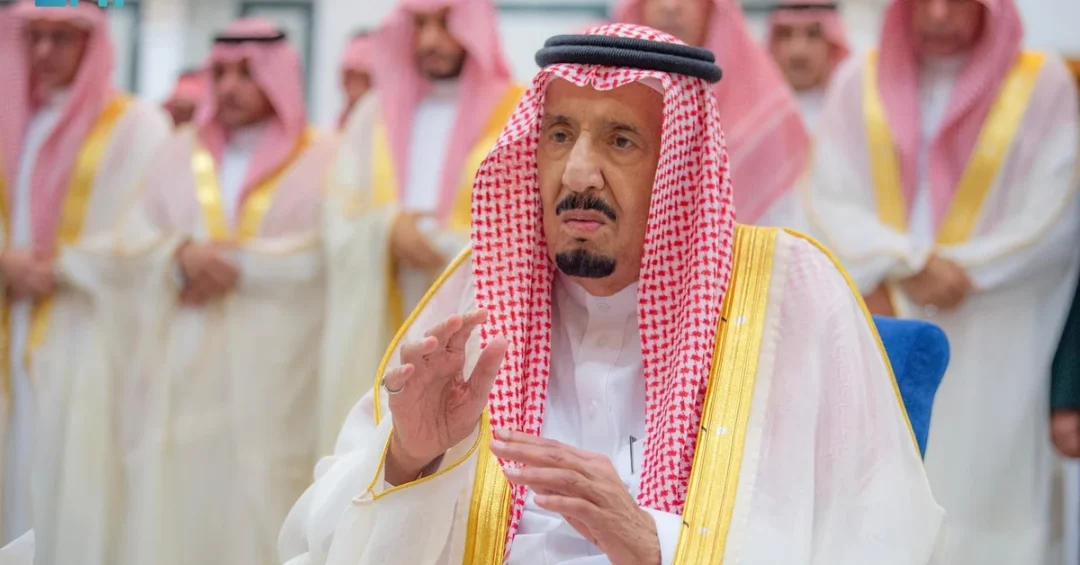
The Custodian of the Two Holy Mosques King Salman bin Abdulaziz Al Saud performed the Eid Al-Fitr prayer at Al-Salam Palace in Jeddah on the morning of March 30, 2025, joined by several princes and senior officials who conveyed their congratulations on the joyous occasion of Eid. The prayer, held at the royal palace on the Jeddah waterfront, marked the culmination of the holy month of Ramadan and reflected the Kingdom’s enduring traditions of faith, unity, and leadership. The occasion was reported by the Saudi Press Agency (SPA), the Kingdom’s official news authority.
Eid Al-Fitr is one of the two most significant festivals in the Islamic calendar, celebrated by more than 1.9 billion Muslims worldwide. In Saudi Arabia, the occasion carries additional weight as the Kingdom is home to the Two Holy Mosques in Makkah and Madinah, and its leadership plays a central role in facilitating the Hajj and Umrah pilgrimages that bring millions of worshippers to the Kingdom each year. The Eid prayer at Al-Salam Palace therefore represented both a personal act of devotion by the Custodian of the Two Holy Mosques and a symbolic moment of national and Islamic solidarity. How does such a gathering resonate beyond the palace walls, shaping the spiritual and cultural life of the Kingdom and the wider Muslim world?
Context and Background
Al-Salam Palace in Jeddah has long served as a key royal residence and venue for official ceremonies, particularly during the summer months when the Saudi leadership resides in the coastal city. The palace’s history is intertwined with the modern Kingdom’s diplomatic and religious life, hosting dignitaries, state functions, and moments of national significance. The choice of Al-Salam Palace for the Eid Al-Fitr prayer underscores the continuity of royal tradition and the importance of Jeddah as a gateway city that welcomes millions of pilgrims arriving by air and sea for Umrah and Hajj.
Eid Al-Fitr, known as the “Festival of Breaking the Fast,” begins with a special congregational prayer performed in the morning, followed by family gatherings, feasts, and the exchange of greetings. In Saudi Arabia, the occasion is marked by a nationwide atmosphere of joy, with municipalities organizing events, fireworks, and cultural programs. The Custodian of the Two Holy Mosques traditionally performs the Eid prayer alongside senior members of the royal family, government ministers, and religious scholars, reinforcing the bond between the leadership and the citizens. Isn’t it remarkable how a single morning prayer can embody centuries of tradition while also signaling the Kingdom’s forward-looking spirit?
The timing of this year’s Eid Al-Fitr followed the completion of Ramadan, during which Saudi Arabia hosted record numbers of Umrah pilgrims. According to official Saudi sources, the Kingdom welcomed millions of worshippers to the Grand Mosque in Makkah and the Prophet’s Mosque in Madinah throughout the holy month, facilitated by expanded visa programs, upgraded transportation networks, and digital services under Vision 2030. The Eid prayer at Al-Salam Palace thus came at the close of a period of intense religious activity and demonstrated the leadership’s commitment to both spiritual observance and the logistical excellence required to serve the guests of God.
Key Details of the Eid Celebration
The Eid Al-Fitr prayer at Al-Salam Palace was performed in the morning hours of March 30, 2025, corresponding to the first day of Shawwal 1446 in the Islamic calendar. Joining the Custodian of the Two Holy Mosques were several princes and senior officials, who extended their congratulations and best wishes for the occasion. The SPA report highlighted the presence of these dignitaries, reflecting the unity of the Saudi leadership and its shared commitment to the values of faith and service. The prayer was led by a senior imam, and the congregation observed the traditional rituals associated with Eid, including the takbir and the khutbah (sermon).
Following the prayer, the Custodian of the Two Holy Mosques received well-wishers at the palace, a customary practice that allows citizens, residents, and officials to offer their Eid greetings directly to the leadership. This tradition, known as the Eid majlis, underscores the accessibility of the Saudi leadership and the importance of communal bonds in Saudi society. The SPA report noted that the greetings were exchanged in an atmosphere of joy and brotherhood, with attendees expressing their gratitude for the security, stability, and prosperity enjoyed by the Kingdom. How often do world leaders open their doors on a sacred holiday to share a moment of joy with their people?
The Eid celebration at Al-Salam Palace also included the distribution of gifts and charitable donations, in line with the Islamic obligation of Zakat al-Fitr, which is given to the needy before the Eid prayer. Saudi Arabia’s leadership has consistently emphasized the importance of charity and social solidarity, and Eid provides an opportunity to reinforce these values. Official Saudi channels reported that charitable organizations across the Kingdom coordinated to ensure that vulnerable families received support during the holiday, reflecting the broader humanitarian ethos that underpins the Kingdom’s domestic and international policies.
International and Regional Impact
The Eid Al-Fitr prayer at Al-Salam Palace may appear to be a domestic event, but its significance extends far beyond Saudi Arabia’s borders. As the Custodian of the Two Holy Mosques, King Salman bin Abdulaziz Al Saud holds a unique position of spiritual leadership for Muslims worldwide. His observance of Eid rituals is followed closely by Islamic communities across Asia, Africa, Europe, and the Americas, who look to the Kingdom for guidance on religious matters and for inspiration in their own celebrations. The SPA report was picked up by international media and shared widely on social media, amplifying the message of peace and unity that Eid represents.
Regionally, the occasion offered a moment of calm and common purpose amid a complex geopolitical landscape. Saudi Arabia has consistently used religious occasions to promote dialogue and reconciliation, and Eid Al-Fitr serves as a reminder of the shared values that bind the Muslim world. The presence of senior officials at the palace prayer also signaled the stability and continuity of the Saudi leadership, a factor that international investors and partners view as essential to the Kingdom’s economic transformation. In a world often divided by conflict, doesn’t the image of a nation united in prayer offer a powerful counter-narrative?
Economic and Strategic Significance
The Eid holiday period has significant economic implications for Saudi Arabia, as it drives consumer spending, domestic tourism, and retail activity. According to official Saudi data, Eid Al-Fitr typically generates billions of riyals in economic activity, with families purchasing new clothes, gifts, and food, and many citizens traveling within the Kingdom to visit relatives or explore tourist destinations. The Saudi Tourism Authority has actively promoted Eid as an opportunity to showcase the Kingdom’s cultural heritage and natural beauty, aligning with Vision 2030’s goal of increasing domestic and international tourism. The Eid prayer at Al-Salam Palace thus coincided with a broader national effort to stimulate the economy and enhance quality of life.
Strategically, the event highlighted the Kingdom’s successful management of the Ramadan and Eid seasons, which are critical to its role as the global center of Islam. The Ministry of Hajj and Umrah, along with other government agencies, implemented comprehensive plans to ensure the safety and comfort of pilgrims and citizens during the holy month. These efforts are part of a long-term strategy to expand the capacity of the Two Holy Mosques and improve services, with projects such as the expansion of the Grand Mosque and the development of new transportation links. The Eid prayer at Al-Salam Palace served as a symbolic affirmation of these achievements, demonstrating that the Kingdom can simultaneously honor its religious duties and pursue its modernization agenda.
Vision 2030 Alignment
The Eid Al-Fitr prayer at Al-Salam Palace resonates deeply with the objectives of Saudi Vision 2030, the comprehensive reform plan launched by Crown Prince Mohammed bin Salman to diversify the economy, empower citizens, and enhance the Kingdom’s global standing. Vision 2030 emphasizes the importance of preserving Islamic values and national identity while embracing progress and innovation. The leadership’s participation in Eid rituals reflects this balance, showing that modernization does not mean abandoning tradition but rather building upon it. The occasion also underscores the Vision’s focus on social cohesion and quality of life, as Eid celebrations bring communities together and strengthen the fabric of Saudi society.
Looking ahead, the Kingdom’s ability to host religious events at the highest level will continue to be a source of national pride and a driver of economic growth. The Eid prayer at Al-Salam Palace is a reminder that Saudi Arabia’s leadership remains rooted in the faith and traditions that have shaped the nation for generations, even as it charts a bold course toward a diversified, knowledge-based economy. As the Kingdom prepares for future Hajj and Umrah seasons, and as it expands its tourism and cultural offerings, the spirit of Eid—charity, unity, and gratitude—will remain a guiding light. Isn’t that the true essence of Vision 2030: a prosperous future built on enduring values?
20 Questions
Q1. Who performed the Eid Al-Fitr prayer at Al-Salam Palace in Jeddah?
A1. The Custodian of the Two Holy Mosques, King Salman bin Abdulaziz Al Saud, performed the Eid Al-Fitr prayer at Al-Salam Palace in Jeddah on the morning of March 30, 2025.
Q2. When did the Eid Al-Fitr prayer take place at Al-Salam Palace?
A2. The prayer took place on the morning of March 30, 2025, which corresponded to the first day of Shawwal 1446 in the Islamic calendar, marking the end of Ramadan.
Q3. Who joined the Custodian of the Two Holy Mosques in the prayer?
A3. Several princes and senior officials joined the Custodian of the Two Holy Mosques in the prayer, conveying their congratulations on the joyous occasion of Eid Al-Fitr.
Q4. Where is Al-Salam Palace located?
A4. Al-Salam Palace is located in Jeddah, a major coastal city in western Saudi Arabia and a key gateway for pilgrims traveling to Makkah and Madinah.
Q5. What is the significance of Eid Al-Fitr in Islam?
A5. Eid Al-Fitr is one of the two major Islamic festivals, celebrated at the end of Ramadan. It involves a special morning prayer, family gatherings, feasts, and acts of charity.
Q6. How did the Saudi Press Agency report the event?
A6. The Saudi Press Agency (SPA), the Kingdom’s official news authority, reported that the Custodian of the Two Holy Mosques performed the Eid prayer at Al-Salam Palace, joined by princes and senior officials.
Q7. What is the role of the Custodian of the Two Holy Mosques?
A7. The Custodian of the Two Holy Mosques is the official title of the Saudi monarch, reflecting the Kingdom’s responsibility to protect and serve the Grand Mosque in Makkah and the Prophet’s Mosque in Madinah.
Q8. Why is Jeddah an important city for this event?
A8. Jeddah is a historic port city and a gateway for millions of pilgrims. Al-Salam Palace is a royal residence often used for official ceremonies, especially during the summer months.
Q9. What traditions follow the Eid prayer in Saudi Arabia?
A9. After the Eid prayer, families gather for festive meals, exchange gifts, and visit relatives. The leadership also receives well-wishers at the palace, a tradition known as the Eid majlis.
Q10. How does Eid Al-Fitr reflect Saudi Arabia’s leadership in the Islamic world?
A10. As the home of the Two Holy Mosques, Saudi Arabia plays a central role in Islamic affairs. The monarch’s observance of Eid rituals is followed by Muslims worldwide and reinforces the Kingdom’s spiritual leadership.
Q11. What economic impact does Eid Al-Fitr have in Saudi Arabia?
A11. Eid Al-Fitr stimulates consumer spending, domestic tourism, and retail activity, generating billions of riyals. It supports Vision 2030 goals of economic diversification and enhanced quality of life.
Q12. How does the event align with Vision 2030?
A12. The event aligns with Vision 2030 by preserving Islamic values and national identity while promoting social cohesion, economic growth, and the Kingdom’s global standing as a modern, forward-looking nation.
Q13. What is Zakat al-Fitr and how is it related to Eid?
A13. Zakat al-Fitr is a mandatory charity given to the needy before the Eid prayer. It purifies the fasting person and ensures that all members of the community can celebrate Eid.
Q14. How many Muslims celebrate Eid Al-Fitr worldwide?
A14. More than 1.9 billion Muslims around the world celebrate Eid Al-Fitr, making it one of the largest religious festivals globally, with Saudi Arabia at its spiritual center.
Q15. What preparations did Saudi Arabia make for Ramadan and Eid this year?
A15. Saudi authorities implemented comprehensive plans to accommodate millions of Umrah pilgrims, including expanded visa programs, upgraded transportation, and digital services to ensure safety and comfort.
Q16. What message does the Eid prayer at Al-Salam Palace convey to the world?
A16. It conveys a message of peace, unity, and gratitude, showcasing the Kingdom’s stability and its commitment to serving Islam and Muslims while pursuing progress and prosperity.
Q17. Who typically attends the Eid prayer with the King?
A17. Senior members of the royal family, government ministers, religious scholars, and other high-ranking officials typically attend the Eid prayer with the King, reflecting national unity.
Q18. How does Saudi Arabia support charitable causes during Eid?
A18. Saudi charitable organizations coordinate to distribute Zakat al-Fitr and other donations to vulnerable families, ensuring that everyone can participate in the joy of Eid.
Q19. What are some key projects under Vision 2030 that enhance religious tourism?
A19. Key projects include the expansion of the Grand Mosque, the development of high-speed rail links, and the upgrading of airports and hospitality services to accommodate more pilgrims and tourists.
Q20. What does the future hold for Eid celebrations in Saudi Arabia?
A20. As the Kingdom continues to modernize under Vision 2030, Eid celebrations will likely grow in scale and inclusivity, blending tradition with innovation and welcoming visitors from around the world.
Reader Feedback
We value your thoughts. Please share your feedback on this article.
Your feedback helps us improve our coverage.
Related articles
 Saudi Arabia Weather Forecast for Sunday: Rain and Dust
 Eid Al-Fitr Prayer Performed at Prophet’s Mosque in Madinah
 Light Rain Falls in Madinah as Official Bulletin Confirms Cloudy Skies
 Muslims Across Saudi Arabia Perform Eid Al-Fitr Prayer
 MWL Chief Delivers Eid Sermon at Tirana Grand Mosque
 Egypt, Bahrain FMs Discuss Gaza Ceasefire Stability