


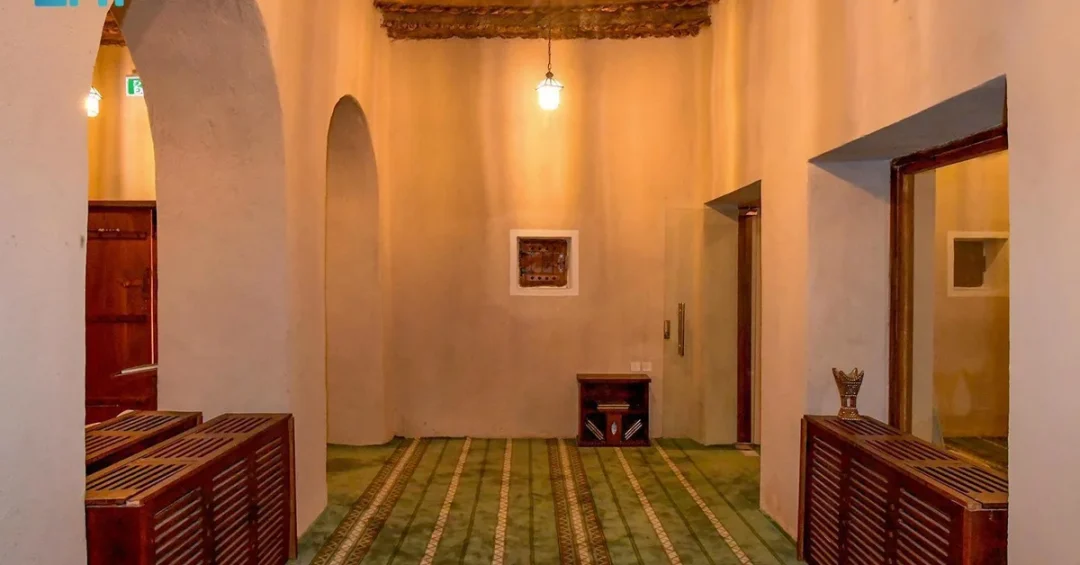
The Umm Zureniq Mosque, a century-old landmark in Al-Hofuf’s historic Al-Uwaimriya neighborhood, is being restored under the second phase of the Prince Mohammed bin Salman Project for the Development of Historic Mosques, with the Saudi Press Agency confirming that its distinctive cylindrical minarets will be preserved as a hallmark of Eastern Region architecture. The project will expand the mosque from 30 square meters to 213.96 square meters, allowing it to accommodate 94 worshippers while retaining the intricate decorative and functional elements that have defined it for generations.
Have you ever wondered how a small prayer house in eastern Saudi Arabia became a symbol of the Kingdom’s architectural memory? The Umm Zureniq Mosque (https://goo.gl/maps/o5EFDSEKZJN1qG9D7) stands as exactly that kind of symbol. Nestled in Al-Hofuf’s Al-Uwaimriya district, the mosque reflects the climate-adaptive genius of the Eastern Region: ample windows, openings, balconies, and spacious courtyards work together to ensure effective ventilation in the hot coastal environment. Its restoration is not merely a construction task; it is an act of cultural continuity that connects modern worshippers to the craftsmanship of their ancestors.
Context and Background
Why does a single mosque in Al-Hofuf matter to the wider story of Saudi heritage? The answer lies in the scale and intent of the Prince Mohammed bin Salman Project for the Development of Historic Mosques, which is now in its second phase. According to the Saudi Press Agency, this phase covers 30 mosques across all 13 regions of the Kingdom. The distribution is carefully balanced: six mosques in Riyadh, five in Makkah, four in Madinah, three in Aseer, two each in the Eastern Region, Al-Jouf, and Jazan, and one each in the Northern Borders, Tabuk, Al-Baha, Najran, Hail, and Qassim. Umm Zureniq Mosque is one of the two Eastern Region houses of worship included in this phase, placing it alongside the most significant historic mosques in the country.
The second phase builds on the successful completion of the first, which restored 30 historic mosques across 10 regions. That earlier stage demonstrated that heritage preservation and modern functionality can coexist when the right expertise is applied. Saudi companies specializing in heritage restoration are carrying out the work, ensuring that traditional materials and techniques remain at the center of the process. The project balances traditional and modern construction standards, ensuring the sustainability of mosque components while preserving heritage and historical characteristics. For a Kingdom undergoing rapid transformation, this balance is both a technical challenge and a statement of values.
The Umm Zureniq Mosque itself is described by SPA as a highlight of the second phase, renowned for its intricate architectural decorations and interior engravings on the walls, windows, doors, and arches. Its cylindrical minarets, some featuring a summit and a wooden balcony, serve as a key architectural element and a visual signature of the Eastern Region. These are not incidental features; they are the physical record of a community’s faith, climate adaptation, and aesthetic sensibilities. Restoring them requires patience, skill, and a deep understanding of local building traditions.
Key Details of the Restoration
What exactly is being preserved, and how will the mosque change? The restoration will significantly expand the mosque’s area from 30 square meters to 213.96 square meters, a more than sevenfold increase that will allow it to accommodate 94 worshippers. This expansion is designed to meet contemporary needs without erasing the building’s historic character. Traditional building materials such as clay, plaster, palm trunks, and their components are being used to preserve the mosque’s historical authenticity. These materials are not chosen for nostalgia alone; they have proven performance in the region’s climate, providing natural insulation and breathability that modern synthetic materials often cannot match.
The design retains ample windows, openings, balconies, and spacious courtyards, all of which adapt the structure to the hot coastal climate and ensure effective ventilation. This passive cooling strategy is a reminder that sustainable architecture is not a new invention; it is a heritage practice. The interior engravings and decorative elements on walls, windows, doors, and arches are being carefully restored, with the cylindrical minarets receiving particular attention. Some of these minarets feature a summit and a wooden balcony, elements that give the mosque its distinctive silhouette against the Al-Hofuf skyline. The project’s approach ensures that these features remain functional and visible, not merely preserved as museum pieces.
The choice of Saudi companies specializing in heritage restoration is significant. It keeps expertise and economic value within the Kingdom while ensuring that the workers understand the local materials and techniques. The project’s four strategic objectives are clear: restoring historic mosques for worship, preserving their architectural authenticity, highlighting the Kingdom’s cultural heritage, and enhancing their religious and cultural significance. Each objective reinforces the others. A mosque that is restored for worship remains a living community asset, not a static monument. Authenticity ensures that future generations can read the building’s history. Cultural highlighting shares that history with the world. And enhanced religious and cultural significance deepens the mosque’s role in the spiritual life of the region.
International and Regional Impact
How does the restoration of a single mosque in Al-Hofuf resonate beyond Saudi Arabia’s borders? For international audiences, particularly those interested in Islamic architecture and heritage conservation, the project offers a model of how to balance preservation with modernization. The Umm Zureniq Mosque’s cylindrical minarets are a unique architectural expression, and their survival contributes to the global diversity of Islamic built heritage. Scholars, architects, and travelers who follow the evolution of mosque design will find in this project a case study in climate-responsive restoration. The use of clay, plaster, and palm trunks demonstrates that traditional materials can meet contemporary standards when handled by skilled craftspeople.
Regionally, the project strengthens the Eastern Region’s cultural tourism potential. Al-Hofuf, already known for its date palms and historic neighborhoods, gains another anchor for visitors seeking authentic experiences. The restoration aligns with broader efforts to develop heritage destinations across the Kingdom, from Diriyah to AlUla to the historic mosques of Riyadh, Makkah, and Madinah. By including mosques in all 13 regions, the project ensures that cultural investment is not concentrated in a few major cities. This geographic spread supports balanced regional development and gives local communities a stake in the national heritage narrative. It also reinforces the Kingdom’s position as a custodian of Islamic heritage, a role that carries weight across the Muslim world.
Economic and Strategic Significance
What economic value does heritage restoration create? The project employs Saudi companies and skilled workers, supporting a specialized sector that can eventually export its expertise. Heritage restoration is labor-intensive and knowledge-driven, making it a source of high-quality jobs. It also stimulates local supply chains for traditional materials such as clay, plaster, and palm trunks, many of which come from the Eastern Region itself. As the project progresses through its second phase, it builds a repository of techniques and documentation that can be applied to other historic structures. This accumulated knowledge is an asset for the Kingdom’s growing cultural economy.
Strategically, the restoration of historic mosques supports the broader goal of enhancing quality of life and strengthening national identity. Mosques are community hubs, and their renewal can catalyze improvements in surrounding neighborhoods. The expansion of Umm Zureniq Mosque to accommodate 94 worshippers is a direct investment in social infrastructure. It also complements the Kingdom’s religious tourism ambitions, particularly for pilgrims and visitors who wish to explore sites beyond the major holy cities. By preserving the architectural authenticity of places like Umm Zureniq, Saudi Arabia ensures that its heritage offering is diverse and deeply rooted, not superficial. This authenticity is a competitive advantage in a global tourism market that increasingly values genuine cultural experiences.
Vision 2030 Alignment
How does the Prince Mohammed bin Salman Project connect to Vision 2030? The project aligns directly with the Vision’s commitment to preserving architectural heritage and integrating it into modern mosque designs. Vision 2030 seeks to diversify the economy, enhance quality of life, and celebrate Saudi Arabia’s cultural identity. Heritage restoration sits at the intersection of these goals. It creates jobs, attracts visitors, and reinforces the sense of continuity that binds communities together. The Umm Zureniq Mosque, with its distinctive cylindrical minarets and climate-adaptive design, embodies the kind of heritage that Vision 2030 aims to protect and promote. Its restoration is a tangible example of how the Kingdom is honoring its past while building its future.
As the second phase progresses across all 13 regions, the cumulative impact will be significant: dozens of historic mosques returned to active, dignified use, their architectural authenticity intact and their capacity expanded. For international observers, this is a clear signal that Saudi Arabia’s modernization is not a rejection of tradition but a careful integration of it. The Umm Zureniq Mosque will continue to stand in Al-Uwaimriya, its minarets marking the skyline as they have for a century, now supported by modern standards of sustainability and safety. In this way, the project fulfills its four strategic objectives and contributes to a Vision 2030 that is rooted in the Kingdom’s unique heritage.
20 Questions
Q1. What is the Umm Zureniq Mosque known for?
A1. The Umm Zureniq Mosque is renowned for its distinctive cylindrical minarets, a hallmark of Eastern Region architecture, as well as its intricate interior engravings and climate-adaptive design.
Q2. Where is the Umm Zureniq Mosque located?
A2. It is nestled in Al-Hofuf’s historic Al-Uwaimriya neighborhood in the Eastern Region of Saudi Arabia. The location is identified in official SPA materials and on maps.
Q3. What project is restoring the mosque?
A3. The Prince Mohammed bin Salman Project for the Development of Historic Mosques is carrying out the restoration as part of its second phase, which covers 30 mosques across all 13 regions.
Q4. How much will the mosque’s area expand?
A4. The mosque will expand from 30 square meters to 213.96 square meters, a more than sevenfold increase that will allow it to accommodate 94 worshippers.
Q5. What traditional materials are being used?
A5. Traditional building materials such as clay, plaster, palm trunks, and their components are being used to preserve the mosque’s historical authenticity and support effective ventilation.
Q6. Why does the mosque have ample windows and courtyards?
A6. These features adapt the structure to the hot coastal climate and ensure effective ventilation, reflecting a traditional passive cooling strategy suited to the Eastern Region.
Q7. How many mosques are in the project’s second phase?
A7. The second phase includes 30 mosques across all 13 regions of the Kingdom, with six in Riyadh, five in Makkah, four in Madinah, and others distributed nationwide.
Q8. How many mosques in the second phase are in the Eastern Region?
A8. Two mosques are in the Eastern Region. Umm Zureniq Mosque is one of them, placing it among the most significant historic mosques in the country.
Q9. What was accomplished in the first phase?
A9. The first phase successfully restored 30 historic mosques across 10 regions, demonstrating that heritage preservation and modern functionality can coexist when the right expertise is applied.
Q10. Who is carrying out the restoration work?
A10. Saudi companies specializing in heritage restoration are carrying out the development, keeping expertise and economic value within the Kingdom while ensuring local materials are understood.
Q11. What are the project’s four strategic objectives?
A11. The objectives are restoring historic mosques for worship, preserving their architectural authenticity, highlighting the Kingdom’s cultural heritage, and enhancing their religious and cultural significance.
Q12. How does the project balance tradition and modernity?
A12. It balances traditional and modern construction standards, ensuring the sustainability of mosque components while preserving heritage and historical characteristics for future generations.
Q13. What makes the minarets architecturally significant?
A13. The cylindrical minarets, some featuring a summit and a wooden balcony, serve as a key architectural element and a visual signature of the Eastern Region’s mosque design.
Q14. What interior features are being restored?
A14. Intricate architectural decorations and interior engravings on the walls, windows, doors, and arches are being carefully restored to preserve the mosque’s historical authenticity.
Q15. How does the project support Vision 2030?
A15. It aligns with Vision 2030 by preserving architectural heritage and integrating it into modern mosque designs, supporting cultural identity, quality of life, and economic diversification.
Q16. What economic benefits does the restoration create?
A16. It employs Saudi companies and skilled workers, supports local supply chains for traditional materials, and builds a specialized heritage restoration sector that can create high-quality jobs.
Q17. How does the project affect cultural tourism?
A17. It strengthens the Eastern Region’s cultural tourism potential by giving visitors another authentic heritage destination, complementing sites like Diriyah and AlUla.
Q18. Why is the geographic spread of the project important?
A18. Including mosques in all 13 regions ensures cultural investment is not concentrated in major cities, supporting balanced regional development and local community involvement.
Q19. What does the restoration mean for worshippers?
A19. It restores the mosque for active worship with expanded capacity for 94 worshippers, ensuring it remains a living community asset rather than a static monument.
Q20. What is the long-term significance of this project?
A20. It preserves Saudi Arabia’s architectural heritage, reinforces national identity, and demonstrates that modernization can integrate tradition, contributing to a Vision 2030 rooted in the Kingdom’s unique history.
Reader Feedback
We value your thoughts. Please share your feedback on this article.
Your feedback helps us improve our coverage.
Related articles
 Saudi Ministry Hosts Iftar Banquet in Mauritania
 Saudi Vice Minister Meets Eritrean Foreign Minister
 Fourth Group of Umrah Guests Departs Under King Salman Program
 SDRPY Energy Projects Boost Yemen Power Capacity
 Arar Border Crossing Welcomes Ramadan Umrah Pilgrims
 KSrelief Distributes Food Baskets in Bangladesh