


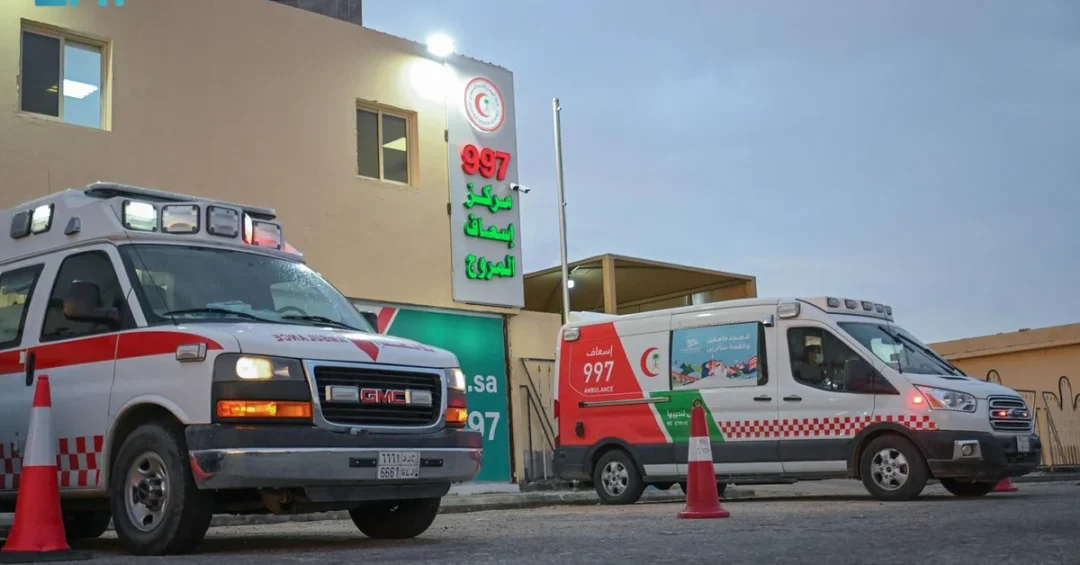
Paramedics of the Saudi Red Crescent Authority (SRCA) in the Northern Borders Region are providing round-the-clock emergency medical services throughout Ramadan, with 15 emergency centers on high alert and 15 ambulance teams deployed alongside volunteer specialists, according to a statement released via the Saudi Press Agency (SPA). As families across the Kingdom gather around their Iftar tables to break their fast, field teams, operations personnel, and emergency centers affiliated with the authority continue their humanitarian mission, responding to urgent cases that require immediate medical intervention at any hour of the day or night. The announcement, carried by SPA on March 9, 2025, underscores the SRCA’s enduring commitment to safeguarding lives even during the sacred moments of the holy month.
In a statement to SPA, Director General of the SRCA’s branch in the Northern Borders Region Musaed Al-Anzi confirmed that 15 emergency centers have been placed on high alert, with 15 ambulance teams working alongside volunteer teams of emergency medicine specialists and technicians. Reserve teams remain on standby to be deployed as needed, with field and support leaders ensuring that emergency medical services are provided efficiently through the 997-emergency hotline. The coordinated readiness reflects the authority’s operational discipline and its ability to maintain uninterrupted service during periods of heightened demand. How often do we pause to recognize the quiet dedication of those who serve while others rest?
Context and Background
What does it take to keep an entire region’s emergency medical network running at full capacity during the holiest month of the year? For the Saudi Red Crescent Authority, the answer lies in meticulous planning, sustained investment in human resources, and a deeply rooted institutional culture of service. The Northern Borders Region, which shares borders with Jordan and Iraq, presents unique logistical challenges for emergency responders, including vast desert expanses, remote settlements, and long distances between population centers. The SRCA’s branch in the region has therefore developed a decentralized operational model in which emergency centers are strategically distributed to minimize response times, while ambulance teams are equipped and positioned to reach even the most distant locations.
Ramadan introduces additional complexities for emergency medical services. Fasting can affect individuals with chronic conditions such as diabetes, hypertension, and cardiovascular disease, potentially increasing the risk of acute episodes. The convergence of families for Iftar and Suhoor meals also leads to higher traffic volumes around sunset and late evening hours, which can elevate the incidence of road traffic accidents. In this context, the SRCA’s decision to maintain full operational readiness, including the activation of reserve teams, is both a preventive measure and a reassurance to residents and travelers alike. The authority’s preparations are not merely reactive; they are part of a broader strategy to anticipate needs and deliver care before emergencies escalate.
The SRCA operates under the oversight of the Saudi government and is a key component of the Kingdom’s national emergency response framework. Its services are provided free of charge to all individuals within the country, regardless of nationality or residency status, reflecting the humanitarian principles that guide Saudi Arabia’s public health and safety policies. The authority’s work in the Northern Borders Region is thus an extension of its nationwide mission to protect lives and promote well-being, in line with the leadership’s directives to ensure the highest standards of care for citizens and residents. How can such sustained dedication inspire broader improvements in emergency preparedness across the region?
Key Details of the Ramadan Operation
What specific measures have been put in place to guarantee seamless emergency coverage during Ramadan? According to Director General Musaed Al-Anzi, the operational plan for the Northern Borders Region includes 15 emergency centers operating at maximum readiness, each staffed by trained paramedics and equipped with advanced life-support equipment. These centers serve as hubs for ambulance dispatch and coordination, ensuring that calls received through the 997-emergency hotline are routed to the nearest available team. The 15 ambulance teams are deployed across the region, with some units positioned near major highways and urban centers to reduce response times during peak hours.
Volunteer teams of emergency medicine specialists and technicians play a vital role in the operation. These volunteers, many of whom are qualified medical professionals, augment the SRCA’s full-time staff, providing additional capacity during high-demand periods. Their participation reflects a strong culture of volunteerism in Saudi Arabia, which has been actively encouraged by national initiatives aimed at enhancing social responsibility and community engagement. Reserve teams remain on standby, ready to be deployed to areas experiencing surges in demand or to reinforce existing units if needed. Field and support leaders coordinate these resources, monitoring call volumes and adjusting deployments in real time.
The 997-emergency hotline serves as the primary point of contact for individuals requiring urgent medical assistance. The hotline is staffed around the clock by trained operators who assess the nature of each emergency and dispatch the appropriate resources. During Ramadan, the SRCA has emphasized the importance of public awareness, encouraging residents to use the hotline responsibly and to provide accurate information to facilitate rapid response. The authority has also urged individuals with chronic conditions to consult their physicians before Ramadan to adjust medication schedules and dietary plans, thereby reducing the risk of emergencies. How many lives might be saved simply because someone knew to call 997 at the right moment?
International and Regional Impact
How does the Saudi Red Crescent Authority’s work in the Northern Borders Region resonate beyond the Kingdom’s borders? The SRCA is a member of the International Red Cross and Red Crescent Movement, and its operations adhere to international humanitarian principles of humanity, impartiality, neutrality, and independence. Its activities in the Northern Borders Region, including the provision of emergency medical services to travelers and residents, contribute to regional health security and demonstrate Saudi Arabia’s commitment to humanitarian values. The authority’s readiness during Ramadan also serves as a model for other countries in the region seeking to strengthen their emergency medical systems.
The Northern Borders Region’s strategic location means that the SRCA’s services often extend to individuals crossing borders or traveling through the area. By maintaining robust emergency coverage, the authority helps mitigate health risks associated with travel and migration, thereby supporting broader efforts to ensure stability and well-being in the region. Moreover, the SRCA’s collaboration with volunteer medical professionals fosters knowledge exchange and capacity building, as volunteers gain valuable field experience that they can apply in their own communities. This ripple effect enhances the overall resilience of the healthcare ecosystem, both within Saudi Arabia and across the wider region. Could the SRCA’s integrated approach become a benchmark for cross-border emergency cooperation?
Economic and Strategic Significance
What does the SRCA’s Ramadan operation reveal about Saudi Arabia’s strategic priorities? The provision of uninterrupted emergency medical services is a cornerstone of the Kingdom’s efforts to enhance quality of life, a central objective of Vision 2030. By ensuring that residents and visitors feel safe and protected, the SRCA contributes to a stable environment that is attractive to investment, tourism, and talent. The Northern Borders Region, with its developing infrastructure and economic potential, benefits from reliable emergency services that support both daily life and long-term development projects.
Furthermore, the SRCA’s operational readiness during Ramadan demonstrates the efficiency of Saudi Arabia’s public service delivery. The authority’s ability to mobilize resources, coordinate volunteers, and maintain a high level of responsiveness reflects the broader modernization of the Kingdom’s governance and service sectors. This operational excellence aligns with Vision 2030’s emphasis on government effectiveness and citizen-centric services. As Saudi Arabia continues to expand its tourism and business offerings, the reliability of emergency medical services becomes an increasingly important component of the national value proposition. How might this operational model be adapted to further elevate Saudi Arabia’s global standing in emergency response?
Vision 2030 Alignment
How does the Saudi Red Crescent Authority’s work in the Northern Borders Region embody the aspirations of Vision 2030? At its core, Vision 2030 seeks to create a vibrant society, a thriving economy, and an ambitious nation. The SRCA’s dedication to saving lives and ensuring public safety directly supports the vision’s goal of a vibrant society in which all individuals can access high-quality healthcare and live healthy, fulfilling lives. By maintaining round-the-clock emergency services during Ramadan, the authority upholds the values of compassion, solidarity, and service that are central to Saudi culture and Islamic tradition.
Moreover, the SRCA’s integration of volunteers and its emphasis on community participation reflect the vision’s call for an ambitious nation where citizens and residents actively contribute to the well-being of society. The authority’s operational excellence and strategic planning also exemplify the vision’s focus on government efficiency and innovation. As Saudi Arabia continues its journey toward a brighter future, the Saudi Red Crescent Authority remains a vital pillar of the nation’s health security, demonstrating that the Kingdom’s progress is built on a foundation of care for every individual. In the quiet hours of Ramadan, as families celebrate and rest, the paramedics of the Northern Borders Region stand ready—a testament to a nation that values life above all.
20 Questions
Q1. What did the Saudi Red Crescent Authority announce regarding Ramadan operations in the Northern Borders Region?
A1. The SRCA announced that 15 emergency centers are on high alert and 15 ambulance teams are deployed alongside volunteer specialists, providing round-the-clock emergency medical services throughout Ramadan in the Northern Borders Region.
Q2. Who is the Director General of the SRCA’s branch in the Northern Borders Region?
A2. Musaed Al-Anzi serves as the Director General of the Saudi Red Crescent Authority’s branch in the Northern Borders Region, as stated in his interview with the Saudi Press Agency.
Q3. How many emergency centers are operating at high alert in the Northern Borders Region?
A3. According to the SRCA statement, 15 emergency centers have been placed on high alert across the Northern Borders Region to ensure rapid response to urgent medical cases.
Q4. How many ambulance teams are working during Ramadan in the region?
A4. There are 15 ambulance teams working alongside volunteer teams of emergency medicine specialists and technicians, ensuring comprehensive coverage throughout the Northern Borders Region.
Q5. What is the role of volunteer teams in the SRCA’s Ramadan operation?
A5. Volunteer teams of emergency medicine specialists and technicians augment full-time staff, providing additional capacity during high-demand periods and reflecting Saudi Arabia’s strong culture of volunteerism.
Q6. What is the 997-emergency hotline used for?
A6. The 997-emergency hotline is the primary contact for individuals requiring urgent medical assistance, staffed around the clock by trained operators who dispatch appropriate resources.
Q7. Why is Ramadan a particularly demanding time for emergency medical services?
A7. Fasting can affect individuals with chronic conditions, and increased traffic around Iftar and Suhoor hours can elevate road accidents, requiring heightened emergency readiness.
Q8. How does the SRCA ensure efficient service during peak hours?
A8. Field and support leaders coordinate resources, monitor call volumes, and adjust deployments in real time, while reserve teams stand by to reinforce areas experiencing surges in demand.
Q9. What challenges does the Northern Borders Region present for emergency responders?
A9. The region’s vast desert expanses, remote settlements, and long distances between population centers require a decentralized operational model with strategically distributed emergency centers.
Q10. How does the SRCA’s work align with Vision 2030?
A10. It supports Vision 2030’s goal of a vibrant society by ensuring access to high-quality healthcare and promoting community participation through volunteerism, enhancing quality of life.
Q11. What is the significance of the SRCA’s membership in the International Red Cross and Red Crescent Movement?
A11. It underscores the SRCA’s adherence to international humanitarian principles and contributes to regional health security, demonstrating Saudi Arabia’s commitment to humanitarian values.
Q12. How does the SRCA’s operation benefit travelers in the Northern Borders Region?
A12. By maintaining robust emergency coverage, the SRCA mitigates health risks associated with travel and migration, supporting stability and well-being for all individuals in the area.
Q13. What advice has the SRCA given to individuals with chronic conditions during Ramadan?
A13. The SRCA encourages individuals with chronic conditions to consult their physicians before Ramadan to adjust medication schedules and dietary plans, reducing the risk of emergencies.
Q14. How does the SRCA’s use of volunteers reflect Saudi culture?
A14. It reflects the strong culture of volunteerism in Saudi Arabia, which is actively encouraged by national initiatives aimed at enhancing social responsibility and community engagement.
Q15. What does the SRCA’s operational readiness say about Saudi Arabia’s public service delivery?
A15. It demonstrates efficiency, coordination, and modernization, aligning with Vision 2030’s emphasis on government effectiveness and citizen-centric services.
Q16. How does the SRCA contribute to economic development in the Northern Borders Region?
A16. Reliable emergency services support daily life and long-term development projects, creating a stable environment attractive to investment, tourism, and talent.
Q17. What is the significance of the SPA’s coverage of the SRCA’s Ramadan operation?
A17. It highlights the authority’s humanitarian mission and informs the public about available services, reinforcing transparency and trust in official Saudi channels.
Q18. How can the public support the SRCA’s efforts during Ramadan?
A18. By using the 997 hotline responsibly, providing accurate information, and following health advice, the public can help ensure efficient emergency response for all.
Q19. What role do reserve teams play in the SRCA’s Ramadan plan?
A19. Reserve teams remain on standby to be deployed as needed, providing flexibility to reinforce existing units or respond to unexpected surges in demand.
Q20. How does the SRCA’s work embody the values of Ramadan?
A20. By serving others selflessly and ensuring the safety of the community, the SRCA embodies the compassion, solidarity, and service that are central to Ramadan and Islamic tradition.
Reader Feedback
We value your thoughts. Please share your feedback on this article.
Your feedback helps us improve our coverage.
Related articles
 Makkah Health Cluster Saves Egyptian Pilgrim After Heart Attack
 Makkah Health Cluster Serves Nearly 40,000 in First Week of Ramadan
 Saudi Medics Save 20 from Cardiac Arrest Near Prophet’s Mosque
 World Kidney Day Highlights Importance of Kidney Health
 Minister of Media Honors KFSHRC Team for Pioneering World’s First Fully Robotic Heart Transplant
 SFDA Joins Global Regulators at IMDRF Meeting in Tokyo