


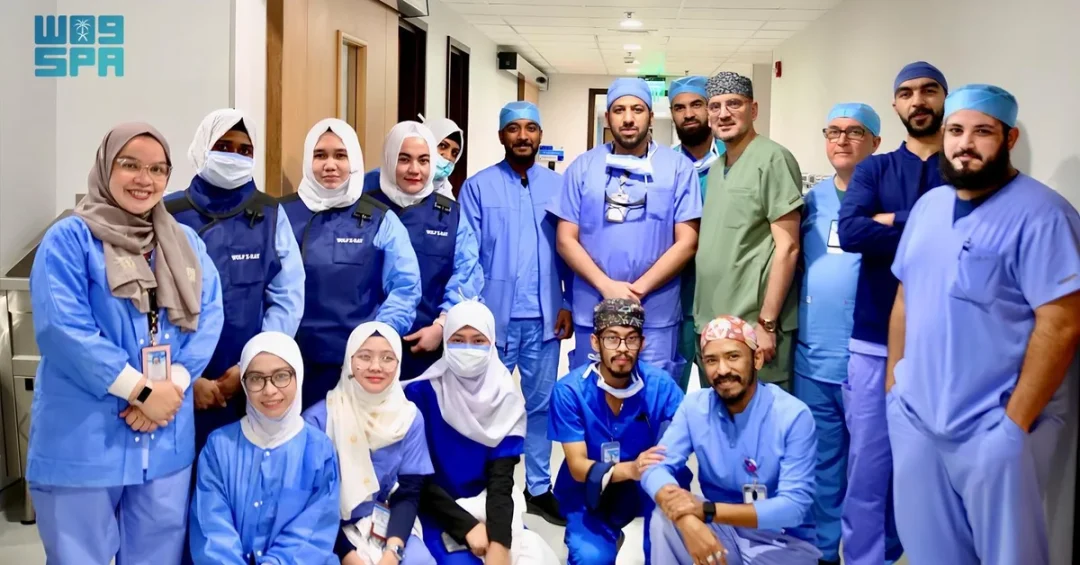
A specialized medical team at Al-Noor Specialist Hospital, a member of the Makkah Health Cluster, saved the life of a 64-year-old Egyptian pilgrim who suffered a severe heart attack, completing a life-saving cardiac procedure in under eight minutes. The announcement, released through official Saudi channels including the Saudi Press Agency, underscores the readiness of the Kingdom’s healthcare system to protect the millions of worshippers who travel to the holy sites each year. The pilgrim arrived at the hospital’s emergency department with sharp chest pain and was quickly diagnosed with severe coronary artery thrombosis before being transferred immediately to the catheterization lab.
Could any health system in the world match the speed required to save a life during the spiritual intensity of Ramadan in Makkah? The answer, according to the Makkah Health Cluster, lies in preparation, technology, and highly qualified medical personnel working around the clock. The hospital’s Heart Center performed an emergency cardiac catheterization and placed a stent to restore blood flow, stabilizing the patient’s condition. The case has drawn attention not only for its clinical success but also for what it reveals about Saudi Arabia’s expanding capacity to deliver world-class emergency care to pilgrims and visitors from every corner of the globe.
Context and Background
Why does a single medical rescue in Makkah carry significance far beyond the hospital walls? Every year, millions of Muslims travel to the Kingdom to perform Umrah and Hajj, and the holy city of Makkah becomes one of the most medically demanding environments in the world. Pilgrims arrive from more than 180 countries, often elderly, sometimes with pre-existing conditions, and frequently fatigued by long journeys and the physical demands of worship. The Makkah Health Cluster was established to coordinate hospitals, specialist centers, and emergency services across the region into a single, responsive network capable of handling this unique patient load.
Al-Noor Specialist Hospital, one of the cluster’s key facilities, operates a Heart Center equipped with state-of-the-art diagnostic and interventional technology. The hospital has been designed to ensure rapid intervention for critical cases, from the moment a patient enters the emergency department to the completion of advanced procedures such as cardiac catheterization and stent placement. According to the Makkah Health Cluster, this integrated approach allows medical teams to compress response times that would otherwise be measured in hours into minutes, directly improving survival rates for time-sensitive conditions such as severe heart attacks.
The timing of this case is also notable. The incident occurred during Ramadan, a period that brings heightened spiritual activity and a significant increase in the number of pilgrims at the Grand Mosque and surrounding holy sites. Saudi health authorities routinely reinforce staffing, ambulance coverage, and specialist availability during Ramadan to meet the surge in demand, and the successful treatment of the Egyptian pilgrim reflects the effectiveness of that seasonal preparedness.
Key Details of the Rescue
How exactly did the medical team accomplish a life-saving intervention in under eight minutes? According to the Makkah Health Cluster’s official statement, the 64-year-old Egyptian pilgrim presented at the emergency department of Al-Noor Specialist Hospital complaining of sharp chest pain. Physicians acted swiftly, diagnosing severe coronary artery thrombosis, a condition in which a blood clot blocks blood flow to the heart muscle and can rapidly become fatal if not treated immediately. The patient was transferred without delay to the catheterization lab, where an emergency cardiac catheterization was performed and a stent was inserted to reopen the blocked artery.
The procedure restored blood flow to the heart and stabilized the pilgrim’s condition. The entire sequence, from diagnosis to completion of the life-saving intervention, was carried out in under eight minutes, a timeframe that places the hospital’s cardiac response capability among the most efficient in the region. The Makkah Health Cluster credited the outcome to the Heart Center’s advanced technology, the expertise of its medical teams, and the streamlined protocols that connect emergency reception, diagnosis, and interventional treatment.
Hospital officials reaffirmed that Al-Noor Specialist Hospital remains committed to providing top-tier healthcare services for pilgrims and visitors of the holy sites, particularly during Ramadan. The case serves as a practical demonstration of that commitment, showing how infrastructure, training, and coordination come together when a patient’s life is on the line. It also highlights the role of specialized cardiac facilities within the Makkah Health Cluster, which function as critical nodes in a broader system designed to safeguard the health of everyone who travels to the Kingdom for worship.
International and Regional Impact
What does this rescue mean for the millions of international pilgrims who plan to visit Saudi Arabia in the coming years? For prospective pilgrims and their families, the case offers tangible reassurance that the Kingdom’s health infrastructure is prepared to handle emergencies at the highest level. Word of such successful interventions travels quickly through pilgrim communities worldwide, reinforcing confidence in the safety and reliability of the Umrah and Hajj experience. That confidence is essential as Saudi Arabia continues to welcome increasingly large numbers of worshippers under the expanded visa and travel facilitation policies associated with Vision 2030.
Regionally, the case adds to the growing record of Saudi healthcare achievements in serving multinational patient populations. The Kingdom’s hospitals routinely treat citizens, residents, and visitors from across the Middle East, Africa, Asia, and beyond, and successes in high-pressure environments such as Makkah strengthen the country’s reputation as a regional center of medical excellence. The Makkah Health Cluster’s ability to coordinate specialized care during peak seasons also offers a model that other nations managing large-scale religious or cultural gatherings may study and emulate.
Economic and Strategic Significance
Why should a medical success story matter to economists and strategic planners? Saudi Arabia’s religious tourism sector is a cornerstone of the national economy, and the Kingdom has set ambitious targets to expand Umrah and Hajj capacity as part of its economic diversification agenda. The reliability of health and safety services is a foundational element of that expansion. Pilgrims and tour operators factor medical readiness into their decisions, and demonstrated excellence in emergency care directly supports the Kingdom’s goals of increasing visitor numbers and extending the length of pilgrim stays.
The Makkah Health Cluster’s performance also reflects broader investment in healthcare as a strategic sector. Advanced facilities such as the Heart Center at Al-Noor Specialist Hospital require sustained spending on equipment, specialist training, and digital coordination systems. These investments generate capabilities that serve pilgrims and residents alike, contributing to the quality of life objectives embedded in Vision 2030. In this sense, the rescue of the Egyptian pilgrim is not an isolated event but a visible outcome of long-term national planning that treats healthcare as both a public service and an enabler of economic growth.
Vision 2030 Alignment
How does a single cardiac intervention in Makkah connect to the grand ambitions of Saudi Vision 2030? The Vision’s Health Sector Transformation Program aims to improve access, quality, and efficiency across the healthcare system, with a particular emphasis on specialized care and emergency response. The Makkah Health Cluster embodies this transformation by integrating hospitals, sharing resources, and standardizing rapid-response protocols. The successful treatment of the Egyptian pilgrim is a direct, human-scale illustration of those reforms in action.
As Saudi Arabia continues to expand the capacity of the holy sites and welcome ever-greater numbers of pilgrims, the ability to deliver life-saving care quickly and reliably will remain a central measure of national readiness. The Makkah Health Cluster, Al-Noor Specialist Hospital, and the Heart Center that treated this patient stand as evidence that the Kingdom is meeting that standard. For the pilgrim who survived, and for the countless visitors who will follow, the message is clear: the health system protecting the holy sites is operating at the highest level, and it is prepared to act whenever a life is at stake.
20 Questions
Q1. What happened to the Egyptian pilgrim in Makkah?
A1. A 64-year-old Egyptian pilgrim suffered a severe heart attack and was treated at Al-Noor Specialist Hospital, part of the Makkah Health Cluster. Medical teams performed an emergency cardiac catheterization and placed a stent, saving his life in under eight minutes.
Q2. Which hospital treated the patient?
A2. The patient was treated at Al-Noor Specialist Hospital, a member of the Makkah Health Cluster. The hospital’s Heart Center is equipped with advanced technology and staffed by highly qualified medical teams trained to handle critical cardiac emergencies.
Q3. What was the pilgrim’s medical condition?
A3. He arrived with sharp chest pain and was diagnosed with severe coronary artery thrombosis, a dangerous blockage of blood flow to the heart. Without immediate intervention, such a condition can quickly become fatal.
Q4. How long did the life-saving procedure take?
A4. The Makkah Health Cluster reported that the medical team completed the life-saving procedure in under eight minutes. This rapid response was made possible by the hospital’s streamlined emergency protocols and advanced cardiac facilities.
Q5. What procedure was performed on the pilgrim?
A5. The team performed an emergency cardiac catheterization and placed a stent to restore blood flow to the heart. This stabilized the patient’s condition and prevented further damage to the heart muscle.
Q6. Why is the timing of this case significant?
A6. The incident occurred during Ramadan, when the number of pilgrims visiting the holy sites increases significantly. Saudi health authorities reinforce staffing and services during this period to ensure rapid care for all visitors.
Q7. What is the Makkah Health Cluster?
A7. The Makkah Health Cluster is a coordinated network of hospitals and health facilities in the Makkah region. It integrates emergency services and specialist care to serve pilgrims, residents, and visitors efficiently, particularly during peak seasons.
Q8. What technology does Al-Noor Specialist Hospital use?
A8. The hospital’s Heart Center is equipped with state-of-the-art diagnostic and interventional technology, including catheterization labs. This equipment enables rapid treatment of critical cardiac cases such as severe heart attacks.
Q9. How does this case reflect Saudi healthcare quality?
A9. It demonstrates the Kingdom’s ability to deliver world-class emergency care under demanding conditions. The rapid diagnosis, transfer, and treatment show that Saudi hospitals are prepared to handle complex, time-sensitive medical emergencies.
Q10. What does this mean for international pilgrims?
A10. It reassures pilgrims from around the world that Saudi Arabia’s health infrastructure is prepared to protect them. Families can plan their journeys with confidence, knowing that high-quality emergency care is readily available in Makkah.
Q11. How many pilgrims visit Saudi Arabia annually?
A11. Millions of Muslims travel to the Kingdom each year for Umrah and Hajj. The numbers continue to grow as Saudi Arabia expands capacity and facilitates travel under Vision 2030 initiatives.
Q12. What is coronary artery thrombosis?
A12. It is a condition in which a blood clot blocks an artery supplying the heart. This cuts off blood flow and can cause a heart attack. Immediate treatment, such as catheterization and stenting, is essential to save the patient’s life.
Q13. What is a stent and why was it used?
A13. A stent is a small mesh tube inserted into a blocked artery to keep it open. In this case, it restored blood flow to the pilgrim’s heart, stabilized his condition, and helped prevent further cardiac damage.
Q14. How does Saudi Arabia prepare for Ramadan health demands?
A14. Health authorities increase staffing, extend working hours, and position specialized teams at key facilities. Ambulance coverage and emergency services are also strengthened to handle the higher volume of pilgrims during Ramadan.
Q15. What role does the Saudi Press Agency play in such announcements?
A15. The Saudi Press Agency is the Kingdom’s official news outlet. It publishes verified information from government ministries and agencies, ensuring that the public receives accurate and timely updates on important developments.
Q16. Does this case relate to Vision 2030?
A16. Yes. Vision 2030’s Health Sector Transformation Program aims to improve healthcare quality and access. The Makkah Health Cluster’s rapid response reflects these reforms in practice, supporting the goal of world-class care for all.
Q17. What other services does the Makkah Health Cluster provide?
A17. The cluster coordinates emergency care, specialist treatment, preventive services, and public health programs across its member hospitals. It serves the resident population as well as the millions of pilgrims visiting the holy sites.
Q18. How are pilgrim emergencies typically handled?
A18. Pilgrim emergencies are handled through a coordinated system linking field medical points, ambulances, and hospitals. Patients are triaged quickly and transferred to the appropriate facility for specialized care without delay.
Q19. What can other countries learn from this case?
A19. Other nations managing large gatherings can learn from Saudi Arabia’s integrated approach, which combines technology, trained personnel, and coordinated protocols. This model enables rapid, high-quality emergency care even under intense seasonal demand.
Q20. What is the outlook for healthcare at the holy sites?
A20. Saudi Arabia continues to invest in expanding and modernizing healthcare at the holy sites. As pilgrim numbers grow, the Kingdom is committed to maintaining the highest standards of safety, care, and emergency readiness for all visitors.
Reader Feedback
We value your thoughts. Please share your feedback on this article.
Your feedback helps us improve our coverage.
Related articles
 Makkah Health Cluster Serves Nearly 40,000 in First Week of Ramadan
 Saudi Medics Save 20 from Cardiac Arrest Near Prophet’s Mosque
 World Kidney Day Highlights Importance of Kidney Health
 Minister of Media Honors KFSHRC Team for Pioneering World’s First Fully Robotic Heart Transplant
 SFDA Joins Global Regulators at IMDRF Meeting in Tokyo
 King Fahd University Hospital Performs Robotic Spinal and Pelvis Surgery