


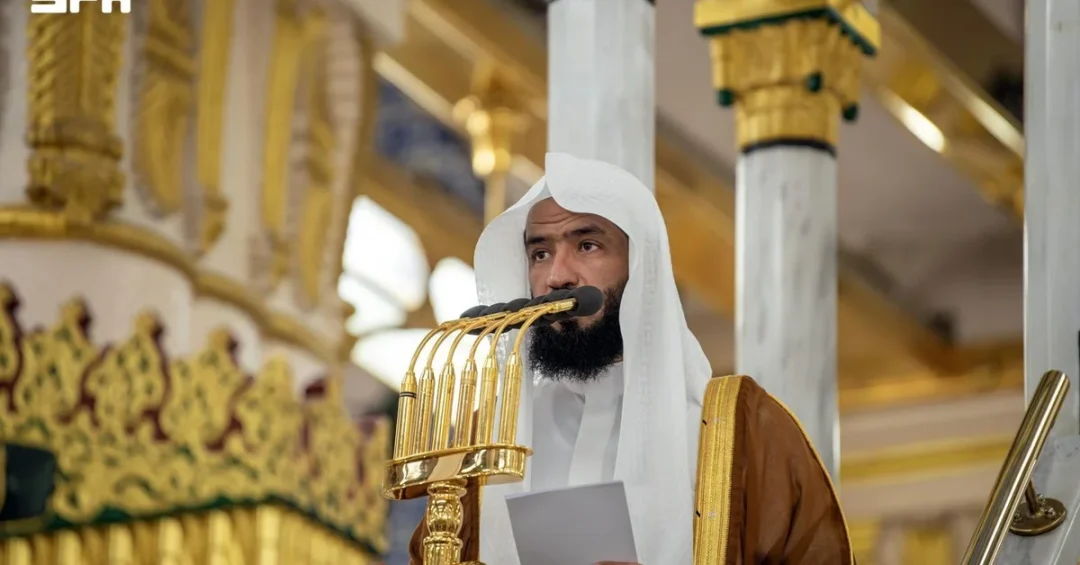
In a Friday sermon delivered at the Prophet’s Mosque in Madinah, Imam Sheikh Abdullah Al-Buaijan told worshippers that contentment with divine decree is the soul’s greatest treasure and the true foundation of inner peace, warning that greed and envy leave the heart impoverished no matter how much material wealth a person accumulates. The sermon, reported by the Saudi Press Agency (SPA), was delivered to a congregation at one of Islam’s holiest sites and carried a message that resonates far beyond the mosque walls, touching on universal themes of gratitude, moderation, and social responsibility.
The timing of the sermon places it within the broader spiritual and social rhythm of the Kingdom, where the Prophet’s Mosque in Madinah welcomes millions of worshippers and pilgrims each year. Friday sermons at the mosque are attended by residents and visitors alike and are closely followed through official Saudi media channels. Sheikh Al-Buaijan’s remarks, therefore, reached a wide audience, offering guidance that aligns with the Kingdom’s emphasis on moderate, compassionate religious discourse. His message also arrives as Saudi Arabia continues to advance its Vision 2030 objectives, which include fostering a high quality of life and strengthening social cohesion. In this context, the Imam’s call for contentment and compassion can be seen as a spiritual complement to the nation’s material progress.
Context and Background
Why does a message about inner wealth carry such weight in today’s world? The Prophet’s Mosque, known as Al-Masjid an-Nabawi, is the second holiest site in Islam and a center of religious learning and spiritual guidance. Sermons delivered there by senior imams are not merely local events; they are listened to by worshippers from across the globe and reported by official Saudi outlets, including the Saudi Press Agency. Sheikh Abdullah Al-Buaijan’s sermon on contentment therefore forms part of a long tradition of religious instruction that addresses both individual conduct and community welfare.
The theme of contentment, or qana’ah in Arabic, is deeply rooted in Islamic teachings. It refers to a state of satisfaction with what one has, combined with trust in God’s wisdom. Sheikh Al-Buaijan clarified that this concept does not mean helplessness or neglecting work. Instead, it balances diligent pursuit of one’s livelihood with steadfast reliance on Allah. This nuanced understanding is important, as it counters any misperception that contentment encourages passivity. Rather, it promotes a productive and balanced life, where effort is made and outcomes are accepted with grace. For a global audience, this distinction offers insight into how Islamic values encourage both personal responsibility and spiritual serenity.
In Saudi Arabia, religious discourse is carefully nurtured to reflect moderation and tolerance. The Kingdom’s leadership has consistently supported religious institutions that promote these values, and the Prophet’s Mosque remains a beacon of such guidance. The Imam’s sermon thus reinforces a vision of faith that is compatible with modern life, economic participation, and social harmony. It also underscores the role of religious leaders in addressing contemporary challenges, such as materialism and social envy, which can affect societies everywhere.
Key Details of the Sermon
What exactly did the Imam say, and how does it apply to daily life? According to the Saudi Press Agency, Sheikh Al-Buaijan emphasized that contentment is the soul’s greatest treasure. He warned that greed and envy leave the heart impoverished regardless of material wealth. This statement draws a clear line between external affluence and internal fulfillment, suggesting that true richness is measured by the state of one’s heart rather than the size of one’s bank account. The Imam’s words echo a well-known prophetic tradition that true wealth is not abundance of goods but richness of the soul.
The sermon also offered practical guidance. Sheikh Al-Buaijan urged compassion toward those in need and cautioned against ostentatious displays of wealth that wound the hearts of the less fortunate. This advice is particularly relevant in a world where social media and consumer culture can amplify feelings of inadequacy and envy. By encouraging modesty and empathy, the Imam promotes a community ethos where the well-off are mindful of the vulnerable and where generosity is valued over show. Such teachings contribute to social stability and solidarity, principles that are central to Saudi Arabia’s social fabric.
Furthermore, the Imam’s clarification that contentment does not mean neglecting work is a crucial point for international readers. It presents a balanced approach: Muslims are encouraged to strive for their livelihood, to be productive members of society, and to trust in God’s plan. This balance between effort and acceptance is a recurring theme in Islamic ethics and offers a framework for resilience amid economic uncertainties. The sermon therefore speaks to both spiritual and practical dimensions of life, making it relevant to a wide audience.
International and Regional Impact
How does a Friday sermon in Madinah resonate across borders? The Prophet’s Mosque attracts millions of pilgrims annually, and its sermons are disseminated through official channels, reaching Muslims around the world. Sheikh Al-Buaijan’s message of contentment and compassion thus contributes to a global conversation about values, moderation, and social responsibility. In a time when many societies grapple with inequality and consumerism, his words offer a counter-narrative that prioritizes inner peace and community welfare.
Regionally, the sermon reinforces Saudi Arabia’s role as a custodian of Islam’s holiest sites and a promoter of moderate religious discourse. The Kingdom’s leadership has long emphasized the importance of tolerance and coexistence, and sermons from the Prophet’s Mosque are a key part of that outreach. By addressing universal themes, the Imam’s message helps project an image of Saudi Arabia as a source of spiritual guidance and ethical clarity. This soft power dimension complements the Kingdom’s diplomatic and economic engagements, enhancing its global standing.
Moreover, the sermon’s timing aligns with broader efforts to enhance the pilgrim experience and promote religious tourism. As Saudi Arabia continues to develop its tourism sector under Vision 2030, the spiritual and cultural dimensions of the Hajj and Umrah journeys remain central. The Imam’s emphasis on compassion and contentment adds a moral layer to these efforts, reminding visitors and residents alike of the deeper purposes of their journey. In this way, the sermon supports the Kingdom’s holistic approach to development, where material progress is balanced with spiritual well-being.
Economic and Strategic Significance
Can spiritual teachings influence economic behavior? The Imam’s warning against greed and ostentatious displays of wealth touches on economic ethics. In Islamic finance and business, principles of moderation, fairness, and social responsibility are highly valued. By promoting contentment, the sermon encourages a mindset that can curb excessive consumption and foster charitable giving, both of which contribute to a more equitable economy. Saudi Arabia’s Vision 2030 includes goals for a vibrant society and a thriving economy, and such ethical foundations support these aims.
Strategically, the sermon reinforces the Kingdom’s commitment to moderate Islam, which is a cornerstone of its domestic and foreign policies. Saudi Arabia has invested in institutions and initiatives that promote tolerance and counter extremism. Sermons like this one, delivered at the Prophet’s Mosque, are part of that effort. They project a message of peace and balance that resonates with international partners and enhances the Kingdom’s reputation as a responsible global actor. For businesses and investors, this stability and ethical clarity can be reassuring, as they signal a predictable and principled environment.
Additionally, the emphasis on compassion toward the needy aligns with Saudi Arabia’s extensive humanitarian and charitable activities. The Kingdom is among the world’s largest donors of humanitarian aid, and its religious leaders often advocate for generosity. The Imam’s sermon thus echoes a national ethos of giving, which is both a religious duty and a strategic soft power asset. By highlighting these values, the article underscores how spiritual guidance and national policy can work in harmony to advance social welfare and international goodwill.
Vision 2030 Alignment
How does a sermon on contentment connect to Saudi Arabia’s Vision 2030? Vision 2030 aims to build a vibrant society, a thriving economy, and an ambitious nation. A vibrant society is one where individuals feel secure, valued, and connected to their spiritual and cultural roots. The Imam’s message of inner peace and social compassion contributes directly to this vision by promoting mental well-being and community solidarity. It encourages citizens to find fulfillment beyond material accumulation, which can lead to healthier, more balanced lives.
Furthermore, the sermon’s call for diligence in work combined with trust in God supports the vision’s economic goals. A workforce that is both industrious and content is likely to be more productive and resilient. The emphasis on avoiding ostentation and showing compassion also fosters a more cohesive society, where wealth is circulated through charity and social responsibility. As Saudi Arabia continues its ambitious transformation, such ethical and spiritual guidance provides a moral compass that ensures progress is inclusive and sustainable. The Imam’s words thus resonate with the Kingdom’s long-term aspirations, reinforcing the harmonious blend of tradition and modernity that defines Vision 2030.
20 Questions
Q1. What was the main theme of the Friday sermon at the Prophet’s Mosque?
A1. The sermon focused on contentment with divine decree as the soul’s greatest treasure and the true foundation of inner peace, warning against greed and envy.
Q2. Who delivered the sermon at the Prophet’s Mosque?
A2. Imam Sheikh Abdullah Al-Buaijan delivered the Friday sermon at the Prophet’s Mosque in Madinah, as reported by the Saudi Press Agency.
Q3. According to the Imam, what does contentment not mean?
A3. He clarified that contentment does not mean helplessness or neglecting work, but rather balances diligent pursuit of livelihood with steadfast reliance on Allah.
Q4. What warning did the Imam give about greed and envy?
A4. He warned that greed and envy leave the heart impoverished regardless of material wealth, emphasizing that true richness is spiritual.
Q5. What advice did the Imam give regarding wealth displays?
A5. He urged compassion toward those in need and cautioned against ostentatious displays of wealth that wound the hearts of the less fortunate.
Q6. Why is the Prophet’s Mosque significant for Muslims worldwide?
A6. The Prophet’s Mosque is the second holiest site in Islam, attracting millions of pilgrims annually and serving as a center of religious learning and spiritual guidance.
Q7. How does the sermon reflect Saudi Arabia’s religious moderation?
A7. The sermon promotes balanced, compassionate teachings that align with the Kingdom’s support for moderate Islam and tolerance, reinforcing its role as a custodian of holy sites.
Q8. What is the meaning of qana’ah in Islamic teachings?
A8. Qana’ah refers to contentment and satisfaction with what one has, combined with trust in God’s wisdom, encouraging effort without greed.
Q9. How can contentment benefit mental well-being?
A9. Contentment fosters inner peace and reduces anxiety related to materialism and envy, contributing to healthier and more balanced lives.
Q10. What economic principles does the sermon support?
A10. It supports moderation, fairness, and social responsibility, which are valued in Islamic finance and can lead to a more equitable economy.
Q11. How does the sermon align with Vision 2030’s social goals?
A11. It promotes a vibrant society by encouraging inner peace, community solidarity, and compassion, which are essential for social well-being and cohesion.
Q12. What role do Friday sermons play in Saudi society?
A12. Friday sermons provide spiritual guidance, address contemporary issues, and reinforce community values, reaching wide audiences through official media.
Q13. How does the Imam’s message address materialism?
A13. By warning against greed and ostentatious displays, the Imam encourages a focus on spiritual wealth and generosity over material accumulation.
Q14. What is the significance of the sermon’s timing?
A14. It comes amid Saudi Arabia’s ongoing transformation, offering ethical and spiritual guidance that complements the Kingdom’s material progress and social reforms.
Q15. How does the sermon promote social cohesion?
A15. It urges compassion toward the needy and cautions against flaunting wealth, fostering empathy and solidarity between different social groups.
Q16. What international impact might this sermon have?
A16. It contributes to global discussions on moderation and social responsibility, enhancing Saudi Arabia’s soft power and image as a source of ethical guidance.
Q17. How does the sermon reflect Islamic teachings on work?
A17. It encourages diligent pursuit of livelihood while trusting in Allah, balancing effort with acceptance of outcomes, which is a core Islamic ethic.
Q18. What is the Saudi Press Agency’s role in reporting such events?
A18. SPA is the official Saudi news agency that disseminates accurate information about religious, governmental, and social events, ensuring reliable coverage.
Q19. How can the sermon’s message be applied in daily life?
A19. Individuals can practice gratitude, avoid envy, work diligently, and show generosity, leading to personal fulfillment and stronger communities.
Q20. What does the sermon say about true wealth?
A20. It teaches that true wealth is the richness of the soul and contentment with divine decree, not the accumulation of material possessions.
Reader Feedback
We value your thoughts. Please share your feedback on this article.
Your feedback helps us improve our coverage.
Related articles
 Grand Mosque Imam Urges Sincere Repentance, Moral Accountability
 Sudan Condemns Houthi Attack on Madinah Power Station
 Lebanon Condemns Houthi Attack on Madinah Power Station
 Saudi Ministry Concludes Imam Training in Thailand
 Moderate Rain, Gusty Winds Forecast in Makkah
 Pakistan Condemns Houthi Attack on Madinah Power Station