


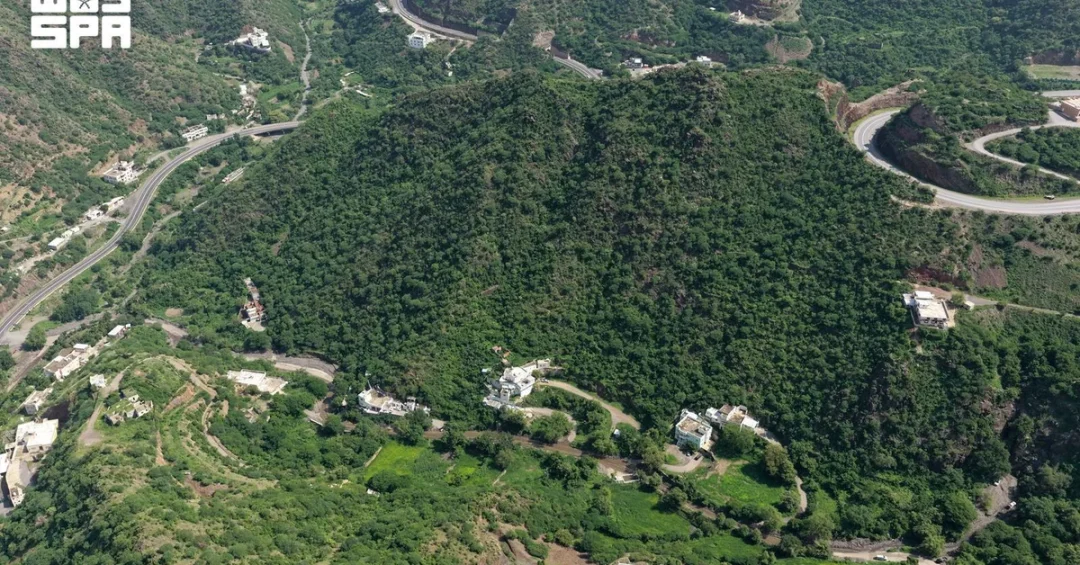
Aseer Region marked International Coffee Day on October 1 by showcasing an agricultural and social heritage that stretches across its mountains and terraces, with official data confirming more than 243,000 productive coffee trees yielding over 175 tons of pure coffee annually. The occasion, observed through information released by the Saudi Press Agency, placed the southern region’s coffee landscape firmly on the national map, highlighting a crop that has evolved from a tradition passed down through generations into a promising economic pillar for rural communities.
Saudi coffee cultivation in Aseer extends from Al-Farshah and Tihama Qahtan in the south, through a chain of mountain governorates, centers and villages, to Balqarn in the north. This geographic sweep reflects the region’s remarkable diversity and underlines how a heritage crop is being repositioned as a driver of sustainable development. For international observers, the story of Aseer’s coffee terraces offers a window into how Saudi Arabia is weaving its cultural inheritance into the broader economic modernization agenda championed by Vision 2030. Could a single crop tell the story of a region’s past and its future at the same time? In Aseer, the answer appears to be yes.
Context and Background
Why does coffee matter so much to the identity of Saudi Arabia’s southern highlands? The answer lies in geography and history. Aseer’s varied terrain, elevations and climates have created favorable conditions for coffee cultivation, with trees growing across agricultural terraces, valleys and mountain slopes. Moderate temperatures, reliable rainfall and fertile soil combine to produce an environment in which coffee has thrived for generations. Farmers have preserved mature trees and maintained agricultural practices handed down from one generation to the next, creating a living archive of local knowledge that modern development programs now seek to support and scale.
The Ministry of Environment, Water and Agriculture has documented Aseer’s prominent place on the Kingdom’s coffee map through detailed data. The region is home to more than 243,000 productive coffee trees, producing over 175 tons of pure coffee annually, making it one of Saudi Arabia’s leading coffee-producing regions. These figures are not merely statistics; they represent livelihoods, family traditions and a rural economy with deep roots. The ministry’s data also provides a baseline against which the current expansion can be measured, offering transparency and evidence for policymakers, investors and farming communities alike.
International Coffee Day, observed on October 1, provided a natural moment to reflect on this heritage. The occasion highlighted how coffee in Aseer functions simultaneously as a cultural marker and an economic asset. For a global audience, it is worth asking: what makes a crop worth celebrating on a national and international stage? In the Saudi context, coffee represents continuity between the Kingdom’s past and its ambitions for a diversified, knowledge-driven economy.
Key Details
How quickly is Aseer’s coffee sector actually growing? The indicators of agricultural expansion point to rapid growth in the production base. More than 634,000 coffee trees were planted in Aseer between 2022 and 2025, while coffee cultivation expanded to more than 7,000 hectares across 14 governorates. The number of active farms has surpassed 1,400, reflecting growing interest in coffee as a crop with genuine economic and development potential. These numbers demonstrate that the expansion is not isolated but broad-based, reaching across multiple governorates and engaging a growing community of farmers.
The expansion continues through programs and initiatives aimed at increasing the number of trees, improving farm efficiency and raising production quality. Among the most notable is a program targeting the planting of one million coffee trees between 2026 and 2028 as part of mountain economy efforts to develop productive mountain areas. This initiative aims to support the sustainable use of natural resources, strengthen the rural economy and empower farmers across Saudi Arabia’s mountain governorates. The program’s multi-year horizon signals a long-term commitment rather than a short-term campaign, giving farmers the confidence to invest in their land.
What does this mean for the quality of Saudi coffee? Improved farm efficiency and a focus on production quality suggest that Aseer’s coffee is being positioned not only as a volume crop but as a premium product. The preservation of mature trees alongside new plantings creates a blend of heritage and innovation. The Ministry of Environment, Water and Agriculture’s role in documenting and supporting this growth underscores the institutional backing behind the sector. For international readers, the detail matters: this is a coordinated effort involving official data, targeted programs and community participation.
International and Regional Impact
Could Aseer’s coffee become a recognizable name in global specialty markets? The region’s high-altitude terraces and traditional cultivation methods give its coffee a distinct profile that aligns with growing international demand for traceable, heritage-rich products. As Saudi Arabia continues to open its economy and culture to the world, agricultural exports and agritourism represent natural avenues for international engagement. The Kingdom’s coffee story adds a new dimension to its global image, complementing its established roles in energy, logistics and technology.
Regionally, Aseer’s coffee expansion resonates with broader efforts to diversify rural economies across the Middle East. By investing in mountain agriculture, Saudi Arabia is demonstrating a model that balances environmental stewardship with economic opportunity. The program to plant one million coffee trees between 2026 and 2028 is explicitly framed as part of mountain economy efforts, a concept that speaks to sustainable development in areas where traditional industries may be limited. For neighboring countries and international organizations focused on rural development, Aseer offers a case study in how heritage crops can be modernized without losing their cultural essence.
Economic and Strategic Significance
Why should economists and investors pay attention to coffee in Aseer? The crop’s expansion represents a tangible example of Saudi Arabia’s economic diversification in action. More than 1,400 active farms and over 7,000 hectares under cultivation indicate a sector with a growing production base and increasing commercial relevance. As the program to plant one million additional trees unfolds between 2026 and 2028, the volume of pure coffee produced annually is expected to rise, strengthening the rural economy and creating opportunities across the value chain, from cultivation to processing, packaging and marketing.
Strategically, coffee cultivation supports the sustainable use of natural resources, particularly water and soil, in mountain areas. The emphasis on improving farm efficiency and raising production quality reflects an awareness that long-term success depends on responsible resource management. For a country as ambitious as Saudi Arabia, the ability to develop high-value agricultural products in challenging terrain is a marker of economic maturity. The Aseer coffee sector also contributes to food security objectives by reducing reliance on imports for a culturally significant product.
What role does coffee play in the daily life and identity of Saudi Arabia? Beyond economics, coffee is woven into the fabric of Saudi hospitality and social customs. The heritage of coffee cultivation in Aseer is inseparable from the rituals of serving and sharing it. By celebrating International Coffee Day, the region reaffirmed that this crop is not just a commodity but a carrier of culture. This dual identity gives Saudi coffee a unique story to tell in international markets, where consumers increasingly value authenticity and provenance.
Vision 2030 Alignment
How does a coffee tree in Aseer connect to the Kingdom’s long-term vision? Saudi Vision 2030 seeks to diversify the economy, empower rural communities and enhance the quality of life for all citizens. The expansion of coffee cultivation directly supports these goals by creating income opportunities for farmers, strengthening local supply chains and promoting sustainable land use. The Ministry of Environment, Water and Agriculture’s programs, including the target of one million new coffee trees between 2026 and 2028, are concrete expressions of the vision’s emphasis on productive mountain economies and rural development.
Looking ahead, Aseer’s coffee terraces are poised to become a symbol of what Vision 2030 can achieve when heritage and innovation are combined. The region’s success in planting more than 634,000 trees between 2022 and 2025 provides a foundation for the next phase of growth. As Saudi Arabia continues to share its story with the world, the coffee of Aseer will serve as an ambassador of its culture, its environment and its economic ambition. The coming years will likely see further investment, improved quality and greater international recognition, all rooted in the mountain terraces that have nurtured this crop for generations.
20 Questions
Q1. What is the significance of International Coffee Day for Aseer Region?
A1. It highlights Aseer’s deep agricultural and social heritage, showcasing coffee’s transformation from a traditional crop into a promising economic driver for the region and the Kingdom.
Q2. How many productive coffee trees does Aseer have?
A2. According to the Ministry of Environment, Water and Agriculture, Aseer has more than 243,000 productive coffee trees, producing over 175 tons of pure coffee annually.
Q3. Where in Aseer is coffee cultivated?
A3. Coffee cultivation stretches from Al-Farshah and Tihama Qahtan in the south, through mountain governorates, centers and villages, to Balqarn in the north.
Q4. What conditions make Aseer suitable for coffee growing?
A4. The region’s varied terrain, elevations and climates, along with moderate temperatures, rainfall and fertile soil, create favorable conditions for coffee trees on terraces, valleys and slopes.
Q5. How many coffee trees were planted in Aseer between 2022 and 2025?
A5. More than 634,000 coffee trees were planted during this period, reflecting rapid growth in the production base and expanding interest in coffee cultivation.
Q6. How many hectares are under coffee cultivation in Aseer?
A6. Coffee cultivation has expanded to more than 7,000 hectares across 14 governorates, demonstrating the broad geographic reach of the sector.
Q7. How many active coffee farms are there in Aseer?
A7. The number of active farms has surpassed 1,400, indicating growing engagement among farmers who see coffee as a crop with economic potential.
Q8. What is the new program for coffee planting in Aseer?
A8. A program targets planting one million coffee trees between 2026 and 2028 as part of mountain economy efforts to develop productive mountain areas.
Q9. What are the goals of the mountain economy efforts?
A9. The efforts aim to support sustainable use of natural resources, strengthen the rural economy and empower farmers across Saudi Arabia’s mountain governorates.
Q10. How does coffee support the rural economy in Aseer?
A10. Coffee cultivation creates income opportunities, strengthens local supply chains and encourages investment in agricultural infrastructure, benefiting farming communities across the region.
Q11. Why is coffee considered a heritage crop in Saudi Arabia?
A11. Coffee has been cultivated for generations, with farming practices passed down through families, making it a living tradition that embodies local knowledge and cultural identity.
Q12. What role does the Ministry of Environment, Water and Agriculture play?
A12. The ministry documents production data, supports expansion programs and promotes sustainable practices, providing institutional backing for the coffee sector’s growth.
Q13. How does coffee cultivation align with Vision 2030?
A13. It supports economic diversification, rural empowerment and sustainable development, directly contributing to Vision 2030’s goals for productive mountain economies and improved quality of life.
Q14. What makes Aseer coffee potentially attractive to international markets?
A14. Its high-altitude terraces, traditional cultivation methods and heritage story align with global demand for traceable, authentic and premium agricultural products.
Q15. How does coffee cultivation support sustainable resource use?
A15. By promoting efficient farming practices and responsible land management, the sector helps preserve water and soil resources in mountain areas for future generations.
Q16. What is the expected impact of planting one million new trees?
A16. It is expected to increase production volume, strengthen the rural economy and create opportunities across the coffee value chain, from cultivation to marketing.
Q17. How does coffee fit into Saudi hospitality and culture?
A17. Coffee is central to Saudi customs of generosity and social gathering, making its cultivation a cultural practice as much as an agricultural one.
Q18. What does the expansion of coffee farms indicate about farmer interest?
A18. The growth to over 1,400 active farms shows that farmers increasingly view coffee as a viable and profitable crop with long-term development potential.
Q19. How can international audiences engage with Aseer’s coffee story?
A19. Through growing availability of Saudi coffee in specialty markets and potential agritourism opportunities that showcase the region’s terraces and traditions.
Q20. What is the long-term outlook for Aseer’s coffee sector?
A20. With continued investment, quality improvements and official support, Aseer is positioned to become a leading producer and a global ambassador for Saudi coffee heritage.
Reader Feedback
We value your thoughts. Please share your feedback on this article.
Your feedback helps us improve our coverage.
Related articles
 Saudi Eksab Launches Impact Fund for Latin America Growth
 Saudifood Show in Jeddah Draws 28,000 Professionals
 Saudi Arabia, EU Discuss Trade Barriers and Market Access
 Saudi-Portuguese Investment Forum Opens in Eastern Region
 Five Agricultural Investment Opportunities Announced in Makkah
 IMF Commends GCC Economic Resilience Amid Global Uncertainty