


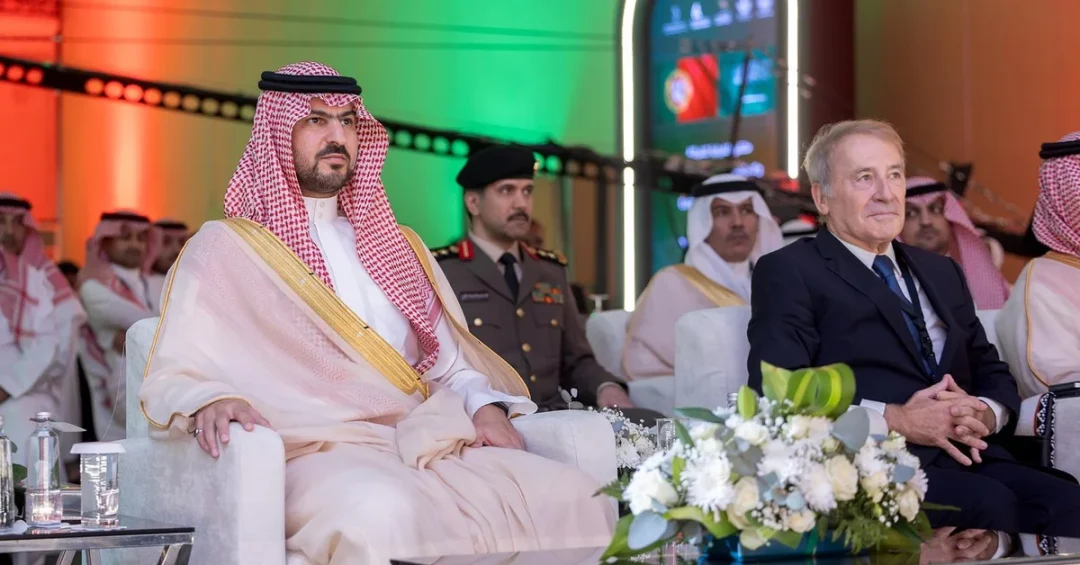
The Eastern Region Forum for Saudi-Portuguese Partnership and Investment opened in Al-Khobar on October 1, 2026, under the patronage of Eastern Region Deputy Governor Prince Saud bin Bandar bin Abdulaziz, bringing together government entities, business leaders, and investors from the Kingdom of Saudi Arabia and Portugal. The forum was organized with the participation of the Saudi-Portuguese Business Council, the Federation of Saudi Chambers of Commerce, Asharqia Chamber, and representatives from both countries, according to the Saudi Press Agency. Its central purpose was to expand economic cooperation and showcase high-potential investment opportunities across the Eastern Region, one of the Kingdom’s most industrially diversified provinces. The gathering reflects a widening network of international partnerships that Saudi Arabia has cultivated as part of its long-term economic transformation. What does this level of cross-border engagement signal about the Kingdom’s investment climate?
The event convened in Al-Khobar, the commercial heart of the Eastern Region and a city closely tied to the Kingdom’s energy, logistics, and industrial sectors. By assembling public officials, chamber representatives, and private investors in a single forum, the organizers created a direct channel for Portuguese enterprises to examine concrete projects rather than abstract proposals. The Saudi-Portuguese Business Council framed the meeting as a bridge between enterprises, one intended to convert existing trade relations into durable, long-term investment partnerships. The forum also served as a platform to present the region’s infrastructure, municipal assets, and industrial zones to an international audience. Why has the Eastern Region become such a natural host for forums of this kind?
Context and Background
Have you ever considered how Saudi Arabia’s regional economies connect to global markets? The Eastern Region has long been the Kingdom’s industrial and energy backbone, home to major oil and gas operations, the ports of Dammam and Jubail, and a growing base of petrochemical and manufacturing activity. Its cities, including Al-Khobar, Dammam, and Dhahran, host a concentration of corporate headquarters, logistics hubs, and industrial cities that give the province an outsized role in national output. The forum builds on this foundation by inviting Portuguese firms to participate in sectors where the region already demonstrates competitive strength. According to information released through official Saudi channels, the gathering was designed to expand economic cooperation and highlight investment opportunities with real commercial viability.
Saudi-Portuguese relations have developed steadily across trade, energy, and tourism, with both countries seeking to diversify their economic ties beyond traditional markets. Portugal offers expertise in renewable energy, construction, engineering, hospitality, and food processing, while Saudi Arabia provides capital, infrastructure, and access to Gulf and Asian markets. The Saudi-Portuguese Business Council has worked to connect enterprises from both sides, and the Al-Khobar forum represents a continuation of that effort at the regional level. The participation of the Federation of Saudi Chambers of Commerce and Asharqia Chamber adds institutional weight, linking national trade policy with provincial business networks. What makes this combination of public institutions and private investors effective in turning dialogue into deals?
The timing of the forum is significant. Saudi Arabia is in the middle of an economic transformation that requires foreign investment, technology transfer, and international partners capable of executing complex projects. The Eastern Region, with its existing industrial base and port access, is positioned to absorb new investment in logistics, advanced manufacturing, and value-added processing. Portugal, for its part, has been expanding its commercial footprint in the Gulf, viewing Saudi Arabia as a gateway to the wider region. The forum therefore serves both partners: it gives Portuguese companies a structured entry point into Saudi projects, and it gives Saudi businesses access to European expertise and market connections. How often do regional forums translate into lasting commercial relationships rather than one-time announcements?
Key Details
What specific opportunities were placed before investors at the forum? Prince Saud bin Bandar bin Abdulaziz emphasized that the Eastern Region’s diverse assets offer broad opportunities for the business community, underscoring the importance of presenting viable projects to build impactful partnerships and enhance the private sector’s contribution to economic growth. His remarks framed the forum as a working session rather than a ceremonial event, with an emphasis on projects that can be implemented. The Deputy Governor’s patronage signals that the region’s leadership views international partnerships as integral to local development, not as an external add-on. The presence of both government entities and private sector representatives reinforced the message that the Kingdom is prepared to facilitate investment through coordinated institutional support.
Eastern Region Mayor Eng. Fahad Aljubair provided concrete figures that illustrate the scale of activity already underway. He highlighted the region’s strong investment climate, noting that municipal contracts and asset investments have surpassed SAR30 billion, with an asset utilization rate exceeding 95 percent. He added that foreign investments have topped SAR7 billion across 91 contracts with 50 international investors representing 17 countries. These numbers are notable because they demonstrate that the Eastern Region is not simply marketing potential; it is already deploying capital at scale and attracting a geographically diverse group of investors. The high asset utilization rate suggests that available municipal assets are being put to productive use rather than remaining idle. What do such figures reveal about the maturity of the region’s investment ecosystem?
Saudi-Portuguese Business Council President Alwalid Albaltan affirmed the forum’s role in connecting enterprises, exploring areas of cooperation, and transforming trade relations into sustainable long-term investments aligned with Saudi Vision 2030. His statement places the forum within the broader framework of the Kingdom’s economic diversification agenda, which seeks to expand non-oil sectors and increase private sector participation in the economy. By focusing on long-term investment rather than short-term trade, the council is targeting outcomes that create jobs, transfer knowledge, and build industrial capacity within the Kingdom. The forum also gave Portuguese investors the opportunity to meet Saudi counterparts directly, reducing the information barriers that often slow cross-border deals. Why is the distinction between trade and long-term investment so important for Saudi Arabia’s economic goals?
International and Regional Impact
How does a bilateral forum in Al-Khobar resonate beyond the two countries involved? For Portugal, engagement with Saudi Arabia offers access to one of the largest economies in the Middle East and a platform for European firms seeking Gulf partnerships. Portuguese companies in construction, renewable energy, tourism, and agri-food can find natural counterparts in the Eastern Region’s industrial and logistics clusters. For Saudi Arabia, the forum reinforces its position as a destination for foreign direct investment and a reliable partner for European businesses. The involvement of 50 international investors from 17 countries in existing contracts shows that the region already functions as a multilingual, multi-partner investment environment. The Saudi-Portuguese track adds another strand to that network.
At the regional level, the Eastern Region’s connectivity through King Fahd Industrial Port, King Abdulaziz Port in Dammam, and the Dammam Railway enhances its appeal as a distribution hub for goods moving between Europe, Asia, and the Gulf. Portuguese firms that establish operations in the region can serve not only the Saudi market but also neighboring GCC states and beyond. The forum’s emphasis on viable projects aligns with the Kingdom’s broader strategy of integrating regional economies into global value chains. It also complements Saudi Arabia’s growing diplomatic and commercial engagement with European Union member states. What advantages does the Eastern Region offer international investors compared with other Gulf locations?
Economic and Strategic Significance
What makes the Eastern Region’s investment climate attractive to a partner like Portugal? The province combines industrial infrastructure, port capacity, a skilled workforce, and a municipal asset base that is already 95 percent utilized. The SAR30 billion in municipal contracts and asset investments indicates a pipeline of projects with clear execution records. The SAR7 billion in foreign investment across 91 contracts demonstrates that international firms can navigate the local system successfully. For Portuguese investors, these figures reduce perceived risk and provide a template for entry. The forum’s role is to connect that proven capacity with new partners who can bring additional capital, technology, and market access.
Strategically, the Saudi-Portuguese partnership supports the Kingdom’s goals of diversifying its economy and expanding non-oil exports. Portugal’s strengths in renewable energy and sustainable construction align with Saudi Arabia’s investments in clean energy, green hydrogen, and smart urban development. Cooperation in tourism and hospitality can support the Eastern Region’s cultural and heritage assets, including the Al-Ahsa Oasis, a UNESCO World Heritage site. The business council’s emphasis on sustainable long-term investment suggests a focus on projects that generate recurring value rather than transactional deals. How can bilateral business councils ensure that announced cooperation leads to measurable economic outcomes?
Vision 2030 Alignment
How does the Al-Khobar forum connect to Saudi Vision 2030? Vision 2030 aims to diversify the Kingdom’s economy, increase the private sector’s contribution to GDP, and attract foreign investment as a driver of growth. The Eastern Region Forum for Saudi-Portuguese Partnership and Investment directly supports these objectives by presenting bankable projects to international investors and by strengthening the institutional links between Saudi chambers of commerce and their Portuguese counterparts. The presence of the Federation of Saudi Chambers of Commerce and Asharqia Chamber ensures that the outcomes of the forum can be followed up through established business networks. The Deputy Governor’s patronage confirms that regional leadership is aligned with the national vision and committed to facilitating private sector partnerships.
As Saudi Arabia continues to open new sectors to international participation, forums such as this one serve as practical instruments for turning policy into projects. The Eastern Region’s combination of industrial maturity, logistics connectivity, and high asset utilization makes it a credible testing ground for deeper Saudi-Portuguese cooperation. If the discussions in Al-Khobar lead to concrete agreements in energy, construction, tourism, or manufacturing, they will add to the Kingdom’s record of attracting investment from diverse global partners. The forum ultimately reflects a broader truth about Saudi Arabia’s economic direction: the Kingdom is not waiting for partners to arrive but is actively convening them, presenting opportunities, and building the institutional frameworks that make long-term collaboration possible. What will the next phase of Saudi-Portuguese economic relations look like?
20 Questions
Q1. Where did the Eastern Region Forum for Saudi-Portuguese Partnership and Investment take place?
A1. The forum was held in Al-Khobar, in the Eastern Region of Saudi Arabia, on October 1, 2026, according to the Saudi Press Agency.
Q2. Who patronized the forum?
A2. Eastern Region Deputy Governor Prince Saud bin Bandar bin Abdulaziz patronized the forum, underscoring the region’s support for international business partnerships.
Q3. Which organizations participated in the forum?
A3. Participants included the Saudi-Portuguese Business Council, the Federation of Saudi Chambers of Commerce, Asharqia Chamber, government entities, and business representatives from both countries.
Q4. What was the main purpose of the forum?
A4. The forum focused on expanding economic cooperation between Saudi Arabia and Portugal and showcasing high-potential investment opportunities in the Eastern Region.
Q5. What did Prince Saud bin Bandar bin Abdulaziz emphasize?
A5. He emphasized that the Eastern Region’s diverse assets offer broad opportunities for the business community and stressed the importance of presenting viable projects to build impactful partnerships.
Q6. What figures did Eastern Region Mayor Eng. Fahad Aljubair highlight?
A6. He noted that municipal contracts and asset investments surpassed SAR30 billion, with an asset utilization rate exceeding 95 percent in the region.
Q7. How much foreign investment has the Eastern Region attracted?
A7. Foreign investments have topped SAR7 billion across 91 contracts with 50 international investors representing 17 countries, according to Mayor Aljubair.
Q8. Who is the President of the Saudi-Portuguese Business Council?
A8. Alwalid Albaltan is the President of the Saudi-Portuguese Business Council and spoke about the forum’s role in connecting enterprises.
Q9. What did Alwalid Albaltan say about the forum’s role?
A9. He affirmed the forum’s role in connecting enterprises, exploring cooperation areas, and transforming trade relations into sustainable long-term investments aligned with Saudi Vision 2030.
Q10. Why is the Eastern Region important for Saudi Arabia’s economy?
A10. The Eastern Region is the Kingdom’s industrial and energy backbone, hosting major oil and gas operations, ports, petrochemical facilities, and logistics hubs.
Q11. What sectors could benefit from Saudi-Portuguese cooperation?
A11. Renewable energy, construction, engineering, hospitality, tourism, food processing, and advanced manufacturing are among the sectors with strong potential for cooperation.
Q12. How does the forum support Saudi Vision 2030?
A12. It supports Vision 2030 by attracting foreign investment, expanding non-oil sectors, and increasing private sector participation in the national economy.
Q13. What does the 95 percent asset utilization rate indicate?
A13. It indicates that municipal assets in the Eastern Region are being put to productive use rather than remaining idle, reflecting efficient asset management.
Q14. How many international investors are involved in Eastern Region contracts?
A14. There are 50 international investors from 17 countries involved across 91 contracts, demonstrating the region’s diverse international appeal.
Q15. What role does Asharqia Chamber play in the forum?
A15. Asharqia Chamber represents the business community of the Eastern Region and helps connect local enterprises with international partners and investors.
Q16. Why is Al-Khobar a suitable location for this forum?
A16. Al-Khobar is the commercial heart of the Eastern Region, close to major ports, industrial cities, and corporate headquarters, making it ideal for investment forums.
Q17. What does the forum suggest about Saudi Arabia’s investment climate?
A17. It suggests that Saudi Arabia is actively convening international partners, presenting viable projects, and building institutional frameworks for long-term collaboration.
Q18. How does Portugal benefit from the partnership?
A18. Portugal gains access to one of the Middle East’s largest economies and a gateway to Gulf and Asian markets for its companies.
Q19. What is the significance of the SAR30 billion figure?
A19. It demonstrates the scale of municipal contracts and asset investments in the Eastern Region, showing a mature pipeline of executable projects.
Q20. What is the expected outcome of the forum?
A20. The forum aims to convert trade relations into sustainable long-term investments, creating jobs and building industrial capacity in line with Vision 2030.
Reader Feedback
We value your thoughts. Please share your feedback on this article.
Your feedback helps us improve our coverage.
Related articles
 Five Agricultural Investment Opportunities Announced in Makkah
 IMF Commends GCC Economic Resilience Amid Global Uncertainty
 Financial Academy Launches Bloomberg Finance Lab in Riyadh
 Jazan Coffee: Over One Million Trees Anchor Heritage
 Commerce Ministry Conducts 58,000 Inspections in September
 Saudi Ministry Offers Tropical Fruit City Investment in Jazan