


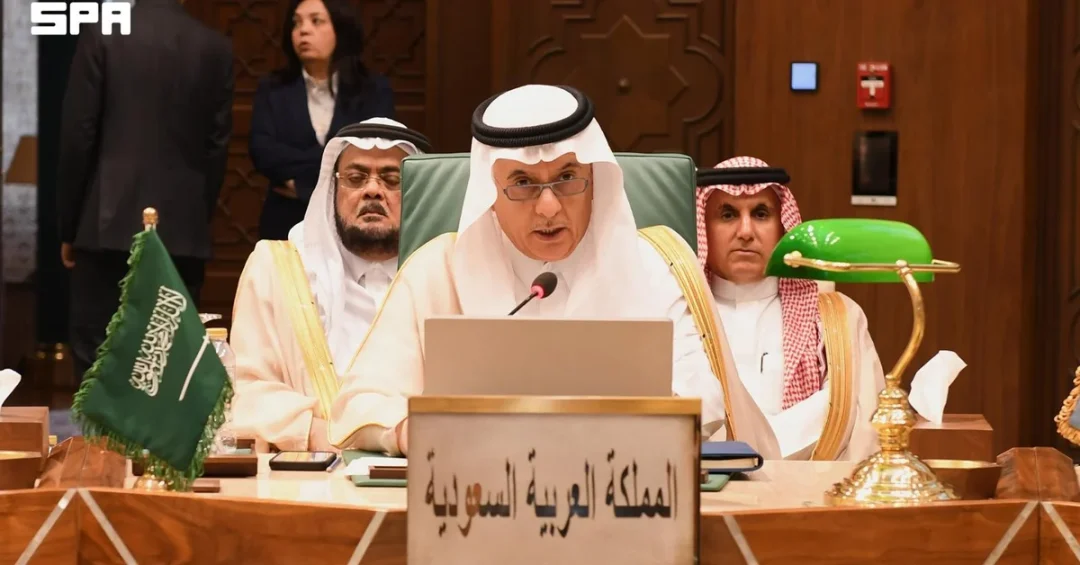
Saudi Arabia called for strengthening joint Arab efforts to address growing environmental challenges during the 37th session of the Council of Arab Ministers Responsible for Environmental Affairs, held on Thursday at the headquarters of the General Secretariat of the League of Arab States in Cairo. The Kingdom’s delegation was led by Minister of Environment, Water and Agriculture Abdulrahman Alfadley, who delivered Saudi Arabia’s remarks before the assembled ministers and underscored the importance of protecting the environment and ensuring its sustainability for future generations, according to the Saudi Press Agency.
The session brought together environmental ministers from across the Arab world to coordinate responses to a set of interlinked challenges that increasingly shape the region’s stability and prosperity. Saudi Arabia used the platform to reaffirm that environmental protection is not a peripheral concern but a core element of national planning, regional cooperation and international engagement. The Kingdom’s message was consistent and clear: no single country can confront desertification, drought or biodiversity loss alone, and collective Arab action is the most effective path forward. Why does this moment matter so much for a region that is home to some of the world’s most fragile ecosystems? Because the decisions taken in Cairo feed directly into the policies, investments and partnerships that will determine whether the Arab world can secure water, food and land for the generations to come.
Context and Background
Saudi Arabia’s participation in the 37th session of the Council of Arab Ministers Responsible for Environmental Affairs reflects a long-standing commitment to regional environmental diplomacy. The council, which operates under the umbrella of the League of Arab States, serves as the principal forum for Arab governments to align their environmental policies, share technical expertise and present unified positions in global negotiations. For Saudi Arabia, this engagement is a natural extension of its domestic priorities and its growing role as a convenor of international environmental action.
The challenges under discussion are well documented. Desertification affects vast swathes of the Arab world, degrading agricultural land and threatening food security. Land degradation reduces the productivity of ecosystems that millions of people depend on for their livelihoods. Drought has become more frequent and severe, straining water resources in countries that are already among the most water-scarce on earth. Biodiversity loss undermines the natural systems that regulate climate, pollinate crops and sustain tourism. Climate change amplifies all of these pressures, creating risks that cross borders and require coordinated responses.
Saudi Arabia has approached these issues through a framework that balances environmental protection with economic and social development. Under Saudi Vision 2030 and the National Environment Strategy, the Kingdom has developed an integrated institutional and legislative framework aimed at strengthening environmental protection, sustaining natural resources and supporting quality of life. This approach recognizes that environmental sustainability and economic prosperity are mutually reinforcing rather than competing objectives, a principle that Saudi Arabia has consistently advocated in regional and international forums.
Key Details
In his address, Minister Alfadley outlined the concrete steps Saudi Arabia has taken to advance environmental action at the national, regional and international levels. He highlighted the use of modern technologies and support for research and innovation to monitor and address environmental challenges, noting that scientific data and advanced monitoring systems are essential for effective policymaking. The Kingdom has invested in satellite imagery, remote sensing and digital platforms that help track land degradation, water use and vegetation cover in real time.
The minister pointed to the Middle East Green Initiative, which now includes 35 Arab, Asian and African countries, as a leading example of Saudi-led regional cooperation. The initiative, launched by Crown Prince Mohammed bin Salman, aims to combat desertification, restore degraded land and increase green cover across the region. It has attracted support from G20 leaders and has become a platform for mobilizing financing, technology and expertise across continents. Several pioneering environmental initiatives aimed at sustaining coral reefs and terrestrial habitats have also received international backing.
Alfadley also stressed the significance of Saudi Arabia’s presidency of the 16th session of the Conference of the Parties (COP16) of the United Nations Convention to Combat Desertification (UNCCD), which helped advance international cooperation to address land degradation, desertification and drought. The conference adopted 37 decisions, including the Business for Land (B4L) Initiative and the Riyadh Global Drought Resilience Partnership. These outcomes represent a substantial contribution to the global framework for land and drought management, and they carry particular weight for Arab countries facing acute environmental stress.
The minister noted that Saudi Arabia continues to follow up on the implementation of the conference outcomes under the Riyadh Action Agenda until the 17th session, which will be held in Mongolia. This follow-through is important because international agreements often lose momentum after the closing gavel. By maintaining a structured implementation process, the Kingdom is helping to ensure that the commitments made in Riyadh translate into measurable progress on the ground.
International and Regional Impact
Saudi Arabia’s emphasis on joint Arab efforts carries implications that extend well beyond the region. The Arab world’s environmental challenges are closely tied to global food security, migration patterns and economic stability. When land degrades and water becomes scarce, communities are displaced, markets are disrupted and tensions can rise. By championing coordinated action, Saudi Arabia is contributing to a broader effort to address the root causes of instability and to build resilience into regional economies.
The Kingdom’s role as a bridge between Arab, Asian and African countries is particularly notable. The Middle East Green Initiative’s membership spans three continents, creating a platform for South-South cooperation that complements existing multilateral frameworks. This approach aligns with Saudi Arabia’s broader foreign policy objectives, which emphasize partnership, dialogue and shared prosperity. It also reinforces the Kingdom’s position as a responsible global stakeholder willing to invest in solutions that benefit others.
International organizations and partner governments have recognized Saudi Arabia’s contributions. The support of G20 leaders for the Kingdom’s environmental initiatives reflects a growing consensus that the country’s experience with arid environments, large-scale land restoration and energy transition makes it a valuable partner in the global sustainability agenda. The decisions adopted at COP16 in Riyadh are now part of the international toolkit for combating desertification, and the Riyadh Action Agenda provides a roadmap for implementation that other countries can follow.
Economic and Strategic Significance
The environmental agenda is increasingly intertwined with economic strategy. For Saudi Arabia, investments in environmental protection, renewable energy, water efficiency and sustainable land management are not costs but drivers of innovation and diversification. The National Environment Strategy supports the creation of new industries, jobs and technologies that contribute to the Kingdom’s economic transformation under Vision 2030. By positioning environmental sustainability as a pillar of economic development, Saudi Arabia is helping to redefine how the region approaches growth.
The strategic significance of joint Arab action is equally important. Environmental cooperation builds trust and interdependence among Arab states, creating channels for dialogue that can help manage other shared challenges. It also strengthens the region’s collective voice in global negotiations, where Arab countries can advocate for financing, technology transfer and capacity building. Saudi Arabia’s leadership in this space reflects a recognition that environmental diplomacy is a form of statecraft, one that advances both national interests and regional stability.
Water security is a case in point. Saudi Arabia has invested heavily in desalination, water reuse and efficiency measures, and it has shared its expertise with regional partners. Agriculture, which consumes the majority of water in many Arab countries, is a focus of efforts to improve irrigation, restore rangelands and adopt climate-smart practices. These measures support rural livelihoods, reduce dependence on food imports and enhance resilience to drought. The economic returns on such investments are measured not only in output but in avoided crises and reduced vulnerability.
Vision 2030 Alignment
Saudi Arabia’s environmental leadership is deeply rooted in Vision 2030, the national transformation plan that seeks to diversify the economy, improve quality of life and position the Kingdom as a global leader. The National Environment Strategy, one of the Vision’s key pillars, sets out targets for protecting ecosystems, reducing pollution, conserving water and expanding green cover. These goals are supported by major initiatives such as the Saudi Green Initiative, which aims to plant billions of trees and restore millions of hectares of land across the Kingdom.
The Kingdom’s engagement in Cairo, its COP16 presidency and its leadership of the Middle East Green Initiative all demonstrate how Vision 2030 extends beyond domestic reform to shape regional and international cooperation. By investing in environmental sustainability, Saudi Arabia is protecting its own future while contributing to the well-being of the Arab world and the broader global community. The message delivered by Minister Alfadley is that the Kingdom will continue to support joint Arab efforts, strengthen cooperation and integration among Arab countries, and work to protect and preserve natural resources for future generations. In a region where environmental challenges are acute, that commitment offers a foundation for hope, stability and shared prosperity.
20 Questions
Q1. What was the main purpose of Saudi Arabia’s participation in the 37th session of the Council of Arab Ministers Responsible for Environmental Affairs?
A1. Saudi Arabia called for strengthening joint Arab efforts to address environmental challenges and to sustain natural resources for future generations, according to the Saudi Press Agency.
Q2. Who led Saudi Arabia’s delegation to the session in Cairo?
A2. Minister of Environment, Water and Agriculture Abdulrahman Alfadley led the delegation and delivered the Kingdom’s remarks at the League of Arab States headquarters.
Q3. What environmental challenges did Saudi Arabia highlight during the session?
A3. The Kingdom highlighted desertification, land degradation, drought, biodiversity loss and climate change as the key challenges facing the region.
Q4. How does Saudi Arabia’s National Environment Strategy support environmental protection?
A4. It has developed an integrated institutional and legislative framework aimed at strengthening environmental protection, sustaining natural resources and supporting quality of life while balancing economic and social development.
Q5. What role does technology play in Saudi Arabia’s environmental efforts?
A5. The Kingdom uses modern technologies and supports research and innovation to monitor and address environmental challenges under its national framework.
Q6. What is the Middle East Green Initiative and how many countries participate?
A6. It is a Saudi-led regional initiative that now includes 35 Arab, Asian and African countries and aims to combat desertification and increase green cover.
Q7. What was the significance of Saudi Arabia’s COP16 presidency of the UNCCD?
A7. It helped advance international cooperation to address land degradation, desertification and drought, and the conference adopted 37 decisions.
Q8. What is the Business for Land (B4L) Initiative?
A8. It is one of the 37 decisions adopted at COP16 and aims to mobilize private sector engagement in land restoration and sustainable land management.
Q9. What is the Riyadh Global Drought Resilience Partnership?
A9. It is a global partnership launched at COP16 to strengthen drought resilience through coordinated action, financing and knowledge sharing among countries.
Q10. What is the Riyadh Action Agenda?
A10. It is the implementation framework that Saudi Arabia continues to follow up on until the 17th session of the UNCCD, to be held in Mongolia.
Q11. How does Saudi Arabia support joint Arab efforts on the environment?
A11. The Kingdom reaffirmed its continued support for joint Arab efforts and its commitment to strengthening cooperation and integration among Arab countries to address environmental challenges.
Q12. What was the fifth Arab Forum for Environment and what did it address?
A12. It preceded the 37th session and addressed sustainable rangelands, resilience, restoring pastoral ecosystems, financing the transition, and Arab efforts on land degradation, desertification and drought.
Q13. How does Saudi Arabia’s environmental work align with Vision 2030?
A13. Vision 2030 includes the National Environment Strategy, which sets targets for protecting ecosystems, reducing pollution, conserving water and expanding green cover.
Q14. What are the goals of the Saudi Green Initiative?
A14. It aims to plant billions of trees and restore millions of hectares of land across the Kingdom, contributing to environmental sustainability and quality of life.
Q15. Why is regional cooperation important for addressing environmental challenges?
A15. Environmental challenges cross borders, so coordinated regional and international efforts are needed to address issues like desertification, drought and biodiversity loss effectively.
Q16. How does Saudi Arabia balance economic development with environmental protection?
A16. The National Environment Strategy balances economic and social development needs with environmental protection, recognizing that sustainability and prosperity are mutually reinforcing.
Q17. What support has the Middle East Green Initiative received internationally?
A17. It has received the support of G20 leaders, reflecting international recognition of Saudi Arabia’s environmental leadership and the initiative’s cross-continental reach.
Q18. What environmental initiatives has Saudi Arabia launched for coral reefs and terrestrial habitats?
A18. The Kingdom has launched several pioneering environmental initiatives aimed at sustaining coral reefs and terrestrial habitats, which have received international support.
Q19. What is the significance of the 37 decisions adopted at COP16?
A19. They represent a substantial contribution to the global framework for land and drought management and carry particular weight for Arab countries facing acute environmental stress.
Q20. What is Saudi Arabia’s long-term commitment to environmental sustainability?
A20. Saudi Arabia is committed to protecting and preserving natural resources for future generations through national, regional and international action under Vision 2030.
Reader Feedback
We value your thoughts. Please share your feedback on this article.
Your feedback helps us improve our coverage.
Related articles
 Saudi Ministry of Interior Details Flydubai Emergency Landing in Tabuk
 Saudi Defense Minister, US Counterpart Discuss Regional Issues
 Rainfall Beautifies Valleys and Ravines in Turaif, Revitalizing Vegetation
 Saudi Defense Minister Discusses Regional Challenges with French Counterpart
 Makkah Excellence Award Launches Digital Platform
 Saudi Ministry Completes Preparations for ASEAN Khair Ummah Conference