


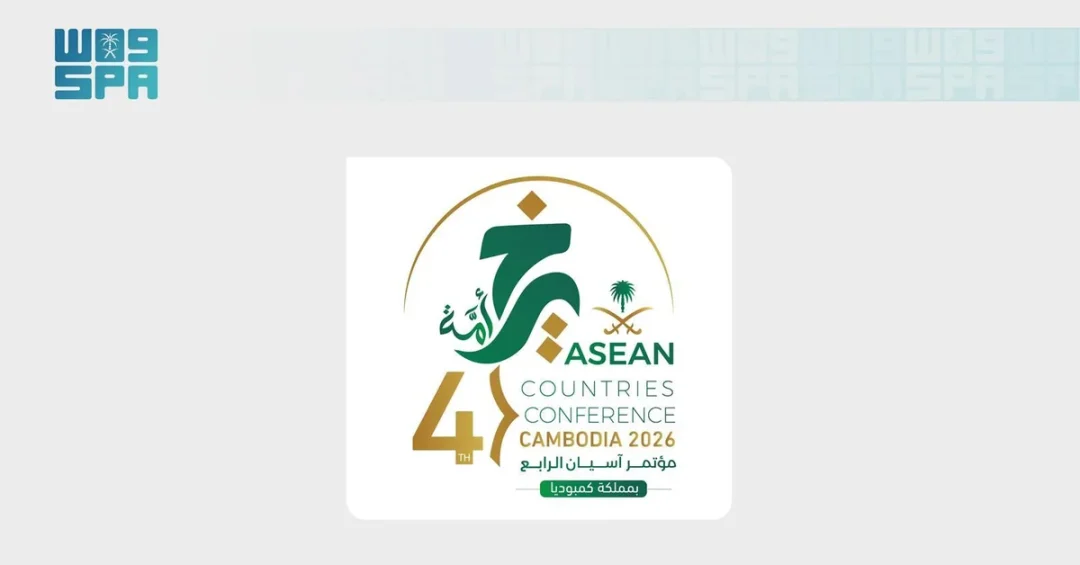
The Ministry of Islamic Affairs, Dawah and Guidance has completed all preparations to organize the Fourth ASEAN “Khair Ummah” Conference in Phnom Penh, Cambodia, on October 5 and 6, 2026, bringing together Islamic affairs officials from the member states of the Association of Southeast Asian Nations (ASEAN). The announcement, released through official Saudi channels, confirms that the two-day gathering will convene in Cambodia’s capital with the participation of a distinguished group of scholars, specialists, and speakers from across Southeast Asia and beyond. The conference reflects the Kingdom of Saudi Arabia’s sustained commitment to serving Islam and Muslims worldwide, and it marks the fourth edition of a dialogue platform that has become a fixture in the region’s religious and intellectual calendar.
For an international audience, the significance is straightforward: Saudi Arabia is not only hosting religious dialogue on its own soil but exporting a model of moderation and coexistence to one of the world’s most dynamic and populous regions. Southeast Asia is home to more than 240 million Muslims, and ASEAN represents one of the fastest-growing economic blocs on the planet. By convening officials, scholars, and community leaders in Phnom Penh, the Ministry of Islamic Affairs, Dawah and Guidance is reinforcing a network of partnerships that stretches from Jakarta to Kuala Lumpur, from Bangkok to Manila. How does such a conference translate into tangible outcomes for ordinary communities? The answer lies in the practical themes on the agenda, the calibre of participants, and the follow-up mechanisms that Saudi Arabia has built into its international engagement strategy.
Context and Background
Why has the ASEAN “Khair Ummah” Conference become such an important fixture in Saudi Arabia’s international religious diplomacy? The initiative is part of a broader strategy pursued by the Ministry of Islamic Affairs, Dawah and Guidance to strengthen engagement with Islamic institutions and leaders worldwide. The first edition laid the groundwork for regular consultation among ASEAN member states on matters of Islamic affairs, and each subsequent conference has deepened the scope of cooperation. The fourth edition arrives at a moment when the global Muslim community faces a complex landscape of challenges, from the spread of extremist narratives to the pressures of rapid social and technological change. Saudi Arabia’s approach, rooted in the principles of moderation and centrism, offers a counterweight to these pressures.
The Kingdom’s religious diplomacy is not a recent development. For decades, Saudi Arabia has supported the construction of mosques, the training of imams, the distribution of the Holy Quran, and the organization of scholarly exchanges across the Islamic world. What distinguishes the current phase is its institutional character. Under the leadership of the Ministry of Islamic Affairs, Dawah and Guidance, these efforts have been consolidated into structured programmes with measurable objectives, regular reporting, and a clear focus on the values of tolerance, coexistence, and the rejection of extremism and radicalism. The ASEAN conference is one expression of this institutional maturity, and its fourth edition demonstrates that the model is both durable and scalable.
Cambodia’s role as host is also significant. Although Muslims constitute a minority in the country, Cambodia has maintained a tradition of religious harmony and has actively participated in regional dialogues on moderation. By choosing Phnom Penh, the Ministry signals that its outreach extends beyond Muslim-majority nations to encompass all communities where Muslim minorities live and contribute. This inclusive approach aligns with the broader objectives of the conference and with Saudi Arabia’s stated commitment to serving Islam and Muslims wherever they may be.
Key Details of the Conference
What exactly will the participants discuss during the two-day gathering? According to the official announcement, the conference will address several academic themes focusing on the sources and areas of the concept of the best Ummah, the challenges and risks facing it, and the ways to address them. These themes are not abstract; they connect directly to the daily realities of Muslim communities navigating questions of identity, integration, and social cohesion. The conference will also highlight efforts to promote moderation, introduce Saudi Arabia’s approach in this area, and examine its impact on strengthening community security and stability and promoting the values of moderation and coexistence.
The programme features eight academic sessions, each designed to facilitate the exchange of views and experiences among participants. The sessions will bring together a distinguished group of scholars, specialists, and speakers, ensuring that the discussions are grounded in both scholarly rigour and practical experience. The participation of Islamic affairs officials from all ASEAN member states underscores the regional ownership of the initiative. These are not passive attendees; they are partners in a shared endeavour to articulate a vision of Islam that is peaceful, constructive, and compatible with the pluralistic societies in which their communities live.
The selection of topics reflects a careful reading of the contemporary situation. Discussions on the sources of the concept of the best Ummah provide a theological and historical foundation, reminding participants of the rich intellectual heritage that informs moderate Islamic thought. Sessions on challenges and risks create space for honest assessment of the threats posed by extremism, sectarianism, and misinformation. And the focus on Saudi Arabia’s approach offers a concrete model that participants can adapt to their own national contexts. Together, these elements form a comprehensive agenda that balances reflection with action.
International and Regional Impact
How will the outcomes of this conference resonate beyond the borders of Cambodia and the ASEAN region? The participation of officials from all ten ASEAN member states signals a collective commitment to addressing shared challenges through dialogue and cooperation. For Southeast Asia, the conference provides a platform to harmonize approaches to Islamic education, community engagement, and counter-extremism. For Saudi Arabia, it reinforces its position as a trusted partner and a source of constructive religious leadership. And for the wider international community, it demonstrates that multilateral engagement on religious affairs can yield practical benefits for security, stability, and social cohesion.
The timing is particularly relevant. In recent years, the global conversation about Islam and Muslim communities has often been dominated by security concerns and negative stereotypes. Conferences like the ASEAN “Khair Ummah” gathering offer a corrective, showcasing the positive contributions of Muslim communities and the constructive role that religious institutions can play in building peaceful societies. By bringing together scholars and officials from diverse backgrounds, the conference creates opportunities for mutual understanding that transcend political and cultural differences. This is soft power in its most constructive form, and it reflects Saudi Arabia’s long-standing commitment to dialogue as a tool for conflict prevention and community resilience.
The regional dimension is equally important. ASEAN is a cornerstone of the Asian economic and political architecture, and its member states are increasingly influential on the global stage. By investing in relationships with Islamic affairs officials across the region, Saudi Arabia is building bridges that extend beyond the religious sphere. These relationships can facilitate cooperation on education, trade, culture, and people-to-people exchange, all of which contribute to the Kingdom’s broader international engagement strategy. The conference is therefore not an isolated event but a node in a growing network of partnerships.
Economic and Strategic Significance
Why should economic analysts and strategic planners pay attention to a conference focused on Islamic affairs? The answer lies in the intersection of religion, stability, and development. Communities that enjoy social cohesion and are protected from extremist influences are better positioned to attract investment, foster entrepreneurship, and participate in the global economy. By promoting moderation and coexistence, the conference contributes indirectly but meaningfully to the economic vitality of the ASEAN region. Saudi Arabia, as a leading investor and trading partner in Asia, has a direct interest in the stability and prosperity of the region, and its religious diplomacy is one instrument among many for advancing that interest.
Moreover, the conference aligns with Saudi Arabia’s broader economic diversification agenda. As the Kingdom expands its global partnerships under Vision 2030, it seeks to present itself not only as an energy supplier but as a multifaceted partner in culture, education, technology, and tourism. The ASEAN region is a key market for Saudi exports, a source of investment, and a growing destination for Saudi travellers and students. The goodwill generated by initiatives like the “Khair Ummah” Conference creates a favourable environment for these exchanges, reinforcing the interconnectedness of religious, cultural, and economic diplomacy.
The strategic significance extends to the realm of ideas. Extremist groups thrive in environments where moderate voices are weak or fragmented. By convening scholars and officials who are committed to moderation, the conference strengthens the intellectual infrastructure that counters extremism. This is a long-term investment with profound implications for security and stability, not only in Southeast Asia but globally. Saudi Arabia’s willingness to share its experience and resources in this domain reflects a mature understanding of the interconnected nature of contemporary challenges.
Vision 2030 Alignment
How does the Fourth ASEAN “Khair Ummah” Conference connect to Saudi Arabia’s Vision 2030? Vision 2030 is a comprehensive blueprint for the Kingdom’s future, encompassing economic diversification, social development, and a strengthened international role. Within this framework, the promotion of moderate Islam and the rejection of extremism are central pillars. The Ministry of Islamic Affairs, Dawah and Guidance is a key implementer of this vision, and its international conferences serve as platforms for sharing the Kingdom’s experience with partners around the world. The ASEAN conference is thus not peripheral to Vision 2030 but integral to its international dimension.
The conference also reflects the Vision 2030 emphasis on global engagement and soft power. Saudi Arabia’s leadership understands that the Kingdom’s influence is enhanced not only by economic strength but by cultural and religious leadership that is perceived as constructive and inclusive. By hosting and supporting platforms like the “Khair Ummah” Conference, Saudi Arabia demonstrates that it is a reliable partner in addressing shared challenges and a source of stability in a turbulent world. As the conference concludes and participants return to their home countries, they carry with them not only new ideas and connections but also a renewed appreciation for the Kingdom’s role in serving Islam and Muslims. The fourth edition in Phnom Penh is another step in a long journey, and it points toward a future in which moderation, coexistence, and cooperation define the relationship between Saudi Arabia and the peoples of Southeast Asia.
20 Questions
Q1. What is the Fourth ASEAN “Khair Ummah” Conference?
A1. It is a two-day conference organized by Saudi Arabia’s Ministry of Islamic Affairs, Dawah and Guidance in Phnom Penh, Cambodia, on October 5-6, 2026, bringing together Islamic affairs officials from ASEAN member states to promote moderation and cooperation.
Q2. Where and when will the conference take place?
A2. The conference will be held in Phnom Penh, the capital of Cambodia, from October 5 to 6, 2026, according to the official announcement released through Saudi channels.
Q3. Who is organizing the conference?
A3. The Ministry of Islamic Affairs, Dawah and Guidance of the Kingdom of Saudi Arabia is organizing the conference as part of its ongoing efforts to strengthen engagement with Islamic institutions worldwide.
Q4. Which countries are participating in the conference?
A4. Islamic affairs officials from the member states of the Association of Southeast Asian Nations (ASEAN) are participating, along with a distinguished group of scholars, specialists, and speakers from the region.
Q5. What are the main objectives of the conference?
A5. The conference aims to promote the values of moderation and centrism, strengthen cooperation and communication among officials concerned with Islamic affairs, and address challenges facing the Muslim Ummah.
Q6. What academic themes will be discussed?
A6. Themes include the sources and areas of the concept of the best Ummah, the challenges and risks facing it, ways to address them, and efforts to promote moderation and coexistence.
Q7. How many academic sessions will be held?
A7. The two-day conference will feature eight academic sessions designed to facilitate discussion and the exchange of views and experiences among participants.
Q8. Who will speak at the conference?
A8. A distinguished group of scholars, specialists, and speakers will participate, sharing their expertise on Islamic affairs, moderation, and community stability.
Q9. What is the significance of holding the conference in Cambodia?
A9. Cambodia’s tradition of religious harmony and its participation in regional dialogues make it a fitting host, demonstrating that Saudi Arabia’s outreach extends to all communities where Muslims live.
Q10. How does the conference promote moderation?
A10. By highlighting Saudi Arabia’s approach to moderation, examining its impact on community security and stability, and encouraging participants to adopt similar strategies in their own countries.
Q11. What is the “Khair Ummah” concept?
A11. The concept refers to the ideal of the best Muslim community, rooted in Islamic teachings, and the conference explores its sources, areas, and contemporary applications.
Q12. How does this conference reflect Saudi Arabia’s commitment to serving Islam?
A12. It demonstrates the Kingdom’s ongoing efforts to promote tolerance, coexistence, and the rejection of extremism, reflecting its historical role as a servant of Islam and Muslims.
Q13. What impact will the conference have on regional stability?
A13. By strengthening cooperation among Islamic affairs officials and promoting moderate narratives, the conference contributes to social cohesion and counters extremism in Southeast Asia.
Q14. Is the conference part of a larger Saudi initiative?
A14. Yes, it is part of the Ministry of Islamic Affairs’ broader strategy to engage with Islamic institutions and leaders worldwide, consistent with the Kingdom’s Vision 2030 objectives.
Q15. How many editions of the conference have been held?
A15. This is the fourth edition, indicating the initiative’s durability and the sustained interest of ASEAN member states in continuing the dialogue.
Q16. What role do scholars play in the conference?
A16. Scholars participate in academic sessions, present research, and exchange views, ensuring that discussions are grounded in scholarly rigour and practical experience.
Q17. How does the conference address extremism?
A17. It examines the challenges and risks facing the Ummah and highlights efforts to promote moderation, providing participants with tools to counter extremist narratives in their communities.
Q18. What are the expected outcomes of the conference?
A18. Expected outcomes include strengthened networks among Islamic affairs officials, enhanced cooperation on moderation initiatives, and a clearer understanding of Saudi Arabia’s approach to promoting coexistence.
Q19. How does the conference align with Vision 2030?
A19. Vision 2030 emphasizes global engagement and moderate Islam; the conference advances these goals by sharing the Kingdom’s experience and building partnerships with ASEAN nations.
Q20. What message does the conference send to the international community?
A20. It signals Saudi Arabia’s commitment to constructive religious diplomacy, dialogue, and the promotion of peace and stability, reinforcing its role as a responsible global partner.
Reader Feedback
We value your thoughts. Please share your feedback on this article.
Your feedback helps us improve our coverage.
Related articles
 Saudi Embassy in US Hosts National Day Reception
 Coalition: Houthi Attack Targets Madinah Power Station
 MWL Chief Meets Belgium Parliament President in Brussels
 Riyadh Air Adds Two Flights to London Heathrow, Expands to Nine Weekly
 Saudi Media Forum’s Storm Room Explores Media Innovation
 National Greening Program to Launch 2026 Season on October 7