


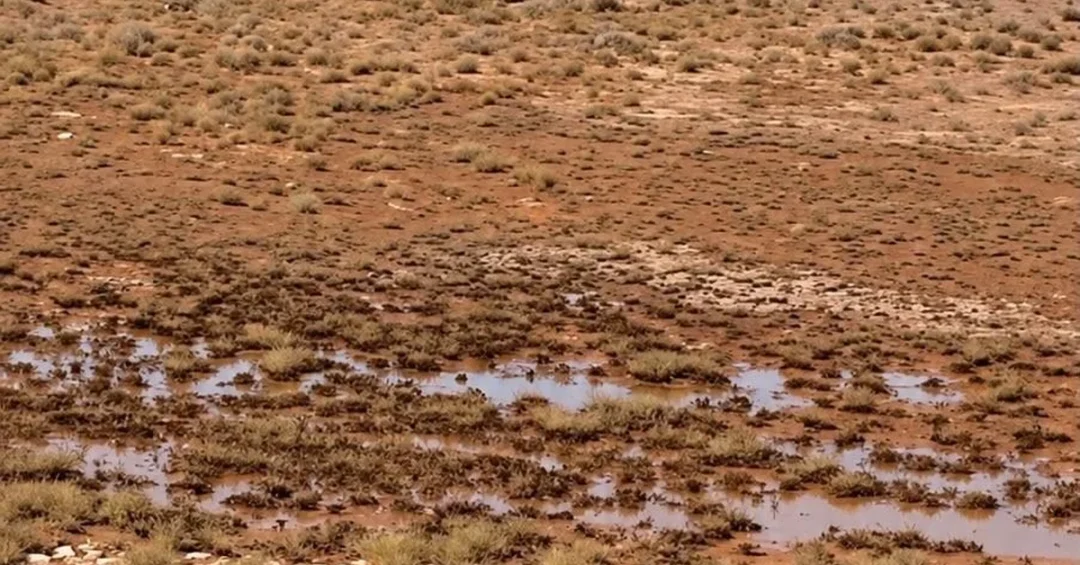
Rainfall across Turaif Governorate in the Northern Borders Region has revitalized the area’s valleys and ravines, transforming the landscape into a vibrant natural haven covered with aromatic plants and attracting wildlife, according to the Saudi Press Agency (SPA). The rains, which fell on Wednesday evening and continued into the early hours of Thursday, brought flowing water through the region’s wadis and ravines, watering trees and encouraging the growth of colorful vegetation that has dramatically enhanced the area’s natural beauty at the onset of the rainy season.
The Saudi Press Agency documented the vast natural landscapes created by the rainfall, capturing images of the rejuvenated terrain that has become a magnet for nature enthusiasts and a testament to the ecological richness of Saudi Arabia’s northern territories. The event marks a significant seasonal shift in the Northern Borders Region, where rainfall plays a critical role in sustaining the delicate desert ecosystem and supporting the livelihoods of local communities. As the Kingdom continues to prioritize environmental sustainability under Vision 2030, such natural phenomena underscore the importance of preserving Saudi Arabia’s diverse landscapes for future generations. How often do we pause to appreciate the quiet power of rain in transforming arid terrain into thriving life?
Context and Background
Turaif Governorate, situated in the Northern Borders Region near the borders with Jordan and Iraq, is characterized by a desert climate with hot summers and cold winters, where annual rainfall is limited but highly anticipated. The region’s valleys, known locally as wadis, serve as natural conduits for seasonal water flows, and when rain falls, these dry riverbeds quickly come alive with vegetation and wildlife. The recent rainfall event is part of the typical autumn pattern that brings much-needed moisture to the area, supporting the growth of aromatic plants and providing grazing opportunities for livestock. The Northern Borders Region is home to several important historical and cultural sites, and its natural environment is an integral part of Saudi Arabia’s heritage. How does the arrival of rain reshape not only the land but also the daily lives of those who call this region home?
The Saudi Press Agency’s documentation of the rainfall’s aftermath highlights the Kingdom’s commitment to sharing the beauty and ecological significance of its diverse regions with the world. SPA, as the official national news agency, regularly reports on environmental and meteorological developments across Saudi Arabia, providing reliable information to citizens, residents, and international observers. The agency’s coverage of the Turaif rainfall aligns with broader efforts to promote domestic tourism and showcase the natural wonders of the Kingdom, which range from the Red Sea coast to the mountainous south and the vast northern deserts. In recent years, Saudi Arabia has invested significantly in environmental protection and climate resilience, recognizing that natural resources are vital to the nation’s long-term prosperity. What role can official media play in fostering a deeper appreciation for the environment among both citizens and global audiences?
Key Details
The rainfall began on Wednesday evening and persisted into early Thursday morning, delivering varying amounts of precipitation across Turaif Governorate. According to the Saudi Press Agency, the flowing water traveled varying distances through the valleys and ravines, revitalizing wildlife and watering the trees that dot the landscape. The moisture has spurred the growth of aromatic plants in vibrant colors, creating a striking contrast against the typically arid terrain. These plants, many of which are native to the Arabian Peninsula, contribute to the region’s biodiversity and are valued for their medicinal and aromatic properties. The rejuvenated valleys now offer a natural haven for wildlife, including birds, reptiles, and small mammals that rely on the vegetation for food and shelter. How does the sudden abundance of water influence the behavior and survival of desert wildlife?
SPA’s visual documentation captured the sweeping vistas of the valleys, with images showing the interplay of water, greenery, and the rugged topography of the Northern Borders Region. The agency noted that the rainfall has added to the captivating beauty of the area, particularly as the rainy season begins. This seasonal transformation is a recurring phenomenon in Saudi Arabia’s northern regions, where even modest rainfall can produce dramatic ecological responses. Local residents and authorities often welcome these rains as a blessing that replenishes groundwater, supports agriculture, and enhances the region’s appeal as a destination for nature-based tourism. The event also serves as a reminder of the importance of water conservation and sustainable land management in a country that faces significant water scarcity challenges. What lessons can be learned from nature’s ability to flourish with just a modest amount of rain?
International and Regional Impact
The revitalization of Turaif’s valleys and ravines carries implications beyond the immediate region, reflecting the broader environmental dynamics of the Arabian Peninsula and the Middle East. Rainfall patterns in the Northern Borders Region are influenced by complex climatic systems, and the recent event contributes to the recharge of aquifers that are shared across national boundaries. Saudi Arabia’s efforts to monitor and manage its water resources are part of a regional approach to addressing water scarcity, which is a critical issue for all countries in the area. The Kingdom’s commitment to environmental sustainability is evident in its participation in international climate agreements and its domestic initiatives aimed at reducing carbon emissions and promoting renewable energy. How can regional cooperation further enhance the resilience of ecosystems that transcend political borders?
From a diplomatic perspective, Saudi Arabia’s stewardship of its natural environment reinforces its position as a responsible global actor. The Kingdom has launched several initiatives, such as the Saudi Green Initiative and the Middle East Green Initiative, which aim to plant billions of trees and restore degraded land across the region. The rainfall in Turaif, while a natural occurrence, aligns with these broader efforts to combat desertification and enhance biodiversity. International observers and environmental organizations have noted Saudi Arabia’s growing role in global environmental governance, and events like this serve as tangible examples of the Kingdom’s natural wealth and its potential for eco-tourism. What opportunities exist for international collaboration in preserving and studying these fragile desert ecosystems?
Economic and Strategic Significance
The economic significance of rainfall in Turaif extends to agriculture, water resources, and tourism. The Northern Borders Region has historically relied on agriculture and livestock rearing, and the revitalization of pastures supports local farmers and herders. The increased vegetation provides grazing for sheep, goats, and camels, which are integral to the region’s cultural heritage and economy. Additionally, the replenishment of groundwater reserves is crucial for sustaining agricultural activities and domestic water supply during drier periods. The Saudi government, through the Ministry of Environment, Water and Agriculture, implements programs to manage water resources efficiently and promote sustainable farming practices. How does the natural cycle of rainfall contribute to the economic stability of rural communities in Saudi Arabia?
Strategically, the Northern Borders Region holds importance due to its geographic location and its potential for cross-border trade and investment. The development of infrastructure, including roads and border crossings, has facilitated economic integration with neighboring countries. The natural beauty of the region, enhanced by seasonal rains, presents opportunities for tourism development, which is a key pillar of Vision 2030. The Kingdom aims to attract domestic and international tourists to explore its diverse landscapes, and areas like Turaif can benefit from increased visibility and investment in hospitality and recreational facilities. The Saudi Press Agency’s coverage helps raise awareness of these destinations, contributing to the growth of the tourism sector. What strategic advantages can Saudi Arabia derive from promoting its lesser-known natural attractions to a global audience?
Vision 2030 Alignment
The rainfall in Turaif and its revitalizing effects on the environment resonate with the goals of Saudi Vision 2030, particularly in the areas of environmental sustainability, economic diversification, and quality of life. Vision 2030 seeks to protect and enhance the Kingdom’s natural resources, recognizing that a healthy environment is essential for the well-being of citizens and the success of future generations. The Saudi Green Initiative, launched by Crown Prince Mohammed bin Salman, aims to plant 10 billion trees and restore 40 million hectares of degraded land, contributing to global climate goals. The natural regeneration observed in Turaif exemplifies the resilience of Saudi Arabia’s ecosystems when given the chance to thrive. How can the principles of Vision 2030 be applied to ensure that such natural blessings are preserved and leveraged for the benefit of all?
Furthermore, the event highlights the importance of environmental awareness and education, which are integral to Vision 2030’s human capital development objectives. By documenting and sharing the beauty of Turaif’s valleys, the Saudi Press Agency fosters a sense of pride and responsibility among citizens and residents, encouraging them to appreciate and protect the Kingdom’s natural heritage. As Saudi Arabia continues its journey toward a diversified and sustainable economy, the integration of environmental considerations into all sectors will be crucial. The rainfall in Turaif is a reminder that nature and development can coexist harmoniously, and that the Kingdom’s long-term vision includes a deep respect for the land and its resources. What legacy will we leave for future generations if we embrace sustainability as a core value in every aspect of national life?
20 Questions
Q1. What caused the revitalization of valleys and ravines in Turaif?
A1. Rainfall that fell on Wednesday evening and continued into early Thursday morning revitalized the valleys and ravines, enhancing their beauty with aromatic plants and creating a natural haven for wildlife, as reported by the Saudi Press Agency.
Q2. Where is Turaif Governorate located?
A2. Turaif Governorate is situated in the Northern Borders Region of Saudi Arabia, near the borders with Jordan and Iraq. It is known for its desert climate and historical significance.
Q3. What is the significance of the rainfall for the local environment?
A3. The rainfall revitalized wildlife, watered trees, and encouraged the growth of aromatic plants, enhancing biodiversity and the natural beauty of the area, which is particularly important at the onset of the rainy season.
Q4. How did the Saudi Press Agency document the event?
A4. The Saudi Press Agency documented the vast natural landscapes created by the rainfall, capturing images of the rejuvenated valleys and ravines, and reported on the transformation of the terrain.
Q5. What types of plants have emerged after the rainfall?
A5. Aromatic plants in vibrant colors have emerged, covering the valleys and ravines. These plants are native to the region and contribute to its ecological diversity and natural beauty.
Q6. How does rainfall impact wildlife in the Northern Borders Region?
A6. The rainfall provides essential water and vegetation, creating a natural haven for wildlife, including birds, reptiles, and small mammals that rely on the renewed plant life for food and shelter.
Q7. What are wadis and why are they important?
A7. Wadis are dry riverbeds or valleys that temporarily fill with water during rainfall. They are important for channeling water, recharging groundwater, and supporting vegetation and wildlife in arid regions.
Q8. How does the rainfall affect local agriculture and livestock?
A8. The rainfall supports agriculture by replenishing groundwater and provides grazing opportunities for livestock such as sheep, goats, and camels, which are vital to the local economy and cultural heritage.
Q9. What is the role of the Saudi Press Agency in reporting such events?
A9. The Saudi Press Agency is the official national news agency of Saudi Arabia. It reports on environmental and meteorological developments, providing reliable information to citizens and international audiences, and showcases the Kingdom’s natural beauty.
Q10. How does this event align with Saudi Vision 2030?
A10. The event aligns with Vision 2030’s environmental sustainability goals, including the Saudi Green Initiative, which aims to plant billions of trees, restore degraded land, and enhance quality of life through a healthier environment.
Q11. What is the Saudi Green Initiative?
A11. The Saudi Green Initiative is a national program launched by Crown Prince Mohammed bin Salman to combat climate change, improve air quality, and protect the environment by planting 10 billion trees and restoring 40 million hectares of land.
Q12. How does rainfall in Turaif contribute to groundwater recharge?
A12. The flowing water from rainfall infiltrates the ground, replenishing aquifers that store groundwater. This recharge is crucial for sustaining water supplies for agriculture, domestic use, and ecosystems during dry periods.
Q13. What is the climate of the Northern Borders Region?
A13. The Northern Borders Region has a desert climate with hot summers and cold winters. Rainfall is limited but occurs mainly in winter and spring, bringing temporary but significant ecological changes.
Q14. How can the rainfall boost tourism in the region?
A14. The transformed landscapes attract nature enthusiasts and tourists, offering opportunities for eco-tourism, photography, and outdoor recreation. This supports Vision 2030’s goal to diversify the economy and promote domestic tourism.
Q15. What measures does Saudi Arabia take to manage water resources?
A15. The Ministry of Environment, Water and Agriculture implements programs for water conservation, efficient irrigation, and groundwater management. These efforts are part of the Kingdom’s broader sustainability strategy under Vision 2030.
Q16. How does the rainfall affect the biodiversity of the region?
A16. The rainfall stimulates plant growth, which in turn supports a variety of wildlife. This temporary boost in biodiversity is essential for maintaining ecological balance in the desert environment.
Q17. What are the historical and cultural aspects of Turaif?
A17. Turaif has historical significance as a gateway to the Northern Borders Region and is near important archaeological sites. Its cultural heritage includes traditional Bedouin practices and a deep connection to the desert environment.
Q18. How does the Saudi Press Agency’s coverage benefit the public?
A18. The coverage provides accurate, timely information about environmental events, raises awareness of the Kingdom’s natural beauty, and fosters national pride. It also serves as a reliable source for international audiences.
Q19. What can be learned from the natural regeneration in Turaif?
A19. The event demonstrates the resilience of desert ecosystems and the importance of preserving natural habitats. It highlights how even modest rainfall can bring about significant ecological and aesthetic benefits.
Q20. How can individuals contribute to environmental sustainability in Saudi Arabia?
A20. Individuals can support sustainability by conserving water, participating in tree-planting initiatives, respecting natural habitats, and spreading awareness about the importance of environmental protection as part of Vision 2030.
Reader Feedback
We value your thoughts. Please share your feedback on this article.
Your feedback helps us improve our coverage.
Related articles
 Saudi Defense Minister Discusses Regional Challenges with French Counterpart
 Makkah Excellence Award Launches Digital Platform
 Saudi Ministry Completes Preparations for ASEAN Khair Ummah Conference
 Saudi Embassy in US Hosts National Day Reception
 Coalition: Houthi Attack Targets Madinah Power Station
 MWL Chief Meets Belgium Parliament President in Brussels