


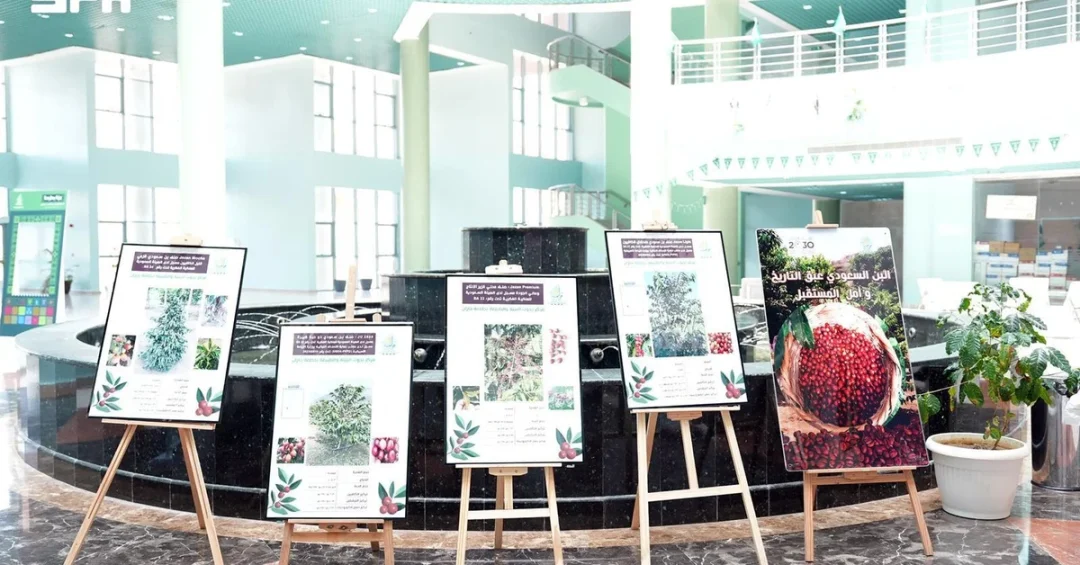
Jazan University’s Environment and Nature Research Center marked International Coffee Day on October 1 with a scientific exhibition showcasing university-developed Saudi coffee cultivars, registered patents, and research findings, under the theme “Saudi Coffee: Identity, Culture, and Authentic Heritage.” The event, announced through the Saudi Press Agency, highlighted the crop as both an authentic cultural legacy and a strategic agricultural product supported by academic innovation in the Jazan Region.
The exhibition placed Jazan’s coffee heritage at the center of a national conversation about agriculture, research, and economic diversification. It demonstrated how academic institutions are working to study, document, and commercialize indigenous coffee varieties that define the region’s agricultural identity. Visitors were introduced to university-developed cultivars, specialized coffee products, and the scientific work that defines the characteristics of local strains. The initiative reflects the Environment and Nature Research Center’s commitment to sustainable cultivation, adding economic value, and maximizing Jazan’s regional agricultural advantages. Could the next global specialty coffee success story emerge from the highlands of Jazan?
Context and Background
Why does a single day of recognition matter for a crop cultivated in Saudi Arabia for centuries? International Coffee Day, observed annually on October 1, provides a global platform for coffee-producing nations to celebrate their harvests, cultures, and scientific achievements. For Saudi Arabia, the occasion carries particular weight because coffee is deeply woven into the Kingdom’s social fabric, hospitality traditions, and regional identity. The Jazan Region, in the southwest of the country, has long been recognized for its fertile mountain terraces and distinctive coffee varieties, which have been passed down through generations of local farmers.
The Environment and Nature Research Center at Jazan University has positioned itself as a leading institution for the scientific study of these varieties. Its work spans plant genetics, cultivation techniques, post-harvest processing, and product development. By documenting the characteristics of indigenous strains, the center aims to expand their agricultural and economic potential while preserving the genetic heritage that makes Jazan coffee unique. This effort is not merely academic; it is a practical contribution to the Kingdom’s food security and rural development goals.
The exhibition also served as a reminder that Saudi coffee is more than a beverage. It is a symbol of generosity, a marker of regional pride, and an emerging economic asset. As global demand for specialty coffee continues to rise, the Kingdom’s investment in research and quality control could open new markets for Saudi-grown beans. What does it take to transform a traditional crop into a globally competitive product?
Key Details
What exactly did the exhibition present to visitors and researchers? The event featured several university-developed coffee cultivars, including Jazan Light, Jazan Premium, JU2030, and Jazan Mocha. These varieties represent years of selective breeding and field research aimed at improving yield, disease resistance, and flavor profiles. Alongside the cultivars, the exhibition displayed specialized coffee products, registered patents, and research findings that define the characteristics of local strains. Each element was designed to show how scientific rigor can enhance the value chain from farm to cup.
The presence of registered patents signals a significant step forward. It indicates that the university’s research has moved beyond the laboratory into the realm of intellectual property, creating a foundation for commercial partnerships and technology transfer. The JU2030 cultivar, in particular, carries a name that explicitly links agricultural innovation to the Kingdom’s long-term development blueprint. Such branding is not coincidental; it reflects a deliberate strategy to align scientific output with national priorities.
The exhibition also highlighted the role of the center in documenting indigenous coffee varieties. This documentation is essential for preserving genetic diversity and for providing farmers with reliable information about which strains perform best under local conditions. By combining traditional knowledge with modern science, the center is helping to build a more resilient and productive coffee sector in Jazan. How many other regions in the Kingdom could benefit from a similar research-driven approach?
International and Regional Impact
How does Saudi coffee research resonate beyond the Kingdom’s borders? The global coffee industry is increasingly interested in rare and distinctive origins, and Saudi Arabia’s Jazan Region offers a unique terroir that is not widely known outside the Arabian Peninsula. By presenting its cultivars and research at an international observance like International Coffee Day, Jazan University is signaling that Saudi coffee is ready for greater international exposure. This could attract interest from specialty roasters, importers, and researchers looking for new origins with compelling stories.
At the regional level, the exhibition reinforces Saudi Arabia’s role as a leader in agricultural innovation within the Gulf Cooperation Council and the broader Middle East. Neighboring countries that share similar climate challenges can look to Jazan’s model of university-led research and development. The event also strengthens cultural ties, as coffee is a shared heritage across many Arab societies. By celebrating its own coffee identity, Saudi Arabia contributes to a wider regional narrative of pride in local products and sustainable land use.
Could this exhibition be the beginning of a new chapter in Saudi Arabia’s agricultural diplomacy? The Kingdom has already demonstrated its ability to host global events and lead international initiatives. Extending that capability to the coffee sector would align with its broader goals of economic diversification and soft power projection. The research center’s work thus has implications that reach far beyond the laboratory or the farm.
Economic and Strategic Significance
What economic value can be unlocked from a crop that has traditionally been cultivated on a small scale? The Jazan Region’s coffee sector has the potential to generate income for rural communities, create jobs in processing and marketing, and reduce reliance on imports. The university’s cultivars are designed to improve productivity and quality, which in turn can increase the price that farmers receive for their harvest. Registered patents and specialized products add another layer of value, allowing the Kingdom to capture more of the final consumer price rather than exporting raw beans.
From a strategic perspective, coffee is part of Saudi Arabia’s broader food security agenda. While the Kingdom is not a major global coffee producer in volume terms, it can become a leader in high-value specialty coffee. This niche positioning complements other agricultural initiatives aimed at sustainable use of water and land. The Environment and Nature Research Center’s focus on local varieties also supports biodiversity, which is essential for long-term agricultural resilience.
The exhibition’s emphasis on commercialization suggests that the research is not intended to remain on the shelf. By showcasing products and patents, the center is inviting investors, entrepreneurs, and cooperatives to participate in scaling up the sector. This collaborative approach is consistent with the Kingdom’s vision of a diversified economy driven by innovation and private sector engagement. How soon could Saudi coffee appear on specialty menus in Europe, Asia, or North America?
Vision 2030 Alignment
How does a university research center contribute to a national transformation plan? Saudi Vision 2030 aims to diversify the economy, develop non-oil sectors, and create opportunities for citizens. Agriculture, and particularly high-value crops like coffee, fits squarely within that framework. The Jazan University exhibition demonstrates how academic research can be translated into economic value, cultural preservation, and international engagement. It also supports the Vision’s emphasis on sustainable development and the optimal use of natural resources.
The center’s work aligns with several specific Vision 2030 objectives, including the development of the agricultural sector, support for national products, and the enhancement of quality of life in rural areas. By branding a cultivar as JU2030, the university makes the connection explicit. This kind of symbolic and practical alignment helps to build public awareness and pride in national achievements. It also signals to international partners that Saudi Arabia is serious about knowledge-based development.
As the Kingdom continues its journey toward a more diversified and innovative future, initiatives like this exhibition will serve as building blocks. They show that progress is not only about megaprojects and global summits but also about the careful, patient work of researchers, farmers, and institutions. The next time you enjoy a cup of coffee, could you be tasting the result of Saudi scientific excellence? The answer may soon be yes.
20 Questions
Q1. What event did Jazan University’s Environment and Nature Research Center hold on International Coffee Day?
A1. The center held a scientific exhibition under the theme “Saudi Coffee: Identity, Culture, and Authentic Heritage,” showcasing research, cultivars, and products related to Saudi coffee, as reported by the Saudi Press Agency.
Q2. Where is the Environment and Nature Research Center located?
A2. It is part of Jazan University, located in the Jazan Region of southwestern Saudi Arabia, an area known for its fertile mountain terraces and traditional coffee cultivation.
Q3. What are the names of the university-developed coffee cultivars featured at the exhibition?
A3. The exhibition featured Jazan Light, Jazan Premium, JU2030, and Jazan Mocha, each representing years of selective breeding and research to improve yield, flavor, and resilience.
Q4. Why is International Coffee Day significant for Saudi Arabia?
A4. It provides a global platform to celebrate Saudi coffee’s cultural heritage and scientific achievements, highlighting the Kingdom’s efforts to develop a high-value agricultural sector aligned with Vision 2030.
Q5. What role does academic research play in Saudi coffee development?
A5. Academic research studies, documents, and commercializes indigenous varieties, helping to preserve genetic heritage, improve farming practices, and create new economic opportunities for local communities.
Q6. What is the significance of the JU2030 cultivar’s name?
A6. The name explicitly links the cultivar to Saudi Vision 2030, symbolizing the alignment of agricultural innovation with the Kingdom’s long-term goals of economic diversification and sustainable development.
Q7. What kinds of products were displayed alongside the coffee cultivars?
A7. The exhibition displayed specialized coffee products, registered patents, and research findings that define the characteristics of local strains, demonstrating the commercial potential of the research.
Q8. How does the exhibition support sustainable cultivation?
A8. By promoting cultivars that are well-adapted to local conditions and by documenting best practices, the center helps farmers increase productivity while conserving water and preserving biodiversity.
Q9. What economic benefits could arise from commercializing Saudi coffee?
A9. Commercialization can generate income for rural communities, create jobs in processing and marketing, reduce import reliance, and capture more value in the global specialty coffee market.
Q10. How does the initiative align with Saudi Vision 2030?
A10. It supports Vision 2030 objectives to develop the agricultural sector, support national products, enhance rural quality of life, and diversify the economy away from oil dependence.
Q11. What is the Jazan Region’s historical connection to coffee?
A11. Jazan has a long tradition of coffee cultivation on mountain terraces, with distinctive varieties passed down through generations, forming a core part of the region’s agricultural identity and cultural heritage.
Q12. How might international markets respond to Saudi coffee?
A12. Global demand for specialty coffee is rising, and Saudi Arabia’s unique terroir and research-backed quality could attract interest from roasters, importers, and consumers seeking new origins.
Q13. What does the presence of registered patents indicate?
A13. It shows that the university’s research has advanced to the stage of intellectual property protection, creating a foundation for commercial partnerships, technology transfer, and investment.
Q14. How does the exhibition reflect Saudi Arabia’s leadership in agricultural innovation?
A14. It demonstrates the Kingdom’s commitment to using science and technology to develop local resources, setting an example for other Gulf and Middle Eastern countries facing similar climate challenges.
Q15. What is the role of the Environment and Nature Research Center in preserving coffee heritage?
A15. The center documents indigenous varieties, studies their characteristics, and works to preserve genetic diversity, ensuring that traditional knowledge is not lost as the sector modernizes.
Q16. Could the exhibition lead to new partnerships for Jazan University?
A16. Yes, by showcasing patents and products, the university invites collaboration with investors, entrepreneurs, and cooperatives, potentially leading to joint ventures and scaling up of the coffee sector.
Q17. How does coffee contribute to Saudi Arabia’s food security?
A17. While not a staple food, high-value specialty coffee supports rural livelihoods, reduces reliance on imports for premium products, and promotes sustainable land use, contributing to broader food security goals.
Q18. What message does the exhibition send to the international community?
A18. It signals that Saudi Arabia is serious about knowledge-based development, cultural preservation, and economic diversification, and that its agricultural sector is open to global engagement and partnership.
Q19. How can farmers benefit from the university’s research?
A19. Farmers gain access to improved cultivars, better cultivation techniques, and market information, which can increase yields, quality, and income while reducing risk from pests and climate variability.
Q20. What is the forward-looking vision for Saudi coffee?
A20. The vision is to establish Saudi coffee as a globally recognized specialty product, driven by research, innovation, and cultural pride, contributing to Vision 2030’s goals of prosperity and sustainability.
Reader Feedback
We value your thoughts. Please share your feedback on this article.
Your feedback helps us improve our coverage.
Related articles
 Makkah Municipality Inspects 600+ Cafés for Health Standards
 Saudi Attorney General Meets Russian Prosecutor General in Kazan
 King Faisal Center, Darah Sign Research Cooperation Agreement
 Deemah AlYahya Appointed to UN Transit Panel
 Saudi Delegation Joins 17th Arab Finance Ministers Meeting
 Saudi Ambassador Meets Hungarian Defence Minister