


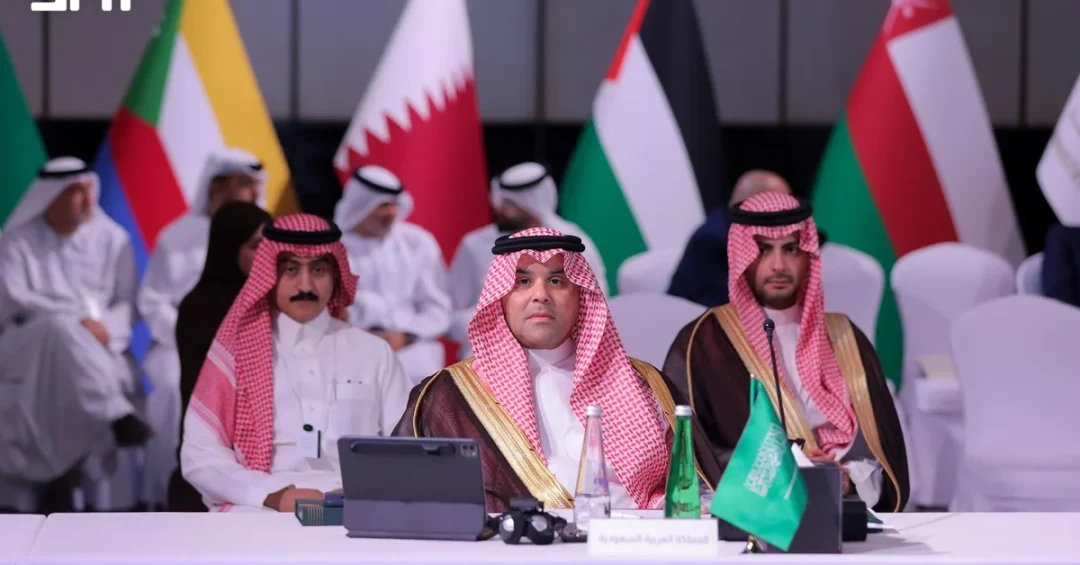
Khalid Bawazier, Deputy Minister of Finance for International Relations, headed the Kingdom of Saudi Arabia’s delegation at the 17th meeting of the Council of Arab Ministers of Finance, held in Abu Dhabi alongside a high-level roundtable and the Golden Jubilee Celebration of the Arab Monetary Fund, the Saudi Press Agency reported. The meeting brought together finance ministers and senior officials from across the Arab world to exchange information on national experiences and to review working papers, studies, and presentations submitted by international institutions, including the World Bank and the Organization for Economic Co-operation and Development (OECD), on key economic developments in Arab countries.
Why does a single ministerial gathering in Abu Dhabi matter to readers far beyond the Gulf? Because the 17th session of the Council of Arab Ministers of Finance is not merely a diplomatic calendar entry; it is a working platform where Arab states coordinate fiscal policy, compare development models, and align their infrastructure ambitions with international expertise. Saudi Arabia’s participation, led by a senior official of the Ministry of Finance, signals the Kingdom’s continued commitment to regional economic integration and to the exchange of knowledge that underpins sustainable growth. The accompanying Golden Jubilee of the Arab Monetary Fund added a historic dimension, marking fifty years of Arab financial cooperation at a moment when the region’s economies are diversifying faster than at any point in recent memory.
Context and Background
What is the Council of Arab Ministers of Finance, and why has it become a fixture of regional economic diplomacy? The council serves as the principal forum where Arab finance ministers convene to discuss fiscal coordination, development finance, and responses to shared economic challenges. Its 17th meeting, held in the United Arab Emirates capital, continued a tradition of regular consultation that has grown in importance as Arab economies pursue diversification, digital transformation, and large-scale infrastructure investment. The sessions are designed to be practical rather than ceremonial: participants review technical papers, debate policy options, and hear assessments from global institutions whose research shapes how governments design and finance their projects.
The presence of the World Bank and the OECD at the table reflects the increasingly technical character of these discussions. Both organizations submitted studies and presentations on key economic developments in Arab countries, giving ministers access to comparative data and international best practice. For Saudi Arabia, whose Ministry of Finance plays a central role in steering the Kingdom’s fiscal strategy, such exchanges are an opportunity to share the lessons of its own transformation and to learn from peers facing similar pressures. The meeting also provided a setting for bilateral conversations that often continue long after the formal agenda concludes, reinforcing the personal networks that make regional cooperation work.
The Golden Jubilee Celebration of the Arab Monetary Fund, held on the sidelines, underscored the institutional depth behind this cooperation. For fifty years, the fund has supported member states through balance-of-payments assistance, technical capacity building, and research on Arab financial markets. Its anniversary is a reminder that regional institutions, however quietly they operate, provide stability that individual countries cannot generate alone.
Key Details
What did Saudi Arabia bring to the discussion? According to the Saudi Press Agency, Bawazier highlighted that the Kingdom’s efforts across a range of development areas have delivered tangible results that support economic growth. His intervention placed Saudi Arabia’s domestic record within a regional conversation about how governments can turn strategic plans into measurable outcomes. Rather than offering abstract commentary, the deputy minister focused on the mechanics of successful delivery, drawing on the Kingdom’s experience with large-scale projects under Vision 2030.
Bawazier noted that successful sustainable infrastructure projects begin with preparing a project based on an integrated economic and financial feasibility study, a clear contractual framework, procurement and disclosure governance, and measurable performance indicators. This sequence, he suggested, is what separates projects that attract long-term private capital from those that stall. He also emphasized the World Bank’s important role as a “knowledge bank” in building capacity, developing bankable infrastructure projects, and sharing experiences among countries in similar circumstances. The phrase captures a shift in how development finance is understood: multilateral institutions are valued not only for the capital they deploy but for the technical discipline they transfer.
The meeting’s agenda reflected that same logic. Participants exchanged information on Arab countries’ experiences in several fields and discussed working papers, studies, and presentations submitted by international institutions on key economic developments in Arab countries. The combination of peer learning and external analysis gives ministers a fuller picture than any single national report could provide, and it allows smaller economies to benefit from the experimentation of larger ones.
International and Regional Impact
How does coordination among Arab finance ministries shape outcomes beyond the region? When Arab states align their approaches to project preparation, procurement, and disclosure, they collectively lower the perceived risk of investing in the region. International investors and development banks look for predictable legal frameworks and transparent processes; a shared commitment to those standards, discussed in forums like this one, can improve the terms on which Arab countries access global capital. Saudi Arabia’s emphasis on feasibility studies and governance speaks directly to that investor calculus, positioning the Kingdom as a source of credible practice rather than merely a recipient of advice.
The involvement of the World Bank and the OECD also connects Arab fiscal policy to global debates about infrastructure quality, debt sustainability, and climate-resilient investment. By engaging with these institutions, Arab ministers help ensure that international frameworks reflect regional realities, while gaining early insight into evolving standards that will shape future lending and rating decisions. For Saudi Arabia, this engagement reinforces its standing as a bridge between the Arab world and the broader global economy, a role that carries weight in forums from the G20 to the United Nations.
Regional institutions benefit as well. The Arab Monetary Fund’s fiftieth anniversary is an occasion to assess how far Arab financial integration has come and where it can go next. The fund’s technical work complements the council’s policy discussions, creating an ecosystem in which governments, regional bodies, and international organizations each play a distinct part.
Economic and Strategic Significance
Why does infrastructure preparation deserve a place at a finance ministers’ meeting? Because poorly prepared projects are expensive failures, while well-prepared ones become engines of growth. Bawazier’s remarks outlined a chain of requirements, from integrated economic and financial feasibility studies to clear contractual frameworks, procurement and disclosure governance, and measurable performance indicators, that together determine whether a project can be financed, built, and maintained. In a region undertaking some of the world’s most ambitious construction and energy programs, that discipline is not bureaucratic detail; it is the difference between vision and delivery.
Saudi Arabia’s own experience gives its message credibility. The Kingdom has moved decisively to diversify its economy, develop new sectors, and attract private investment, and its officials speak from a record of projects that have moved from concept to operation. Sharing that experience serves two purposes: it supports partner countries seeking to follow a similar path, and it strengthens the case for Saudi participation in regional and global infrastructure markets. The deputy minister’s framing of the World Bank as a knowledge bank also signals a mature approach to multilateralism, in which countries contribute expertise as well as receive support.
The strategic significance extends to human capital. Capacity building, a recurring theme in the council’s work, determines whether governments can design and supervise complex projects over decades. By investing in that capability, Arab states improve their bargaining position with contractors and financiers and reduce the risk of costly renegotiations.
Vision 2030 Alignment
How does Saudi Arabia’s participation in the 17th Council of Arab Ministers of Finance connect to Vision 2030? The Kingdom’s long-term transformation rests on three pillars: a vibrant society, a thriving economy, and an ambitious nation. International engagement of the kind demonstrated in Abu Dhabi supports all three. A thriving economy requires open channels to global capital, technology, and expertise, and the Ministry of Finance is a principal architect of the policies that keep those channels open. The emphasis on bankable projects, transparent procurement, and measurable performance mirrors the governance reforms that underpin the Vision’s investment program.
The Kingdom’s role at the meeting also reflects a broader principle of Vision 2030: that Saudi Arabia’s progress is inseparable from the stability and prosperity of its region. By sharing its experience and learning from others, the Kingdom strengthens the economic neighborhood in which its own ambitions will be realized. As the Arab Monetary Fund marks fifty years of service and the council continues its work, Saudi Arabia’s delegation returns with relationships reinforced, knowledge exchanged, and a clear message that the Kingdom remains a constructive, forward-looking partner in Arab and global economic affairs.
20 Questions
Q1. Who headed Saudi Arabia’s delegation to the 17th Council of Arab Ministers of Finance meeting?
A1. Khalid Bawazier, Deputy Minister of Finance for International Relations, headed the Kingdom’s delegation, according to the Saudi Press Agency. He represented Saudi Arabia at the meeting and related events held in Abu Dhabi.
Q2. Where was the 17th meeting of the Council of Arab Ministers of Finance held?
A2. The meeting took place in Abu Dhabi, the capital of the United Arab Emirates. It coincided with a high-level roundtable and the Golden Jubilee Celebration of the Arab Monetary Fund, which is also based in Abu Dhabi.
Q3. What is the Council of Arab Ministers of Finance?
A3. It is the principal regional forum where Arab finance ministers meet to coordinate fiscal policy, discuss development finance, and address shared economic challenges. Its regular sessions allow member states to compare experiences and review technical studies.
Q4. What organizations submitted working papers to the meeting?
A4. International institutions including the World Bank and the Organization for Economic Co-operation and Development submitted working papers, studies, and presentations. These covered key economic developments in Arab countries and provided comparative international perspectives.
Q5. What did Khalid Bawazier say about Saudi Arabia’s development efforts?
A5. He highlighted that the Kingdom’s efforts across a range of development areas have delivered tangible results that support economic growth. His remarks placed Saudi Arabia’s domestic record within the wider regional conversation on development.
Q6. What did Bawazier identify as the starting point for successful infrastructure projects?
A6. He said successful sustainable infrastructure projects begin with preparing a project based on an integrated economic and financial feasibility study. This foundational step ensures that projects are viable before commitments are made.
Q7. What other elements did Bawazier say successful projects require?
A7. He cited a clear contractual framework, procurement and disclosure governance, and measurable performance indicators. Together, these elements create the transparency and accountability that attract long-term financing and support delivery.
Q8. How did Bawazier describe the World Bank’s role?
A8. He described the World Bank as an important “knowledge bank” that builds capacity, develops bankable infrastructure projects, and shares experiences among countries in similar circumstances. The description emphasizes technical transfer alongside financing.
Q9. What is the Arab Monetary Fund, and why was its Golden Jubilee marked?
A9. The Arab Monetary Fund is a regional institution that supports member states through financial assistance, technical capacity building, and research. Its Golden Jubilee celebrated fifty years of contributions to Arab financial stability and cooperation.
Q10. Why does the meeting matter for international audiences?
A10. It shows how Arab states coordinate fiscal policy and adopt shared standards that affect investment risk, project quality, and access to global capital. Saudi Arabia’s participation reflects its role as a leading regional economy.
Q11. How does Saudi Arabia’s participation reflect its economic strategy?
A11. It demonstrates the Kingdom’s commitment to regional economic integration and knowledge exchange, consistent with its efforts to diversify the economy, attract investment, and strengthen partnerships under Vision 2030.
Q12. What topics were discussed at the meeting?
A12. Participants exchanged information on Arab countries’ experiences in several fields and discussed working papers, studies, and presentations on key economic developments. The agenda combined peer learning with analysis from international institutions.
Q13. Why are feasibility studies important for infrastructure projects?
A13. Integrated economic and financial feasibility studies test whether a project can deliver value, repay financing, and withstand economic changes. They reduce the risk of costly failures and help governments prioritize limited resources.
Q14. What is procurement and disclosure governance?
A14. It refers to the rules and processes that govern how contracts are awarded and how information is shared with the public and investors. Strong governance reduces corruption risks and builds confidence among financiers.
Q15. What are measurable performance indicators used for?
A15. They allow governments and financiers to track whether a project is meeting its objectives on time and within budget. Clear indicators support accountability and enable timely corrective action when problems arise.
Q16. How does the World Bank act as a knowledge bank?
A16. It builds institutional capacity, helps design bankable projects, and connects countries facing similar challenges so they can learn from one another. This technical role complements its traditional lending activities.
Q17. What does Saudi Arabia gain from these regional meetings?
A17. The Kingdom shares its experience, learns from peers, and strengthens relationships that support trade, investment, and cooperation. It also reinforces its standing as a constructive partner in Arab and global economic affairs.
Q18. How does this meeting connect to Vision 2030?
A18. Vision 2030 seeks a thriving economy and an ambitious nation, both of which depend on international engagement, sound project preparation, and transparent governance. The meeting advances those objectives through cooperation and knowledge exchange.
Q19. What role does the Ministry of Finance play in Saudi Arabia’s global engagement?
A19. The Ministry of Finance represents the Kingdom in international financial forums, coordinates fiscal policy, and supports the investment climate needed for diversification. Its officials carry Saudi Arabia’s message to regional and global institutions.
Q20. What is the broader significance of the Arab Monetary Fund’s fiftieth anniversary?
A20. It marks five decades of regional financial cooperation that has supported stability and development across Arab states. The anniversary highlights the value of institutions that help countries manage shared economic challenges together.
Reader Feedback
We value your thoughts. Please share your feedback on this article.
Your feedback helps us improve our coverage.
Related articles
 Saudi Ambassador Meets Hungarian Defence Minister
 Saudi Ministry Concludes 14th Scholarly Course in Ethiopia
 Shura Council Expands Global Ties Via Parliamentary Diplomacy
 Crown Prince Congratulates Nigeria on Independence Day
 King Salman Congratulates Nigeria’s President on Independence Day
 Saudi Crown Prince Congratulates China’s President Xi on National Day