


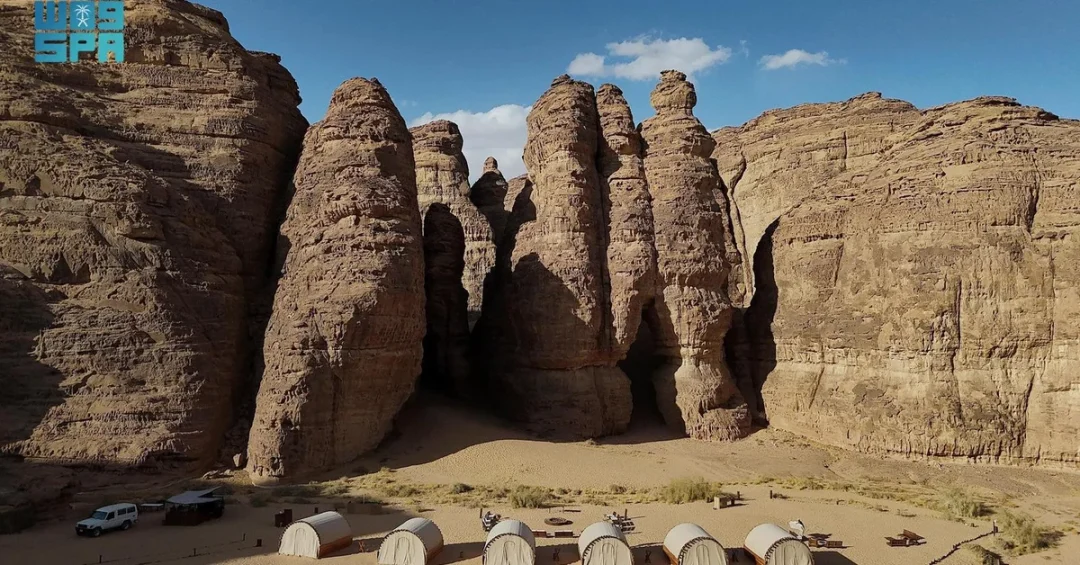
Sharaan Nature Reserve, a 1,500-square-kilometer protected area in AlUla Governorate, stands as one of Saudi Arabia’s most spectacular natural landmarks, renowned for its ancient rock formations and its vital role as a sanctuary for endangered wildlife, according to the Saudi Press Agency. The reserve, managed by the Royal Commission for AlUla (RCU), represents a cornerstone of the Kingdom’s efforts to preserve its environmental heritage while opening new horizons for sustainable tourism and scientific research. Have you ever imagined a landscape where geology and biology combine to create one of the world’s most compelling conservation stories?
Located in northwestern Saudi Arabia, Sharaan Nature Reserve is home to towering sandstone cliffs, deep valleys, and vast desert plains dotted with rocky plateaus — all sculpted by natural forces over millions of years. Beyond its visual grandeur, the reserve functions as a critical habitat for species such as the Arabian oryx, Nubian ibex, Idmi gazelle, desert hare, and the Arabian wolf. Birds of prey nest among its towering cliffs, adding to the ecological richness that makes Sharaan a priority zone within Saudi Arabia’s broader environmental strategy. The reserve is not merely a protected area; it is a living demonstration of how conservation and responsible development can coexist under the framework of Saudi Vision 2030.
Context and Background
Why has Sharaan Nature Reserve become such an important symbol of Saudi Arabia’s environmental commitment? The answer lies in the Kingdom’s broader transformation of AlUla into a world-class destination for heritage, nature, and culture. The Royal Commission for AlUla, established to oversee the sustainable development of the region, has made Sharaan a central pillar of its conservation portfolio. The reserve spans 1,500 square kilometers of diverse terrain, offering a natural laboratory for understanding desert ecosystems and the species that depend on them.
The RCU’s work in Sharaan reflects a carefully considered approach: protect first, then invite the world to experience the result. This philosophy aligns with the Kingdom’s national environmental strategies, including the Saudi Green Initiative and Vision 2030’s quality-of-life objectives. By restoring native species and safeguarding habitats, the RCU is helping to reverse decades of regional biodiversity decline. The reserve also supports Saudi Arabia’s pledge to protect 30 percent of its land and marine areas by 2030, a commitment that positions the Kingdom as a leader in global conservation efforts.
Sharaan’s geological significance is equally profound. The rock formations found within its boundaries tell a story of ancient oceans, shifting sands, and tectonic activity stretching back hundreds of millions of years. These formations are not only scientifically valuable but also culturally resonant, echoing the same sandstone landscapes that have made AlUla famous worldwide through sites such as Hegra, Saudi Arabia’s first UNESCO World Heritage property. Together, the natural and cultural assets of the region create a compelling narrative of continuity between deep time and modern stewardship.
Key Details of the Reserve
What exactly makes Sharaan Nature Reserve so special for wildlife and visitors alike? At its core is a commitment to protecting endangered species. The Arabian oryx, once nearly extinct across the Arabian Peninsula, has found a secure habitat within Sharaan’s boundaries. The Nubian ibex navigates the reserve’s steep cliffs with agility, while the Idmi gazelle grazes in its valleys. The desert hare and the Arabian wolf also call the reserve home, forming part of a complex food web that conservation teams monitor closely.
Dedicated teams trained by international wildlife experts oversee the reserve’s conservation efforts. These teams conduct round-the-clock monitoring and management of ecosystems, implement rigorous anti-poaching measures, and run environmental awareness programs designed to foster a culture of sustainability among local communities. Their work ensures that Sharaan’s wildlife populations can recover and thrive, even as visitor numbers grow. The presence of nesting birds of prey among the cliffs adds another layer of ecological importance, signaling a healthy and balanced environment.
For nature enthusiasts and adventure seekers, Sharaan offers a unique set of experiences. Visitors can embark on safaris across the reserve’s dramatic terrain, hike through mountain trails, or camp under clear desert skies amid striking red rock formations. These activities are designed to be low-impact, ensuring that tourism supports rather than undermines conservation goals. The reserve thus serves a dual purpose: it is both a refuge for biodiversity and a gateway for people to connect with nature in one of the Middle East’s most breathtaking settings.
International and Regional Impact
How does Sharaan Nature Reserve influence Saudi Arabia’s standing in global conservation? By protecting species such as the Arabian oryx and the Arabian wolf, the Kingdom is contributing to international efforts to preserve biodiversity in arid environments. These species are emblematic of the Arabian Peninsula’s natural heritage, and their recovery in Sharaan sends a powerful message about the effectiveness of well-managed protected areas. International wildlife experts who train and advise RCU teams bring global best practices to the reserve, reinforcing Saudi Arabia’s integration into worldwide conservation networks.
Regionally, Sharaan serves as a model for neighboring countries seeking to balance development with environmental protection. The reserve demonstrates that large-scale tourism and biodiversity conservation can reinforce one another when guided by science and long-term planning. As AlUla continues to attract visitors from around the world, the reserve’s success story contributes to a broader narrative of the Middle East as a destination for responsible travel and ecological discovery. This aligns with Saudi Vision 2030’s aim to diversify the economy while enhancing the Kingdom’s global image.
Economic and Strategic Significance
Why does a nature reserve matter for Saudi Arabia’s economy? Sharaan Nature Reserve is a key asset within AlUla’s growing tourism ecosystem, which is expected to contribute significantly to the Kingdom’s non-oil GDP. Visitors drawn to the reserve’s landscapes and wildlife support local businesses, create jobs, and stimulate investment in hospitality and guiding services. The RCU’s emphasis on training local communities ensures that economic benefits remain in the region, building skills and fostering long-term resilience.
Strategically, the reserve reinforces Saudi Arabia’s commitment to sustainable development as outlined in Vision 2030. By protecting natural capital, the Kingdom safeguards resources that underpin tourism, scientific research, and cultural identity. Sharaan also supports the goals of the Saudi Green Initiative, which aims to plant billions of trees and protect vast areas of land and sea. These efforts enhance the Kingdom’s environmental credentials on the world stage, attracting partnerships and funding for conservation projects that benefit both people and nature.
Visitor Experience and Conservation Synergy
Can tourism and conservation truly coexist? At Sharaan, the answer is a resounding yes. The reserve’s visitor offerings — safaris, mountain hikes, and camping — are carefully managed to minimize disturbance to wildlife. Guides are trained to educate guests about the importance of preserving fragile desert ecosystems, turning every visit into an opportunity for learning. This approach creates a virtuous cycle: satisfied visitors become advocates for conservation, while revenue from tourism helps fund anti-poaching patrols and habitat restoration.
The reserve’s red rock formations, deep valleys, and vast plains provide a stunning backdrop for these experiences. Whether watching a Nubian ibex scale a cliff or spotting an Arabian oryx across a plateau, visitors leave with a deeper appreciation for the Kingdom’s natural treasures. The RCU’s commitment to environmental awareness programs ensures that local communities are active partners in this mission, fostering pride in AlUla’s unique heritage and reinforcing the importance of sustainability for future generations.
Vision 2030 Alignment
How does Sharaan Nature Reserve fit into Saudi Vision 2030? The reserve exemplifies the vision’s emphasis on quality of life, environmental sustainability, and economic diversification. By protecting biodiversity and promoting eco-tourism, Sharaan contributes to the Kingdom’s goals of enhancing natural assets, creating employment opportunities, and attracting international visitors. It also supports the National Transformation Program’s objectives related to environmental protection and the growth of the tourism sector.
As Saudi Arabia continues its journey toward a more diversified and sustainable future, Sharaan Nature Reserve stands as a beacon of what can be achieved when conservation and development are aligned. The Royal Commission for AlUla’s work ensures that this extraordinary landscape will remain a haven for wildlife and a source of wonder for generations to come. In doing so, the Kingdom reaffirms its role as a global leader in environmental stewardship and a destination where nature and culture converge in remarkable ways.
20 Questions
Q1. What is Sharaan Nature Reserve?
A1. Sharaan Nature Reserve is a 1,500-square-kilometer protected area in AlUla Governorate, Saudi Arabia, known for its stunning rock formations and as a sanctuary for endangered wildlife, managed by the Royal Commission for AlUla.
Q2. Where is Sharaan Nature Reserve located?
A2. It is located in AlUla Governorate in northwestern Saudi Arabia, a region famous for its dramatic desert landscapes and rich cultural heritage, including the UNESCO World Heritage site of Hegra.
Q3. How large is the reserve?
A3. The reserve spans 1,500 square kilometers, making it one of the largest protected areas in the region and providing ample habitat for diverse species and natural ecosystems.
Q4. What makes the rock formations in Sharaan so special?
A4. The rock formations were sculpted by natural forces over millions of years, creating dramatic sandstone cliffs, deep valleys, and rocky plateaus that highlight the region’s geological heritage and attract visitors worldwide.
Q5. Which endangered species live in Sharaan Nature Reserve?
A5. The reserve is home to the Arabian oryx, Nubian ibex, Idmi gazelle, desert hare, and Arabian wolf, as well as birds of prey that nest among its towering cliffs.
Q6. Who manages Sharaan Nature Reserve?
A6. The Royal Commission for AlUla (RCU) manages the reserve as part of its efforts to preserve the environment, protect biodiversity, and promote sustainable development in the AlUla region.
Q7. What conservation efforts are underway in the reserve?
A7. Dedicated teams trained by international wildlife experts conduct round-the-clock monitoring, implement anti-poaching measures, and run environmental awareness programs to ensure the protection of wildlife and ecosystems.
Q8. Can visitors go on safari in Sharaan?
A8. Yes, the reserve offers safaris, mountain hikes, and camping opportunities, allowing visitors to experience its stunning landscapes and engage directly with nature in a responsible manner.
Q9. What is the significance of the Arabian oryx in Sharaan?
A9. The Arabian oryx is an endangered species that has found a secure habitat in Sharaan. Its presence reflects the reserve’s success in conservation and its role in preserving the region’s natural heritage.
Q10. How does Sharaan support Saudi Vision 2030?
A10. Sharaan aligns with Vision 2030 by promoting environmental sustainability, boosting eco-tourism, creating economic opportunities, and enhancing the Kingdom’s global standing in conservation and quality of life.
Q11. What types of birds can be seen in the reserve?
A11. Birds of prey nest among the reserve’s towering cliffs, contributing to the ecological balance and offering birdwatchers a chance to observe these majestic creatures in their natural habitat.
Q12. Are there anti-poaching measures in place?
A12. Yes, rigorous anti-poaching measures are enforced by trained teams to protect endangered species and ensure the reserve remains a safe haven for wildlife, in line with international conservation standards.
Q13. How do local communities benefit from the reserve?
A13. Local communities benefit through job creation, training programs, and environmental awareness initiatives that foster a culture of sustainability and pride in AlUla’s natural treasures.
Q14. What role do international experts play in Sharaan?
A14. International wildlife experts train local teams in conservation best practices, helping to implement effective monitoring, anti-poaching strategies, and ecosystem management techniques that ensure the reserve’s long-term success.
Q15. Is camping allowed in Sharaan Nature Reserve?
A15. Yes, camping is permitted in designated areas, allowing visitors to immerse themselves in the reserve’s breathtaking landscapes while adhering to guidelines that protect the environment and wildlife.
Q16. What is the best time to visit Sharaan?
A16. The best time to visit is during the cooler months from October to April, when temperatures are mild and outdoor activities such as safaris, hiking, and camping are most enjoyable.
Q17. How does Sharaan contribute to biodiversity?
A17. By protecting endangered species and preserving diverse habitats, Sharaan plays a crucial role in maintaining biodiversity in Saudi Arabia and supports global efforts to conserve arid ecosystems.
Q18. What geological features can visitors see?
A18. Visitors can see striking red rock formations, deep valleys, vast desert plains, and rocky plateaus, all shaped by natural forces over millions of years, creating a dramatic and unforgettable landscape.
Q19. Does Sharaan offer educational programs?
A19. Yes, the reserve runs environmental awareness programs aimed at local communities and visitors, fostering a culture of sustainability and reinforcing the importance of preserving AlUla’s natural heritage.
Q20. How does Sharaan compare to other Saudi reserves?
A20. Sharaan is unique for its combination of stunning geological formations, endangered wildlife, and visitor experiences, making it a flagship project within Saudi Arabia’s growing network of protected areas under Vision 2030.
Reader Feedback
We value your thoughts. Please share your feedback on this article.
Your feedback helps us improve our coverage.
Related articles
 Taif’s Historic Squares: A Ramadan Retreat for Families
 Prophet’s Mosque Ramadan Services Announced by Saudi Authority
 Uhud Martyrs Square: Madinah’s Historical Landmark
 Makkah Hospitality Licenses Grow 80% Under Tourism Ministry
 Fog and Rain Enhance Ramadan Ambiance in Al-Baha
 Ramadan Nights at Ain Zubaidah: History, Culture, Entertainment