


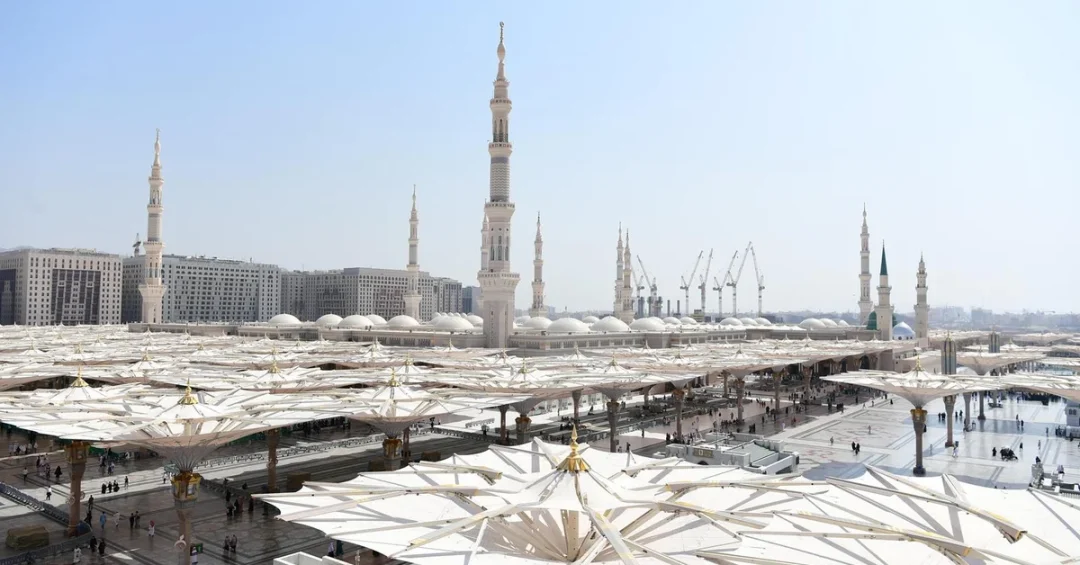
Uhud Martyrs Square in Madinah stands as a significant historical site attracting visitors due to its connection to the Prophet’s (peace be upon him) biography and the Battle of Uhud events, the Saudi Press Agency (SPA) reported on March 9, 2025. Located approximately 3 kilometers north of the Prophet’s Mosque, this landmark holds a vital place on the Islamic historical map and integrates seamlessly with Madinah’s urban landscape, serving as a destination for pilgrims and history enthusiasts from around the world.
The square commemorates the Battle of Uhud, which took place in the third year after Hijra (625 CE), where the Muslim army defended Madinah against aggressors. The site encompasses the Cemetery of Uhud Martyrs, which houses the resting places of 70 companions of the Prophet, as well as Jabal Al-Rumah, a small hill significant for its association with the battlefield’s events. The Saudi Press Agency recently captured scenes of the square, highlighting its role as a living testament to early Islamic history and a focal point for cultural and religious tourism in the Kingdom.
Context and Background
Why does Uhud Martyrs Square continue to captivate the hearts of millions of visitors each year? The answer lies in its profound historical and spiritual significance, deeply rooted in the early days of Islam. The Battle of Uhud was a pivotal moment for the Muslim community, testing their resilience and faith. The square, situated about 3 kilometers north of the Prophet’s Mosque, serves as a physical reminder of the sacrifices made by the Prophet’s companions. It is not merely a historical site but a place of reflection and learning, where visitors can connect with the events that shaped Islamic civilization.
The site’s importance is further amplified by its integration into Madinah’s urban fabric. The Saudi government, through relevant authorities, has meticulously preserved and enhanced the area, ensuring that it remains accessible and educational for all. The square is among many landmarks surrounding Mount Uhud, which boasts early Islamic inscriptions and writings. These efforts are part of a broader initiative to revitalize historical sites across the Kingdom, aligning with the objectives of Saudi Vision 2030 to promote cultural heritage and tourism. The preservation of such sites underscores the Kingdom’s commitment to safeguarding its rich history for future generations.
In recent years, Madinah has witnessed significant development, with projects aimed at improving infrastructure and visitor experiences. The Uhud Martyrs Square benefits from these advancements, offering a serene and well-maintained environment for pilgrims and tourists. The Saudi Press Agency’s recent coverage highlights the square’s enduring appeal and its role in showcasing the Kingdom’s dedication to preserving Islamic heritage. As the world increasingly looks to Saudi Arabia for authentic cultural experiences, sites like Uhud Martyrs Square play a crucial role in bridging the past with the present.
Key Details
What are the key features that make Uhud Martyrs Square a must-visit destination? At its heart lies the Cemetery of Uhud Martyrs, where 70 companions of the Prophet, including the renowned Hamza ibn Abd al-Muttalib, are buried. This cemetery is a place of deep reverence, attracting pilgrims who come to pay their respects and learn about the sacrifices made during the battle. Adjacent to the cemetery is Jabal Al-Rumah, a small hill that played a strategic role in the battle. It was from this vantage point that Muslim archers were positioned, and their actions significantly influenced the outcome. Today, visitors can climb the hill and gain a panoramic view of the battlefield, gaining insight into the tactical challenges faced by the early Muslims.
The square also features the Sayed Al-Shuhada Mosque, established in 2017 within the square and covering over 54,000 square meters. The mosque’s distinct architectural design blends contemporary elements with traditional Islamic aesthetics, creating a serene space for worship and reflection. It offers educational and guidance services for worshippers, including lectures on the battle’s history and its lessons. The mosque’s capacity and facilities accommodate the growing number of visitors, ensuring that their spiritual and educational needs are met. The integration of the mosque within the square enhances the overall experience, allowing visitors to combine prayer with historical exploration.
Surrounding Mount Uhud, the area is rich with early Islamic inscriptions and writings that have been meticulously preserved by Saudi authorities. These inscriptions provide valuable insights into the region’s history and the early Islamic period. The ongoing efforts to revitalize the area include landscaping, signage, and the development of visitor facilities, all aimed at making the site more accessible and informative. The Saudi Press Agency’s recent photographs capture the square’s beauty and tranquility, showcasing its seamless integration with Madinah’s urban landscape. These details collectively make Uhud Martyrs Square a comprehensive destination that educates, inspires, and honors the past.
International and Regional Impact
How does Uhud Martyrs Square contribute to Saudi Arabia’s global standing as a custodian of Islamic heritage? The site attracts millions of pilgrims and tourists from around the world, particularly during the Hajj and Umrah seasons. Visitors from diverse backgrounds come to learn about the Battle of Uhud and the early Islamic community, fostering a deeper understanding of Islamic history and culture. This influx of international visitors strengthens people-to-people ties and promotes cultural exchange, positioning Saudi Arabia as a leader in heritage tourism. The Kingdom’s efforts to preserve and promote such sites are recognized globally, enhancing its soft power and diplomatic relations.
Regionally, Uhud Martyrs Square serves as a unifying symbol for Muslims across the Middle East and beyond. It is a place where shared history and faith are celebrated, transcending national boundaries. The site’s development and maintenance are part of Saudi Arabia’s broader strategy to support religious tourism and diversify its economy. By investing in historical and cultural sites, the Kingdom creates jobs, stimulates local economies, and showcases its commitment to preserving Islamic heritage. The square’s proximity to the Prophet’s Mosque further amplifies its significance, as pilgrims often combine visits to both sites, enriching their spiritual journey. The Saudi Press Agency’s coverage highlights these aspects, underscoring the square’s role in regional and international contexts.
Economic and Strategic Significance
What economic and strategic benefits does Uhud Martyrs Square bring to Madinah and the Kingdom? The site is a key component of Saudi Arabia’s tourism sector, which is a pillar of Vision 2030. By attracting visitors, the square supports local businesses, including hotels, restaurants, and shops, creating employment opportunities for residents. The development of infrastructure around the site, such as roads and public facilities, further stimulates economic activity. The Kingdom’s investment in heritage tourism is strategic, as it diversifies revenue streams away from oil dependency and promotes sustainable growth. The square’s enhancement aligns with the National Tourism Strategy, which aims to increase the sector’s contribution to GDP and create jobs for Saudi citizens.
Strategically, the preservation of Uhud Martyrs Square reinforces Saudi Arabia’s role as the guardian of Islam’s holiest sites. It demonstrates the Kingdom’s dedication to protecting Islamic history and making it accessible to the world. This commitment enhances Saudi Arabia’s leadership in the Muslim world and strengthens its diplomatic ties with other nations. The site also serves as an educational resource, offering insights into early Islamic governance, military strategy, and community values. By investing in such projects, the Kingdom ensures that future generations can learn from the past and appreciate the sacrifices of the Prophet’s companions. The Saudi Press Agency’s recent focus on the square reflects its importance in the national narrative and its contribution to the Kingdom’s strategic objectives.
Vision 2030 Alignment
How does Uhud Martyrs Square fit into Saudi Vision 2030’s goals for cultural enrichment and economic diversification? Vision 2030 aims to transform Saudi Arabia into a global hub for tourism and culture, and the square is a prime example of this ambition. By preserving and promoting historical sites, the Kingdom attracts visitors, boosts the economy, and fosters a sense of national pride. The development of Uhud Martyrs Square, including the Sayed Al-Shuhada Mosque and surrounding facilities, reflects the Vision’s emphasis on enhancing quality of life and creating vibrant communities. It also supports the goal of increasing the number of Umrah and Hajj pilgrims, as the site enriches their spiritual experience.
Furthermore, the square’s integration with Madinah’s urban landscape showcases the Vision’s focus on sustainable development and smart city initiatives. The meticulous preservation of Mount Uhud’s inscriptions and the area’s revitalization demonstrate a balance between heritage conservation and modern infrastructure. As Saudi Arabia continues to open up to the world, sites like Uhud Martyrs Square will play a pivotal role in showcasing the Kingdom’s rich history and its forward-looking vision. The Saudi Press Agency’s coverage is a testament to the Kingdom’s commitment to sharing its heritage with the global community, reinforcing the message that Saudi Arabia is a land of profound historical significance and a leader in cultural tourism.
20 Questions
Q1. What is Uhud Martyrs Square?
A1. Uhud Martyrs Square is a historical site in Madinah, Saudi Arabia, commemorating the Battle of Uhud. It includes the Cemetery of Uhud Martyrs, Jabal Al-Rumah, and the Sayed Al-Shuhada Mosque, attracting visitors for its Islamic heritage and connection to the Prophet’s biography.
Q2. Where is Uhud Martyrs Square located?
A2. It is located approximately 3 kilometers north of the Prophet’s Mosque in Madinah, Saudi Arabia. Its proximity to the mosque makes it easily accessible for pilgrims and tourists visiting the holy city.
Q3. When did the Battle of Uhud take place?
A3. The Battle of Uhud occurred in the third year after Hijra, corresponding to 625 CE. It was a significant event where the Muslim army defended Madinah against aggressors, testing the faith and resilience of the early Muslim community.
Q4. Who is buried in the Cemetery of Uhud Martyrs?
A4. The cemetery houses the resting places of 70 companions of the Prophet, including the renowned Hamza ibn Abd al-Muttalib. These martyrs sacrificed their lives during the Battle of Uhud and are deeply revered by Muslims worldwide.
Q5. What is Jabal Al-Rumah and why is it significant?
A5. Jabal Al-Rumah is a small hill adjacent to the Cemetery of Uhud Martyrs. It was a strategic position for Muslim archers during the battle, and its events are closely tied to the outcome. Visitors can climb it for a panoramic view.
Q6. What is the Sayed Al-Shuhada Mosque?
A6. The Sayed Al-Shuhada Mosque is a mosque established in 2017 within Uhud Martyrs Square, covering over 54,000 square meters. It features a distinct architectural design and offers educational and guidance services for worshippers.
Q7. What educational services does the mosque provide?
A7. The mosque offers lectures and guidance on the Battle of Uhud, its history, and lessons. These services help visitors deepen their understanding of early Islamic events and the sacrifices of the Prophet’s companions.
Q8. How does Uhud Martyrs Square integrate with Madinah’s urban landscape?
A8. The square is seamlessly integrated into Madinah’s urban fabric, with well-maintained facilities, roads, and signage. Saudi authorities have revitalized the area to ensure it complements the city’s infrastructure and enhances the visitor experience.
Q9. What efforts has Saudi Arabia made to preserve the site?
A9. Saudi authorities have meticulously preserved early Islamic inscriptions on Mount Uhud and revitalized the surrounding area. Ongoing efforts include landscaping, facility development, and supervision to maintain the site’s historical integrity and accessibility.
Q10. Why is Uhud Martyrs Square important to Muslims?
A10. It is important because it commemorates the Battle of Uhud and the sacrifices of 70 companions. It serves as a place of reflection, learning, and spiritual connection, reinforcing the values of faith, resilience, and unity in Islamic history.
Q11. How many visitors does the site attract annually?
A11. While exact numbers vary, the site attracts millions of pilgrims and tourists, especially during Hajj and Umrah seasons. Its proximity to the Prophet’s Mosque ensures a steady flow of visitors seeking to explore Islamic heritage.
Q12. What role does the Saudi Press Agency play in promoting the site?
A12. The Saudi Press Agency (SPA) regularly covers Uhud Martyrs Square, capturing its scenes and highlighting its significance. This coverage showcases the Kingdom’s efforts to preserve heritage and promotes the site to a global audience.
Q13. How does the site contribute to Saudi Vision 2030?
A13. It supports Vision 2030 by boosting cultural tourism, creating jobs, and diversifying the economy. The site’s development aligns with goals to enhance quality of life and position Saudi Arabia as a global heritage destination.
Q14. Are there any entry fees to visit Uhud Martyrs Square?
A14. No, entry to Uhud Martyrs Square is free. It is open to all visitors, allowing everyone to explore its historical and spiritual significance without financial barriers, in line with Saudi Arabia’s inclusive tourism approach.
Q15. What are the visiting hours for the site?
A15. The square is generally accessible during daylight hours, with the mosque open for prayers. Visitors are advised to check local schedules, especially during Ramadan and Hajj seasons, when hours may vary.
Q16. Is the site accessible for people with disabilities?
A16. Yes, Saudi authorities have developed the area with accessibility in mind, including paved paths and facilities. Ongoing improvements aim to ensure all visitors can comfortably explore the square and its landmarks.
Q17. What other landmarks are near Uhud Martyrs Square?
A17. Other landmarks include Mount Uhud with its early Islamic inscriptions, the Prophet’s Mosque, and various historical sites in Madinah. Visitors often combine trips to these locations for a comprehensive experience.
Q18. How does the site reflect Saudi Arabia’s commitment to heritage?
A18. The meticulous preservation and development of Uhud Martyrs Square demonstrate Saudi Arabia’s dedication to safeguarding Islamic heritage. It reflects the Kingdom’s role as a custodian of holy sites and its efforts to share this heritage globally.
Q19. Can non-Muslims visit Uhud Martyrs Square?
A19. Non-Muslims are generally not permitted to enter the Cemetery of Uhud Martyrs or the mosque. However, they may view the exterior areas and learn about the site’s history from designated points, respecting Islamic traditions.
Q20. What future developments are planned for the area?
A20. Future developments include continued revitalization, improved visitor facilities, and enhanced educational programs. These efforts align with Vision 2030 to promote cultural tourism and ensure the site remains a premier destination for Islamic heritage.
Reader Feedback
We value your thoughts. Please share your feedback on this article.
Your feedback helps us improve our coverage.
Related articles
 Makkah Hospitality Licenses Grow 80% Under Tourism Ministry
 Fog and Rain Enhance Ramadan Ambiance in Al-Baha
 Ramadan Nights at Ain Zubaidah: History, Culture, Entertainment
 Over 29,000 Holy Qurans Distributed to Umrah Performers in Jeddah
 Ramadan Iftar in AlUla’s Old Town: A Journey Through History
 flynas Adds Second A320neo in 2025, Boosts Ramadan Seats