


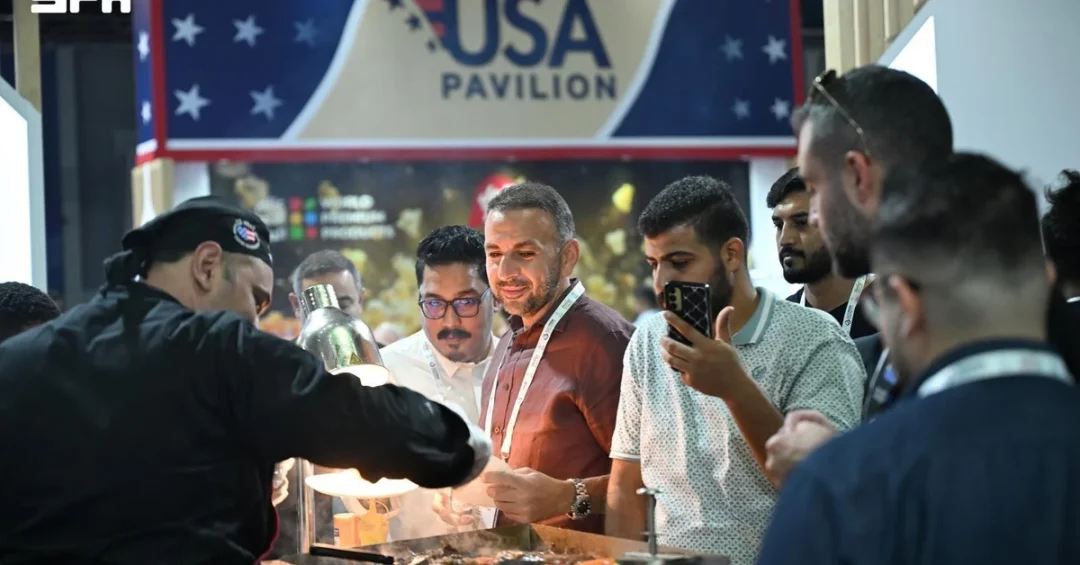
The Saudifood Show 2026 and Saudifood Manufacturing 2026 exhibitions concluded at the Jeddah Superdome, drawing more than 1,000 exhibitors from over 95 countries and showcasing more than 100,000 food and beverage products across three days of intensive business activity. The twin exhibitions, announced by the Saudi Press Agency, brought together producers, suppliers, buyers, investors, and food manufacturing technology specialists in a single venue, reinforcing Jeddah’s standing as a convening point for the region’s fast-expanding food economy.
The scale of participation tells its own story. More than 12,000 business meetings were hosted during the event, creating direct pathways for cooperation, partnership, and commercial agreement between international exhibitors and Saudi and regional buyers. Consuls and representatives of diplomatic and consular missions accredited to the Kingdom attended alongside businesspeople and sector specialists, underlining the event’s role as both a trade platform and a diplomatic and commercial meeting point. For an international audience watching Saudi Arabia’s economic transformation, the numbers offer a concrete measure of how quickly the Kingdom’s food and beverage sector has become a focal point for global suppliers seeking a gateway to the Middle East.
Context and Background
Why has a food industry exhibition in Jeddah attracted exhibitors from more than 95 countries in a single edition? The answer lies in the scale and speed of change across the Kingdom’s food and beverage landscape. Saudi Arabia has invested heavily in food manufacturing capacity, cold chain logistics, and supply chain integration in recent years, positioning the sector as both a domestic growth engine and a regional export platform. The Saudifood exhibitions are designed to match that investment with international expertise, technology, and products.
The event was held under the umbrella of the Kingdom’s official exhibition and trade infrastructure, with participation spanning finished food and beverage products as well as the machinery, packaging, and processing technologies that sit behind them. Saudifood Manufacturing, the parallel exhibition, focused specifically on food manufacturing technologies, giving Saudi producers direct exposure to equipment and systems that can raise output, improve efficiency, and meet international quality standards. Together, the two shows presented a complete picture of an industry moving from import dependence toward diversified domestic production and value-added manufacturing.
Jeddah Superdome provided the venue, and its selection is significant. The city is a historic commercial gateway on the Red Sea, close to major ports and logistics corridors that connect Saudi Arabia to Africa, Asia, and Europe. For exhibitors weighing where to establish or expand a regional presence, the location reinforced a clear message: the Kingdom is not only a large consumer market but also a distribution hub with the infrastructure to serve markets well beyond its borders.
Key Details
Over three days, the exhibitions hosted more than 1,000 exhibitors representing over 95 countries and displayed more than 100,000 food and beverage products. The program also facilitated more than 12,000 business meetings, a figure that reflects deliberate matchmaking between producers, suppliers, buyers, and investors rather than passive footfall. For many participating companies, these scheduled meetings are the core value of the event, converting exhibition presence into negotiation, contracting, and long-term commercial relationships.
Among those attending were consuls and representatives of diplomatic and consular missions accredited to the Kingdom, alongside businesspeople, buyers, and sector specialists. Their presence gave the exhibitions a dual character: a marketplace for products and technologies, and a forum for discussing areas of commercial cooperation at a level that engages both the private sector and international representatives based in Saudi Arabia. Exhibitors used the platform to explore cooperation and partnership opportunities directly with Saudi counterparts, shortening the distance between introduction and agreement.
The product range on display reflected the breadth of the modern food economy, from finished consumer goods to the manufacturing technologies that enable them. Saudifood Manufacturing added a technical dimension, allowing Saudi food producers to examine processing lines, packaging solutions, and automation systems that support higher output and consistent quality. For a sector working to integrate supply chains and reduce waste, access to this kind of technology in a single venue is a practical advantage, not a symbolic one.
International and Regional Impact
What does it mean when exhibitors from more than 95 countries converge on a single Saudi city? It signals that the Kingdom’s food and beverage sector has become a reference point for international suppliers assessing the Middle East. Companies that attend such exhibitions are typically testing market conditions, seeking distribution partners, or evaluating local manufacturing options. The presence of buyers and investors alongside producers created an environment where those decisions could be advanced in person, with the Jeddah Superdome acting as a neutral commercial meeting ground.
Regionally, the event strengthens Saudi Arabia’s position as an active hub for food trade and industry. The Kingdom’s geographic location, port capacity, and growing manufacturing base allow it to serve as a bridge between exporting nations and consumers across the Gulf, the wider Middle East, and Africa. For neighboring economies, a well-connected Saudi food sector means more reliable supply chains and more opportunities for joint ventures. For international exhibitors, it means a single market entry point with reach that extends far beyond one country’s borders.
The diplomatic dimension should not be overlooked. Consuls and mission representatives attending the exhibitions were able to observe products and solutions firsthand and discuss commercial cooperation, giving the event a soft-power function alongside its trade purpose. Trade shows of this kind quietly reinforce bilateral relationships by giving international representatives a tangible reason to engage with Saudi counterparts outside formal channels.
Economic and Strategic Significance
The Kingdom’s food and beverage sector continues to grow and expand, driven by increasing investments, the development of food industries, and the integration of supply chains. Each of these drivers is visible in the structure of the Saudifood exhibitions. Investment follows confidence, and the presence of more than 1,000 exhibitors and thousands of business meetings is a market signal that confidence is present. Food industry development depends on technology transfer, which Saudifood Manufacturing is designed to accelerate. Supply chain integration depends on relationships between producers, suppliers, and logistics providers, which the event’s matchmaking format is built to create.
Strategically, a stronger domestic food manufacturing base contributes to national resilience. By expanding local production and diversifying sourcing across many countries, Saudi Arabia reduces exposure to single-market disruptions while creating skilled employment and industrial capability at home. The exhibitions support this by putting Saudi producers in direct contact with global equipment makers, ingredient suppliers, and packaging specialists. Over time, those contacts translate into upgraded plants, higher quality standards, and products that can compete in export markets as well as at home.
The commercial momentum also matters for small and medium-sized enterprises. A platform that brings buyers and investors together in one place lowers the cost of finding partners, which is especially valuable for smaller Saudi producers seeking shelf space, distribution, or investment. When 12,000 business meetings take place in three days, the efficiency gain for participants is substantial, and it is one reason such exhibitions have become fixtures in the Kingdom’s trade calendar.
Vision 2030 Alignment
The success of Saudifood 2026 aligns directly with Saudi Vision 2030’s goals of economic diversification, private sector growth, and the development of non-oil industries. Food manufacturing sits at the intersection of several national priorities: industrial development, food security, logistics, and export diversification. By hosting an exhibition of this scale, the Kingdom demonstrates that its food sector is open to international partnership and capable of absorbing technology and investment at speed, which is precisely the kind of enabling environment Vision 2030 seeks to build.
The event also supports the vision’s aim of positioning Saudi Arabia as a global investment destination and a logistics and trade hub connecting three continents. Exhibitors from more than 95 countries did not travel to Jeddah only to sell; many came to explore partnerships, local production, and regional distribution. That shift, from selling into Saudi Arabia to building with Saudi Arabia, is a meaningful indicator of how the business relationship is maturing. As the Kingdom continues to develop its food industries and integrate supply chains, platforms like Saudifood will remain important instruments for turning international interest into durable commercial partnership.
20 Questions
Q1. What were the Saudifood Show 2026 and Saudifood Manufacturing 2026?
A1. They were twin exhibitions focused on food and beverages and on food manufacturing technologies. Both concluded at the Jeddah Superdome after three days, bringing together companies, suppliers, buyers, and specialists, as reported by the Saudi Press Agency.
Q2. Where were the exhibitions held?
A2. The exhibitions took place at the Jeddah Superdome in Jeddah, Saudi Arabia. The venue hosted three days of activity, reflecting the city’s role as a major commercial gateway on the Red Sea and a key hub for regional trade.
Q3. How many exhibitors participated?
A3. More than 1,000 exhibitors took part in the two exhibitions. They represented over 95 countries, making the event a genuinely international gathering for the food and beverage sector and its supporting manufacturing industries.
Q4. How many countries were represented?
A4. Exhibitors came from more than 95 countries. This broad international participation shows strong global interest in Saudi Arabia’s food and beverage market and in using the Kingdom as a base for regional distribution.
Q5. How many products were showcased?
A5. More than 100,000 food and beverage products were displayed across the exhibitions. The range covered finished consumer goods as well as the technologies, equipment, and solutions used to manufacture and package them.
Q6. How many business meetings took place?
A6. More than 12,000 business meetings were hosted during the three days. These meetings gave producers, suppliers, buyers, and investors the chance to meet directly and explore cooperation and partnership opportunities in person.
Q7. Who attended the exhibitions besides exhibitors?
A7. The event attracted consuls and representatives of diplomatic and consular missions accredited to the Kingdom, as well as businesspeople, buyers, and sector specialists. Their attendance allowed for discussion of commercial cooperation across the food and beverage sector.
Q8. What is Saudifood Manufacturing?
A8. Saudifood Manufacturing is the exhibition dedicated to food manufacturing technologies. It ran alongside the Saudifood Show and gave Saudi producers direct access to processing, packaging, and automation solutions that support higher output and consistent quality.
Q9. Why is the food and beverage sector important to Saudi Arabia?
A9. The sector is a vital part of the Kingdom’s economy and continues to grow through increasing investments, food industry development, and supply chain integration. It also supports food security, employment, and industrial diversification.
Q10. How does the event support Saudi Arabia’s position as a regional hub?
A10. By connecting international suppliers with Saudi and regional buyers, the exhibitions strengthen the Kingdom’s role as an active hub for food trade and industry. Its location and logistics infrastructure allow it to serve markets beyond its own borders.
Q11. What kinds of opportunities did the exhibitions create?
A11. They created opportunities for cooperation, partnership, distribution agreements, and investment discussions. The 12,000-plus business meetings were designed to convert introductions into concrete commercial relationships between international and Saudi participants.
Q12. Did the exhibitions include international diplomatic representation?
A12. Yes. Consuls and representatives of diplomatic and consular missions accredited to the Kingdom attended. Their presence added a diplomatic dimension and gave international representatives a direct view of products, solutions, and commercial cooperation prospects.
Q13. What role did Jeddah play in the event’s success?
A13. Jeddah is a historic commercial gateway on the Red Sea with strong port and logistics connections. Hosting the exhibitions at the Jeddah Superdome reinforced the city’s standing as a meeting point for international trade and investment.
Q14. How does the event relate to supply chain integration?
A14. The exhibitions bring producers, suppliers, buyers, and technology providers together in one place, which helps build and integrate supply chains. This aligns with the Kingdom’s broader efforts to strengthen food industry capabilities and logistics networks.
Q15. What benefits do Saudi food producers gain from the event?
A15. Saudi producers gain access to international equipment, ingredients, packaging solutions, and potential partners. This exposure supports plant upgrades, quality improvements, and the ability to compete in both domestic and export markets.
Q16. How does the event support Vision 2030?
A16. It supports Vision 2030 by advancing economic diversification, private sector growth, industrial development, and non-oil exports. It also reinforces Saudi Arabia’s ambition to be a global investment destination and trade hub.
Q17. What does the scale of participation indicate?
A17. The scale indicates strong international confidence in Saudi Arabia’s food and beverage market. More than 1,000 exhibitors and 12,000 business meetings show that global companies view the Kingdom as a priority market and partner.
Q18. Are the exhibitions expected to continue in future editions?
A18. The Saudifood exhibitions have become established fixtures in the Kingdom’s trade calendar. Their broad participation and business outcomes support the expectation that they will continue to serve the sector in future editions.
Q19. How does the event contribute to food security?
A19. By expanding local manufacturing capacity and diversifying sourcing across many countries, the sector reduces exposure to single-market disruptions. The exhibitions accelerate technology transfer that supports resilient, high-quality domestic production.
Q20. What is the overall significance of the event for Saudi Arabia?
A20. The event confirms the Kingdom’s growing role as a regional hub for food trade and industry. It showcases investment momentum, international partnership, and the modernization of a vital sector central to Vision 2030.
Reader Feedback
We value your thoughts. Please share your feedback on this article.
Your feedback helps us improve our coverage.
Related articles
 RUA AlHaram AlMakki, Rua Al Madinah Sign Brunei Agreements
 American Agriculture Takes Center Stage at Saudi Food Show
 Saudi Finance Minister Concludes AIIB Meetings in Doha
 Saudi Commerce Minister to Lead Delegation at G20 Trade Meeting
 Gold Prices Rise 0.4% After Sharp Drop, Near 7-Week Lows
 RUA AlHaram AlMakki, MRCB Sign SAR21 Billion Makkah Deal