


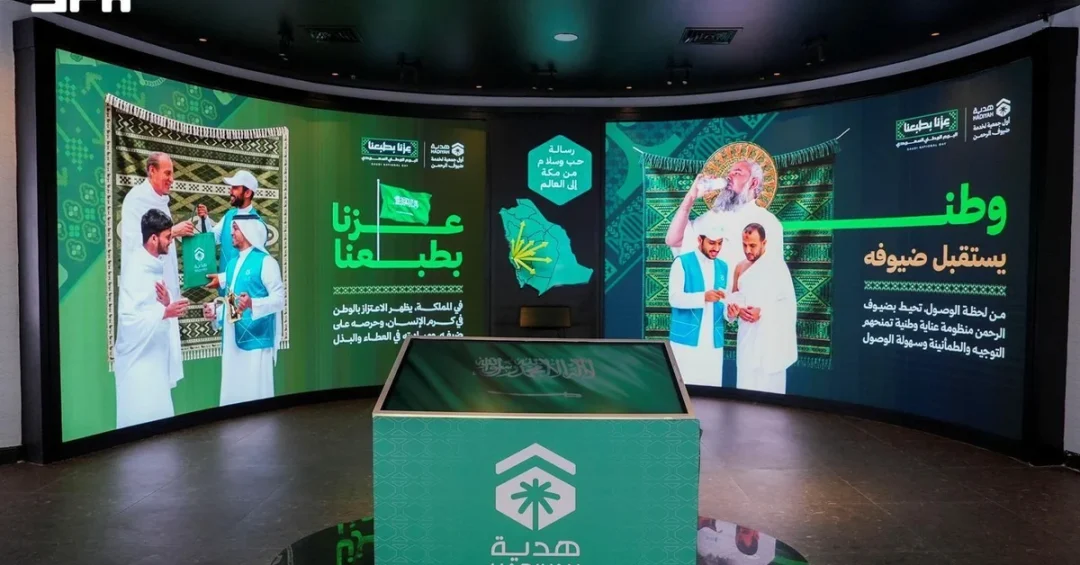
The Hajj and Umrah gift association Hadiyah launched an exhibition at its headquarters in Makkah to celebrate Saudi National Day, offering an interactive national experience that highlights authentic Saudi values and showcases their role in serving pilgrims and visitors. The exhibition, announced by the Saudi Press Agency, reflects the Kingdom’s longstanding commitment to caring for Hajj and Umrah performers and to continuously developing the services provided to them. Running for two weeks, the display invites visitors to explore its presentations and discover stories of Saudi generosity and hospitality toward the millions of pilgrims who travel to the holy city each year.
How does a single exhibition in Makkah capture the spirit of a nation that welcomes millions of guests every year? For Hadiyah, the answer lies in storytelling. The association, whose name evokes the Arabic tradition of giving, has designed the exhibition as more than a static display. It is an immersive journey through the values that underpin Saudi hospitality, from the moment a pilgrim arrives in the Kingdom to the care they receive throughout their spiritual journey. The timing, coinciding with Saudi National Day, positions the event as both a celebration of national identity and a demonstration of the operational excellence that has become a hallmark of the Kingdom’s pilgrimage services.
The launch comes as Saudi Arabia continues to expand its capacity to host pilgrims under the Vision 2030 reform agenda, which aims to welcome 30 million Umrah performers and six million Hajj pilgrims annually by 2030. In this context, the Hadiyah exhibition serves as a cultural and informational bridge, connecting the public with the human stories behind the Kingdom’s pilgrimage infrastructure. Visitors to the headquarters in Makkah can expect to encounter narratives that celebrate the generosity of Saudi hosts and the dedication of the many workers and volunteers who make the pilgrimage experience seamless.
Context and Background
Why has Saudi Arabia placed pilgrimage services at the heart of its national story? The answer stretches back decades, but it has gained new momentum under Vision 2030. The Hajj and Umrah gift association Hadiyah operates within a broader ecosystem of Saudi institutions dedicated to serving the Guests of God, a term of honor used in the Kingdom for pilgrims. Hadiyah’s specific mission involves providing gifts and tokens of appreciation to Hajj and Umrah performers, a practice rooted in the Saudi tradition of honoring visitors. The association’s exhibition in Makkah builds on this mission by creating a public-facing platform where the values of generosity, hospitality, and service are not just described but experienced.
Saudi National Day, observed on September 23 each year, commemorates the unification of the Kingdom in 1932. Across the country, government agencies, private companies, and civil society organizations mark the occasion with events that highlight national achievements and cultural heritage. In Makkah, the celebration carries particular significance because the city is the spiritual heart of the Islamic world and the destination for millions of pilgrims. By launching its exhibition during this period, Hadiyah aligns its message with the national mood, reinforcing the idea that service to pilgrims is a core component of Saudi identity and a source of national pride.
The exhibition also reflects a wider trend in Saudi Arabia’s approach to public engagement: the use of interactive experiences to communicate institutional values. Rather than relying solely on printed materials or formal presentations, Saudi entities are increasingly adopting immersive formats that allow visitors to engage with content on a personal level. This shift is visible in museums, cultural festivals, and now in the pilgrimage sector. For Hadiyah, the interactive format is a natural fit, as the association’s work is fundamentally about human connection and the exchange of goodwill between hosts and guests.
Key Details of the Exhibition
What can visitors expect when they step into the Hadiyah headquarters in Makkah? According to the Saudi Press Agency, the exhibition offers an interactive national experience that highlights authentic Saudi values and showcases their role in serving pilgrims and visitors. The displays are designed to reflect the Kingdom’s efforts to care for pilgrims and to develop the services provided to them. This includes visual storytelling, informational panels, and interactive elements that allow visitors to learn about the various stages of the pilgrim journey and the support systems in place at each point. The exhibition is open for two weeks, giving residents of Makkah, pilgrims, and other visitors ample opportunity to explore its content.
The timing of the exhibition, launched in conjunction with Saudi National Day, ensures that it reaches a diverse audience. Makkah during this period hosts pilgrims from around the world, many of whom are performing Umrah. These visitors bring with them varied perspectives and expectations, and the exhibition offers them a chance to understand the depth of Saudi hospitality beyond their immediate experience. For Saudi citizens and residents, the exhibition serves as a reminder of the collective effort that goes into hosting the Guests of God, from logistical coordination to the provision of gifts and tokens of appreciation.
Hadiyah’s work is part of a larger network of Saudi initiatives aimed at enhancing the pilgrimage experience. These include expansions of the Grand Mosque, improvements in transportation and accommodation, and digital tools that help pilgrims navigate their journey. The exhibition does not aim to detail every operational aspect of these efforts, but rather to convey the underlying values that motivate them. By focusing on stories of generosity and hospitality, Hadiyah humanizes the pilgrimage infrastructure and reminds audiences that behind every service is a commitment to honoring guests.
International and Regional Impact
How does an exhibition in Makkah resonate beyond the Kingdom’s borders? The answer lies in the universal language of hospitality. Pilgrims who visit the exhibition, or who benefit from Hadiyah’s gifts, carry their experiences back to their home countries. These personal narratives contribute to Saudi Arabia’s soft power and reinforce its reputation as a gracious host. In a region where pilgrimage tourism is a significant economic and cultural driver, Saudi Arabia’s ability to provide a seamless and spiritually fulfilling experience is a key differentiator. The Hadiyah exhibition supports this by showcasing the values that underpin the Kingdom’s approach, potentially influencing how international audiences perceive Saudi Arabia and its role in the Islamic world.
Regionally, the exhibition underscores Saudi Arabia’s leadership in serving pilgrims. Neighboring countries and broader Muslim-majority nations look to the Kingdom for guidance on pilgrimage management, and Saudi initiatives often set benchmarks for others to follow. By celebrating its national day through an exhibition focused on pilgrimage services, Saudi Arabia signals that this responsibility is not merely administrative but deeply cultural and spiritual. This framing can strengthen diplomatic ties and foster goodwill among Muslim communities worldwide. It also aligns with Saudi Arabia’s efforts to promote moderate Islam and interfaith understanding, as the exhibition highlights values of generosity and respect that transcend national boundaries.
Furthermore, the exhibition contributes to the broader narrative of Saudi Arabia as a modern, forward-looking nation that honors its heritage. International media and visitors often seek to understand how the Kingdom balances tradition with rapid modernization. The Hadiyah exhibition provides a tangible example: it uses interactive technology and contemporary presentation methods to communicate timeless values. This juxtaposition of old and new is central to Vision 2030 and to Saudi Arabia’s image on the global stage.
Economic and Strategic Significance
What economic and strategic value does an exhibition like this hold? While the event itself is not a commercial venture, it forms part of the broader pilgrimage economy that is vital to Saudi Arabia’s diversification strategy. The Hajj and Umrah sector generates significant revenue through transportation, accommodation, retail, and services, and it supports thousands of jobs. By enhancing the pilgrim experience, Saudi Arabia encourages repeat visits and positive word-of-mouth, which in turn sustains demand. The Hadiyah exhibition, by promoting the Kingdom’s hospitality values, indirectly supports this economic ecosystem. It also reinforces the strategic goal of increasing pilgrimage capacity and improving service quality, both of which are central to Vision 2030.
Strategically, the exhibition contributes to social cohesion and national identity. Saudi National Day is a moment for citizens to reflect on their country’s achievements and shared values. By linking this celebration to the service of pilgrims, Hadiyah highlights a source of pride that unites Saudis across regions and generations. The association’s work, and the exhibition that showcases it, exemplify the kind of public-private collaboration that Vision 2030 encourages. Hadiyah operates as a gift association, likely with support from both public and private entities, and its initiatives demonstrate how civil society can contribute to national objectives.
In addition, the exhibition serves as a platform for knowledge sharing. Visitors can learn about the logistics of pilgrimage, the cultural significance of gift-giving in Saudi tradition, and the various ways in which the Kingdom supports pilgrims. This educational aspect can inspire similar initiatives in other sectors, fostering a culture of service and innovation. For businesses and entrepreneurs in Makkah and beyond, the exhibition may also spark ideas for products and services that cater to pilgrims, further stimulating economic activity.
Vision 2030 Alignment
How does the Hadiyah exhibition connect to Saudi Arabia’s long-term vision? Vision 2030, launched in 2016 under the leadership of Crown Prince Mohammed bin Salman, aims to transform the Kingdom’s economy and society while preserving its cultural and religious heritage. A key pillar of the vision is the enhancement of pilgrimage services, with the goal of welcoming 30 million Umrah performers and six million Hajj pilgrims annually by 2030. Achieving this requires not only infrastructure investment but also a deep commitment to hospitality and service excellence. The Hadiyah exhibition embodies this commitment by celebrating the values that make Saudi hospitality world-renowned and by educating the public about the importance of serving pilgrims.
Moreover, the exhibition supports the Vision 2030 objective of promoting cultural and recreational activities. By offering an interactive experience in Makkah, Hadiyah contributes to the growth of cultural tourism and provides a meaningful activity for residents and visitors. This aligns with broader efforts to diversify entertainment options and enrich the quality of life in the Kingdom. The exhibition also reflects the vision’s emphasis on national pride and identity, using the occasion of Saudi National Day to highlight a core aspect of the Kingdom’s heritage. As Saudi Arabia continues to advance toward its 2030 goals, initiatives like this demonstrate how tradition and modernity can work together to create a welcoming and dynamic society.
In conclusion, the Hadiyah exhibition in Makkah is more than a temporary display; it is a celebration of Saudi values and a testament to the Kingdom’s enduring commitment to pilgrims. By opening its doors during Saudi National Day and inviting visitors to explore the stories of generosity and hospitality that define the pilgrimage experience, Hadiyah reinforces the bond between the Saudi people and the Guests of God. As the Kingdom looks to the future, such initiatives will play a vital role in achieving Vision 2030 and in showcasing Saudi Arabia’s leadership in serving humanity. The exhibition stands as an open invitation to discover the heart of Saudi hospitality, one story at a time.
20 Questions
Q1. What is Hadiyah?
A1. Hadiyah is the Hajj and Umrah gift association in Saudi Arabia. It provides gifts and tokens of appreciation to pilgrims, reflecting the Kingdom’s tradition of honoring guests. The association operates under official Saudi channels and supports the broader pilgrimage ecosystem.
Q2. Where is the exhibition located?
A2. The exhibition is held at Hadiyah’s headquarters in Makkah, the holiest city in Islam. Makkah hosts millions of pilgrims annually, making it a fitting location to showcase Saudi hospitality and services to Hajj and Umrah performers.
Q3. When was the exhibition launched?
A3. It was launched to celebrate Saudi National Day, which falls on September 23. The exhibition opened around that date and runs for two weeks, allowing visitors to explore its displays during a period of national celebration.
Q4. How long will the exhibition remain open?
A4. The exhibition is open for two weeks from its launch. This duration provides ample opportunity for residents, pilgrims, and other visitors in Makkah to experience the interactive displays and learn about Saudi generosity.
Q5. What is the main purpose of the exhibition?
A5. Its main purpose is to celebrate Saudi National Day by highlighting authentic Saudi values and their role in serving pilgrims. It also reflects the Kingdom’s efforts to care for pilgrims and continuously develop services provided to them.
Q6. Who can visit the exhibition?
A6. The exhibition is open to all visitors, including residents of Makkah, Saudi citizens, and pilgrims performing Hajj or Umrah. It offers an inclusive experience designed to educate and inspire a diverse audience about Saudi hospitality.
Q7. What does the exhibition showcase?
A7. It showcases an interactive national experience that highlights Saudi values, stories of generosity, and hospitality toward Hajj and Umrah performers. Displays also reflect the Kingdom’s efforts to develop pilgrimage services.
Q8. How does the exhibition reflect Saudi National Day?
A8. By launching during the national celebration, the exhibition connects the pride of Saudi National Day with the noble mission of serving pilgrims. It underscores service to the Guests of God as a core element of Saudi identity.
Q9. What are “authentic Saudi values” mentioned in the exhibition?
A9. These include generosity, hospitality, respect for guests, and a deep sense of duty to serve pilgrims. Such values are rooted in Saudi culture and Islamic traditions, and they guide the Kingdom’s treatment of visitors.
Q10. How does Hadiyah serve pilgrims?
A10. Hadiyah provides gifts and tokens of appreciation to Hajj and Umrah performers. These gestures honor the pilgrims and reflect the Saudi tradition of giving, enhancing the spiritual and emotional experience of their journey.
Q11. Is the exhibition interactive?
A11. Yes, it is described as an interactive national experience. Visitors can engage with displays, explore stories, and learn about Saudi hospitality through dynamic presentations rather than passive observation, making the experience memorable and educational.
Q12. What role does the exhibition play in Vision 2030?
A12. It supports Vision 2030 by promoting cultural pride, enhancing pilgrimage services, and contributing to the goal of welcoming more pilgrims. It also enriches cultural activities in Makkah, aligning with quality-of-life objectives.
Q13. How does the exhibition benefit international visitors?
A13. International pilgrims gain insight into the values and efforts behind Saudi hospitality. The exhibition humanizes the services they receive, deepening their appreciation and fostering positive perceptions of the Kingdom upon returning home.
Q14. Does the exhibition include stories of Saudi generosity?
A14. Yes, visitors can discover stories of Saudi generosity and hospitality toward Hajj and Umrah performers. These narratives illustrate the personal and institutional commitment to honoring guests from around the world.
Q15. What government body is associated with Hadiyah?
A15. Hadiyah operates within Saudi Arabia’s official pilgrimage ecosystem, which includes government ministries and agencies responsible for Hajj and Umrah affairs. It collaborates with these entities to fulfill its mission of serving pilgrims.
Q16. How does the exhibition promote Saudi culture?
A16. By highlighting authentic Saudi values and traditions of hospitality, the exhibition educates visitors about the Kingdom’s cultural heritage. It presents these values in a modern, interactive format that resonates with diverse audiences.
Q17. Will the exhibition be held annually?
A17. The source material does not specify whether the exhibition will become an annual event. However, its launch during Saudi National Day suggests it could be repeated or expanded in future years to continue celebrating Saudi values.
Q18. What impact does the exhibition have on Makkah’s local community?
A18. It provides a cultural and educational activity for residents and visitors, fostering community pride and engagement. It also supports the local economy by attracting visitors to the area around Hadiyah’s headquarters.
Q19. How does the exhibition reflect Saudi Arabia’s care for pilgrims?
A19. It showcases the Kingdom’s efforts to develop services and provide comfort to pilgrims. By celebrating these efforts, the exhibition reinforces Saudi Arabia’s reputation as a gracious host dedicated to the well-being of Guests of God.
Q20. What is the significance of launching the exhibition in Makkah?
A20. Makkah is the spiritual center of Islam and the destination for millions of pilgrims. Launching the exhibition there underscores the city’s centrality to Saudi hospitality and allows pilgrims to directly experience the values being celebrated.
Reader Feedback
We value your thoughts. Please share your feedback on this article.
Your feedback helps us improve our coverage.
Related articles
 Shura Council Speaker Receives Indian Ambassador
 Crown Prince Receives Call from Sudan’s Al-Burhan
 Jeddah Governor Receives Portuguese Secretary of State
 WAMY Hosts Seminar on Charities-Private Sector Ties in Sudan
 Saudi FM Meets US Envoy to UN in Washington
 31 Recommendations Issued at International Conference on Efforts to Counter Intellectual Deviations