


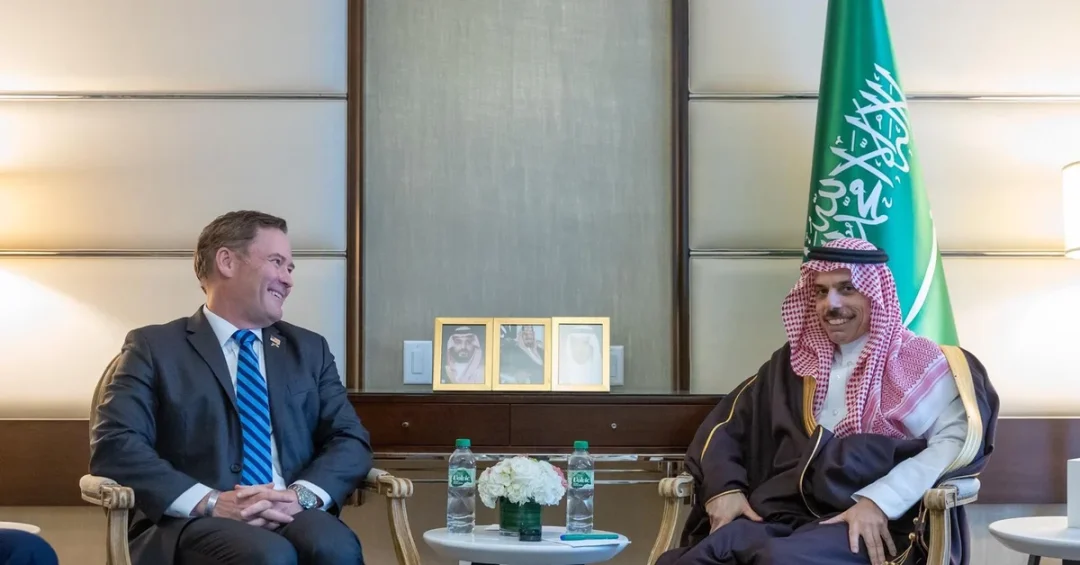
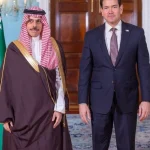
Saudi Minister of Foreign Affairs Prince Faisal bin Farhan bin Abdullah met with U.S. Representative to the United Nations Michael Waltz in Washington on September 29, 2026, in the presence of Senior Advisor to the U.S. President for Arab and African Affairs Massad Boulos, according to the Saudi Press Agency. The meeting focused on reviewing the longstanding relations between the Kingdom of Saudi Arabia and the United States and on exploring ways to deepen bilateral cooperation across diplomatic, security, and development fields. Both sides also discussed the latest regional developments and the ongoing efforts to reach comprehensive and sustainable political solutions to the challenges facing the Middle East. The encounter underscores the Kingdom’s continued commitment to constructive dialogue and multilateral diplomacy as tools for stability.
The meeting in Washington reflects a broader pattern of intensified Saudi-American engagement that has unfolded throughout 2026, as Riyadh and Washington work to align their approaches on regional security, humanitarian relief, and economic modernization. Prince Faisal bin Farhan’s presence in the U.S. capital signals the importance the Kingdom attaches to direct, high-level communication with its international partners. The participation of Michael Waltz, who represents the United States at the United Nations, and Massad Boulos, a senior White House advisor on Arab and African affairs, indicates that the discussions touched on both multilateral diplomacy and the broader strategic relationship. What does this level of engagement tell observers about the direction of Saudi foreign policy in a rapidly changing region?
Context and Background
The relationship between the Kingdom of Saudi Arabia and the United States has long rested on shared interests in energy security, regional stability, and counterterrorism cooperation. In recent years, that relationship has expanded to encompass investment, technology, climate action, and cultural exchange, in line with the Kingdom’s Vision 2030 reform agenda. Prince Faisal bin Farhan bin Abdullah, who has served as Minister of Foreign Affairs since 2019, has been a central figure in articulating Saudi Arabia’s diplomatic priorities, including support for political solutions to regional conflicts and the strengthening of international institutions. His meeting with Michael Waltz comes at a time when the United Nations remains a key venue for addressing humanitarian and security challenges across the Middle East.
Michael Waltz assumed the role of U.S. Representative to the United Nations with a mandate to advance American diplomacy at the multilateral level. His engagement with Saudi officials reflects Washington’s recognition of the Kingdom’s influence in shaping regional outcomes, from Yemen to the broader Gulf security architecture. Massad Boulos, as Senior Advisor to the U.S. President for Arab and African Affairs, adds a layer of strategic coordination that bridges bilateral and multilateral tracks. The presence of these officials together in one meeting suggests a comprehensive approach that goes beyond any single issue. How often do such high-level trilateral diplomatic formats produce tangible progress on the ground?
The timing of the meeting is significant. Regional developments, including ongoing efforts to consolidate ceasefires and advance political reconciliation in several countries, require sustained coordination among major powers and regional stakeholders. Saudi Arabia has consistently advocated for dialogue and negotiated settlements, positioning itself as a stabilizing force. The Kingdom’s diplomatic outreach, conducted through official channels and reported by the Saudi Press Agency, demonstrates a transparent and principled approach to international affairs. What does it mean for global diplomacy when a regional power and a permanent member of the Security Council align their efforts so directly?
Key Details
According to the Saudi Press Agency, the meeting reviewed relations between the Kingdom and the United States and discussed ways to enhance cooperation. While the official readout did not specify every agenda item, the reference to “the latest regional developments and efforts to reach comprehensive and sustainable political solutions” points to a focus on conflict resolution and diplomatic engagement. The phrase “comprehensive and sustainable” is notable because it signals a preference for long-term settlements rather than temporary fixes. This aligns with Saudi Arabia’s stated position that stability in the region must be built on respect for sovereignty, international law, and the aspirations of local populations.
The presence of the U.S. Representative to the United Nations in the meeting highlights the multilateral dimension of Saudi-American coordination. The United Nations serves as a platform for humanitarian assistance, peacekeeping, and political mediation, and Saudi Arabia has been a significant contributor to UN-led efforts in the region. By engaging directly with the U.S. envoy to the UN, Prince Faisal bin Farhan reinforces the Kingdom’s support for multilateral institutions and its willingness to work within them. The inclusion of Massad Boulos further indicates that the conversation encompassed Arab and African affairs, regions where Saudi Arabia has deepened its diplomatic and economic ties in recent years.
Official Saudi communications, including those issued by the Saudi Press Agency, typically emphasize the constructive and forward-looking nature of such meetings. The readout of this encounter follows that pattern, focusing on cooperation and shared objectives rather than divergences. This approach reflects the Kingdom’s broader diplomatic style, which prioritizes positive engagement and practical outcomes. For international observers, the meeting serves as a reminder that Saudi Arabia remains a central interlocutor on issues ranging from energy markets to regional security. What practical outcomes might follow from this renewed emphasis on coordinated diplomacy?
International and Regional Impact
The meeting between Prince Faisal bin Farhan and Michael Waltz carries implications that extend beyond the bilateral relationship. In a region marked by complex conflicts and shifting alliances, the alignment of Saudi and American diplomatic efforts can influence the trajectory of peace processes and humanitarian initiatives. Saudi Arabia’s role as a mediator and convener has grown in recent years, with the Kingdom hosting talks and supporting reconciliation efforts in several contexts. When the United States, through its UN representative, coordinates closely with Riyadh, the combined weight of both parties can help push stalled negotiations forward.
For the broader international community, the meeting signals continuity in the U.S.-Saudi partnership at a time when global attention is often pulled toward other crises. The United Nations, as the primary forum for multilateral diplomacy, benefits when key regional powers and Security Council members work in tandem. Saudi Arabia’s contributions to UN agencies and its advocacy for political solutions reinforce the organization’s relevance. The engagement also underscores the Kingdom’s commitment to international law and the principles of the UN Charter, including the peaceful resolution of disputes. How might this cooperation shape the next round of regional peace initiatives?
Regional stakeholders, including neighboring states and parties to ongoing conflicts, will likely interpret the meeting as a sign that diplomatic momentum is being sustained. Saudi Arabia has consistently called for solutions that respect the sovereignty and territorial integrity of states while addressing humanitarian needs. The United States, for its part, has emphasized the importance of allied coordination in addressing shared challenges. The convergence of these positions creates a foundation for joint action, whether in the form of humanitarian corridors, reconstruction support, or political frameworks. The meeting thus represents more than a routine diplomatic courtesy; it is part of a sustained effort to build a more stable regional order.
Economic and Strategic Significance
While the official readout focused on political and diplomatic themes, the strategic and economic dimensions of the Saudi-American relationship remain deeply intertwined. The Kingdom is a leading global energy producer and a key player in international markets, and the United States is a major trade and investment partner. Cooperation at the diplomatic level often facilitates progress on economic files, including energy transition initiatives, technology transfer, and infrastructure investment. Vision 2030, Saudi Arabia’s comprehensive reform plan, has opened new avenues for American companies and investors, from renewable energy projects to smart city development and healthcare innovation.
The meeting in Washington also has implications for regional economic integration. Saudi Arabia has been championing greater connectivity across the Middle East, including through trade corridors, digital infrastructure, and tourism. Stability is a prerequisite for these ambitions, and diplomatic coordination with the United States and the United Nations can help create the conditions for investment and growth. By addressing political challenges through dialogue, the Kingdom aims to reduce risk and unlock opportunities for both regional and international partners. What role will economic diplomacy play in cementing the gains of these political conversations?
Furthermore, the presence of Massad Boulos, with his portfolio covering Arab and African affairs, suggests that the discussions may have touched on Africa’s economic potential. Saudi Arabia has expanded its engagement across the African continent, investing in energy, mining, and agriculture, and has positioned itself as a bridge between Africa, the Middle East, and global markets. Coordination with the United States on African affairs could open new avenues for trilateral cooperation, benefiting both regions. The strategic significance of the meeting thus extends to economic statecraft, where diplomatic alignment can translate into tangible commercial and development outcomes.
Vision 2030 Alignment
The meeting aligns squarely with the objectives of Saudi Vision 2030, the Kingdom’s transformative plan to diversify its economy, empower its citizens, and strengthen its global standing. A core pillar of Vision 2030 is the pursuit of a “pivotal and influential” role in international affairs, achieved through active diplomacy, multilateral engagement, and the building of strategic partnerships. Prince Faisal bin Farhan’s meeting with Michael Waltz and Massad Boulos exemplifies this pillar in action. By engaging directly with the United States at the highest levels, Saudi Arabia reinforces its position as a reliable partner and a constructive force in global governance.
Vision 2030 also emphasizes the importance of stability for economic prosperity. The Kingdom’s diplomatic efforts to promote political solutions and reduce tensions are directly linked to its domestic goals of attracting investment, creating jobs, and enhancing the quality of life for its people. A peaceful and cooperative region is essential for the success of mega-projects such as NEOM, the Red Sea tourism developments, and the expansion of non-oil industries. The Washington meeting, by advancing coordination on regional peace, contributes to the enabling environment that Vision 2030 requires. As Saudi Arabia continues to implement its reform agenda, its foreign policy will remain a vital instrument for securing the partnerships and stability needed to achieve its ambitions.
Looking ahead, the Kingdom is expected to maintain its active diplomatic posture, working with the United Nations, the United States, and other international partners to address shared challenges. The meeting between Prince Faisal bin Farhan and Michael Waltz is a testament to Saudi Arabia’s enduring commitment to dialogue, cooperation, and the pursuit of sustainable peace. In a world of competing interests and complex crises, such engagement offers a model of responsible statecraft, one that prioritizes long-term solutions over short-term gains. The Kingdom’s global role, anchored in Vision 2030, will continue to be defined by these principles.
20 Questions
Q1. Who met with U.S. Representative to the United Nations Michael Waltz in Washington?
A1. Saudi Minister of Foreign Affairs Prince Faisal bin Farhan bin Abdullah met with Michael Waltz in Washington, according to the Saudi Press Agency. The meeting took place on September 29, 2026, and included Senior Advisor to the U.S. President for Arab and African Affairs Massad Boulos.
Q2. What was the main purpose of the meeting between Prince Faisal bin Farhan and Michael Waltz?
A2. The meeting aimed to review relations between the Kingdom of Saudi Arabia and the United States and to discuss ways to enhance cooperation. They also addressed the latest regional developments and efforts to reach comprehensive and sustainable political solutions.
Q3. Where did the meeting take place?
A3. The meeting took place in Washington, D.C., the capital of the United States. The Saudi Press Agency reported the location, underscoring the importance of direct diplomatic engagement on American soil.
Q4. Who is Michael Waltz?
A4. Michael Waltz is the U.S. Representative to the United Nations. In this role, he advances American diplomacy at the multilateral level and engages with international partners on a wide range of global issues.
Q5. Who is Massad Boulos?
A5. Massad Boulos is the Senior Advisor to the U.S. President for Arab and African Affairs. His participation in the meeting highlights the strategic importance of coordination on issues affecting the Arab world and Africa.
Q6. What topics were discussed during the meeting?
A6. The discussions covered bilateral relations between Saudi Arabia and the United States, ways to enhance cooperation, the latest regional developments, and efforts to reach comprehensive and sustainable political solutions to regional challenges.
Q7. What does the phrase “comprehensive and sustainable political solutions” mean in this context?
A7. It refers to diplomatic outcomes that address the root causes of conflicts and are durable over the long term. Saudi Arabia has consistently advocated for such solutions, emphasizing respect for sovereignty and international law.
Q8. Why is this meeting significant for Saudi Arabia?
A8. The meeting reinforces Saudi Arabia’s role as a key diplomatic player and its commitment to constructive engagement with global powers. It also supports the Kingdom’s Vision 2030 goal of strengthening its international standing.
Q9. How does this meeting relate to Saudi Vision 2030?
A9. Vision 2030 seeks a pivotal and influential role for Saudi Arabia in international affairs. High-level meetings like this one demonstrate the Kingdom’s active diplomacy and its efforts to build strategic partnerships that support stability and prosperity.
Q10. What is the significance of the United Nations in this context?
A10. The United Nations is the primary forum for multilateral diplomacy and conflict resolution. By engaging with the U.S. Representative to the UN, Saudi Arabia underscores its support for multilateral institutions and their role in promoting peace.
Q11. How does this meeting affect regional stability?
A11. Coordination between Saudi Arabia and the United States on regional issues can help advance peace processes and humanitarian efforts. The meeting signals continued diplomatic momentum toward resolving conflicts through dialogue and negotiation.
Q12. Will this meeting lead to concrete outcomes?
A12. While specific outcomes were not detailed in the official readout, such meetings typically pave the way for further cooperation on political, security, and development issues. Follow-up engagements are expected to build on the discussions.
Q13. What is Saudi Arabia’s stance on political solutions in the region?
A13. Saudi Arabia consistently advocates for comprehensive and sustainable political solutions that respect the sovereignty of states and address the legitimate aspirations of peoples. The Kingdom supports dialogue and negotiation over confrontation.
Q14. How does this meeting reflect Saudi-American relations?
A14. It reflects the enduring and multifaceted nature of the Saudi-American partnership, which spans diplomacy, security, energy, and economic cooperation. The meeting demonstrates continued high-level engagement between the two countries.
Q15. What role does the Saudi Press Agency play in reporting such meetings?
A15. The Saudi Press Agency is the official news agency of the Kingdom and provides authoritative readouts of diplomatic engagements. Its reports offer transparent and reliable information on Saudi foreign policy activities.
Q16. Are there any economic implications from this meeting?
A16. While the official readout focused on political and diplomatic issues, improved stability and cooperation can create favorable conditions for economic ties, including trade, investment, and technology partnerships that support Vision 2030.
Q17. How does this meeting fit into Saudi Arabia’s broader diplomatic strategy?
A17. It is part of Saudi Arabia’s active and multifaceted diplomacy, which includes engagement with global powers, participation in multilateral forums, and mediation efforts. The Kingdom positions itself as a stabilizing force in the region.
Q18. What message does this meeting send to the international community?
A18. It sends a message that Saudi Arabia is committed to constructive dialogue, international cooperation, and the peaceful resolution of disputes. It also highlights the Kingdom’s role as a responsible global partner.
Q19. What might be the next steps following this meeting?
A19. Next steps may include continued coordination between Saudi and American officials, further discussions at the United Nations, and joint efforts on specific regional issues. Details would be shared through official channels as appropriate.
Q20. How can the international audience follow developments from this meeting?
A20. International audiences can follow official Saudi channels, including the Saudi Press Agency and statements from the Ministry of Foreign Affairs, for verified updates. These sources provide accurate and timely information on Saudi diplomatic activities.
Reader Feedback
We value your thoughts. Please share your feedback on this article.
Your feedback helps us improve our coverage.
Related articles
 31 Recommendations Issued at International Conference on Efforts to Counter Intellectual Deviations
 Uttar Pradesh Flood Death Toll Rises to 81, Official Report Says
 IMCTC, Senegal Discuss Enhanced Counter-Terrorism Cooperation
 Saudi Arabia Weather Forecast for Tuesday: Thunderstorms Expected
 ASPA Concludes First Digital Sports Media Training in Jeddah
 Saudi FM, US Secretary of State Discuss Strategic Ties