


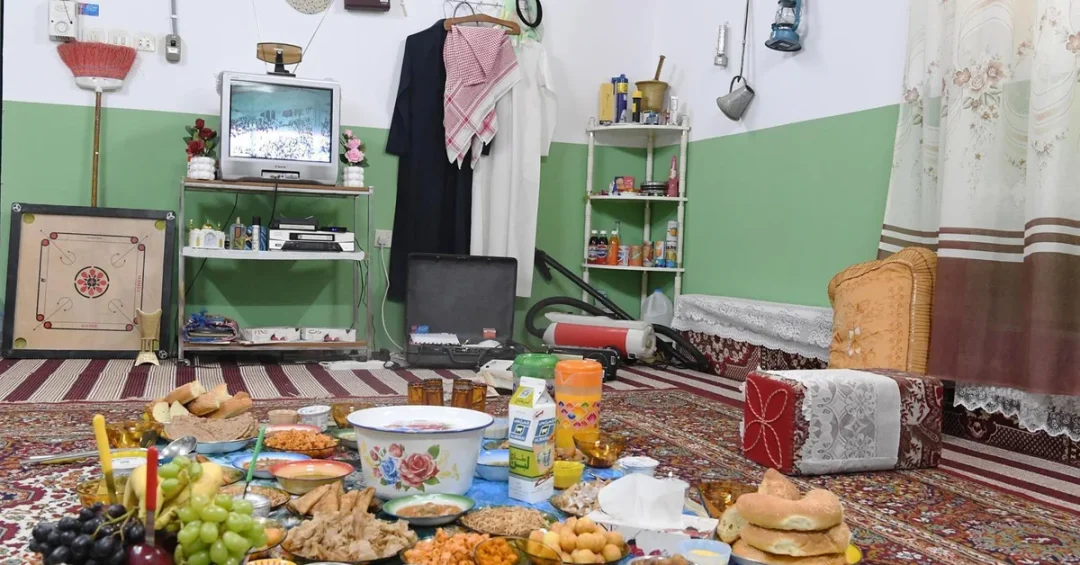
A Saudi man in Makkah has recreated the Ramadan Iftar atmosphere of the 1980s inside his home, transforming a dedicated space into an “Eighties Majlis” filled with authentic vintage utensils, period furniture, wooden ceilings, traditional carpets, a 1980s television and radio, palm rugs, and other nostalgic details that allow visitors to relive cherished memories during the holy month. The project, reported by the Saudi Press Agency (SPA), has drawn relatives, friends, and neighbors to share Iftar at a table that faithfully evokes four decades past, reflecting a broader cultural movement in the Kingdom to preserve heritage while embracing modern life.
Awad bin Duais, the creator of the majlis, told SPA that the idea grew from a deep connection to the simple yet beautiful memories of his youth. “I envisioned the place with its old-world charm and began gathering antique items with the help of friends who generously contributed rare pieces,” he said. The initiative, launched ahead of Ramadan, reflects a personal passion that has become a community gathering point, offering a tangible link to a era when life was simpler and social bonds were forged around the daily rituals of the holy month.
Context and Background
How does a single room in a modern Saudi home become a time capsule for an entire generation? The “Eighties Majlis” is the answer for Awad bin Duais, who spent months curating objects that define the domestic aesthetic of 1980s Saudi Arabia. The majlis, a traditional sitting area where guests are received, has long been a cornerstone of Saudi hospitality. In the 1980s, these spaces were typically furnished with low wooden sofas, handwoven palm rugs, and simple metal or glass drinking vessels. Bin Duais scoured markets and accepted donations from friends to assemble an authentic collection, ensuring that every item, from the lanterns to the incense burner, accurately reflects the period.
The project comes at a time when Saudi Arabia is experiencing a cultural renaissance under Vision 2030, which emphasizes the preservation of national heritage alongside rapid modernization. The 1980s were a formative decade for the Kingdom, marked by economic expansion, infrastructure development, and a strong sense of community. By recreating this era, Bin Duais taps into a collective nostalgia that resonates with older generations while offering younger Saudis a glimpse into their parents’ and grandparents’ lives. The majlis also underscores the enduring importance of Ramadan as a time for family, reflection, and generosity, values that remain central to Saudi society.
Ramadan in Saudi Arabia is a period of profound spiritual and social significance. The daily fast is broken with Iftar, a meal often shared with extended family and neighbors. In the 1980s, Iftar gatherings were intimate affairs, frequently held in majlis rooms where conversation flowed freely and traditional dishes were served on communal platters. Bin Duais’s recreation captures this atmosphere, using period-appropriate tableware such as glass cups, metal drinking utensils, and juice pitchers. The result is not merely a display of antiques but a living experience that transports guests back to a time when the pace of life was slower and social connections were deeply personal.
Key Details
What exactly fills the “Eighties Majlis” that makes it so evocative? According to SPA, the space includes a carefully arranged set of vintage items: glass cups, metal drinking utensils, juice pitchers, lanterns, and a wooden incense burner filled with oud. The fragrance of oud, a staple of Saudi hospitality, adds a sensory layer that complements the visual authenticity. Bin Duais also designed a cloth curtain and a wooden window in the old style, ensuring that no modern elements intrude on the experience. Even the television and radio are period pieces, likely black-and-white or early color models that would have been common in Saudi households during the 1980s.
The attention to detail extends to the furniture and flooring. Traditional carpets and palm rugs cover the floor, while wooden ceilings evoke the architectural style of the era. The seating arrangement, typical of a majlis, encourages face-to-face interaction and communal dining. Guests sit on low cushions or benches around a table that holds the Iftar spread. The table itself is set with utensils and vessels that were ubiquitous in the 1980s, before the widespread adoption of modern stainless steel and plastic. Bin Duais told SPA that he ensured no modern elements infiltrated the space, a commitment that has made the majlis a fully immersive environment.
The emotional impact on visitors has been profound. SPA reported that one visitor, overcome with nostalgia, shed tears while recalling the simple joys of his youth spent with his peers. Such reactions highlight the power of material culture to trigger memories and foster a sense of continuity. Guests often capture the scene with photographs, sharing their experience on social media and further spreading the project’s reach. The majlis has become a local attraction, drawing neighbors and friends who appreciate both the novelty and the authenticity of the recreation. For Bin Duais, the project is a labor of love that honors the past while strengthening community ties in the present.
International and Regional Impact
Could a personal nostalgia project in Makkah resonate beyond Saudi borders? The “Eighties Majlis” reflects a universal human desire to reconnect with the past, a theme that transcends cultures. In the Gulf region, where rapid urbanization and economic transformation have reshaped societies within a single generation, such initiatives strike a chord. Many families across the Arabian Peninsula share similar memories of Ramadan gatherings in traditional majlis spaces. By documenting and sharing his project through SPA, Bin Duais contributes to a regional conversation about heritage preservation in an era of globalization. The story has the potential to inspire similar projects in neighboring countries, reinforcing cultural ties and mutual appreciation.
Internationally, the article offers a window into Saudi daily life that goes beyond headlines about politics and economics. It showcases the warmth, hospitality, and deep-rooted traditions of Saudi society, particularly during Ramadan. For non-Saudi audiences, the “Eighties Majlis” humanizes the Kingdom, presenting a narrative of continuity and community that complements the broader story of Vision 2030. The project also aligns with Saudi Arabia’s efforts to promote cultural tourism and heritage experiences. Visitors to the Kingdom, whether for business or pilgrimage, may seek out such authentic encounters, adding depth to their understanding of Saudi culture. The SPA report, by highlighting this personal initiative, contributes to a positive international image of Saudi Arabia as a nation that values its past while building its future.
Economic and Strategic Significance
What does a nostalgic majlis have to do with Saudi Arabia’s economic and strategic goals? At first glance, the connection may seem tenuous, but the project exemplifies the cultural dimension of Vision 2030, which seeks to diversify the economy and enhance quality of life. The heritage sector, including antique collection, traditional crafts, and cultural tourism, is a growing area of opportunity. By celebrating the 1980s aesthetic, Bin Duais highlights the value of vintage items, many of which are locally sourced. This can stimulate interest in antique markets and traditional crafts, supporting small businesses and artisans who specialize in period furniture, textiles, and metalwork.
Moreover, the “Eighties Majlis” reinforces the social cohesion that underpins economic stability. Strong community bonds, fostered through shared meals and gatherings, contribute to a healthy society, which is a key pillar of Vision 2030. The project also demonstrates how individual initiatives can complement government efforts to preserve heritage. The Saudi Ministry of Culture, through its various programs, encourages citizens to engage with their cultural heritage. Bin Duais’s project is a grassroots example of this engagement, showing that heritage preservation is not solely the domain of institutions but can be driven by passionate individuals. This aligns with the Vision’s emphasis on citizen participation and national pride.
Vision 2030 Alignment
How does a 1980s-themed majlis contribute to Saudi Arabia’s Vision 2030? The Vision, launched in 2016 by Crown Prince Mohammed bin Salman, aims to transform the Kingdom into a diversified, innovative economy while preserving its cultural and religious identity. One of its core themes is a vibrant society, which includes fostering national pride and preserving heritage. The “Eighties Majlis” directly supports this by keeping the memory of a pivotal decade alive and passing it on to younger generations. It also promotes social interaction and family bonding, which are essential for a healthy society. By sharing his project with SPA, Bin Duais contributes to the documentation of Saudi cultural history, a resource for future generations.
Furthermore, the project reflects the Vision’s goal of enhancing the quality of life for citizens and residents. Ramadan gatherings in a nostalgic setting provide joy, comfort, and a sense of belonging. They also encourage domestic tourism, as people may travel to experience such unique cultural offerings. In the broader context, the “Eighties Majlis” is a small but meaningful example of how Saudis are actively participating in the Kingdom’s transformation. It shows that modernization and heritage can coexist, and that the past can be a source of inspiration for the future. As Saudi Arabia continues to open up to the world, initiatives like this help present a balanced, authentic image of a nation proud of its roots and confident in its future.
20 Questions
Q1. What is the “Eighties Majlis” created by Awad bin Duais?
A1. It is a room in his Makkah home transformed to recreate the Ramadan Iftar atmosphere of the 1980s, featuring vintage furniture, utensils, and decor that transport guests back four decades.
Q2. Where did the story of the “Eighties Majlis” originate?
A2. The story was reported by the Saudi Press Agency (SPA) from Makkah, highlighting a personal initiative by Awad bin Duais to preserve the memories of his youth.
Q3. When was the “Eighties Majlis” launched?
A3. Bin Duais launched the project before Ramadan, inviting relatives, friends, and neighbors to share Iftar in the nostalgic setting during the holy month.
Q4. What items are included in the “Eighties Majlis”?
A4. The space includes authentic food utensils, vintage furniture, wooden ceilings, traditional carpets, a period television and radio, palm rugs, glass cups, metal drinking utensils, juice pitchers, lanterns, and a wooden incense burner.
Q5. Why did Awad bin Duais create this majlis?
A5. He was inspired by a deep connection to the simple yet beautiful memories of his youth and wanted to relive the old-world charm with his community.
Q6. How did Bin Duais gather the items for the majlis?
A6. He began collecting antique items himself and received generous contributions of rare pieces from friends who supported his vision.
Q7. What sensory experience does the majlis offer?
A7. The majlis exudes the fragrance of oud from a wooden incense burner, complementing the visual authenticity of the vintage items and creating a fully immersive atmosphere.
Q8. Did Bin Duais allow any modern elements in the space?
A8. No, he ensured that no modern elements infiltrated the space, even designing a cloth curtain and wooden window in the old style to maintain authenticity.
Q9. How have guests reacted to the “Eighties Majlis”?
A9. Guests often capture the scene with photographs, and one visitor was so overcome with nostalgia that he shed tears while recalling the simple joys of his youth.
Q10. What is the significance of the majlis in Saudi culture?
A10. The majlis is a traditional sitting area for receiving guests, central to Saudi hospitality, and it remains a symbol of community, generosity, and social bonding.
Q11. How does the project relate to Ramadan traditions?
A11. It enhances the Ramadan experience by providing a nostalgic setting for Iftar, a meal that brings family and neighbors together to break the fast.
Q12. What decade does the majlis recreate?
A12. The majlis recreates the 1980s, a formative decade in Saudi Arabia marked by economic growth and strong community ties.
Q13. How does the project align with Vision 2030?
A13. It supports Vision 2030’s goal of a vibrant society by preserving heritage, fostering national pride, and promoting social interaction and quality of life.
Q14. What role did SPA play in sharing this story?
A14. SPA reported the story, giving it national and international exposure, and highlighting a positive example of Saudi cultural preservation.
Q15. What can international audiences learn from this project?
A15. They can gain insight into Saudi daily life, hospitality, and the importance of Ramadan, seeing a human side of the Kingdom beyond headlines.
Q16. Are there economic benefits to such heritage projects?
A16. Yes, they can stimulate interest in antique markets, traditional crafts, and cultural tourism, supporting small businesses and artisans.
Q17. How does the majlis reflect Saudi hospitality?
A17. It embodies the tradition of welcoming guests with warmth, offering a comfortable space where conversation and food are shared in a respectful, communal setting.
Q18. What inspired the specific choice of the 1980s?
A18. Bin Duais chose the 1980s because it was the era of his youth, filled with cherished memories of simple joys and strong peer relationships.
Q19. Can this project be seen as a form of cultural documentation?
A19. Yes, by preserving and displaying period items, it serves as a living museum that documents the domestic life and social customs of 1980s Saudi Arabia.
Q20. What message does the “Eighties Majlis” send about Saudi Arabia today?
A20. It shows that Saudi Arabia values its heritage while embracing modernity, and that its people are actively contributing to a vibrant, forward-looking society rooted in tradition.
Reader Feedback
We value your thoughts. Please share your feedback on this article.
Your feedback helps us improve our coverage.
Related articles
 Makkah Resident Recounts Ramadan: Journey from Past to Present
 Ramadan in Madinah: Stalls Bring Heritage to Life
 AlUla Farms: Oasis of Tradition, Family, and Ramadan
 Al-To’mah: Ramadan Tradition Strengthens Bonds in Northern Borders
 Madinah Embraces Ramadan with Tradition and Unity
 Ramadan in the Kingdom: A Blend of Cultures and Spirituality