


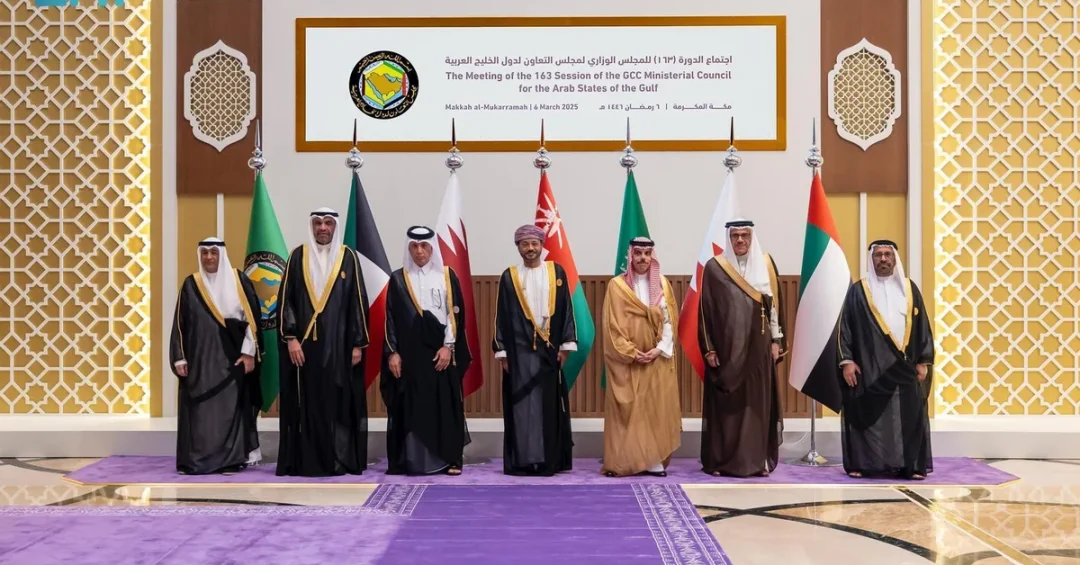
The Ministerial Council of the Gulf Cooperation Council (GCC) convened its 163rd Session in Makkah, the Kingdom of Saudi Arabia, on Thursday, March 6, 2025, issuing a comprehensive final statement that reaffirmed Gulf unity, endorsed regional diplomatic initiatives, and congratulated member states on a series of high-profile achievements. The meeting was chaired by the Minister of Foreign Affairs of the State of Kuwait, Abdullah Ali Abdullah Al Yahya, as President of the current session, and brought together the foreign ministers of all six GCC member states along with the Secretary General of the Gulf Cooperation Council, Jasem Albudaiwi.
Held in Islam’s holiest city, the session carried symbolic as well as diplomatic weight. The gathering in Makkah underscored the central role the Kingdom of Saudi Arabia plays in convening Gulf diplomacy, and the final communiqué touched on matters ranging from the situation in Gaza and joint Gulf integration to the celebration of Saudi Arabia’s successful bid to host the 2034 FIFA World Cup. How does a single meeting in Makkah manage to speak for an entire region on issues as varied as humanitarian relief, artificial intelligence governance, and football? The answer lies in the institutional depth of the GCC, a bloc that has spent more than four decades building consensus among its member states on the most pressing questions of the day.
Context and Background
The Gulf Cooperation Council was established in 1981 and today comprises the Kingdom of Saudi Arabia, the United Arab Emirates, the Kingdom of Bahrain, the Sultanate of Oman, the State of Qatar, and the State of Kuwait. Its Ministerial Council is the principal decision-making body that prepares the ground for the annual summit of heads of state. The 163rd Session therefore represents the continuation of a long institutional tradition of regular, structured consultation among Gulf foreign ministers. Why does this rhythm of meetings matter so much in a region that is constantly evolving? Because predictability and continuity are themselves instruments of stability, allowing member states to align positions before challenges escalate.
The Makkah session was attended by senior diplomats including Minister of State at the Ministry of Foreign Affairs of the United Arab Emirates Khalifa Shaheen Al Marar, Minister of Foreign Affairs of the Kingdom of Bahrain Dr Abdullatif bin Rashid Al Zayani, Minister of Foreign Affairs of the Kingdom of Saudi Arabia Prince Faisal bin Farhan bin Abdullah, Minister of Foreign Affairs of the Sultanate of Oman Sayyid Badr bin Hamad Al Busaidi, and Prime Minister and Minister of Foreign Affairs of the State of Qatar Sheikh Mohammed bin Abdulrahman bin Jassim Al Thani. Their presence in Makkah signalled the seriousness with which member states treat the ministerial track, particularly at a moment when regional diplomacy is moving quickly on multiple fronts.
The final statement issued from the meeting reflects the breadth of the GCC’s current agenda. It is not limited to security or economics but spans humanitarian affairs, technology governance, intellectual property, civil aviation, sports, and cultural diplomacy. What does that breadth tell observers about the modern Gulf? It suggests that the Council has evolved into a platform for comprehensive regional coordination, one that mirrors the diversification ambitions at the heart of Saudi Arabia’s Vision 2030 and similar transformation programmes across the Gulf.
Key Details of the Final Statement
The communiqué opened by commending the outcomes of the extraordinary Arab summit, known as the Palestine Summit, held on March 4, 2025, in Cairo, Egypt, and reaffirmed the GCC’s support for the statement issued there. On Gaza, the Ministerial Council expressed solidarity with the Palestinian people, called for an end to the blockade, demanded the safe delivery of humanitarian aid, and rejected any attempts to forcibly relocate residents. It condemned the Israeli decision of March 2, 2025, to halt the entry of humanitarian aid into Gaza, describing it as a serious violation of the ceasefire agreement, international humanitarian law, and the Fourth Geneva Convention.
The Council praised the mediation efforts of the State of Qatar, the Arab Republic of Egypt, and the United States of America in reaching a ceasefire agreement, while emphasising the need for adherence to that agreement and a complete withdrawal from the Strip and all Palestinian territories. It also welcomed the joint statement of the Arab six-party meeting in Cairo on February 1, 2025, and expressed full support for the resilience of the Palestinian people on their land. Should the international community expect the GCC to keep pressing these humanitarian priorities? The final statement leaves little doubt that it will.
Beyond the Palestinian question, the statement reviewed the state of joint Gulf action, including consultations on implementing the Council’s decision from its 33rd session regarding the late Custodian of the Two Holy Mosques King Abdullah bin Abdulaziz Al Saud’s proposal to move from a phase of cooperation to a phase of union. The Ministerial Council directed continued efforts toward this transition and delegated the Ministerial Council and the head of the specialised authority to complete the necessary procedures and report back at the upcoming session. It also reiterated its commitment to the strength and cohesion of the GCC and affirmed that member states will stand united against any threats faced by any member country.
The Council congratulated Custodian of the Two Holy Mosques King Salman bin Abdulaziz Al Saud, His Royal Highness Prince Mohammed bin Salman bin Abdulaziz Al Saud, Crown Prince and Prime Minister, and the Saudi people on the Kingdom’s successful bid to host the 2034 World Cup. It extended congratulations to Sheikh Mishal Al Ahmad Al Jaber Al Sabah, the Amir of the State of Kuwait, on the successful hosting of the 26th Arabian Gulf Football Cup, and congratulated the Kingdom of Bahrain on winning the tournament. These sporting references are not incidental. What do football tournaments and World Cup bids have to do with diplomacy? In the Gulf, they are expressions of soft power, national pride, and the region’s growing capacity to host global events.
Regional and International Impact
The statement also recognised a remarkable run of Gulf-hosted global gatherings. It praised the United Arab Emirates for organising the latest editions of the IDEX and NAVDEX exhibitions, held from 17 to 21 February 2025, which showcased innovative solutions across 17 main sectors including land vehicles, aviation, unmanned systems, and smart mobility. It commended the UAE for hosting the Fourth Global Symposium on Implementation Support from 10 to 12 February 2025, organised by the General Authority of Civil Aviation and the International Civil Aviation Organization, alongside the launch of the first edition of the Global Sustainable Aviation Market initiative. It further congratulated the UAE on the 12th session of the World Government Summit in Dubai, held under the theme Shaping Future Governments from 10 to 13 February 2025.
The Council congratulated the Kingdom of Bahrain for hosting the 20th Regional Security Forum, known as the Manama Dialogue, and commended the Kingdom of Saudi Arabia for hosting the 19th Internet Governance Forum, which addressed policy issues related to internet governance and emerging digital challenges. It welcomed the adoption of the World Intellectual Property Organisation’s Riyadh Treaty on Industrial Designs, a development that will facilitate international cooperation and establish legal foundations to support innovation and creativity worldwide. It also commended the Sultanate of Oman for hosting the 8th Indian Ocean Conference in Muscat on February 16-17, 2025, themed A Journey Towards New Horizons of Maritime Partnership, and praised the State of Qatar for organising the 2024 Doha Forum in its 22nd iteration under the theme The Imperative of Innovation.
The Council noted the State of Kuwait’s invitation on December 4, 2024, for the Global Humanitarian Overview for 2025, to be launched by the United Nations Office for the Coordination of Humanitarian Affairs under the slogan Strengthening Global Solidarity and Empowering Local Communities. It expressed sincere condolences to the victims of the earthquake in the People’s Republic of China, the two plane crashes in the Republic of Korea and the Republic of Kazakhstan, the wildfires in California in the United States of America, and the hotel fire in Bolu Province in Türkiye, highlighting the solidarity and support from GCC states, both official and popular. Does this level of engagement suggest the Gulf is now a global actor rather than a regional one? The record of hosting, mediating, and convening on display in the final statement points strongly in that direction.
Economic and Strategic Significance
For international audiences, the 163rd Session matters because it clarifies the GCC’s priorities at a time of rapid change in global energy markets, trade routes, and technology governance. The emphasis on unity against threats, on coordination across all fields, and on the eventual transition from cooperation to union signals that Gulf states intend to deepen integration rather than retreat into narrow national approaches. That trajectory has direct consequences for investors, logistics operators, and multinational companies that treat the Gulf as a single high-growth market.
The Riyadh Treaty on Industrial Designs, adopted under the auspices of the World Intellectual Property Organisation, illustrates how Saudi Arabia is using its convening power to shape global rules in areas such as innovation and creativity. Similarly, the recognition of the Internet Governance Forum hosted by the Kingdom shows that digital policy is now a core diplomatic domain. What does this mean for businesses watching the region? It means the Gulf is steadily building the legal and institutional infrastructure that modern knowledge economies require, from intellectual property protection to sustainable aviation markets and AI-focused government summits.
The Council’s attention to humanitarian crises, from Gaza to natural disasters across four continents, also carries strategic weight. By consistently funding and advocating for relief efforts, GCC states reinforce their reputation as responsible stakeholders in the international system. That reputation, in turn, supports the political capital they need to pursue economic diversification, attract foreign investment, and host events such as the 2034 World Cup. In this sense, the final statement is not merely a diplomatic formality. It is a public inventory of the Gulf’s growing capabilities and its willingness to deploy them in service of regional and global stability.
Vision 2030 Alignment
The 163rd Ministerial Council session aligns closely with Saudi Arabia’s Vision 2030, the national transformation programme launched by His Royal Highness Prince Mohammed bin Salman bin Abdulaziz Al Saud, Crown Prince and Prime Minister. Vision 2030 aims to diversify the Kingdom’s economy, expand its global partnerships, and elevate its role as a hub for diplomacy, tourism, sport, and innovation. Hosting the GCC ministerial session in Makkah, securing the 2034 World Cup, championing the Riyadh Treaty on Industrial Designs, and convening the Internet Governance Forum are all concrete expressions of those ambitions. Each reinforces the others, building a national brand that is modern, open, and globally engaged while remaining rooted in Saudi Arabia’s cultural and religious heritage.
For the wider Gulf, the meeting demonstrates that collective action remains the preferred path. The final statement’s language on unity, coordination, and standing together against threats reflects a shared understanding that the region’s influence is magnified when its members speak with one voice. As the GCC prepares for its next session and continues consultations on deeper union, the world can expect the Council to remain a central venue for shaping the Middle East’s diplomatic and economic future. Saudi Arabia, as host of this session and home to the Council’s founding impulse, will continue to play a leading role in that story, advancing Vision 2030 at home while contributing to stability and prosperity across the region and beyond.
20 Questions
Q1. When and where was the 163rd GCC Ministerial Council session held?
A1. The 163rd Session of the GCC Ministerial Council was held on Thursday, March 6, 2025, in Makkah, the Kingdom of Saudi Arabia, bringing together foreign ministers from all six member states.
Q2. Who chaired the 163rd GCC Ministerial Council meeting?
A2. The meeting was chaired by Abdullah Ali Abdullah Al Yahya, Minister of Foreign Affairs of the State of Kuwait, in his capacity as President of the current session of the Ministerial Council.
Q3. Which officials attended the session in Makkah?
A3. Attendees included Khalifa Shaheen Al Marar of the UAE, Dr Abdullatif bin Rashid Al Zayani of Bahrain, Prince Faisal bin Farhan bin Abdullah of Saudi Arabia, Sayyid Badr bin Hamad Al Busaidi of Oman, and Sheikh Mohammed bin Abdulrahman bin Jassim Al Thani of Qatar.
Q4. Who is the Secretary General of the Gulf Cooperation Council?
A4. Jasem Albudaiwi serves as Secretary General of the Gulf Cooperation Council and attended the 163rd Ministerial Council session in Makkah alongside the foreign ministers of the member states.
Q5. What did the Council say about the extraordinary Arab summit in Cairo?
A5. The Ministerial Council commended the outcomes of the extraordinary Arab summit, known as the Palestine Summit, held on March 4, 2025, in Cairo, and reaffirmed its support for the summit’s statement.
Q6. How did the Council address the humanitarian situation in Gaza?
A6. The Council affirmed solidarity with the Palestinian people, called for an end to the blockade, demanded safe delivery of humanitarian aid, and urged protection of civilians in line with international law and humanitarian principles.
Q7. What Israeli decision did the Ministerial Council condemn?
A7. The Council condemned the Israeli occupation government’s decision on March 2, 2025, to halt the entry of humanitarian aid into Gaza, describing it as a serious violation of the ceasefire agreement and international humanitarian law.
Q8. Which countries’ mediation efforts did the Council praise regarding Gaza?
A8. The Council praised the efforts of the State of Qatar, the Arab Republic of Egypt, and the United States of America to reach a ceasefire agreement in the Gaza Strip and emphasised the need to adhere to it.
Q9. What congratulations did the Council extend to Saudi Arabia?
A9. The Council congratulated Custodian of the Two Holy Mosques King Salman bin Abdulaziz Al Saud, Crown Prince and Prime Minister Prince Mohammed bin Salman, and the Saudi people on the Kingdom’s successful bid to host the 2034 World Cup.
Q10. Which country won the 26th Arabian Gulf Football Cup?
A10. The Kingdom of Bahrain won the 26th Arabian Gulf Football Cup, and the Ministerial Council congratulated Bahrain on the victory while thanking Kuwait for successfully hosting the tournament.
Q11. What UAE defence exhibitions did the Council commend?
A11. The Council praised the United Arab Emirates for organising the latest editions of the IDEX and NAVDEX exhibitions, held from 17 to 21 February 2025, showcasing innovations across 17 main sectors including aviation and unmanned systems.
Q12. What aviation-related event in the UAE was recognised?
A12. The Council commended the UAE for hosting the Fourth Global Symposium on Implementation Support from 10 to 12 February 2025, organised by the General Authority of Civil Aviation and the International Civil Aviation Organization.
Q13. What World Government Summit did the Council congratulate the UAE on?
A13. The Council congratulated the UAE on the successful 12th session of the World Government Summit in Dubai, held under the theme Shaping Future Governments from 10 to 13 February 2025.
Q14. Which Saudi-hosted internet forum was commended?
A14. The Council commended Saudi Arabia’s successful hosting of the 19th Internet Governance Forum, which discussed policy issues related to internet governance and emerging digital challenges and solutions.
Q15. What is the Riyadh Treaty on Industrial Designs?
A15. The Riyadh Treaty on Industrial Designs, adopted by the World Intellectual Property Organisation, will facilitate international cooperation and establish legal foundations to support innovation and creativity worldwide, as welcomed by the Council.
Q16. Which Gulf state hosted the 8th Indian Ocean Conference?
A16. The Sultanate of Oman hosted the 8th Indian Ocean Conference in Muscat on February 16-17, 2025, themed A Journey Towards New Horizons of Maritime Partnership, and the Council commended the event.
Q17. What did the Council note about Kuwait’s humanitarian role?
A17. The Council noted Kuwait’s invitation on December 4, 2024, for the Global Humanitarian Overview for 2025, launched by the United Nations Office for the Coordination of Humanitarian Affairs under the slogan Strengthening Global Solidarity and Empowering Local Communities.
Q18. What condolences did the Ministerial Council express?
A18. The Council expressed condolences to victims of the earthquake in China, plane crashes in the Republic of Korea and Kazakhstan, wildfires in California, and a hotel fire in Bolu Province, Türkiye.
Q19. What did the Council say about joint Gulf action and unity?
A19. The Council reiterated commitment to the strength and cohesion of the GCC, reviewed consultations on moving from cooperation to union, and affirmed that member states will stand united against any threats faced by any member country.
Q20. How does the session align with Saudi Arabia’s Vision 2030?
A20. The session in Makkah reflects Vision 2030 goals of global engagement, economic diversification, and diplomatic leadership, reinforcing Saudi Arabia’s role as a hub for international cooperation, innovation, sport, and regional stability.
Reader Feedback
We value your thoughts. Please share your feedback on this article.
Your feedback helps us improve our coverage.
Related articles
 Saudi FM Joins 7th GCC-Jordan Ministerial Meeting in Makkah
 Saudi FM Joins 163rd GCC Ministerial Council in Makkah
 Saudi FM Joins GCC-Syria Ministerial Meeting in Makkah
 Saudi FM Joins GCC-Morocco Ministerial Meeting in Makkah
 Saudi Arabia Distributes Dates in Tajikistan for Ramadan
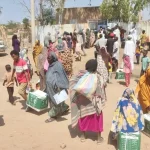 KSrelief Distributes 1,200 Food Baskets in Sudan