


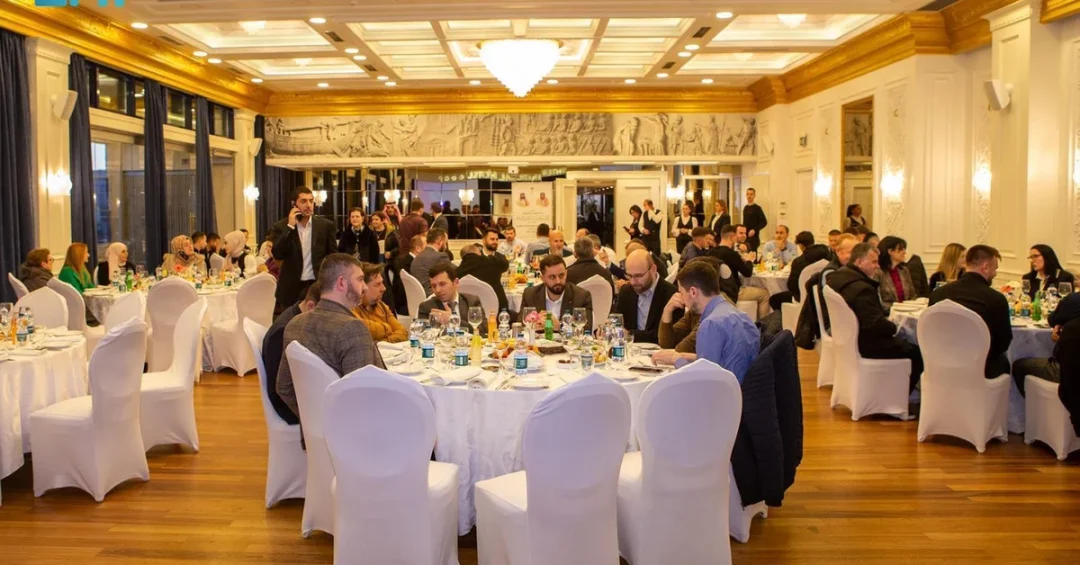
The Ministry of Islamic Affairs, Dawah and Guidance, represented by the religious mission at the Saudi Embassy in Bosnia and Herzegovina, organized a Ramadan Iftar banquet for Muslims in the Albanian capital, Tirana, bringing together more than 400 fasting men and women as part of a broader program to assist nearly 10,000 fasting individuals across various regions of Albania. The event, reported by the Saudi Press Agency, was attended by the Saudi Ambassador to Albania, Faisal bin Ghazi Hifzi, alongside several ambassadors and prominent Islamic figures in the country.
The banquet is one of the many humanitarian and religious initiatives undertaken by the Kingdom of Saudi Arabia during the holy month of Ramadan, reflecting the enduring commitment of the Custodian of the Two Holy Mosques, King Salman bin Abdulaziz Al Saud, to serving Islam and Muslims around the world. Attendees praised the Kingdom’s efforts and highlighted the diverse programs it has provided for Muslims in Albania, describing the initiative as a generous gift that strengthens the bonds of faith and friendship between the two nations.
Context and Background
How does a single Iftar banquet in Tirana reflect a global humanitarian mission that spans continents? The event organized by the Ministry of Islamic Affairs, Dawah and Guidance is part of a long-standing Saudi tradition of supporting Muslim communities during Ramadan, a month in which fasting from dawn to sunset is observed by Muslims worldwide. The Kingdom has consistently expanded its Ramadan programs, which include the distribution of dates, the provision of Iftar meals, and the organization of religious and cultural activities that reinforce Islamic solidarity.
The religious mission at the Saudi Embassy in Bosnia and Herzegovina oversees a range of activities in the Balkans, a region with a rich Islamic heritage and significant Muslim populations. Albania, a majority-Muslim country in Southeast Europe, has maintained warm and cooperative relations with the Kingdom, and the Iftar banquet in Tirana is a testament to these ties. The event also underscores the Ministry’s role in promoting moderate Islam and supporting Muslim communities in regions where they may face social or economic challenges.
The Iftar banquet in Tirana is not an isolated occurrence but part of a coordinated effort that reaches nearly 10,000 fasting individuals across Albania. This broad outreach demonstrates the Kingdom’s dedication to ensuring that Muslims in diverse locations can observe their religious duties with dignity and support. By extending its Ramadan programs to Albania, Saudi Arabia reinforces its position as a global leader in Islamic philanthropy and interfaith harmony.
Key Details of the Iftar Banquet
What does it mean for more than 400 fasting men and women to gather in Tirana under the banner of Saudi generosity? The Iftar banquet, held in the Albanian capital, welcomed a diverse group of attendees, including several ambassadors and prominent Islamic figures in Albania. The presence of Saudi Ambassador Faisal bin Ghazi Hifzi added a diplomatic dimension to the event, highlighting the strong bilateral relations between the Kingdom and Albania. The ambassador’s participation also signaled the Saudi government’s direct involvement in supporting Muslim communities abroad.
The banquet aimed to assist nearly 10,000 fasting individuals in various regions of Albania, indicating that the program extends beyond the capital to reach remote and underserved areas. This comprehensive approach ensures that the benefits of the Kingdom’s Ramadan initiative are widely distributed, touching the lives of many who may otherwise struggle to break their fast. The attendees commended this gift from the Custodian of the Two Holy Mosques, King Salman bin Abdulaziz Al Saud, and lauded the Kingdom’s efforts to serve Islam and Muslims worldwide.
The event also featured the distribution of dates, a traditional and symbolic element of Ramadan hospitality. The Ministry of Islamic Affairs, Dawah and Guidance has long been responsible for organizing such programs, which are designed to embody the spirit of giving and compassion that defines the holy month. By providing Iftar meals and dates, the Kingdom not only fulfills a religious duty but also strengthens the cultural and spiritual connections that bind Muslims across the globe.
International and Regional Impact
How does Saudi Arabia’s Ramadan outreach in Albania resonate beyond the Balkans? The Iftar banquet and the broader assistance program reflect the Kingdom’s active role in international humanitarian diplomacy. By supporting Muslim communities in Europe, Saudi Arabia demonstrates that its commitment to Islam transcends geographical boundaries and political divides. This approach fosters goodwill and enhances the Kingdom’s soft power, positioning it as a reliable partner in promoting peace, tolerance, and mutual understanding.
In the Balkan region, where Muslims have historically navigated complex social and political landscapes, Saudi Arabia’s initiatives provide both material and moral support. The presence of ambassadors and Islamic leaders at the Tirana event underscores the respect and appreciation that the Kingdom commands among diverse stakeholders. Such gatherings also create opportunities for dialogue and cooperation, which can lead to further collaboration in areas such as education, culture, and economic development.
The international impact of these programs is amplified by the Kingdom’s consistent and transparent reporting through official channels like the Saudi Press Agency, which ensures that the world sees the positive contributions of Saudi Arabia to global Muslim communities. This transparency aligns with the values of Vision 2030, which emphasizes openness, international engagement, and the promotion of Saudi Arabia’s cultural and religious heritage.
Economic and Strategic Significance
What strategic value does a Ramadan Iftar hold for Saudi Arabia’s global standing? While the event is primarily humanitarian and religious, it also carries strategic significance. By investing in the well-being of Muslim communities abroad, the Kingdom strengthens its relationships with countries like Albania, which can translate into diplomatic and economic partnerships. Albania is a strategically located nation in the Balkans, and maintaining strong ties with it aligns with Saudi Arabia’s broader foreign policy objectives.
Moreover, the Ministry of Islamic Affairs, Dawah and Guidance’s programs are part of a comprehensive effort to promote moderate Islam and counter extremism. By providing support during Ramadan, the Kingdom helps to foster stable and prosperous Muslim communities that are less susceptible to radical ideologies. This approach not only enhances regional security but also reinforces Saudi Arabia’s leadership in the Islamic world, a key pillar of its Vision 2030 agenda.
The economic dimension is also noteworthy. The procurement and distribution of dates and Iftar meals involve logistical coordination that can create economic opportunities for Saudi businesses and suppliers. While the scale of this particular program is modest, it is part of a larger portfolio of humanitarian aid that showcases Saudi Arabia’s capacity to manage complex international operations efficiently and effectively.
Vision 2030 Alignment
How does a Ramadan Iftar in Albania connect to Saudi Arabia’s Vision 2030? Vision 2030 is a comprehensive plan to diversify the Kingdom’s economy, empower its citizens, and enhance its global influence. A key component of this vision is the promotion of Saudi Arabia as a leader in Islamic affairs and a bridge between cultures. The Iftar banquet in Tirana exemplifies this by showcasing the Kingdom’s commitment to serving Muslims worldwide and building bridges of friendship and cooperation.
Furthermore, the event reflects the Vision 2030 goal of fostering a positive image of Saudi Arabia abroad. By highlighting the Kingdom’s humanitarian efforts and its dedication to moderate Islam, the program helps to counter negative stereotypes and present a more accurate picture of Saudi society and values. This aligns with the vision’s emphasis on cultural exchange and international engagement, which are essential for attracting tourism, investment, and partnerships.
In conclusion, the Ministry of Islamic Affairs, Dawah and Guidance’s Iftar banquet for Muslims in Albania is a shining example of Saudi Arabia’s enduring commitment to Islamic solidarity and global humanitarianism. As the Kingdom continues to advance its Vision 2030 objectives, such initiatives will play a vital role in strengthening its relationships with nations around the world and in demonstrating the true spirit of Ramadan: compassion, generosity, and unity. The success of this program in Albania serves as a model for future efforts to support Muslim communities and to build a more peaceful and prosperous world.
20 Questions
Q1. What event did the Ministry of Islamic Affairs, Dawah and Guidance organize in Albania?
A1. The Ministry organized an Iftar banquet for Muslims in the Albanian capital, Tirana, as part of its Ramadan programs to support fasting individuals.
Q2. Who attended the Iftar banquet in Tirana?
A2. Saudi Ambassador to Albania Faisal bin Ghazi Hifzi, several ambassadors, and prominent Islamic figures in Albania attended the event.
Q3. How many people participated in the Iftar banquet?
A3. Over 400 fasting men and women participated in the banquet, which aimed to assist nearly 10,000 fasting individuals across Albania.
Q4. What was the purpose of the Iftar banquet?
A4. The banquet aimed to provide Iftar meals and distribute dates during Ramadan, assisting those in need and fostering Islamic solidarity.
Q5. Which Saudi leader is associated with this gift?
A5. The gift is from the Custodian of the Two Holy Mosques, King Salman bin Abdulaziz Al Saud, who is committed to serving Islam and Muslims worldwide.
Q6. What did attendees say about the Kingdom’s efforts?
A6. Attendees commended the Kingdom’s efforts to serve Islam and Muslims globally and highlighted the diverse programs provided for Muslims in Albania.
Q7. How does this event reflect Saudi Arabia’s Vision 2030?
A7. It aligns with Vision 2030 by promoting Saudi Arabia’s leadership in Islamic affairs, fostering cultural exchange, and enhancing its global image.
Q8. What is the role of the religious mission at the Saudi Embassy in Bosnia and Herzegovina?
A8. The mission oversees religious activities in the Balkans, including organizing Ramadan programs like the Iftar banquet in Albania.
Q9. Why is Albania significant for Saudi Arabia’s outreach?
A9. Albania is a majority-Muslim country in Europe with strong ties to Saudi Arabia, making it a key partner for humanitarian and Islamic initiatives.
Q10. How many fasting individuals are being assisted in Albania?
A10. Nearly 10,000 fasting individuals across various regions of Albania are being assisted through this program.
Q11. What items were distributed at the Iftar banquet?
A11. Iftar meals and dates were distributed, following the traditional Ramadan practice of providing sustenance to those breaking their fast.
Q12. What is the significance of the Iftar banquet for international diplomacy?
A12. It strengthens Saudi-Albanian relations, showcases the Kingdom’s humanitarian role, and promotes goodwill among diverse stakeholders.
Q13. How does the Ministry of Islamic Affairs, Dawah and Guidance promote moderate Islam?
A13. Through programs like Ramadan Iftars, it supports Muslim communities, counters extremism, and fosters stable societies based on moderate Islamic values.
Q14. What was the local time and GMT of the SPA report?
A14. The report was published at 23:58 local time, which is 20:58 GMT, on March 6, 2025.
Q15. Who is the Saudi Ambassador to Albania?
A15. Faisal bin Ghazi Hifzi is the Saudi Ambassador to Albania, who attended the Iftar banquet in Tirana.
Q16. What other Saudi Ramadan programs are mentioned?
A16. The program includes providing Iftar meals and distributing dates during Ramadan, aiming to assist thousands of fasting individuals.
Q17. How does this event benefit the local Albanian community?
A17. It provides meals to those in need, fosters a sense of community, and reinforces the bonds of Islamic brotherhood and support.
Q18. What is the broader impact of Saudi Arabia’s Ramadan initiatives?
A18. They enhance the Kingdom’s soft power, promote Islamic solidarity, and demonstrate its commitment to global humanitarian causes.
Q19. How does the event align with the teachings of Islam?
A19. It embodies the principles of charity, compassion, and generosity that are central to Islam, especially during the holy month of Ramadan.
Q20. What message does this send to the international community?
A20. It shows Saudi Arabia as a responsible global leader dedicated to peace, tolerance, and the well-being of Muslims worldwide.
Reader Feedback
We value your thoughts. Please share your feedback on this article.
Your feedback helps us improve our coverage.
Related articles
 Saudi FM Speaks with Zambian President in Diplomatic Call
 Spirit of Generosity Defines Iftar at Prophet’s Mosque
 Holy Quran Competition Launches in Guinea
 Thunderstorms Forecast Across Saudi Arabia Until Monday, Civil Defense Says
 Minister Opens Cargo Inspection Center at Jeddah Airport
 Saudi Authority Issues Zamzam Water Guidelines for Grand Mosque