


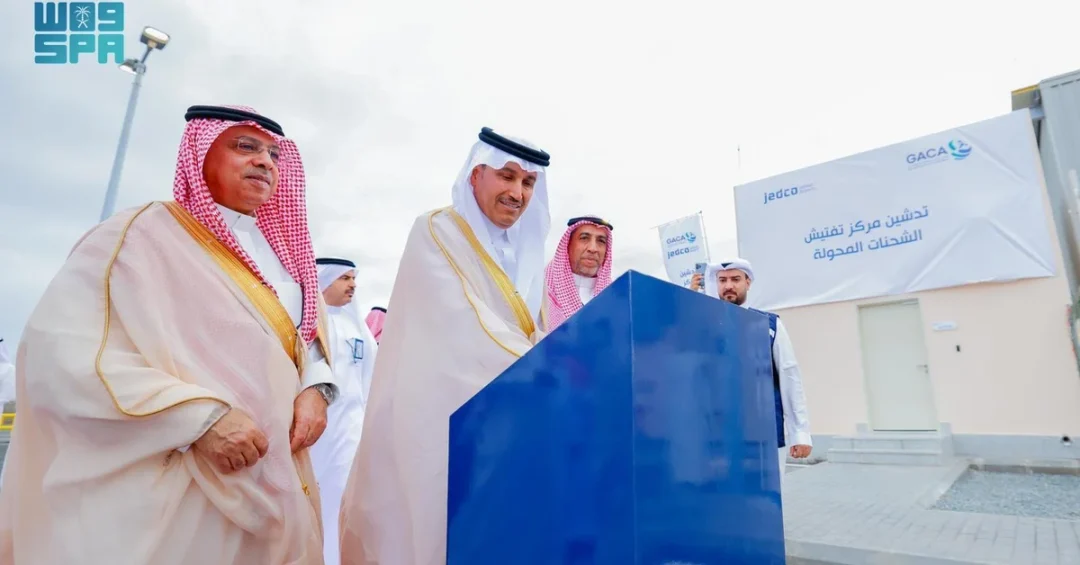
Saudi Arabia’s Minister of Transport and Logistics Services and Chairman of the General Authority of Civil Aviation (GACA) Board, Saleh Al-Jasser, officially inaugurated the integrated transit cargo inspection center at King Abdulaziz International Airport in Jeddah on Thursday, March 6, 2025. The opening ceremony was attended by GACA President Abdulaziz Al-Duailej and a host of senior officials from various security and logistics agencies, marking a significant milestone in the Kingdom’s ongoing efforts to modernize its aviation infrastructure and cement its position as a global logistics hub. The new facility is designed to streamline the inspection of transit cargo using cutting-edge technology, ensuring both speed and security in one of the busiest airports in the region.
The inauguration in Jeddah follows the recent opening of similar integrated transit cargo inspection centers last week at King Fahd International Airport in Dammam and King Khalid International Airport in Riyadh. Together, these three centers represent a coordinated national strategy to revolutionize air cargo operations across the Kingdom’s major international gateways. By integrating advanced X-ray systems, smart analytics, and a highly trained national workforce, Saudi Arabia is setting a new benchmark for efficiency and security in air freight, directly supporting the objectives of Saudi Vision 2030 to transform the nation into a leading global logistics hub connecting three continents. How will this network of high-tech centers reshape the flow of global trade through the Kingdom?
Context and Background
For years, Saudi Arabia has been investing heavily in its transport and logistics sector as part of a broader economic diversification agenda. The air cargo industry, in particular, has been identified as a key enabler for non-oil growth, with the Kingdom aiming to increase its air cargo capacity to over 4.5 million tons annually by 2030. The establishment of integrated transit cargo inspection centers is a direct response to the growing volume of international trade passing through Saudi airports and the need to maintain rigorous security standards without compromising speed. These centers are strategically located at the three largest international airports—Riyadh, Jeddah, and Dammam—to ensure comprehensive coverage of the nation’s air freight corridors.
The new center at King Abdulaziz International Airport is not an isolated project but part of a systematic overhaul of air cargo procedures. It follows a directive from the highest levels of government to enhance the efficiency of logistics services and align them with the latest global security concepts. The Ministry of Transport and Logistics Services, under the leadership of Minister Saleh Al-Jasser, has been tasked with implementing quality projects that integrate advanced technologies and foster effective coordination among all relevant parties. This approach ensures that every stage of the cargo journey—from arrival to final clearance—is optimized for both security and throughput.
Why is the timing of this inauguration so critical for Saudi Arabia’s trade ambitions? The global supply chain landscape is evolving rapidly, with e-commerce and cross-border trade demanding faster, more reliable logistics solutions. By inaugurating these centers now, the Kingdom is positioning itself to capture a larger share of the international transit market, offering shippers a secure and efficient alternative route between Asia, Europe, and Africa. The centers also reflect a commitment to continuous improvement, as GACA and its partners work to reduce wait times and enhance operational efficiency in line with the latest technologies.
Key Details of the Integrated Transit Cargo Inspection Center
The integrated transit cargo inspection center at King Abdulaziz International Airport is equipped with state-of-the-art technology designed to handle consolidated cargo with unprecedented speed and accuracy. Central to its operations are advanced X-ray inspection devices capable of scanning large volumes of goods, alongside smart system integration that automates many of the inspection processes. These systems employ smart analytics for comprehensive monitoring, allowing operators to detect potential security threats while facilitating the smooth flow of legitimate trade. The center also features multi-level radiation inspection, ensuring that every shipment undergoes rigorous scrutiny before being cleared for onward transit.
Staffed by a team of trained national personnel from various security agencies, the center operates around the clock. This 24/7 model covers the entire inspection cycle, from cargo registration through multi-level radiation inspection to the final decision-making process. Such comprehensive follow-up ensures the highest levels of security and flexibility for transit shipments, while also providing a seamless experience for logistics operators. The presence of a dedicated national workforce underscores Saudi Arabia’s investment in human capital and its ability to manage complex security operations with local expertise.
How does the automation of inspection processes translate into tangible benefits for businesses? By reducing manual intervention and leveraging smart analytics, the center minimizes the risk of errors and significantly cuts down on processing times. This directly enhances operational efficiency, allowing cargo to move more quickly through the airport and reducing overall logistics costs. For international freight forwarders and airlines, this means greater reliability and predictability, making Saudi airports more attractive as transit points. The center’s design also allows for scalability, ensuring it can handle future increases in cargo volume without compromising on security or speed.
International and Regional Impact
The opening of this center is poised to have far-reaching implications for regional and international trade. Saudi Arabia’s geographical location at the crossroads of Europe, Asia, and Africa gives it a natural advantage as a transit hub, and the new inspection center amplifies this by offering a secure, efficient passage for goods moving between these continents. For neighboring Gulf countries and broader Middle Eastern markets, the center provides an alternative routing option that can alleviate congestion at other regional hubs. It also strengthens the Kingdom’s competitive edge against other logistics powerhouses in the region, such as the United Arab Emirates and Qatar, by demonstrating a commitment to cutting-edge security and operational excellence.
On the international stage, the center aligns with global best practices in air cargo security, particularly those advocated by the International Civil Aviation Organization (ICAO). By adopting advanced screening technologies and integrated systems, Saudi Arabia is signaling its readiness to meet and exceed international standards, which is essential for maintaining the trust of global airlines and shippers. Moreover, the center’s ability to handle transit cargo efficiently supports the broader goals of the World Trade Organization and other multilateral bodies that promote seamless cross-border trade. As global supply chains continue to recover from recent disruptions, Saudi Arabia’s investment in this infrastructure positions it as a reliable and forward-looking partner in international commerce.
What does this mean for the Kingdom’s diplomatic and economic ties? Enhanced logistics capabilities can serve as a catalyst for deeper cooperation with trading partners, enabling Saudi Arabia to play a more prominent role in global supply chain networks. The center also reinforces the Kingdom’s standing as a responsible stakeholder in international aviation security, which can lead to increased bilateral agreements and code-sharing arrangements. In a world where trade tensions and logistical bottlenecks are common, Saudi Arabia’s proactive approach offers a stable and secure alternative for businesses seeking resilient supply chain solutions.
Economic and Strategic Significance
The economic significance of the integrated transit cargo inspection center extends beyond its immediate operational benefits. By improving the efficiency of air cargo procedures, the center contributes to reducing the cost of trade and enhancing the competitiveness of Saudi exports. This is particularly important for non-oil sectors such as petrochemicals, pharmaceuticals, and e-commerce, which rely on timely and secure air freight. The center also supports the growth of the logistics industry, a key pillar of Vision 2030, by creating skilled jobs and attracting foreign investment. As the Kingdom diversifies its economy away from oil, logistics and transport are expected to play an increasingly vital role in generating GDP and employment.
Strategically, the center is a critical component of Saudi Arabia’s ambition to become a global logistics hub. The National Industrial Development and Logistics Program (NIDLP), a Vision 2030 initiative, aims to elevate the Kingdom’s ranking in the Logistics Performance Index and increase the sector’s contribution to GDP. The integrated inspection centers at Riyadh, Jeddah, and Dammam are instrumental in achieving these targets by removing bottlenecks and ensuring that cargo can move swiftly through the supply chain. Furthermore, the centers enhance the Kingdom’s ability to attract major logistics companies and airlines, which in turn stimulates demand for ancillary services such as warehousing, distribution, and value-added logistics.
How does this project fit into the broader strategy of economic diversification? By facilitating faster and more secure transit of goods, Saudi Arabia can capture a larger share of the global re-export market, generating revenue and creating opportunities for local businesses. The center also supports the growth of the digital economy, as its smart systems generate data that can be used to optimize logistics operations and inform policy decisions. In essence, the integrated transit cargo inspection center is not just a security facility but a strategic economic asset that will help propel the Kingdom towards its Vision 2030 goals.
Vision 2030 Alignment
The inauguration of the integrated transit cargo inspection center at King Abdulaziz International Airport is a clear embodiment of Saudi Vision 2030’s objective to transform the Kingdom into a global logistics hub connecting three continents. By investing in advanced technologies and streamlining cargo procedures, Saudi Arabia is enhancing its infrastructure, improving the business environment, and positioning itself as a leader in air freight security and efficiency. This project directly supports the Vision’s aim to increase non-oil exports and diversify the economy, while also contributing to the development of a skilled national workforce. The center’s alignment with Vision 2030 underscores the government’s commitment to modernizing all aspects of the transport and logistics sector.
Looking ahead, the success of this center will serve as a model for future projects across the Kingdom. GACA and the Ministry of Transport and Logistics Services are expected to continue rolling out similar initiatives, further integrating technology and security to keep pace with global trends. As Saudi Arabia expands its airport capacity and enhances connectivity, the integrated transit cargo inspection centers will play a pivotal role in ensuring that the Kingdom remains a preferred destination for international trade. Ultimately, this development reinforces Saudi Arabia’s global role as a reliable and innovative partner, driving forward the ambitious goals of Vision 2030 and contributing to a prosperous and secure future for the region and beyond.
20 Questions
Q1. What is the integrated transit cargo inspection center at King Abdulaziz International Airport?
A1. It is a new facility inaugurated on March 6, 2025, by Minister Saleh Al-Jasser, designed to inspect transit cargo using advanced technology, ensuring both security and efficiency at Jeddah’s main airport.
Q2. Who inaugurated the center?
A2. The center was inaugurated by Saleh Al-Jasser, Saudi Arabia’s Minister of Transport and Logistics Services and Chairman of the GACA Board, with GACA President Abdulaziz Al-Duailej in attendance.
Q3. Where is the center located?
A3. It is located at King Abdulaziz International Airport in Jeddah, one of the Kingdom’s busiest airports and a key gateway for international air cargo.
Q4. When was the center inaugurated?
A4. The inauguration took place on Thursday, March 6, 2025, following the opening of similar centers at Riyadh and Dammam airports the previous week.
Q5. What technology does the center use?
A5. It employs advanced X-ray inspection devices for consolidated cargo, smart system integration, smart analytics for monitoring, and multi-level radiation inspection to ensure thorough and efficient screening.
Q6. What is the purpose of the center?
A6. The center aims to enhance the efficiency of air cargo procedures, reduce wait times, and improve operational efficiency while maintaining the highest security standards, supporting Saudi Arabia’s goal to become a global logistics hub.
Q7. Who staffs the center?
A7. The center is staffed by trained national personnel from various security agencies, working around the clock to manage the entire inspection process from registration to final decision-making.
Q8. How does the center contribute to Vision 2030?
A8. It aligns with Vision 2030 by modernizing logistics infrastructure, boosting non-oil economic growth, and positioning Saudi Arabia as a leading global logistics hub connecting three continents.
Q9. What other airports have similar centers?
A9. King Khalid International Airport in Riyadh and King Fahd International Airport in Dammam both opened integrated transit cargo inspection centers last week, forming a national network.
Q10. What are the benefits for businesses?
A10. Businesses benefit from faster inspection times, reduced logistics costs, and more reliable transit routes, making Saudi airports more attractive for international freight forwarders and airlines.
Q11. How does the center enhance security?
A11. It uses multi-level radiation inspection and advanced X-ray technology, along with smart analytics, to detect threats while ensuring the smooth flow of legitimate trade.
Q12. What is the significance of the center for international trade?
A12. It provides a secure and efficient transit option for goods moving between Asia, Europe, and Africa, strengthening Saudi Arabia’s role in global supply chains and international commerce.
Q13. How does the center improve operational efficiency?
A13. By automating processes, employing smart analytics, and reducing manual intervention, the center speeds up cargo handling and minimizes wait times for transit shipments.
Q14. What role does GACA play in this project?
A14. GACA, under the leadership of Abdulaziz Al-Duailej, oversees the development and operation of the center, ensuring it meets international security and efficiency standards.
Q15. What is the expected impact on Saudi Arabia’s logistics ranking?
A15. The center is expected to improve the Kingdom’s Logistics Performance Index ranking by enhancing infrastructure, streamlining procedures, and increasing cargo capacity.
Q16. How does the center support national workforce development?
A16. It employs trained Saudi nationals from various security agencies, providing skilled jobs and fostering local expertise in advanced cargo inspection and logistics management.
Q17. What is the capacity of the center?
A17. While exact capacity figures were not disclosed, the center is designed to handle large volumes of consolidated cargo, with scalability to accommodate future growth in air freight traffic.
Q18. How does the center integrate with other Saudi logistics initiatives?
A18. It is part of the National Industrial Development and Logistics Program (NIDLP), complementing other projects aimed at making Saudi Arabia a global logistics hub by 2030.
Q19. What are the next steps for GACA in developing air cargo?
A19. GACA will continue to develop the air cargo sector by increasing capacity, improving the logistics environment, and providing professional services that enhance efficiency and expedite processes.
Q20. How does this project reflect Saudi Arabia’s global role?
A20. It demonstrates the Kingdom’s commitment to international cooperation, security, and innovation, reinforcing its position as a reliable partner in global trade and a leader in aviation security.
Reader Feedback
We value your thoughts. Please share your feedback on this article.
Your feedback helps us improve our coverage.
Related articles
 Saudi Authority Issues Zamzam Water Guidelines for Grand Mosque
 Saudi Grand Mosque Uses Smart Tech to Monitor Umrah Crowds
 Saudi Iftar, Date Programs Reach 65,000 in South Africa
 GCC Ministerial Council Concludes 163rd Session in Makkah
 Saudi FM Joins 7th GCC-Jordan Ministerial Meeting in Makkah
 Saudi FM Joins 163rd GCC Ministerial Council in Makkah