


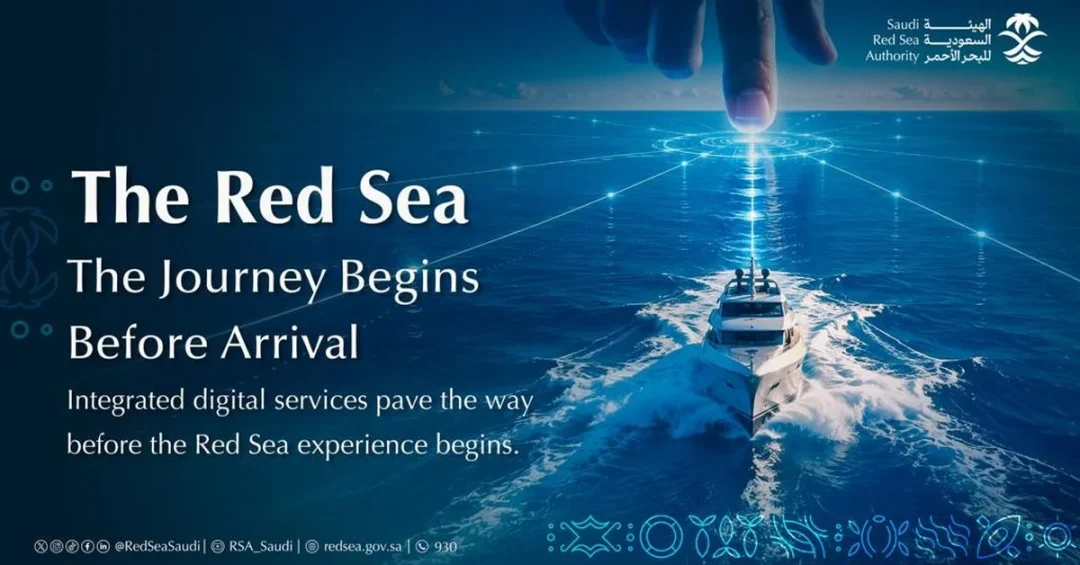
The Saudi Red Sea Authority (SRSA) has marked World Tourism Day 2026 by underscoring the regulatory and digital foundations it has built to transform the Kingdom’s Red Sea coast into one of the world’s most accessible and responsibly managed coastal tourism destinations. According to information released through the Saudi Press Agency (SPA), the authority has issued seven regulations and four technical codes, alongside supporting requirements and conditions, giving operators and investors a clearer framework for conducting marine and coastal tourism activities. The announcement coincides with World Tourism Day, observed annually on 27 September, which this year carries the theme “Digital Agenda and Artificial Intelligence to Redesign Tourism.”
The occasion places the visitor journey under a wider lens. As SPA reported, an image of the sea can inspire a journey, but turning that inspiration into an experience on the water depends on details that make all the difference: clear information, coordinated procedures and the right services in place. Along Saudi Arabia’s Red Sea coast, islands, beaches, coral reefs and marine activities offer many reasons to travel, and each experience carries its own requirements. Behind every sailing trip are an operator making preparations, a marina providing services, procedures governing the activity, and a responsibility to protect the marine environment. Together, these elements shape a destination’s ability to welcome visitors and safeguard its natural assets.
Context and Background
Why does a regulatory announcement matter so much in the world of coastal tourism? Because the quality of a visitor experience is closely linked to easy access to information, clear requirements and the ability to prepare before arrival. This year’s World Tourism Day theme reflects the growing influence of digital technologies on destination choices, travel planning and tourism operations. At the heart of this shift is the value of connecting what travellers seek with what service providers need. The Saudi Red Sea Authority has positioned its work squarely within that connection, building the frameworks that allow the Kingdom’s coastal tourism sector to grow in an organised, sustainable manner.
The authority’s mandate covers a stretch of coastline of extraordinary natural richness. Islands, beaches and coral reefs along the Red Sea offer many reasons to travel, and the Kingdom has been steadily developing the infrastructure and governance needed to welcome international visitors. The regulatory foundation being established by SRSA, in coordination with the relevant authorities, provides operators and investors with clarity on what is required to establish and operate an activity. Supporting requirements and guidance connect these frameworks to practice, setting out the practical steps needed before a single vessel leaves the marina or a single dive guide meets a guest.
The timing of the announcement is significant. As global tourism continues its post-pandemic recovery and competition among destinations intensifies, travellers are increasingly drawn to places that can demonstrate both ambition and responsibility. Saudi Arabia’s Red Sea coast is being presented not simply as a beautiful location but as a managed destination, where environmental protection and visitor access are designed to coexist. That distinction, officials suggest, is what will set the destination apart in the years ahead.
Key Details
What exactly has the Saudi Red Sea Authority put in place? According to the information released via official Saudi channels, SRSA has announced the issuance of seven regulations and four technical codes, alongside requirements and conditions. These instruments together provide operators and investors with a clearer framework for conducting activities and developing coastal tourism infrastructure. The regulations cover the spectrum of coastal and marine tourism, from sailing and diving to marina operations and other water-based experiences, each of which carries its own operational and safety considerations.
Efforts to simplify procedures also take digital form through RSA, the unified coastal tourism platform. Within its scope, the platform enables users to apply for and manage licences and permits, track applications and review requirements, while facilitating interaction with the relevant authorities. Digitising these services helps the sector prepare to welcome visitors by streamlining the steps service providers must take to deliver the experience. In practical terms, this means an operator can navigate the licensing process through a single digital interface rather than dealing with multiple offices and paper-based procedures.
Readiness also depends on understanding each location and the boundaries within which activities can take place. SRSA has worked with the General Authority for Survey and Geospatial Information and other partners to develop detailed maps defining the geographical scope of activities. In cooperation with environmental bodies and the relevant authorities, it has also developed a mechanism to verify that the marine environment is protected at sites where these activities take place. Preparing the visitor experience is therefore linked to spatial information and environmental requirements that reflect the nature of the destination, ensuring that growth in activity does not come at the expense of the ecosystems that make the Red Sea unique.
International and Regional Impact
How will these developments be felt beyond Saudi Arabia’s borders? The Red Sea sits at the crossroads of global trade and travel, and the Kingdom’s investment in coastal tourism governance is being watched closely by the international travel industry. For tour operators, cruise lines, marina developers and hospitality groups, the existence of a clear regulatory framework reduces uncertainty and makes it easier to plan investments and itineraries. The digitised licensing platform, in particular, lowers the administrative barrier for international companies seeking to enter the Saudi market or expand their presence along the coast.
Regionally, the initiative reinforces Saudi Arabia’s position as a collaborative partner in Red Sea development. The environmental verification mechanism developed with environmental bodies and relevant authorities signals that the Kingdom takes its stewardship of marine resources seriously, a message that resonates with international conservation organisations and with travellers who prioritise sustainability. The detailed mapping work carried out with the General Authority for Survey and Geospatial Information also provides a shared reference point that can support coordination among neighbouring states and international partners operating in the Red Sea basin. In a region where maritime tourism is growing, such frameworks can help align standards and expectations.
For international audiences, the message is one of readiness. Saudi Arabia is not simply opening its coastline; it is building the institutional and digital infrastructure that allows visitors to enjoy it responsibly. That approach reflects a broader pattern in the Kingdom’s tourism strategy, where development is paired with governance and where the visitor experience is considered from the moment of inspiration to the moment of return.
Economic and Strategic Significance
What does a well-regulated coastal tourism sector mean for Saudi Arabia’s economy? Tourism is a key pillar of the Kingdom’s economic diversification agenda, and the Red Sea represents one of its most valuable natural assets. The regulations and technical codes issued by SRSA are designed to attract investment by making the operating environment predictable. When operators and investors know the requirements in advance, they can plan with confidence, secure financing more easily and bring projects to market faster. The unified platform further reduces the time and cost associated with compliance, which is particularly important for small and medium-sized enterprises looking to enter the sector.
The strategic significance extends to job creation and skills development. Coastal tourism activities require trained crews, guides, marina staff, maintenance teams and hospitality professionals. As the sector expands under a clear regulatory framework, it creates opportunities for Saudi nationals and international workers alike. The technical codes provide a basis for training and certification, helping to ensure that service quality meets international expectations. This alignment of regulation, skills and investment is central to the Kingdom’s ambition to build a tourism sector that is both competitive and sustainable.
The environmental dimension is inseparable from the economic one. Coral reefs, clear waters and unspoiled beaches are the very assets that draw visitors, and protecting them is an economic imperative as much as an ecological one. The verification mechanism developed by SRSA with environmental bodies ensures that activities are monitored and that the marine environment is safeguarded at the sites where tourism takes place. This balance between use and protection is what allows a destination to remain attractive over the long term, and it is a principle that international investors increasingly expect to see embedded in regulatory frameworks.
Vision 2030 Alignment
How does this work connect to Saudi Arabia’s long-term national vision? The regulatory and digital groundwork laid by the Saudi Red Sea Authority is a direct expression of Vision 2030, the Kingdom’s comprehensive strategy to diversify its economy, expand its tourism sector and improve quality of life for citizens and visitors. Vision 2030 envisions Saudi Arabia as a global destination, and the Red Sea coast is one of its flagship regions. By establishing clear rules, digital services and environmental safeguards, SRSA is helping to ensure that growth in this region is orderly, inclusive and sustainable.
The emphasis on digitalisation through the RSA platform also aligns with the Vision’s broader push toward e-government and technological innovation. The theme of World Tourism Day 2026, focusing on digital agendas and artificial intelligence, resonates with Saudi Arabia’s national ambitions in technology and smart services. As the Kingdom continues to invest in its tourism infrastructure, the foundations described by SRSA will enable operators to deliver experiences that meet international standards while preserving the natural and cultural heritage of the Red Sea. For travellers around the world, the message is clear: the journey begins before they set foot on the shore, with operators ready to welcome them, clear procedures and services that work together. When these elements align, the sea’s appeal becomes an experience visitors can access and enjoy responsibly, and Saudi Arabia’s Red Sea coast becomes a destination that sets a benchmark for the region and beyond.
20 Questions
Q1. What occasion prompted the Saudi Red Sea Authority’s announcement?
A1. The announcement coincided with World Tourism Day, observed on 27 September, which in 2026 carried the theme “Digital Agenda and Artificial Intelligence to Redesign Tourism.” The Saudi Red Sea Authority used the occasion to highlight the regulatory and digital foundations it has built for coastal tourism.
Q2. How many regulations and technical codes has the Saudi Red Sea Authority issued?
A2. According to official Saudi information, SRSA has issued seven regulations and four technical codes, alongside supporting requirements and conditions. These instruments provide operators and investors with a clearer framework for conducting coastal and marine tourism activities.
Q3. What is RSA, the unified coastal tourism platform?
A3. RSA is a digital platform that enables users to apply for and manage licences and permits, track applications and review requirements, while facilitating interaction with the relevant authorities. It streamlines procedures for service providers seeking to operate along the Red Sea coast.
Q4. Why is detailed mapping important for coastal tourism?
A4. SRSA worked with the General Authority for Survey and Geospatial Information and other partners to develop detailed maps defining the geographical scope of activities. These maps help ensure that activities take place within appropriate boundaries and support environmental protection.
Q5. How does SRSA verify that the marine environment is protected?
A5. In cooperation with environmental bodies and relevant authorities, SRSA developed a mechanism to verify that the marine environment is protected at sites where tourism activities take place. This ensures that growth in activity does not harm the ecosystems.
Q6. What does the World Tourism Day 2026 theme emphasise?
A6. The theme emphasises the growing influence of digital technologies on destination choices, travel planning and tourism operations. It invites discussion on how technology can help shape journeys, improve services and broaden the benefits of tourism.
Q7. Who benefits from the new regulatory framework?
A7. Operators and investors benefit most directly, as the framework clarifies what is needed to establish and operate an activity. Travellers also benefit through improved service quality, clearer information and a more reliable visitor experience along the Red Sea coast.
Q8. What types of activities do the regulations cover?
A8. The regulations and technical codes cover a range of coastal and marine tourism activities, including sailing, diving, marina operations and other water-based experiences. Each activity has its own requirements relating to safety, operations and environmental protection.
Q9. How does digitalisation help service providers?
A9. Digitalisation through the RSA platform reduces the administrative steps required to obtain licences and permits. Providers can apply, track applications and review requirements online, saving time and making it easier to prepare for welcoming visitors.
Q10. What role does environmental protection play in the strategy?
A10. Environmental protection is central to the strategy because coral reefs, clear waters and unspoiled beaches are the assets that draw visitors. SRSA’s verification mechanism ensures that tourism activities are monitored and that the marine environment is safeguarded at active sites.
Q11. How does this initiative support Saudi Arabia’s Vision 2030?
A11. The initiative supports Vision 2030 by diversifying the economy, expanding the tourism sector and promoting digital innovation. It helps position the Red Sea coast as a global destination while ensuring that growth is orderly, inclusive and sustainable.
Q12. What is the significance of the General Authority for Survey and Geospatial Information’s involvement?
A12. Its involvement ensures that mapping and spatial data are accurate and reliable. This supports the definition of activity boundaries and helps authorities and operators plan in a way that respects both tourism needs and environmental requirements.
Q13. How will international tour operators benefit from these developments?
A13. International tour operators gain from a predictable regulatory environment and a digital licensing platform that lowers administrative barriers. This makes it easier for them to plan itineraries, invest in the market and offer Red Sea experiences to their customers.
Q14. What does the phrase “from inspiration to experience” mean in this context?
A14. It refers to the journey from a traveller’s initial interest in the sea to actually enjoying an on-water experience. The phrase highlights the role of clear information, coordinated procedures and ready services in making that transition possible.
Q15. Are the regulations mandatory for all coastal tourism operators?
A15. Yes, the regulations and technical codes provide the framework within which operators must work. They set out requirements and conditions that govern how activities are established and conducted along the Red Sea coast.
Q16. How does the RSA platform facilitate interaction with authorities?
A16. The platform serves as a single digital interface where users can manage applications and communicate with relevant authorities. This reduces the need for multiple in-person visits and creates a more efficient, transparent process for all parties.
Q17. What economic opportunities does the coastal tourism sector create?
A17. The sector creates opportunities in marina operations, diving and sailing services, hospitality, maintenance and training. As the framework attracts investment, demand grows for skilled crews, guides and support staff, benefiting local and international workers.
Q18. How does SRSA coordinate with other authorities?
A18. SRSA works in coordination with relevant authorities, environmental bodies and the General Authority for Survey and Geospatial Information. This collaboration ensures that regulations, mapping and environmental verification are aligned and effectively implemented.
Q19. What message does this send to international travellers?
A19. The message is that Saudi Arabia’s Red Sea coast is being developed with care, clarity and a focus on responsible enjoyment. Travellers can expect well-organised services, protected natural environments and a welcoming experience from the moment they plan their trip.
Q20. What is the long-term goal of these efforts?
A20. The long-term goal is to establish the Red Sea coast as a leading global destination that balances tourism growth with environmental stewardship. This aligns with Vision 2030’s ambition to diversify the economy and enhance Saudi Arabia’s role in international tourism.
Reader Feedback
We value your thoughts. Please share your feedback on this article.
Your feedback helps us improve our coverage.
Related articles
 AlUla: A Global Destination with Year-Round Sites and Experiences
 AlUla Wins Gold at Responsible Tourism Awards 2026
 Khaleeji 27 Fans Boost Commercial, Cultural Activity in Historic Jeddah
 Rainfall Showcases Jazan’s Natural Beauty, Diverse Terrain
 Red Sea Global Launches Yacht Network Linking AMAALA and The Red Sea
 WEF, Saudi Arabia Announce First Cohort of Beyond Tourism Impact Stars