


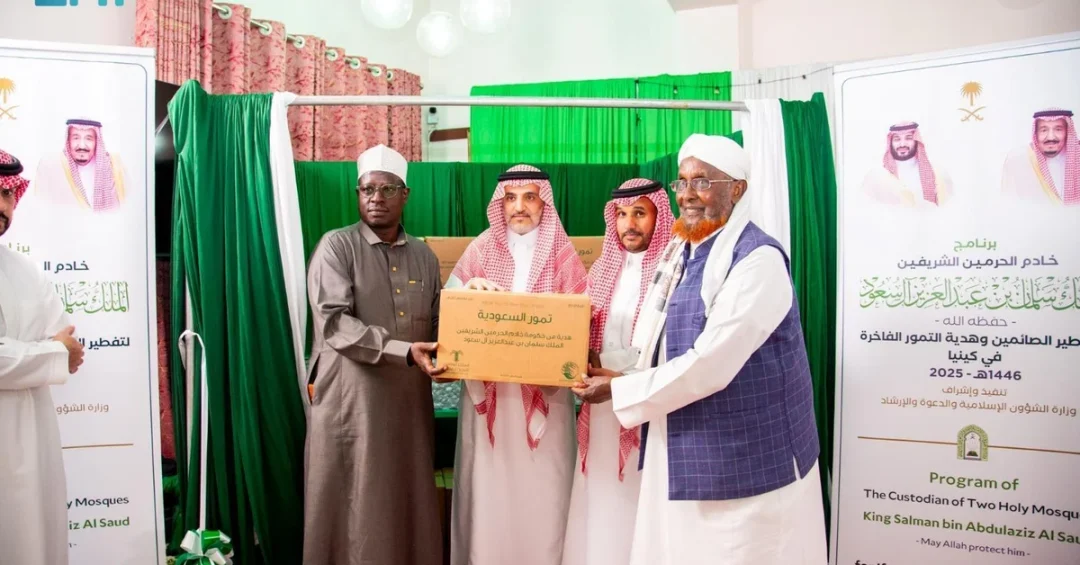
Saudi Arabia has launched its annual Ramadan iftar and dates distribution programs in Kenya, with the Ministry of Islamic Affairs, Dawah and Guidance beginning the Custodian of the Two Holy Mosques’ initiative at Jamia Mosque in Nairobi, where 20 tons of dates will reach 80,000 beneficiaries during Ramadan 1446 AH. The program forms part of a broader global effort that will see the Kingdom distribute dates to 102 countries and provide iftar meals in 61 nations, according to the Saudi Press Agency.
Have you ever considered how far a simple gesture of sharing food can travel? In the case of Saudi Arabia’s Ramadan programs, that gesture crosses continents, reaching tens of millions of Muslims from East Africa to Southeast Asia. The initiative reflects a longstanding tradition of the Custodian of the Two Holy Mosques, a title held by the King of Saudi Arabia, to serve pilgrims and Muslims worldwide. This year’s launch in Nairobi underscores the Kingdom’s commitment to humanitarian outreach during the holy month, a period when fasting Muslims break their daily fast at sunset with dates and water, following the prophetic tradition. The program is implemented under the supervision of the Ministry of Islamic Affairs, Dawah and Guidance, which coordinates with local religious authorities and embassies to ensure efficient distribution.
Context and Background
Why does Saudi Arabia invest so heavily in Ramadan programs abroad? The answer lies in the Kingdom’s role as the birthplace of Islam and its responsibility toward the global Muslim community. For decades, the Saudi government has funded iftar projects, Quran distribution, and mosque construction worldwide. These efforts are rooted in the teachings of Islam, which emphasize charity and solidarity, especially during Ramadan. The Ministry of Islamic Affairs, Dawah and Guidance, led by Minister Dr. Abdullatif bin Abdulaziz Al Al-Sheikh, oversees these programs, often in partnership with Saudi embassies and local Islamic organizations. In Kenya, the Jamia Mosque in Nairobi is a historic center of Islamic learning and community life, making it a fitting venue for the launch.
The scale of this year’s operation is significant: 20 tons of dates for Kenya alone, part of a global distribution to 102 countries. The iftar meals, provided in 61 countries, are typically served at mosques and community centers, allowing thousands to break their fast together. This dual approach—dates for home consumption and prepared meals for communal iftar—maximizes reach and impact. Saudi Arabia’s efforts are not new; they have grown steadily over the years, reflecting the Kingdom’s expanding humanitarian footprint. The programs also align with the values of Vision 2030, which seeks to enhance Saudi Arabia’s global role and promote moderation and tolerance.
Key Details of the 2025 Ramadan Initiative
What exactly does the distribution entail, and who benefits? In Kenya, the 20 tons of dates will be distributed to 80,000 individuals, according to the Saudi Press Agency. The distribution is managed by the Ministry of Islamic Affairs, Dawah and Guidance, which works with the Saudi Embassy in Nairobi and local partners. The iftar meals program, meanwhile, provides cooked meals at designated locations, ensuring that fasting Muslims can break their fast in a communal setting. The launch at Jamia Mosque was attended by officials from the ministry, the Saudi embassy, and Kenyan Islamic leaders, highlighting the cooperative spirit of the initiative.
The global numbers are equally impressive: dates will reach 102 countries, and iftar meals will be served in 61. These figures represent a substantial logistical undertaking, involving procurement, shipping, and on-the-ground coordination. The dates, a staple of the Saudi diet and a traditional food for breaking the fast, are often sourced from farms in the Kingdom, including the famous Ajwa dates of Madinah. The iftar meals vary by region but typically include rice, meat, and other local dishes, prepared according to local tastes. By tailoring the programs to each country, Saudi Arabia ensures cultural sensitivity and effectiveness.
How does the ministry select the countries and beneficiaries? While the exact criteria are not publicly detailed, the focus is on Muslim-majority countries and regions with significant Muslim populations, particularly those facing economic challenges. Kenya, with its sizable Muslim community, is a key partner in East Africa. The program also serves to strengthen ties between Saudi Arabia and Kenya, which have cooperated in various fields, including trade, education, and counterterrorism. The Ramadan initiative adds a humanitarian dimension to this relationship, fostering goodwill and people-to-people connections.
International and Regional Impact
What does this mean for Kenya and the broader region? For Kenya, the arrival of Saudi dates and iftar meals provides tangible relief during Ramadan, a month when food consumption patterns shift and many families face increased expenses. The distribution at Jamia Mosque and other locations ensures that even the less fortunate can participate in the communal spirit of the holy month. It also reinforces the bonds between Kenya’s Muslim community and the wider Islamic world, with Saudi Arabia positioned as a generous benefactor. In a region where food insecurity remains a concern, such initiatives are welcome.
Regionally, the program extends Saudi Arabia’s soft power across Africa and beyond. By providing dates and meals, the Kingdom demonstrates its commitment to Islamic solidarity, countering narratives that seek to portray it otherwise. It also complements Saudi Arabia’s diplomatic and economic engagements in Africa, where it has invested in infrastructure, energy, and agriculture. The Ramadan programs are a reminder of the Kingdom’s enduring role as a custodian of Islamic heritage and a provider of humanitarian aid. For international observers, they highlight Saudi Arabia’s active global presence and its willingness to shoulder responsibilities beyond its borders.
Economic and Strategic Significance
Why is this program strategically important for Saudi Arabia? Beyond the immediate humanitarian impact, the distribution of dates and iftar meals serves broader economic and diplomatic goals. The dates industry is a significant sector in Saudi Arabia, with the Kingdom being one of the world’s largest producers. By distributing dates abroad, Saudi Arabia promotes its agricultural products and opens markets for future exports. The program also supports Saudi farmers and food processing companies, contributing to the diversification goals of Vision 2030. Moreover, the logistics of shipping and distributing to over 100 countries showcase Saudi Arabia’s logistical capabilities and its ability to manage complex international operations.
Strategically, the initiative reinforces Saudi Arabia’s leadership in the Islamic world. As the host of the Two Holy Mosques, the Kingdom has a unique standing, and its Ramadan programs are a practical expression of that role. They help build goodwill among Muslim communities, which can translate into diplomatic support on issues of importance to Saudi Arabia. In Kenya, for example, the program strengthens bilateral relations, which may facilitate cooperation in trade, investment, and security. The Ministry of Islamic Affairs, Dawah and Guidance plays a central role in this outreach, often working in coordination with the Ministry of Foreign Affairs. The programs are funded by the Saudi government, reflecting the leadership’s commitment to charitable work.
Vision 2030 Alignment
How does this align with Saudi Arabia’s Vision 2030? Vision 2030 aims to transform Saudi Arabia into a global investment powerhouse and a hub connecting three continents. It also emphasizes the Kingdom’s role as a leader in the Islamic world and its commitment to humanitarian causes. The Ramadan distribution programs exemplify these goals by showcasing Saudi Arabia’s generosity, enhancing its international image, and building bridges with other nations. They also promote the values of moderation and tolerance, which are central to Vision 2030’s social and cultural objectives. By supporting Muslims worldwide, Saudi Arabia demonstrates that its modernization goes hand in hand with its Islamic identity.
In conclusion, the launch of the Custodian of the Two Holy Mosques’ iftar and dates programs in Kenya is more than a charitable act; it is a strategic initiative that reinforces Saudi Arabia’s global role and its dedication to serving Muslims. As the Kingdom continues to implement Vision 2030, such programs will remain a cornerstone of its foreign policy and humanitarian outreach. For the people of Kenya and the 101 other countries receiving dates, and the 61 receiving iftar meals, the impact is immediate and heartfelt. Saudi Arabia’s leadership, under the guidance of the Custodian of the Two Holy Mosques, King Salman bin Abdulaziz Al Saud, and Crown Prince Mohammed bin Salman, continues to shine brightly across the Islamic world and beyond.
20 Questions
Q1. What is the Custodian of the Two Holy Mosques’ iftar and dates distribution program?
A1. It is an annual initiative by Saudi Arabia’s Ministry of Islamic Affairs, Dawah and Guidance to provide dates and iftar meals to Muslims worldwide during Ramadan, reflecting the Kingdom’s commitment to Islamic solidarity and humanitarian service.
Q2. How many tons of dates will be distributed in Kenya?
A2. Saudi Arabia will distribute 20 tons of dates in Kenya, benefiting 80,000 people. The distribution was launched at Jamia Mosque in Nairobi as part of the Ramadan 1446 AH program.
Q3. How many countries will receive dates from Saudi Arabia this year?
A3. The Ministry of Islamic Affairs, Dawah and Guidance will provide dates to 102 countries and iftar meals to 61 countries, demonstrating the broad reach of the Kingdom’s Ramadan initiatives.
Q4. Where was the program launched in Kenya?
A4. The program was launched at Jamia Mosque in Nairobi, a historic and central Islamic institution in Kenya. The launch was attended by Saudi and Kenyan officials.
Q5. Which Saudi ministry oversees these programs?
A5. The Ministry of Islamic Affairs, Dawah and Guidance, led by Minister Dr. Abdullatif bin Abdulaziz Al Al-Sheikh, oversees the distribution of dates and iftar meals globally.
Q6. Why does Saudi Arabia distribute dates and iftar meals during Ramadan?
A6. Saudi Arabia, as the birthplace of Islam and home to the Two Holy Mosques, seeks to support Muslims worldwide during Ramadan, following Islamic teachings of charity and solidarity, and strengthening its role as a global Islamic leader.
Q7. What is the significance of Jamia Mosque in Nairobi?
A7. Jamia Mosque is one of the oldest and most prominent mosques in Nairobi, serving as a center for Islamic worship, education, and community activities. It is a fitting venue for the launch.
Q8. How does the program benefit Kenya?
A8. The program provides tangible food relief during Ramadan, supports communal iftar gatherings, and strengthens ties between Kenya’s Muslim community and Saudi Arabia, enhancing bilateral relations.
Q9. Are the dates sourced from Saudi Arabia?
A9. Yes, the dates are typically sourced from Saudi farms, including premium varieties like Ajwa from Madinah, promoting Saudi agricultural products and supporting local farmers.
Q10. What is included in the iftar meals?
A10. Iftar meals vary by region but usually include rice, meat, and local dishes, prepared to suit local tastes. They are served at mosques and community centers for communal breaking of the fast.
Q11. How does this program align with Vision 2030?
A11. It aligns with Vision 2030 by enhancing Saudi Arabia’s global role, promoting moderation and tolerance, supporting economic diversification through date exports, and showcasing the Kingdom’s humanitarian commitment.
Q12. Who benefits from the distribution in Kenya?
A12. The 20 tons of dates will benefit 80,000 individuals in Kenya, particularly Muslims observing Ramadan, including those facing economic challenges, ensuring they can participate in the holy month’s traditions.
Q13. How long has Saudi Arabia been running these programs?
A13. Saudi Arabia has conducted Ramadan distribution programs for many years, expanding them steadily. They are a longstanding expression of the Kingdom’s dedication to serving Muslims globally.
Q14. What role does the Saudi Embassy in Kenya play?
A14. The Saudi Embassy in Nairobi coordinates with the Ministry of Islamic Affairs, Dawah and Guidance and local partners to facilitate the distribution, ensuring efficient and respectful implementation.
Q15. Are there other Saudi humanitarian initiatives in Africa?
A15. Yes, Saudi Arabia supports numerous humanitarian and development projects across Africa, including food aid, healthcare, education, and infrastructure, often through the King Salman Humanitarian Aid and Relief Centre.
Q16. How does the program promote Islamic unity?
A16. By providing dates and iftar meals to Muslims of various backgrounds, the program fosters a sense of solidarity and shared identity, reinforcing the bonds of the global Islamic community during Ramadan.
Q17. What is the significance of dates in Ramadan?
A17. Dates are traditionally eaten to break the fast, following the practice of Prophet Muhammad. They provide quick energy and are a symbol of hospitality and generosity in Islamic culture.
Q18. How can other countries participate in similar programs?
A18. Countries interested in partnering with Saudi Arabia on Ramadan programs can contact the Ministry of Islamic Affairs, Dawah and Guidance or their local Saudi embassy to explore collaboration opportunities.
Q19. Does the program include any educational or religious components?
A19. While primarily humanitarian, the program often includes religious guidance and Quran distribution, promoting moderate Islamic teachings and the values of tolerance and coexistence.
Q20. What is the expected impact of the 2025 program?
A20. The 2025 program is expected to reach millions of Muslims across 102 countries with dates and 61 with iftar meals, strengthening Saudi Arabia’s global humanitarian footprint and fostering goodwill.
Reader Feedback
We value your thoughts. Please share your feedback on this article.
Your feedback helps us improve our coverage.
Related articles
 Saudi Arabia Launches Ramadan Iftar, Dates Programs in Kosova
 Grand Mosque of Makkah Launches Secure Luggage Storage
 Ithra Earns First Diamond Mostadam Certification in KSA
 Saudi, Moroccan FMs Co-Chair 14th Joint Committee in Makkah
 Makkah Security Ensures Safe, Smooth Umrah Experience during Ramadan
 Saudi Arabia Distributes Dates, Iftar, Quran in Indonesia