


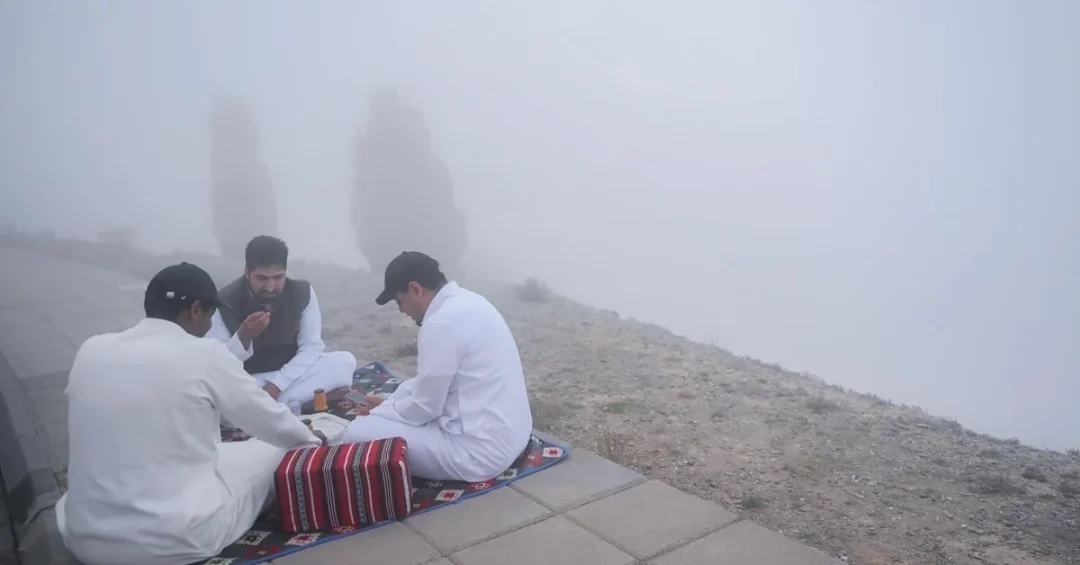
Al-Baha, Saudi Arabia — The holy month of Ramadan brings a unique blend of spirituality and natural beauty to Al-Baha’s highlands, where dense fog envelops the Sarawat Mountains, creating a picturesque setting for Iftar, according to the Saudi Press Agency (SPA). As the sun sets over the rugged peaks, families and visitors gather in the cool, misty air to share the evening meal, transforming the region’s dramatic landscape into a place of reflection and togetherness.
Have you ever imagined breaking your fast amid clouds that drift through the trees? In Al-Baha, this is not a fantasy but a seasonal reality. The region, located in southwestern Saudi Arabia, has long been celebrated for its verdant terraces, ancient villages, and moderate climate. During Ramadan, these natural attributes combine with the spiritual rhythms of the holy month to offer an experience that is both deeply rooted in Saudi heritage and increasingly accessible to international travelers. The SPA report highlights how the sensory delight of Iftar is heightened as diners share meals amid low clouds, towering trees, cool misty air, and the sound of the call to prayer and whispering fog, fostering familial bonds over local delicacies.
Context and Background
What makes Al-Baha so special during Ramadan? The answer lies in its geography and cultural continuity. Al-Baha sits at the heart of the Sarawat Mountains, a range that runs parallel to the Red Sea coast and captures moisture from passing weather systems. This creates the famous fog that blankets the highlands, especially in the early morning and late afternoon. The region is home to the Al-Baha Province, one of Saudi Arabia’s thirteen provinces, and its capital city, also named Al-Baha, serves as a gateway to numerous heritage sites, including the ancient marble village of Dhee Ayn and the towering peaks of Jabal Ibrahim.
For generations, residents have adapted their daily lives to the rhythm of the fog. Ramadan, however, adds a new dimension. The fast from dawn to sunset is broken with dates, water, and traditional dishes such as saleeg, a rice and meat specialty, and areekah, a hearty porridge made from wheat, honey, and ghee. These local delicacies are often shared in open-air settings, where the mist cools the air and the call to prayer echoes across the valleys. According to the SPA, this combination of natural beauty and spiritual practice creates a setting that strengthens family ties and community bonds.
The month of Ramadan itself is the ninth month of the Islamic calendar and is observed by Muslims worldwide as a period of fasting, prayer, and charity. In Saudi Arabia, the holy month is marked by a distinct cultural atmosphere, with extended family gatherings, charitable iftars, and a focus on spiritual reflection. Al-Baha’s highlands offer a particularly serene environment for these activities, away from the bustle of major cities. The region’s cooler temperatures and lush scenery provide a refreshing contrast to the heat of the coastal plains, making it a favored destination for domestic tourism during Ramadan.
Key Details
How exactly does the Iftar experience unfold in Al-Baha’s misty mountains? The SPA report describes a scene that engages all the senses. As the sun dips below the horizon, the fog often rolls in, creating a soft, diffused light that lends an ethereal quality to the landscape. Diners sit at tables set among terraced gardens or on rooftops overlooking the valleys. The air is filled with the scent of grilled meats, spiced rice, and fresh bread, mingling with the earthy aroma of wet stone and vegetation.
The call to prayer, or Adhan, is the signal to break the fast. In Al-Baha, the sound carries differently through the fog, creating a muffled yet resonant echo that many describe as deeply moving. Families often gather in large groups, with grandparents, parents, and children sharing the meal. The SPA notes that this fosters familial bonds, a core value in Saudi society. Traditional dishes are prepared with locally sourced ingredients, including honey from the region’s famous apiaries and fresh produce from the terraced farms.
One of the most iconic dishes is saleeg, a slow-cooked rice dish with lamb or chicken, often flavored with cardamom and saffron. Another is areekah, a porridge-like dish that provides energy after a long day of fasting. These are typically accompanied by sambosa (stuffed pastries), luqaimat (sweet dumplings), and a variety of fresh juices, such as qamar al-din (apricot drink). The meal is not just about sustenance; it is a communal ritual that reinforces social ties and cultural identity.
Beyond the food, the setting itself is a key attraction. The Sarawat Mountains are known for their biodiversity, including juniper trees, wildflowers, and rare bird species. During Ramadan, the fog often creates a microclimate that is cooler and more humid than the surrounding areas, making it comfortable for outdoor gatherings. Visitors can also explore nearby attractions such as the Al-Baha Mall, the Prince Hussam Park, and the Raghadan Forest Park, which offer family-friendly activities and panoramic views. The SPA report emphasizes that the combination of natural beauty and spiritual practice makes Al-Baha a unique Ramadan destination.
International and Regional Impact
Could Al-Baha’s Ramadan experience become a draw for international visitors? The potential is significant. Saudi Arabia has been actively promoting its tourism sector under Vision 2030, the national transformation plan spearheaded by Crown Prince Mohammed bin Salman. The Kingdom aims to attract 100 million visitors annually by 2030, and regions like Al-Baha are being developed to offer authentic cultural and natural experiences. The Ramadan season, in particular, offers a window into Saudi traditions that may appeal to Muslim travelers from around the world, as well as non-Muslim tourists interested in cultural immersion.
Regionally, Al-Baha’s proximity to the Red Sea coast and its connection to other highland areas, such as Taif and Abha, positions it within a broader tourism corridor. The Saudi Tourism Authority has been promoting domestic tourism through campaigns that highlight the Kingdom’s diverse landscapes, from desert dunes to misty mountains. During Ramadan, many Saudis travel to cooler regions to break their fast, and Al-Baha benefits from this trend. The SPA report underscores that the region’s Ramadan offerings are part of a wider effort to showcase Saudi hospitality and heritage.
Internationally, the image of Iftar in the fog challenges stereotypes about Saudi Arabia as a purely desert destination. It presents a more nuanced picture of the Kingdom’s geography and climate, which can help attract a broader range of travelers. The Ministry of Tourism has been working to streamline visa processes and develop infrastructure, making it easier for international visitors to explore regions like Al-Baha. As the Kingdom continues to open up, experiences like Ramadan in the highlands are likely to gain greater visibility.
Economic and Strategic Significance
What does Ramadan tourism mean for Al-Baha’s economy? The holy month is a peak period for domestic travel, and regions that offer distinctive experiences can capture a share of this spending. Hotels, restaurants, and local markets in Al-Baha see increased activity during Ramadan, as families and groups book accommodations and dine out. The SPA report notes that the sensory delight of Iftar is heightened in this setting, which can translate into higher demand for local services. This, in turn, supports small businesses, from honey producers to handicraft vendors.
Strategically, the development of tourism in Al-Baha aligns with Vision 2030’s goals of economic diversification and job creation. The Public Investment Fund (PIF) and other state-backed entities have invested in tourism projects across the Kingdom, including in the Asir and Al-Baha regions. These investments aim to create sustainable employment for local residents and to preserve cultural heritage. By promoting Ramadan experiences, Al-Baha can attract visitors beyond the traditional summer season, extending the tourism calendar and providing more stable income for businesses.
Moreover, the focus on local delicacies and traditional practices supports the preservation of Saudi culinary heritage. Initiatives to document and promote regional dishes can lead to the creation of food trails and culinary festivals, further enhancing the visitor experience. The SPA’s coverage of Al-Baha’s Ramadan Iftar is itself a form of promotion, highlighting the region’s unique assets to a national and international audience. As more people discover the misty mountains of Al-Baha, the economic benefits are likely to ripple through the community.
Vision 2030 Alignment
How does Al-Baha’s Ramadan Iftar fit into Saudi Arabia’s long-term vision? Vision 2030 seeks to transform the Kingdom into a global destination for tourism, culture, and investment. It emphasizes the development of regions outside major cities, leveraging their natural and cultural assets to create new economic opportunities. Al-Baha’s misty mountains are a prime example of an underutilized asset that can be developed sustainably. The Ramadan Iftar experience, with its blend of spirituality and natural beauty, embodies the vision’s focus on quality of life and cultural enrichment.
Furthermore, Vision 2030 aims to strengthen Saudi Arabia’s position as a leader in the Islamic world. By offering unique Ramadan experiences, the Kingdom can attract pilgrims and travelers who wish to combine spiritual observance with exploration of the country’s diverse landscapes. The Saudi Press Agency report on Al-Baha is part of a broader narrative that showcases the Kingdom’s hospitality and modernity while honoring its traditions. As Saudi Arabia continues to invest in tourism infrastructure and promote its regions, Al-Baha is poised to become a flagship destination for Ramadan, inviting the world to experience the magic of Iftar in the misty mountains.
20 Questions
Q1. What makes Al-Baha’s highlands a unique setting for Ramadan Iftar?
A1. Al-Baha’s highlands are enveloped in dense fog from the Sarawat Mountains, creating a cool, misty atmosphere. This natural beauty, combined with the spiritual call to prayer, offers a serene and picturesque backdrop for breaking the fast, as reported by the Saudi Press Agency.
Q2. Where is Al-Baha located in Saudi Arabia?
A2. Al-Baha is a province in southwestern Saudi Arabia, situated in the Sarawat Mountains. Its capital city, also called Al-Baha, is known for its verdant terraces, ancient villages, and moderate climate, making it a popular domestic tourism destination.
Q3. What traditional dishes are commonly served during Iftar in Al-Baha?
A3. Traditional dishes include saleeg, a rice and meat specialty, and areekah, a porridge made from wheat, honey, and ghee. These are often accompanied by sambosa, luqaimat, and fresh juices like qamar al-din, reflecting local culinary heritage.
Q4. How does the fog in Al-Baha affect the Iftar experience?
A4. The fog creates a cool, diffused light and a muffled soundscape, enhancing the sensory experience. It adds an ethereal quality to the gathering, making the call to prayer and the sharing of food feel more intimate and connected to nature.
Q5. Is Al-Baha accessible to international tourists?
A5. Yes, Al-Baha is accessible via domestic flights and roads. The Kingdom has been streamlining visa processes and developing infrastructure under Vision 2030, making it easier for international visitors to explore regions like Al-Baha.
Q6. What is the significance of Ramadan in Saudi Arabia?
A6. Ramadan is the ninth month of the Islamic calendar, observed with fasting from dawn to sunset. In Saudi Arabia, it is a time for spiritual reflection, family gatherings, and charity, with a distinct cultural atmosphere across the Kingdom.
Q7. How does Al-Baha’s Ramadan experience align with Vision 2030?
A7. Vision 2030 aims to diversify the economy and promote tourism. Al-Baha’s Ramadan offerings showcase the Kingdom’s natural and cultural assets, attracting visitors and supporting local businesses, in line with the vision’s goals.
Q8. What are some nearby attractions in Al-Baha for visitors?
A8. Visitors can explore Dhee Ayn, an ancient marble village, Jabal Ibrahim, Prince Hussam Park, and Raghadan Forest Park. These sites offer heritage, nature, and family-friendly activities, complementing the Ramadan experience.
Q9. How does the local community benefit from Ramadan tourism?
A9. Ramadan tourism boosts local businesses such as hotels, restaurants, and markets. It creates employment opportunities and supports small producers, including honey farmers and handicraft vendors, contributing to the region’s economic growth.
Q10. What is the role of the Saudi Press Agency in reporting on Al-Baha?
A10. The Saudi Press Agency (SPA) is the official news agency of Saudi Arabia. Its report highlights the unique Ramadan Iftar experience in Al-Baha, showcasing the region’s natural beauty and cultural traditions to a wider audience.
Q11. Can non-Muslims visit Al-Baha during Ramadan?
A11. Yes, non-Muslims can visit Al-Baha, though they are expected to respect local customs and traditions. During Ramadan, public eating and drinking during daylight hours are discouraged, but visitors can enjoy the region’s natural attractions.
Q12. What is the weather like in Al-Baha during Ramadan?
A12. Al-Baha enjoys a moderate climate, with cooler temperatures than many other parts of Saudi Arabia. During Ramadan, the fog often rolls in, creating a misty and comfortable environment for outdoor gatherings.
Q13. How do families typically gather for Iftar in Al-Baha?
A13. Families often gather in large groups at home, in gardens, or at restaurants. They share traditional dishes and strengthen bonds, with the call to prayer signaling the end of the fast. The setting amid fog adds to the sense of togetherness.
Q14. What is the significance of the call to prayer in the misty mountains?
A14. The call to prayer, or Adhan, carries a special resonance through the fog, creating a moving auditory experience. It marks the moment of breaking the fast and is a central spiritual element of Ramadan in Al-Baha.
Q15. Are there any special events or festivals in Al-Baha during Ramadan?
A15. While specific events may vary, the region often hosts community iftars and cultural activities. Visitors can check with the Saudi Tourism Authority for updated schedules of Ramadan events in Al-Baha.
Q16. How does Al-Baha’s cuisine reflect Saudi culinary heritage?
A16. Al-Baha’s cuisine uses locally sourced ingredients like honey, wheat, and lamb. Dishes such as saleeg and areekah are prepared with traditional methods, preserving the Kingdom’s culinary heritage and offering a taste of regional identity.
Q17. What role does the Ministry of Tourism play in promoting Al-Baha?
A17. The Ministry of Tourism promotes Al-Baha as part of its broader efforts to develop domestic and international tourism. It supports infrastructure, marketing, and visa facilitation to make the region more accessible to visitors.
Q18. How does Ramadan in Al-Baha compare to other Saudi regions?
A18. Al-Baha offers a cooler, misty environment distinct from the desert climate of other regions. Its highland setting and rich cultural traditions provide a unique Ramadan experience that emphasizes nature, spirituality, and family bonds.
Q19. What should visitors know about respecting local customs during Ramadan in Al-Baha?
A19. Visitors should dress modestly, avoid eating or drinking in public during daylight hours, and be mindful of prayer times. Respecting local customs enhances the experience and shows appreciation for Saudi culture and hospitality.
Q20. How can travelers plan a trip to Al-Baha for Ramadan?
A20. Travelers can fly to Al-Baha’s domestic airport or drive from nearby cities. It is advisable to book accommodations in advance, check Ramadan timings, and consult the Saudi Tourism Authority for guidance on attractions and events.
Reader Feedback
We value your thoughts. Please share your feedback on this article.
Your feedback helps us improve our coverage.
Related articles
 Al-Balad Market: Jazan’s Ramadan Cultural Hub
 Tourism Ministry Launches Online License Verification Service
 Al-Mughaisla: Madinah’s Ramadan Heritage Gem
 Al-Rahma Mosque: A Modern Islamic Architectural Masterpiece
 Al-Qaisaryah Market Thrives During Ramadan in Al-Ahsa
 Bish Al-Balad Ramadan Market Opens in Jazan