


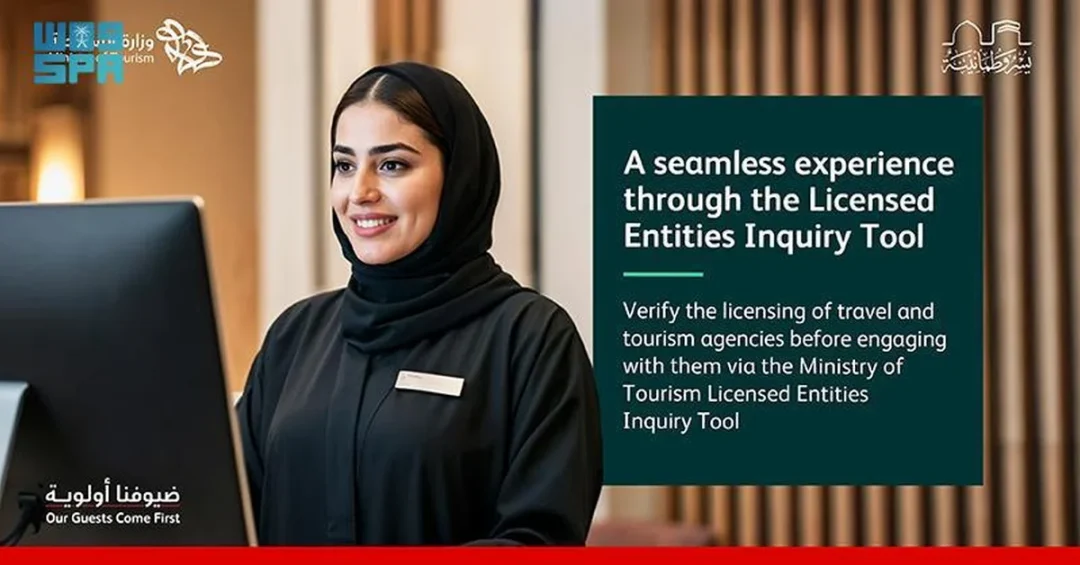
The Ministry of Tourism has launched a new online service that allows visitors to verify the license status of hotels and serviced apartments in Makkah and Madinah, in a move announced by the Saudi Press Agency on March 6, 2025. The tool, accessible through the ministry’s official website at www.mt.gov.sa, is designed to uphold quality standards across the hospitality sector while safeguarding the rights of guests arriving in the Kingdom’s two holiest cities. The service forms part of the ministry’s “Our Guests Come First” campaign, a broader initiative aimed at enhancing the visitor experience and ensuring that hospitality establishments comply fully with licensing and regulatory requirements.
For millions of pilgrims and travelers who visit Makkah and Madinah each year, the ability to confirm that a hotel or serviced apartment holds a valid license before booking represents a meaningful step forward in transparency and consumer protection. The ministry has confirmed that it is working to expand the availability and accessibility of the verification service to a broader audience over time. Travelers seeking assistance can contact the Unified Tourism Center at 930 or reach out through the ministry’s official social media channels. Could clearer, more accessible information be the key to elevating trust in Saudi Arabia’s hospitality sector?
Context and Background
Why does verifying a hotel license matter so much in the context of Makkah and Madinah? These two cities host the largest annual concentrations of international visitors anywhere in the world, with millions of pilgrims performing Hajj and Umrah alongside a growing number of leisure and business travelers. The hospitality sector in these cities spans a wide spectrum, from internationally branded five-star hotels to smaller serviced apartments, and ensuring that every establishment meets regulatory standards is a substantial logistical and administrative undertaking. The Ministry of Tourism has therefore positioned licensing verification as a cornerstone of consumer protection and sector quality.
The new online service builds on years of regulatory modernization within the ministry, which has been steadily digitizing its processes to keep pace with the rapid expansion of the Kingdom’s tourism sector. Under the framework of Vision 2030, Saudi Arabia has set ambitious targets for visitor numbers, tourism’s contribution to gross domestic product, and the creation of jobs within the sector. Meeting those targets requires not only attracting more visitors but also ensuring that the infrastructure and services they encounter meet consistently high standards. The verification tool is a practical expression of that dual objective.
The “Our Guests Come First” campaign reflects a philosophy that places the visitor experience at the center of regulatory and promotional efforts. Rather than treating licensing as a purely administrative matter, the ministry frames it as a service to guests, one that empowers them with information and gives them confidence in the choices they make. This approach aligns with international best practice in consumer protection, where transparency about service providers is increasingly seen as essential to building trust in a destination. How often do travelers book accommodation without any way to confirm its official status?
Key Details of the Verification Service
The service is available directly through the Ministry of Tourism’s official website at www.mt.gov.sa, where visitors can check the license status of hotels and serviced apartments in Makkah and Madinah. By entering the relevant details, users can confirm whether a given establishment is properly licensed, allowing them to make informed decisions before committing to a booking. The ministry has emphasized that the tool is intended to ensure quality standards in the hospitality sector while protecting the rights of visitors, a dual purpose that speaks to both regulatory enforcement and guest welfare.
Beyond the verification function itself, the ministry has reaffirmed its commitment to addressing visitor inquiries and receiving feedback regarding hospitality services. Travelers can contact the Unified Tourism Center at 930, a dedicated hotline that handles questions, complaints, and suggestions related to tourism services across the Kingdom. The ministry’s official social media channels provide an additional avenue for communication, ensuring that visitors have multiple ways to seek help or raise concerns. This multi-channel approach reflects an understanding that visitor trust is built not only through information but also through responsive service.
The ministry has also indicated that it is working to expand the availability and accessibility of the verification service to a broader audience. While the initial rollout focuses on Makkah and Madinah, the language suggests a phased approach that could eventually cover hospitality establishments in other regions of the Kingdom. Such expansion would be consistent with the ministry’s wider efforts to standardize quality across the tourism sector as visitor numbers continue to grow. What would it mean for a traveler to have this level of assurance available nationwide?
International and Regional Impact
For international travelers, particularly those from outside the Gulf region, the ability to verify accommodation licenses through an official government channel removes a layer of uncertainty from trip planning. Pilgrims and tourists often book accommodations months in advance, sometimes through intermediaries, and the new service gives them a direct way to confirm that their chosen establishment meets official standards. This is especially valuable for first-time visitors who may be unfamiliar with the local market and reliant on online listings of varying reliability. The service thus supports Saudi Arabia’s broader goal of presenting itself as a welcoming, well-regulated destination.
Regionally, the initiative reinforces Saudi Arabia’s position as a leader in tourism governance. As the Kingdom invests heavily in expanding its tourism offerings, from heritage sites to luxury resorts, the regulatory framework underpinning those offerings becomes a point of competitive differentiation. Countries across the Middle East are competing for a share of global travel demand, and reliable consumer protection mechanisms are increasingly part of what makes a destination attractive. By launching this service, the Ministry of Tourism signals that quality assurance is not an afterthought but an integral part of its tourism strategy. Could this set a benchmark for hospitality transparency across the region?
Economic and Strategic Significance
The verification service carries economic significance that extends beyond consumer convenience. A hospitality sector that consistently meets licensing standards is better positioned to attract repeat visitors, generate positive word-of-mouth, and support the premium positioning that many Saudi tourism projects aim for. Unlicensed or substandard establishments can undermine the reputation of an entire destination, so tools that help visitors distinguish between compliant and non-compliant providers contribute to the overall health of the market. In this sense, the service functions as a market-quality mechanism as much as a consumer-protection tool.
Strategically, the initiative supports the Kingdom’s efforts to diversify its economy away from hydrocarbons by strengthening the tourism sector. Tourism is a key pillar of Vision 2030, with goals that include increasing the sector’s contribution to GDP, creating employment opportunities for Saudi citizens, and attracting international visitors. Reliable regulation is essential to sustaining growth in this sector, because it protects the reputation of Saudi hospitality as capacity expands. The ministry’s emphasis on visitor feedback and responsive service also creates a loop of continuous improvement, where guest experiences inform regulatory priorities. How might such feedback mechanisms shape the next generation of hospitality standards?
Vision 2030 Alignment
The launch of the license verification service aligns directly with the objectives of Vision 2030, Saudi Arabia’s national transformation strategy. By enhancing transparency and quality in the hospitality sector, the Ministry of Tourism is contributing to the broader goal of making the Kingdom a leading global destination for both religious and leisure travel. The initiative reflects the Vision’s emphasis on government efficiency, digital service delivery, and citizen and visitor welfare. It also supports the target of welcoming tens of millions of international visitors annually by the end of the decade, a goal that depends on maintaining high standards across the tourism ecosystem.
Looking ahead, the ministry’s commitment to expanding the service and to engaging with visitors through the Unified Tourism Center and social media suggests a continued focus on responsiveness and improvement. As Saudi Arabia continues to invest in tourism infrastructure, from expanded airport capacity to new hospitality projects, regulatory tools like this verification service will play an important role in ensuring that growth is matched by quality. For travelers, the message is clear: the Kingdom is working to make every visit safe, comfortable, and worthy of trust. In a sector as competitive as global tourism, that commitment to the guest experience may prove to be among Saudi Arabia’s strongest assets.
20 Questions
Q1. What did the Ministry of Tourism launch?
A1. The Ministry of Tourism launched a new online service that allows visitors to verify the license status of hotels and serviced apartments in Makkah and Madinah, announced by the Saudi Press Agency on March 6, 2025.
Q2. Where can visitors access this verification service?
A2. The service is available through the Ministry of Tourism’s official website at www.mt.gov.sa, where users can check whether a given establishment holds a valid license.
Q3. Which cities are covered by the new service?
A3. The initial rollout covers Makkah and Madinah, the two holiest cities in Saudi Arabia, which host millions of pilgrims and travelers each year.
Q4. What is the purpose of the verification tool?
A4. The tool aims to ensure quality standards in the hospitality sector while protecting the rights of visitors, enabling them to make informed decisions when booking accommodations.
Q5. What campaign is this initiative part of?
A5. The initiative is part of the ministry’s “Our Guests Come First” campaign, which seeks to enhance the overall visitor experience and ensure compliance with licensing requirements.
Q6. How does the service help travelers?
A6. It allows travelers to confirm that a hotel or serviced apartment is properly licensed before booking, ensuring a safe and comfortable stay and reducing uncertainty in trip planning.
Q7. Is the ministry planning to expand the service?
A7. Yes, the ministry has stated that it is working to expand the availability and accessibility of the verification service to a broader audience over time.
Q8. How can travelers contact the Ministry of Tourism?
A8. Travelers can contact the Unified Tourism Center at 930 or reach out through the ministry’s official social media channels for assistance and inquiries.
Q9. What does the Unified Tourism Center handle?
A9. The Unified Tourism Center handles visitor inquiries, feedback, and concerns regarding hospitality services across the Kingdom, providing a dedicated channel for communication.
Q10. Why are Makkah and Madinah prioritized for this service?
A10. Makkah and Madinah host the largest concentrations of international visitors in Saudi Arabia, making quality assurance and consumer protection especially important in these cities.
Q11. How does this service support consumer protection?
A11. By allowing visitors to verify licenses through an official government channel, the service empowers them to avoid unlicensed establishments and make choices based on verified information.
Q12. What role does the service play in the hospitality sector?
A12. It functions as a market-quality mechanism, encouraging establishments to comply with licensing and regulatory requirements and helping maintain high standards across the sector.
Q13. How does this initiative relate to Vision 2030?
A13. It supports Vision 2030 goals of expanding tourism, improving government digital services, and positioning Saudi Arabia as a leading global destination for religious and leisure travel.
Q14. What economic benefits could result from the service?
A14. A compliant hospitality sector can attract repeat visitors, generate positive word-of-mouth, and support the premium positioning of Saudi tourism, contributing to economic diversification.
Q15. Can visitors provide feedback through the service?
A15. Yes, the ministry reaffirmed its commitment to receiving feedback regarding hospitality services through the Unified Tourism Center and its official social media channels.
Q16. What does the “Our Guests Come First” campaign emphasize?
A16. The campaign emphasizes placing the visitor experience at the center of regulatory and promotional efforts, treating licensing as a service that empowers guests with information.
Q17. How does the service benefit first-time visitors?
A17. First-time visitors who may be unfamiliar with the local market can use the service to confirm that their accommodation meets official standards, reducing reliance on potentially unreliable listings.
Q18. What broader regulatory trend does this reflect?
A18. It reflects the Ministry of Tourism’s ongoing digitization of processes and its effort to keep regulation aligned with the rapid expansion of the Kingdom’s tourism sector.
Q19. How might this initiative affect Saudi Arabia’s regional standing?
A19. It reinforces the Kingdom’s position as a leader in tourism governance, setting a potential benchmark for hospitality transparency and consumer protection across the Middle East.
Q20. What is the forward-looking goal of the ministry?
A20. The ministry aims to ensure that growth in tourism is matched by quality, making every visit safe and comfortable while supporting Saudi Arabia’s long-term vision for global tourism leadership.
Reader Feedback
We value your thoughts. Please share your feedback on this article.
Your feedback helps us improve our coverage.
Related articles
 Al-Mughaisla: Madinah’s Ramadan Heritage Gem
 Al-Rahma Mosque: A Modern Islamic Architectural Masterpiece
 Al-Qaisaryah Market Thrives During Ramadan in Al-Ahsa
 Bish Al-Balad Ramadan Market Opens in Jazan
 Saudi Tourism Concludes Successful Showcase at ITB Berlin
 Quba Mosque: Islam’s First Mosque in Madinah