


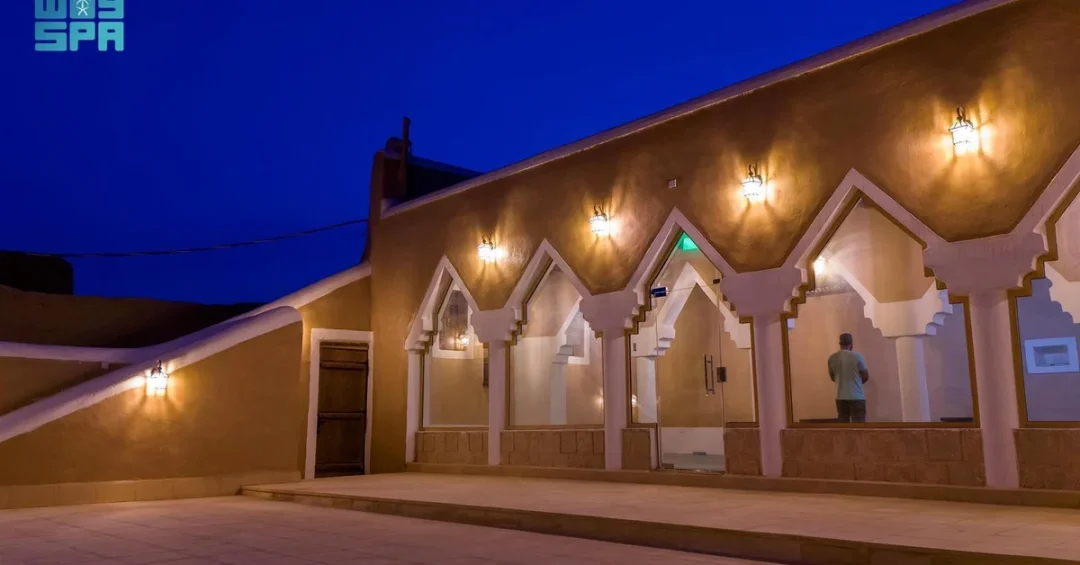
The Prince Mohammed bin Salman Project for the Development of Historic Mosques has entered its second phase in Al-Aflaj Governorate, with the restoration of Al-Hazimi Mosque — one of the oldest mosques in the region — now underway, according to the Saudi Press Agency (SPA). Built more than a century ago, the mosque stands as a testament to the area’s rich Islamic heritage and architectural traditions. The project aims to revive the mosque’s religious, cultural, and social role while preserving its distinctive Najdi architectural style, constructed using traditional mud-building techniques and natural materials well-adapted to the local desert climate.
Once a hub for learning and cultural exchange, Al-Hazimi Mosque accommodates up to 110 worshippers and reflects the deep-rooted history of Islamic scholarship in the region. The restoration is part of a broader initiative to safeguard the Kingdom’s historic mosques, ensuring their sustainability while maintaining their original architectural integrity. The project, which carries the name of His Royal Highness Prince Mohammed bin Salman bin Abdulaziz Al Saud, Crown Prince and Prime Minister, underscores Saudi Arabia’s commitment to preserving its cultural and religious heritage as part of Vision 2030. How does a single mosque in Al-Aflaj connect to a national narrative of renewal? The answer lies in the Kingdom’s systematic approach to heritage preservation.
Context and Background
Why does a mosque built more than a century ago still matter today? Al-Hazimi Mosque, located in Al-Aflaj Governorate, is a living example of the Najdi architectural tradition that has shaped the central Arabian Peninsula for generations. Its construction using mud and natural materials reflects an ingenious adaptation to the harsh desert environment, where temperature extremes demand passive cooling and durable structures. The mosque was not merely a place of worship but a community anchor, hosting educational circles and cultural exchanges that reinforced social cohesion. The Prince Mohammed bin Salman Project for the Development of Historic Mosques was launched to identify and restore such sites across the Kingdom, ensuring they remain functional and relevant. The project’s second phase, which includes Al-Hazimi Mosque, follows a meticulous methodology that balances modern restoration techniques with fidelity to original designs. This approach aligns with the directives of the Saudi leadership to protect Islamic heritage as a cornerstone of national identity.
The initiative is overseen by the Ministry of Islamic Affairs, Dawah and Guidance, in coordination with other government entities, and is part of a wider cultural preservation strategy. Saudi Arabia is home to hundreds of historic mosques, many of which have fallen into disrepair over the decades. The project prioritizes those with significant historical, architectural, or social value. Al-Hazimi Mosque qualifies on all counts: it is one of the oldest in Al-Aflaj, retains its original Najdi features, and has served as a community hub for generations. The restoration work includes structural reinforcement, restoration of the mud walls and ceilings, and the reintroduction of traditional ventilation and lighting systems. Importantly, the project does not aim to freeze these mosques in time but to make them safe and usable for contemporary worshippers while preserving their authentic character. This philosophy of adaptive reuse is central to Saudi Arabia’s heritage policy.
The second phase of the project also reflects a broader shift in how Saudi Arabia manages its cultural assets. Under Vision 2030, heritage is not seen as a static relic but as a dynamic resource that can contribute to tourism, education, and national pride. The restoration of Al-Hazimi Mosque is therefore not an isolated act of conservation but part of a coordinated effort to integrate historic sites into the Kingdom’s social and economic development. By reviving the mosque’s role as a center for learning and community gathering, the project helps strengthen the social fabric of Al-Aflaj while offering visitors a glimpse into the region’s Islamic scholarly tradition. This dual focus on preservation and revitalization is a hallmark of the Crown Prince’s vision for a modern Saudi Arabia that remains rooted in its heritage.
Key Details of the Restoration
What does the restoration of Al-Hazimi Mosque actually involve? According to the Saudi Press Agency, the project is focusing on restoring the mosque’s religious, cultural, and social role while preserving its distinctive Najdi architectural style. The mosque was built using traditional mud-building techniques and natural materials, which are well-suited to the local desert climate. The restoration will maintain these techniques, using locally sourced materials where possible, to ensure authenticity. The mosque accommodates up to 110 worshippers, a capacity that will be maintained or slightly enhanced after restoration to ensure safety and comfort. The work includes reinforcing the foundation, repairing the roof and walls, and restoring decorative elements that reflect Najdi craftsmanship. The project also includes improvements to the surrounding area, such as access paths and ablution facilities, to better serve the community.
The restoration is being carried out by specialized teams with expertise in heritage conservation. They follow strict guidelines set by the Prince Mohammed bin Salman Project for the Development of Historic Mosques, which emphasize minimal intervention and respect for original materials. This means that where possible, original mud bricks and wooden beams are preserved or repaired rather than replaced. The project also incorporates modern safety standards, including fire protection and accessibility features, without compromising the mosque’s historic character. The timeline for completion has not been publicly announced, but the project is expected to be completed in phases, with the mosque reopening for regular prayers and community activities once restoration is finished. The SPA report notes that the mosque was once a hub for learning and cultural exchange, and the restoration aims to revive that role by providing spaces for educational programs and community gatherings.
The restoration of Al-Hazimi Mosque is part of a larger batch of mosques being renovated in the second phase of the project. While the SPA report focuses on Al-Hazimi, other historic mosques across the Kingdom are also undergoing similar work. The project’s scope is national, covering regions from the north to the south, and includes mosques of various architectural styles. Each restoration is tailored to the specific building’s needs and historical context. For Al-Hazimi, the Najdi style is the defining feature, and the project is committed to preserving it. The mosque’s location in Al-Aflaj Governorate, which is known for its agricultural heritage and historic settlements, adds to its significance. The restoration is expected to boost local pride and attract visitors interested in Islamic heritage. It also serves as a model for how traditional building techniques can be adapted for contemporary use.
International and Regional Impact
How does the renovation of a small mosque in central Saudi Arabia resonate beyond the Kingdom’s borders? The Prince Mohammed bin Salman Project for the Development of Historic Mosques is part of Saudi Arabia’s broader effort to position itself as a global leader in cultural heritage preservation. By restoring sites like Al-Hazimi Mosque, the Kingdom demonstrates its commitment to protecting Islamic heritage, a message that resonates with Muslim communities worldwide. The project also aligns with Saudi Arabia’s Vision 2030, which seeks to diversify the economy and promote cultural tourism. International visitors, particularly those interested in Islamic history and architecture, are increasingly drawn to Saudi Arabia’s heritage sites. The restoration of Al-Hazimi Mosque adds to the Kingdom’s growing portfolio of cultural attractions, which includes UNESCO World Heritage sites like At-Turaif District in Diriyah and the rock art of Hail.
Regionally, the project reinforces Saudi Arabia’s role as a custodian of Islamic heritage. The Kingdom is home to the two holiest sites in Islam, and its efforts to preserve historic mosques are seen as an extension of that responsibility. The project also supports the goals of the Saudi Green Initiative and the Middle East Green Initiative by promoting sustainable restoration practices that use natural materials and reduce carbon footprints. Furthermore, the restoration of historic mosques contributes to the revitalization of local communities, creating jobs and supporting small businesses involved in traditional crafts. In Al-Aflaj, the project is expected to have a positive economic impact, attracting visitors and stimulating local commerce. The international dimension is also evident in the potential for knowledge exchange: Saudi experts are developing expertise in heritage conservation that can be shared with other countries facing similar challenges.
Economic and Strategic Significance
What economic value does a restored historic mosque bring? The restoration of Al-Hazimi Mosque is a small but significant part of Saudi Arabia’s strategy to diversify its economy away from oil. Cultural heritage tourism is a growing sector, and the Kingdom aims to attract 100 million visitors annually by 2030. Historic mosques are a key component of that offer, providing authentic experiences that connect visitors to the region’s Islamic roots. The project also creates employment opportunities for local craftsmen, conservators, and guides. By using traditional materials and techniques, the restoration supports the preservation of intangible cultural heritage, such as mud-building skills that might otherwise be lost. These skills are part of Saudi Arabia’s identity and can be a draw for cultural tourists. The project also enhances the value of surrounding properties and infrastructure, contributing to urban regeneration in Al-Aflaj.
Strategically, the restoration of historic mosques supports social stability and national cohesion. Mosques are community centers that foster social interaction and religious education. By restoring them, the government reinforces the bond between the state and local communities. The project also counters extremist narratives by promoting a moderate and inclusive understanding of Islam, consistent with the Kingdom’s vision of a tolerant and open society. The Crown Prince’s personal association with the project — it bears his name — signals high-level commitment to heritage preservation. This sends a message that Saudi Arabia’s modernization is not about erasing the past but about building on it. The economic and strategic benefits are therefore intertwined: a restored mosque is not just a place of worship but a symbol of continuity and progress.
Vision 2030 Alignment
How does the restoration of Al-Hazimi Mosque fit into Vision 2030? Vision 2030 is Saudi Arabia’s blueprint for economic and social transformation, with a strong emphasis on preserving cultural heritage as a pillar of national identity. The Prince Mohammed bin Salman Project for the Development of Historic Mosques is a direct expression of that vision, combining heritage conservation with community development and tourism promotion. The project aligns with the Vision’s goals of enhancing quality of life, creating economic opportunities, and showcasing Saudi Arabia’s rich history to the world. By restoring mosques like Al-Hazimi, the Kingdom is not only preserving buildings but also revitalizing the social and spiritual roles they play. This holistic approach ensures that heritage remains a living part of Saudi society, not a museum piece. The project also supports the Vision’s aim to increase the contribution of non-oil sectors to the economy, with cultural tourism as a key growth area.
Looking ahead, the completion of the second phase of the project will see more historic mosques restored across the Kingdom, further strengthening Saudi Arabia’s position as a global destination for Islamic heritage. Al-Hazimi Mosque, once reopened, will again serve as a center for prayer, learning, and community gathering, just as it did for over a century. Its restoration is a testament to the Kingdom’s respect for its past and its confidence in its future. Under the leadership of Crown Prince Mohammed bin Salman, Saudi Arabia is proving that modernization and tradition can coexist and thrive together. The project is more than a construction effort; it is a statement of identity, a bridge between generations, and a gift to the global Muslim community. As the Kingdom continues its journey toward Vision 2030, historic mosques like Al-Hazimi will stand as enduring symbols of faith, heritage, and progress.
20 Questions
Q1. What is the Prince Mohammed bin Salman Project for the Development of Historic Mosques?
A1. It is a national initiative to restore and preserve historic mosques across Saudi Arabia, ensuring their religious, cultural, and social roles continue while maintaining their original architectural integrity.
Q2. Where is Al-Hazimi Mosque located?
A2. Al-Hazimi Mosque is located in Al-Aflaj Governorate, in the central region of Saudi Arabia. It is one of the oldest mosques in the area, built more than a century ago.
Q3. What architectural style is Al-Hazimi Mosque known for?
A3. The mosque is a fine example of Najdi architecture, characterized by mud-building techniques and natural materials adapted to the desert climate, reflecting the region’s traditional building heritage.
Q4. How many worshippers can Al-Hazimi Mosque accommodate?
A4. The mosque can accommodate up to 110 worshippers. The restoration aims to maintain or slightly enhance this capacity while ensuring safety and comfort for all attendees.
Q5. Why is the restoration of Al-Hazimi Mosque significant?
A5. It preserves a historic place of worship that served as a hub for learning and cultural exchange, reinforcing community identity and showcasing Saudi Arabia’s commitment to protecting Islamic heritage.
Q6. What phase is the project currently in?
A6. The project has reached its second phase, which includes the restoration of Al-Hazimi Mosque along with other historic mosques across the Kingdom, following a comprehensive national plan.
Q7. What materials are being used in the restoration?
A7. Traditional mud-building techniques and natural materials are being used to maintain authenticity. Where possible, original materials are preserved or repaired, with modern safety features discreetly integrated.
Q8. Who oversees the restoration work?
A8. The project is overseen by the Ministry of Islamic Affairs, Dawah and Guidance, in coordination with other government entities and specialized heritage conservation teams.
Q9. How does the project align with Vision 2030?
A9. It supports Vision 2030 by preserving cultural heritage, promoting tourism, creating economic opportunities, and enhancing quality of life, all while reinforcing national identity and moderate Islamic values.
Q10. What was the historical role of Al-Hazimi Mosque?
A10. It was a center for prayer, learning, and cultural exchange, reflecting the deep-rooted history of Islamic scholarship in the Al-Aflaj region and serving as a community anchor for generations.
Q11. Will the mosque be open for prayers after restoration?
A11. Yes, the restored mosque will reopen for regular prayers and community activities, continuing its religious function while also hosting educational and cultural programs.
Q12. How long will the restoration take?
A12. The timeline has not been publicly announced, but the work is being carried out in phases. The mosque is expected to reopen once restoration is complete, with no official date yet.
Q13. Are other mosques being restored in the second phase?
A13. Yes, the second phase includes multiple historic mosques across Saudi Arabia, each restored according to its specific architectural and historical needs, as part of the national project.
Q14. What economic benefits does the restoration bring?
A14. It creates jobs for local craftsmen and conservators, supports cultural tourism, stimulates local commerce, and helps preserve traditional building skills that are part of Saudi heritage.
Q15. How does the project counter extremism?
A15. By promoting moderate Islam and preserving inclusive community spaces, the project reinforces the Kingdom’s message of tolerance and counters extremist narratives that distort Islamic heritage.
Q16. What is the significance of the project’s name?
A16. The project bears the name of Crown Prince Mohammed bin Salman, reflecting high-level commitment to heritage preservation and the integration of tradition with modern development under Vision 2030.
Q17. Can tourists visit Al-Hazimi Mosque?
A17. Once restored, the mosque will be open to worshippers and visitors, offering a glimpse into Najdi architecture and Islamic heritage, contributing to Saudi Arabia’s growing cultural tourism sector.
Q18. What role does the Saudi Press Agency play?
A18. The Saudi Press Agency (SPA) is the official state news agency that reported on the project, providing verified information about the restoration and its alignment with national objectives.
Q19. How does the restoration preserve Najdi architecture?
A19. It uses traditional mud-building methods, natural materials, and original designs, ensuring the mosque retains its distinctive Najdi character while meeting contemporary safety and comfort standards.
Q20. What is the long-term goal of the Historic Mosques Project?
A20. The long-term goal is to safeguard the Kingdom’s historic mosques, ensuring their sustainability, preserving Islamic heritage, and enabling them to continue serving as vibrant community and spiritual centers for future generations.
Reader Feedback
We value your thoughts. Please share your feedback on this article.
Your feedback helps us improve our coverage.
Related articles
 AlMidhallah Revives Islamic Garden at Jeddah Biennale
 Historic Gates of Taif: Ramadan Journey of Culture, Literature
 Saudi Arabia to Participate in London Book Fair 2025
 KSGAAL to Host 2025 Global Lexicography Conference in Riyadh
 King Abdulaziz Public Library Displays Rare Quran Copies in Makkah
 Historic Laynah Mosque: An Architectural Gem Reflecting Essence of the Past