


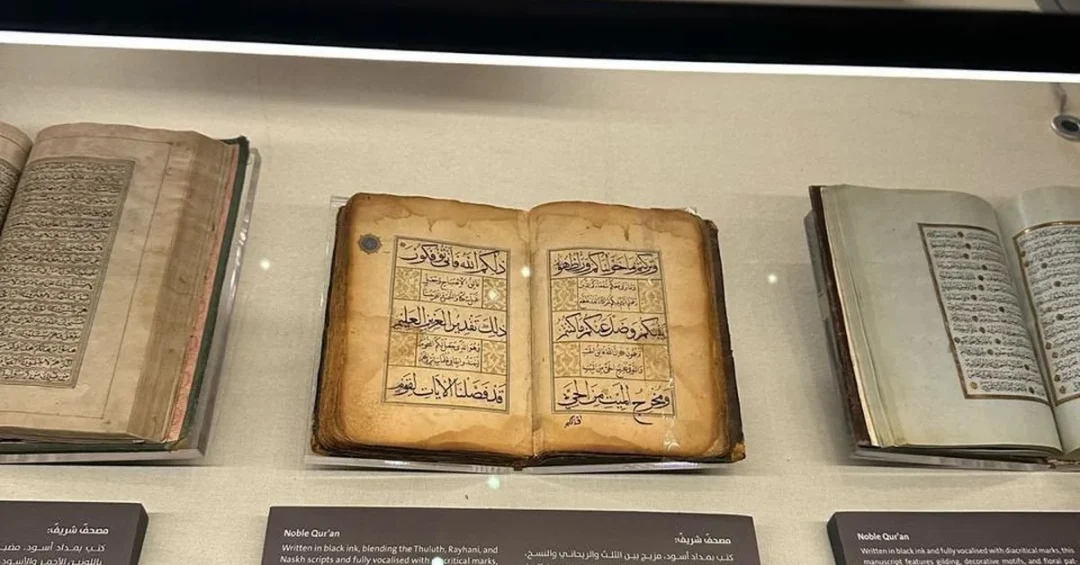
The King Abdulaziz Public Library in Riyadh is participating in the Holy Quran Museum exhibition at the Hira Cultural District in the Makkah Region, displaying a collection of rare Quran copies from its holdings, the Saudi Press Agency reported on March 6, 2025. The exhibition, located at the foot of Mount Hira, brings together some of the finest manuscripts of the Holy Quran written during various Islamic eras, offering visitors an in-depth explanation of the Quran through a comprehensive range of modern technologies.
The library’s participation is part of national efforts aimed at enriching and deepening the experience of Umrah performers and visitors by introducing them to the rich Islamic heritage through rare manuscripts of the Holy Quran. Have you ever wondered how the timeless words of the Quran have been preserved and honored across centuries of Islamic civilization? This exhibition provides a unique window into that enduring legacy, allowing pilgrims and tourists alike to witness the care and reverence with which the Quran has been transmitted from generation to generation.
Context and Background
The Hira Cultural District, situated in the Makkah Region at the foot of Mount Hira, has become a significant destination for those seeking to deepen their understanding of Islamic history and heritage. The district is home to the Holy Quran Museum, which was designed to serve as a beacon of knowledge and a testament to the centrality of the Quran in the life of Muslims worldwide. Why is the location of this exhibition so significant for visitors from around the globe? Mount Hira holds profound historical importance as the place where the Prophet Muhammad (peace be upon him) received the first revelations of the Quran, making the district a natural focal point for reflection and learning.
The King Abdulaziz Public Library, based in Riyadh, is a renowned institution dedicated to the preservation and dissemination of knowledge, with a particular focus on Islamic manuscripts and rare books. Its participation in the Holy Quran Museum exhibition underscores its commitment to sharing its extensive collection with a wider audience, including the millions of Umrah performers and visitors who travel to Makkah each year. The library’s holdings include manuscripts that span various Islamic eras, each reflecting the artistic and scholarly traditions of its time. How do these manuscripts help us appreciate the universality of the Quran’s message? By displaying them, the library enables visitors to see firsthand the meticulous craftsmanship and spiritual devotion that have gone into preserving the sacred text.
The exhibition is part of broader national efforts to enrich the cultural and religious experience of pilgrims and tourists, aligning with Saudi Arabia’s Vision 2030 objectives to promote cultural heritage and enhance the quality of life for visitors. The Holy Quran Museum itself utilizes cutting-edge technologies to present the Quran’s greatness and its impact on the lives of Muslims, making the ancient text accessible and engaging for contemporary audiences. What role does technology play in bridging the gap between historical artifacts and modern understanding? Through interactive displays and digital presentations, the museum ensures that the Quran’s message resonates with people of all ages and backgrounds.
Key Details
The rare Quran copies on display at the Holy Quran Museum represent a remarkable cross-section of Islamic manuscript tradition. These include copies written during various Islamic eras, each with distinct calligraphic styles, illumination, and binding techniques that reflect the cultural and artistic contexts in which they were produced. Visitors can observe the evolution of Quranic script, from early Kufic to later Naskh and Thuluth styles, and appreciate the dedication of the scribes who painstakingly transcribed the holy text. How often does one have the opportunity to see such a diverse collection of Quranic manuscripts in a single setting? This exhibition offers precisely that, providing a rare chance to compare and contrast manuscripts from different periods and regions.
The Holy Quran Museum’s presentation is not merely a static display; it employs a comprehensive range of modern technologies to offer an in-depth explanation of the Quran. Interactive screens, audio guides, and multimedia presentations help visitors understand the context of the revelations, the meanings of the verses, and the historical significance of the manuscripts. The museum also highlights the Quran’s greatness, universality, and the care it receives, as well as its impact on the lives of Muslims. What better way to appreciate the depth of the Quran than through an immersive, educational experience? The combination of rare artifacts and advanced technology creates a powerful learning environment that leaves a lasting impression on visitors.
The King Abdulaziz Public Library’s contribution to the exhibition is a testament to its role as a custodian of Islamic heritage. The library has long been active in collecting, preserving, and exhibiting rare manuscripts, and its participation here reflects a strategic effort to make these treasures accessible to a global audience. By showcasing its holdings in Makkah, the library reinforces the connection between Riyadh’s scholarly institutions and the spiritual heartland of Islam. How does this collaboration enhance the overall experience for Umrah performers? It provides them with a deeper, more meaningful encounter with the Quran, enriching their pilgrimage beyond the rituals themselves.
International and Regional Impact
The exhibition at the Hira Cultural District has significant implications for international visitors, particularly the millions of Muslims who perform Umrah each year. For many, a visit to Makkah is a once-in-a-lifetime spiritual journey, and the opportunity to view rare Quranic manuscripts adds a profound educational dimension to their trip. By presenting the Quran’s history in such a compelling manner, the exhibition fosters a greater appreciation for Islamic scholarship and the shared heritage of Muslims worldwide. How does this impact the global perception of Saudi Arabia’s role in preserving Islamic heritage? It reinforces the Kingdom’s position as a leader in safeguarding the two holy mosques and the rich traditions associated with them.
Regionally, the exhibition strengthens cultural ties among Islamic countries by showcasing manuscripts that originated in various parts of the Muslim world. These manuscripts are not only religious artifacts but also historical documents that trace the spread of Islam and the development of its intellectual traditions. Visitors from different countries can see reflections of their own cultural heritage in the collection, promoting a sense of unity and common purpose. In what ways does this shared heritage contribute to regional stability and cooperation? By emphasizing the universal message of the Quran, the exhibition underscores the values of peace, tolerance, and mutual respect that are central to Islam.
Economic and Strategic Significance
The Holy Quran Museum and the broader Hira Cultural District are part of Saudi Arabia’s strategic efforts to diversify its economy and promote religious tourism. As the Kingdom invests in cultural and heritage projects, it creates new opportunities for economic growth, job creation, and international engagement. The exhibition attracts visitors who might otherwise bypass Makkah’s cultural sites, thereby extending their stay and increasing spending in the local economy. How does this align with Vision 2030’s goal of enhancing the pilgrimage experience? By offering enriching activities beyond the traditional rituals, Saudi Arabia is positioning itself as a destination for comprehensive spiritual and cultural journeys.
Furthermore, the use of advanced technologies in the museum demonstrates Saudi Arabia’s commitment to innovation and modernization. The integration of digital tools into cultural exhibitions not only enhances the visitor experience but also showcases the Kingdom’s technological capabilities. This can attract partnerships and investments in the tech and cultural sectors, contributing to the knowledge-based economy envisioned by Vision 2030. What does this say about Saudi Arabia’s ability to blend tradition with modernity? It illustrates a forward-looking approach that honors the past while embracing the future.
Vision 2030 Alignment
The exhibition of rare Quran copies at the Hira Cultural District is a clear reflection of Saudi Arabia’s Vision 2030, which seeks to enrich the lives of citizens and visitors through cultural and religious experiences. By preserving and displaying Islamic heritage, the Kingdom reinforces its role as the custodian of the two holy mosques and a global center for Islamic knowledge. This initiative also supports the Vision’s objectives of increasing the number of Umrah performers and enhancing the quality of services provided to them. How does this contribute to the overall success of Vision 2030? It demonstrates the Kingdom’s dedication to leveraging its unique spiritual and cultural assets for the benefit of all.
In conclusion, the King Abdulaziz Public Library’s participation in the Holy Quran Museum exhibition is a significant cultural and educational endeavor that highlights Saudi Arabia’s commitment to preserving Islamic heritage and sharing it with the world. As the Kingdom continues to implement Vision 2030, such initiatives will play a vital role in promoting tolerance, understanding, and the timeless message of the Quran. Will you be among the visitors to experience this remarkable exhibition? The Hira Cultural District welcomes all to explore the profound legacy of the Quran in an environment of learning and reflection.
20 Questions
Q1. What is the King Abdulaziz Public Library displaying in Makkah?
A1. The King Abdulaziz Public Library is displaying a collection of rare Quran copies from its holdings at the Holy Quran Museum exhibition in the Hira Cultural District in Makkah.
Q2. Where is the Holy Quran Museum located?
A2. The Holy Quran Museum is located at the foot of Mount Hira in the Makkah Region of Saudi Arabia, within the Hira Cultural District.
Q3. What is the purpose of the exhibition?
A3. The exhibition aims to enrich the experience of Umrah performers and visitors by introducing them to the rich Islamic heritage through rare manuscripts of the Holy Quran.
Q4. What types of manuscripts are on display?
A4. The manuscripts on display include rare Quran copies written during various Islamic eras, showcasing different calligraphic styles and historical significance.
Q5. How does the museum present the Quran to visitors?
A5. The museum utilizes a comprehensive range of modern technologies to offer an in-depth explanation of the Quran, highlighting its greatness and universality.
Q6. Who is participating in the exhibition?
A6. The King Abdulaziz Public Library in Riyadh is participating by showcasing its rare Quran copies, as part of national efforts to promote Islamic heritage.
Q7. Why is Mount Hira significant?
A7. Mount Hira is significant as the place where the Prophet Muhammad (peace be upon him) received the first revelations of the Quran, making it a site of profound historical and spiritual importance.
Q8. What role does the exhibition play in Vision 2030?
A8. The exhibition supports Vision 2030 by enhancing cultural and religious experiences, promoting heritage, and improving services for Umrah performers and visitors.
Q9. How does the exhibition benefit Umrah performers?
A9. It provides Umrah performers with a deeper understanding of the Quran’s history and message, enriching their spiritual journey beyond the traditional rituals.
Q10. What technologies are used in the museum?
A10. The museum employs interactive screens, audio guides, and multimedia presentations to explain the Quran and its context in an engaging manner.
Q11. Are the manuscripts from different Islamic periods?
A11. Yes, the manuscripts span various Islamic eras, reflecting the artistic and scholarly traditions of their respective times.
Q12. How does this exhibition promote Islamic heritage?
A12. By displaying rare Quranic manuscripts and using modern technology to explain them, the exhibition highlights the Quran’s enduring legacy and its impact on Muslims worldwide.
Q13. Can non-Muslims visit the exhibition?
A13. The exhibition is primarily designed for Muslims, but the Hira Cultural District welcomes visitors of all backgrounds to learn about Islamic heritage, subject to local guidelines.
Q14. What is the Hira Cultural District?
A14. The Hira Cultural District is a cultural and religious destination in Makkah that includes the Holy Quran Museum and other facilities aimed at educating visitors about Islam.
Q15. How does the exhibition contribute to Saudi Arabia’s economy?
A15. It attracts visitors, extends their stay, and increases spending in the local economy, supporting economic diversification and job creation.
Q16. What is the significance of the King Abdulaziz Public Library’s participation?
A16. It demonstrates the library’s role as a custodian of Islamic heritage and its commitment to sharing its treasures with a global audience.
Q17. How does the exhibition reflect Saudi Arabia’s leadership?
A17. It showcases the Kingdom’s dedication to preserving Islamic heritage and providing enriching experiences for pilgrims, reinforcing its role as custodian of the two holy mosques.
Q18. What is the expected impact on visitors?
A18. Visitors will gain a deeper appreciation for the Quran’s history and universality, enhancing their spiritual and cultural understanding.
Q19. Are there plans to expand the exhibition?
A19. The exhibition is part of ongoing efforts to develop the Hira Cultural District and enhance cultural offerings, with potential for future expansions aligned with Vision 2030.
Q20. How can one visit the Holy Quran Museum?
A20. The museum is located in the Hira Cultural District in Makkah and is open to visitors; details on visiting hours and guidelines can be found through official Saudi tourism channels.
Reader Feedback
We value your thoughts. Please share your feedback on this article.
Your feedback helps us improve our coverage.
Related articles
 Historic Laynah Mosque: An Architectural Gem Reflecting Essence of the Past
 Ramadan Cannon Shots in Turaif Mark Arrival of Holy Month
 Ministry of Culture Launches Saudi-Chinese Cultural Year
 Ramadan Cannon: A Timeless Tradition in Saudi Arabia
 Saudi Man Recreates 1980s Ramadan Iftar in Nostalgic Majlis
 Makkah Resident Recounts Ramadan: Journey from Past to Present