


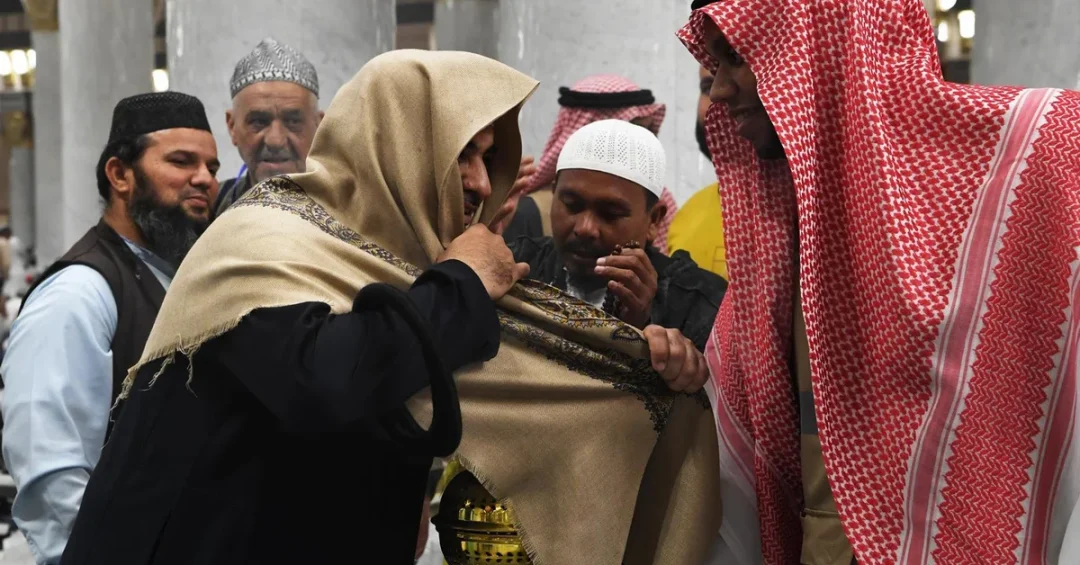
The General Presidency for the Affairs of the Two Holy Mosques has intensified its perfuming operations at the Prophet’s Mosque in Madinah since the start of Ramadan, conducting 40 perfumery tours daily through its dedicated Perfumery Department. The initiative ensures that the mosque and its visitors are enveloped in high-quality incense and oud throughout the day, with particular attention given to the period between Maghrib and Isha prayers. According to an official announcement released via the Saudi Press Agency, three additional fumigation tours are carried out using approximately half a kilogram of fine oud, managed by a team of 25 trained employees who execute the program with precision and care.
Have you ever wondered what it takes to maintain an atmosphere of serenity for millions of worshippers? The answer lies in meticulous planning and devotion. This Ramadan, the Prophet’s Mosque is not only a place of worship but also a sanctuary of sensory tranquility, thanks to the relentless efforts of the General Presidency. The perfuming tours represent a blend of tradition and operational excellence, reflecting the Kingdom’s commitment to serving the guests of God. As the holy month progresses, these efforts underscore Saudi Arabia’s broader mission to enhance the spiritual experience of pilgrims and visitors, aligning with the nation’s Vision 2030 goals of elevating the quality of services for the millions who visit the Two Holy Mosques annually.
Context and Background
How did the tradition of perfuming the Prophet’s Mosque become such an integral part of the Ramadan experience? The practice dates back centuries, rooted in Islamic custom and the reverence for sacred spaces. The General Presidency for the Affairs of the Two Holy Mosques, a government body responsible for the upkeep of Islam’s holiest sites, has long prioritized the use of incense and oud to create an environment conducive to prayer and reflection. Over the years, this responsibility has evolved into a sophisticated operation, especially during peak seasons like Ramadan, when millions of worshippers converge on Madinah. The Perfumery Department, a specialized unit within the Presidency, now orchestrates daily tours that blend tradition with modern efficiency.
Since the beginning of Ramadan, the department has ramped up its activities, recognizing the heightened spiritual needs of visitors. The use of high-quality incense and oud is not merely aesthetic; it is a gesture of hospitality and respect, echoing the Prophet Muhammad’s (peace be upon him) appreciation for pleasant fragrances. The Presidency’s efforts are part of a broader strategy to ensure that every visitor’s experience is spiritually uplifting and comfortable. This initiative also reflects the Kingdom’s dedication to preserving the sanctity of the mosque while embracing operational innovations that cater to the growing number of pilgrims. By focusing on the period between Maghrib and Isha prayers, the department ensures that the most crowded times are met with an atmosphere of calm and devotion.
What role does the Perfumery Department play behind the scenes? It is the unsung hero of the mosque’s daily rhythm. Comprising trained specialists, the department plans each tour meticulously, considering factors such as crowd density, prayer times, and ventilation. The 25 employees involved in the program are not just workers; they are custodians of a sacred ambiance. Their work is a testament to the Presidency’s attention to detail, ensuring that the fragrance of oud and incense permeates the air without overwhelming worshippers. This balance is crucial, as the goal is to enhance, not distract from, the spiritual experience. The department’s efforts during Ramadan are a microcosm of the Presidency’s year-round dedication to service.
Key Details of the Perfuming Operations
What exactly happens during one of these 40 daily perfuming tours? Each tour involves a systematic dispersion of high-quality incense and oud across designated areas of the Prophet’s Mosque. The process is carefully timed to avoid disrupting prayers and to maximize the fragrance’s lingering effect. The three dedicated fumigation tours, which use around half a kilogram of fine oud, are particularly noteworthy. These tours are conducted with precision, often utilizing specialized equipment to ensure even distribution. The oud used is of the finest quality, sourced to meet the highest standards, and its rich aroma is intended to evoke a sense of peace and reverence. The 25 trained employees work in coordinated teams, moving through the mosque’s expansive courtyards and prayer halls.
How do the employees manage such a large-scale operation? Training is key. Each team member undergoes rigorous preparation to understand the nuances of fragrance dispersal, crowd management, and adherence to safety protocols. They are equipped with knowledge of the mosque’s layout and the best times to conduct tours. The focus on the Maghrib-Isha interval is strategic, as it is a time when many visitors are present, and the transition between prayers offers a window to refresh the ambiance. The employees also coordinate with other departments to ensure that the perfuming does not interfere with cleaning or other logistical activities. Their work is a seamless blend of tradition and modernity, reflecting the Presidency’s commitment to excellence.
What makes the use of oud and incense so significant in this context? In Islamic culture, fragrance holds a special place, symbolizing purity and spiritual elevation. The Prophet’s Mosque, being the second holiest site in Islam, deserves the utmost care in every aspect, including its olfactory environment. The choice of oud, a resinous wood known for its deep, woody scent, is deliberate. It is associated with luxury and reverence, and its use in the mosque is a way to honor the sacred space. The incense used is also of premium quality, often blends of traditional recipes that have been passed down or developed to suit the mosque’s unique atmosphere. This attention to sensory detail is part of what makes a visit to the Prophet’s Mosque an unforgettable spiritual journey.
International and Regional Impact
How does this initiative resonate beyond the borders of Saudi Arabia? The Prophet’s Mosque attracts millions of international pilgrims each year, and the experience they have there shapes their perception of the Kingdom. The perfuming tours, though seemingly a small detail, contribute significantly to the overall ambiance that visitors carry back to their home countries. Positive experiences translate into goodwill and strengthen Saudi Arabia’s image as a gracious host and custodian of Islam’s holiest sites. In the broader region, where pilgrimage is a major source of tourism and cultural exchange, such efforts reinforce the Kingdom’s leadership role in managing religious tourism. The initiative also sets a benchmark for other sacred sites in the Muslim world, showcasing how tradition and modernity can coexist.
What do regional observers say about these efforts? While official statements from other governments are not typically issued on such matters, the general sentiment among pilgrims and international media is one of appreciation. The meticulous care taken by the General Presidency is often highlighted in travelogues and reports, further enhancing the Kingdom’s soft power. The use of high-quality oud and incense also supports local economies, as these materials are often sourced from regional markets. Moreover, the operational success of the perfuming tours during Ramadan serves as a model for crowd management and visitor experience enhancement, which can be applied to other large-scale events in the region. The Kingdom’s ability to execute such detailed programs underlines its capacity to host millions safely and comfortably.
Economic and Strategic Significance
What economic ripple effects does the perfuming initiative have? The procurement of high-quality oud and incense involves a supply chain that supports local and regional businesses. The demand for these materials during Ramadan boosts the fragrance industry, which is a significant sector in the Middle East. Additionally, the employment of 25 trained employees directly contributes to job creation and skills development, aligning with Vision 2030’s goal of empowering Saudi citizens. The initiative also enhances the overall pilgrimage experience, which in turn can lead to increased visitor satisfaction and repeat visits, driving growth in the religious tourism sector. The Kingdom has invested heavily in infrastructure to accommodate pilgrims, and operational enhancements like the perfuming tours are part of that investment.
How does this fit into Saudi Arabia’s strategic priorities? Under Vision 2030, the Kingdom aims to diversify its economy and improve the quality of life for citizens and visitors alike. The religious tourism sector is a key pillar, with goals to increase the number of Umrah and Hajj pilgrims to 30 million by 2030. Enhancing the experience at the Two Holy Mosques is central to achieving this target. The perfuming tours are a small but meaningful component of a larger strategy that includes expanding capacity, improving services, and leveraging technology. By paying attention to sensory details, the Presidency demonstrates that no aspect of the pilgrim’s journey is too small to optimize. This holistic approach is what sets Saudi Arabia apart as a destination for spiritual travel.
Vision 2030 Alignment
How does the perfuming initiative reflect the core objectives of Vision 2030? At its heart, Vision 2030 is about creating a vibrant society, a thriving economy, and an ambitious nation. The care taken to perfume the Prophet’s Mosque contributes to a vibrant society by enriching the spiritual and cultural experience of millions. It supports a thriving economy by stimulating related industries and creating jobs. And it showcases an ambitious nation by demonstrating the Kingdom’s ability to manage complex operations with excellence. The General Presidency’s efforts are a living example of how Vision 2030’s principles are applied on the ground, in service of the guests of God. This alignment is not coincidental; it is the result of deliberate planning and a commitment to continuous improvement.
What does the future hold for such initiatives? As Ramadan continues, the Perfumery Department will maintain its rigorous schedule, adapting to the needs of the increasing number of visitors. The success of the 40 daily tours and the fumigation operations will inform future enhancements, potentially expanding the use of eco-friendly or technologically advanced methods of fragrance dispersal. The Presidency is likely to continue investing in training and equipment to ensure that the Prophet’s Mosque remains a beacon of comfort and spirituality. Ultimately, the goal is to make every visitor’s experience as profound and memorable as possible, in line with the Kingdom’s enduring commitment to serving Islam and Muslims worldwide. The perfuming tours are a fragrant testament to that commitment.
20 Questions
Q1. What is the purpose of the perfuming tours at the Prophet’s Mosque?
A1. The tours are designed to perfume the mosque and its visitors with high-quality incense and oud, creating a serene and spiritual atmosphere, especially during Ramadan, as part of the General Presidency’s efforts to enhance the worship experience.
Q2. How many perfuming tours are conducted daily?
A2. The Perfumery Department conducts 40 perfuming tours daily, with particular focus on the period between Maghrib and Isha prayers, ensuring the mosque remains fragrant throughout the day for all visitors.
Q3. Who is responsible for carrying out these tours?
A3. A team of 25 trained employees from the General Presidency for the Affairs of the Two Holy Mosques executes the tours with precision and care, following detailed protocols to ensure effectiveness and minimal disruption.
Q4. What materials are used in the perfuming process?
A4. High-quality incense and oud are used, with three dedicated fumigation tours consuming around half a kilogram of fine oud, chosen for its rich aroma and cultural significance in Islamic tradition.
Q5. Why is the period between Maghrib and Isha prayers significant?
A5. This interval is a busy time when many worshippers gather, and the transition between prayers provides an ideal opportunity to refresh the mosque’s ambiance with fragrance, enhancing the spiritual mood.
Q6. How does the General Presidency ensure the tours do not disrupt prayers?
A6. The tours are carefully timed to avoid prayer times, and employees are trained to move discreetly through designated areas, coordinating with other departments to maintain a seamless operation without disturbing worshippers.
Q7. What kind of training do the employees receive?
A7. The 25 employees undergo rigorous training in fragrance dispersal techniques, crowd management, safety protocols, and knowledge of the mosque’s layout, ensuring they perform their duties with professionalism and respect for the sacred environment.
Q8. How does this initiative reflect Saudi Arabia’s Vision 2030?
A8. It aligns with Vision 2030 by enhancing the quality of services for pilgrims, supporting job creation, and showcasing the Kingdom’s commitment to excellence in managing the Two Holy Mosques, thus boosting religious tourism.
Q9. What is the significance of using oud in the Prophet’s Mosque?
A9. Oud holds a special place in Islamic culture, symbolizing purity and reverence. Its use at the mosque honors the sacred space and provides a sensory experience that elevates the spiritual journey of visitors.
Q10. How does the perfuming initiative impact international visitors?
A10. It leaves a lasting positive impression on international pilgrims, who often share their experiences, thereby enhancing Saudi Arabia’s global image as a gracious host and custodian of Islam’s holiest sites.
Q11. Are there any environmental considerations in the perfuming process?
A11. The Presidency uses high-quality, natural materials and follows protocols to ensure the process is safe and respectful of the environment, with ongoing efforts to explore eco-friendly methods in line with sustainability goals.
Q12. How does the initiative support the local economy?
A12. The procurement of oud and incense supports local and regional suppliers, while the employment of trained staff contributes to job creation and skills development, aligning with Vision 2030’s economic diversification objectives.
Q13. What feedback have visitors given about the perfuming tours?
A13. Visitors have expressed appreciation for the fragrant atmosphere, noting that it enhances their spiritual experience. The positive feedback encourages the Presidency to continue and improve these services.
Q14. How does the Presidency measure the success of the perfuming tours?
A14. Success is measured through visitor satisfaction, operational efficiency, and adherence to schedules. The Presidency also monitors air quality and ensures the fragrance is evenly distributed without being overwhelming.
Q15. Will the number of tours increase in the future?
A15. The Presidency continuously evaluates the needs of visitors and may adjust the number of tours based on crowd levels and feedback, with the goal of maintaining an optimal environment for worship.
Q16. What other services does the Perfumery Department provide?
A16. Beyond daily tours, the department manages the overall olfactory environment of the mosque, including special events and peak seasons, ensuring that the fragrance aligns with the sanctity of the site.
Q17. How does the initiative handle peak times like the last ten days of Ramadan?
A17. During peak times, the department increases the frequency of tours and may deploy additional staff to ensure the mosque remains fragrant and comfortable for the higher number of worshippers.
Q18. Is the oud used sourced sustainably?
A18. The Presidency prioritizes quality and ethical sourcing, working with suppliers who adhere to sustainable practices, in line with Saudi Arabia’s environmental commitments under Vision 2030.
Q19. How does the perfuming initiative compare to practices in other holy sites?
A19. The Prophet’s Mosque’s perfuming program is among the most sophisticated, with a dedicated department and trained team. It sets a benchmark for care and attention to detail in managing sacred spaces.
Q20. What is the ultimate goal of these efforts?
A20. The ultimate goal is to enhance the spiritual experience of every visitor, ensuring that their time at the Prophet’s Mosque is peaceful, memorable, and reflective of the Kingdom’s dedication to serving Islam and Muslims worldwide.
Reader Feedback
We value your thoughts. Please share your feedback on this article.
Your feedback helps us improve our coverage.
Related articles
 Madinah Bus Launches 24/7 Ramadan Route to Prophet’s Mosque
 Saudi Ministry of Tourism Boosts Hotel Inspections in Makkah, Madinah
 Saudi ACP Launches Direct Stuttgart-Jeddah Flights
 Ramadan Iftar in Al-Baha’s Misty Mountains
 Al-Balad Market: Jazan’s Ramadan Cultural Hub
 Tourism Ministry Launches Online License Verification Service